
Two days in Amsterdam: canals, art and De Pijp

Two full days in Amsterdam give you room for the historic centre, the canal belt, one major art museum and a different neighbourhood. The useful decision is how to divide those experiences. Spend the first day understanding the city around the water, then use the second for art, the Albert Cuyp Market and a park in De Pijp.
This itinerary suits a first visit if you enjoy walking and prefer choosing a museum to collecting admission tickets. There are proper lunch breaks and time between indoor and outdoor visits. Evenings stay open, so you can decide where to eat after seeing how much energy you have left.
How to organise two days in Amsterdam
Choose the museum day first and check the calendar. In the outline below, the Rijksmuseum and Albert Cuyp Market fall on day two. For a Saturday–Sunday trip, reverse the days: the market normally operates Monday to Saturday and closes on Sunday. The historic centre and canal day can then take the Sunday position.
RoadMe makes it easier to turn an outline into a complete personal trip plan, with a route shaped around your interests, dates, pace and budget. Tell the app whether art, history or neighbourhood walks matter most, and let it build the days around your priorities.
The times are planning estimates, not a guided-tour schedule or a promise of ticket availability. Walking allowances include some breathing room, but queues, weather and your own pace will change them. Add travel from your accommodation to the start, and the journey back afterwards, separately.
| Day | Main sequence |
|---|---|
| Day one, roughly 09:30–16:30 | Amsterdam Centraal → Damrak → Dam Square → Begijnhof → Museum of the Canals → Prinsengracht → Jordaan |
| Day two, roughly 09:30–16:00 | Rijksmuseum → Museumplein → De Pijp → Albert Cuyp Market → Sarphatipark |
You do not need to start both mornings at the station. On the museum day, go straight to the museum area rather than repeating the entire walk through the centre. If you only have one full sightseeing day, use our one-day Amsterdam itinerary for a first visit instead of trying to compress everything here.
Day one: the historic centre and the canal story
09:30–11:30: Damrak, Dam Square and Begijnhof
Start on the city side of Amsterdam Centraal and follow Damrak towards Dam Square. This approach introduces the contrasts that make Amsterdam interesting: water close to narrow façades, busy shopping streets and much larger public buildings. Allow about an hour to reach and enjoy the square, including a few stops rather than a continuous march.
The Royal Palace gives Dam Square much of its scale. It began as the city's town hall, brought into use in 1655. That history changes how you read the building: its grandeur originally expressed civic influence before it acquired a royal role. For this itinerary, enjoy the exterior. Going inside would require its own time allowance and an admission check.
Continue towards Begijnhof via Kalverstraat. Visitor access is from Gedempte Begijnensloot, and the courtyard's published hours are daily, 09:30–18:00. These are courtyard hours, not a guarantee that every surrounding building is open. Keep the visit quiet and brief, then return to the public streets rather than treating residential doorways as attractions.
The courtyard is associated with the Beguines. You do not need a long architectural explanation to appreciate the change from a commercial street to a small green enclosure. Notice how paths, planting and façades fit together. If access is temporarily restricted, continue through Spui; a single courtyard should not determine the success of the whole morning.
11:30–14:15: understand the canals, then stop for lunch
From Begijnhof, head through Spui and towards Singel and Herengracht. Allow about half an hour to reach Grachtenmuseum, the Museum of the Canals at Herengracht 386, including finding the entrance. Aim for around noon: on Mondays it opens at 12:00, and Tuesday to Sunday at 10:00. Closing is normally 17:00, with last admission at 16:30.
This smaller museum adds context to the streets outside. Models and multimedia rooms explain the city's expansion and the role of water in its design. The canal ring developed through planned urban expansion in the late sixteenth and seventeenth centuries. Understanding that broad idea is more useful here than memorising a list of individual canal houses.
Set aside roughly 75 minutes for admission, the main presentation and any extra rooms you choose to see. The audiovisual exhibition follows a sequence, so do not plan to rush through it in ten minutes. The museum does not use timed admission slots, and an advance ticket does not provide expedited entry. Weekend waiting can use some of your allowance.
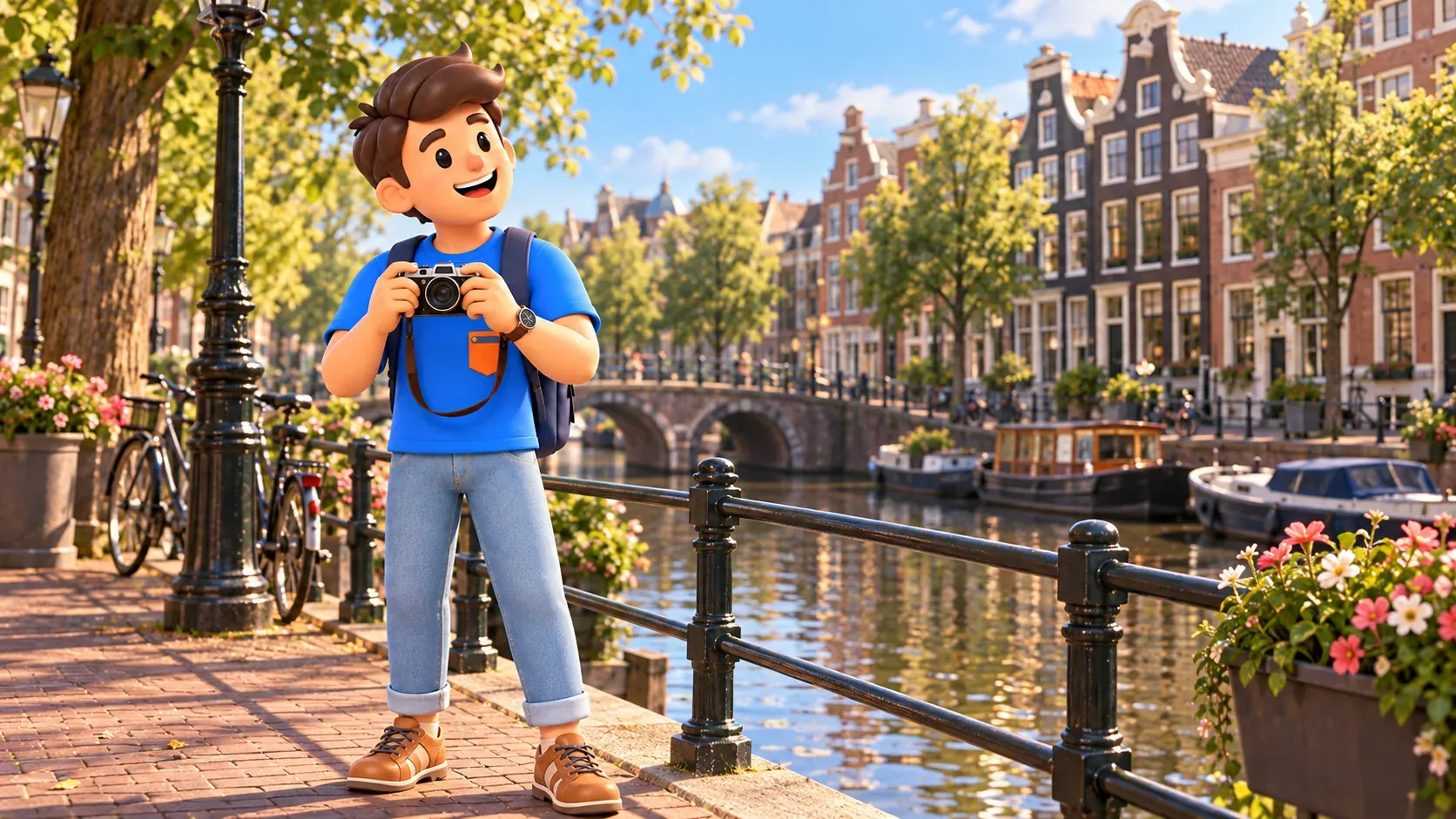
Then take a proper lunch break nearby, roughly 13:15–14:15. There is no museum café at Grachtenmuseum, so do not postpone eating on the assumption that you will find one inside. Pick somewhere that has a suitable menu and a seat. Resting now helps make the afternoon walk enjoyable; another attraction squeezed into this hour is unlikely to improve the day.
14:15–16:30: Prinsengracht and Jordaan
After lunch, work across from Herengracht towards Prinsengracht, then gradually north towards Westerkerk. This is the unhurried part of the itinerary. Compare the shape of the gables, the street width and the reflections on the water. Choose a few places to pause rather than crossing every bridge for another version of the same photograph.
Westerkerk is an exterior landmark in this plan. A tower climb, a church visit and admission to the nearby Anne Frank House are not included. Being outside an important building is different from having access to it. If a particular indoor visit is your priority and you have secured admission, give it a real block of time and shorten the canal walk accordingly.
Finish in Jordaan, perhaps around Noordermarkt. The name identifies a square; it does not mean that a market will be operating on your visiting day. Find a café if you feel like staying, or finish while you still have energy for the evening. There is no need to walk back to Centraal unless that actually suits your onward journey.
Day two: art, De Pijp and a green finish
09:30–12:00: choose one major art museum
The Rijksmuseum is the main art visit in this version. Its present building, designed by Pierre Cuypers, opened in 1885. Before entering, notice the red brick, pale stone details and strong rooflines. The building itself adds something to the morning, even if paintings are the reason you came.
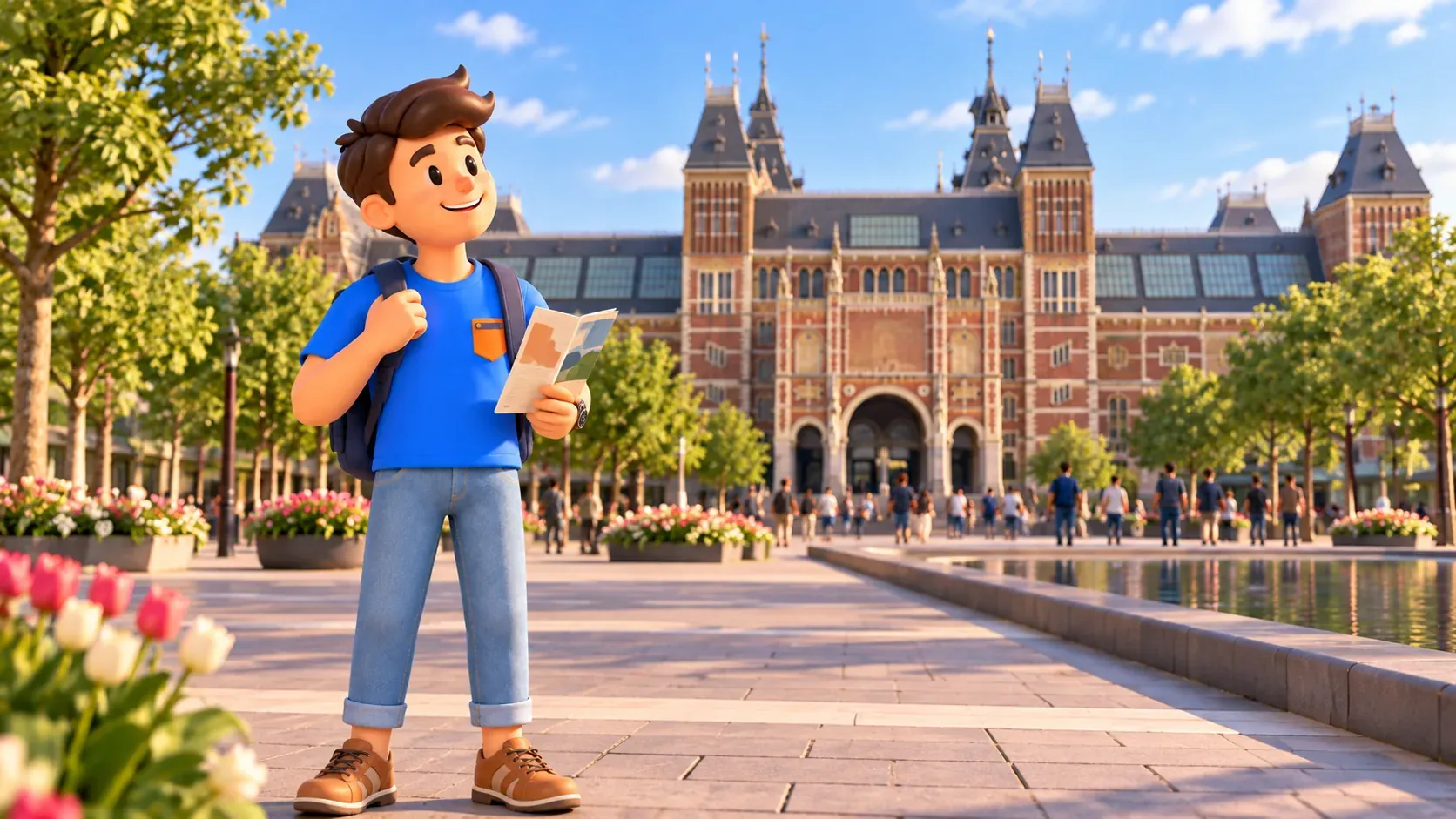
Standard admission requires a ticket with a starting time. Our example uses 09:30, but find an available time for your date before organising the rest of the morning. The museum publishes daily opening hours of 09:00–17:00, including holidays. Limited tickets at the entrance are not a dependable substitute for advance arrangements when this is your only museum morning.
Two and a half hours is a suggested allowance for a selective visit, not enough time to examine the entire collection. Decide which subjects interest you most and allow yourself to leave other sections for another trip. Looking closely at a smaller number of works often makes a more satisfying visit than moving continuously between rooms with a checklist.
If Van Gogh matters more to you, substitute the Van Gogh Museum while keeping the same general area and morning block. Ordinary tickets are sold online with a starting time, and its date-specific opening hours must be checked separately. Do not apply the Rijksmuseum's hours to it. Adding both major museums to this morning would substantially change the pace.
12:00–15:00: Museumplein and Albert Cuyp Market
Spend about half an hour on Museumplein after leaving the museum. It is a useful transition from focused looking to a more informal afternoon. Sit down, look across the square or talk about what stood out in the collection. The next nearby museum does not have to become the next activity simply because its entrance is within reach.
Allow roughly another half-hour to walk from the Rijksmuseum area to the western part of Albert Cuypstraat. A practical direction is through the Hobbemastraat and Stadhouderskade area towards Ferdinand Bolstraat, using the appropriate pedestrian crossings. You are changing neighbourhoods now, so resist adding a detour back to the central canal belt at the same time.
Have lunch in De Pijp around 13:00, then give Albert Cuyp Market about an hour. Its regular hours are Monday to Saturday, 09:30–17:00; it is closed on Sundays. Check special arrangements if your visit falls on a public holiday. Arriving near closing time is not a good plan if you want time to browse different stalls.
The interest lies in the mixture of groceries, prepared food and everyday shopping along the street. Choose something you actually want to taste instead of making every familiar Dutch snack compulsory. Market food can form part of lunch, but a quick bite while standing may not give you the seated rest you need after the museum.

15:00–16:00: finish at Sarphatipark
Allow about fifteen minutes to reach Sarphatipark, depending on where your market browsing ends. The small park near Albert Cuyp makes a useful finish: water, lawns and planting offer a different rhythm after galleries and stalls. There is no requirement to walk every path before you can settle down and enjoy it.
The park is named after Samuel Sarphati, associated with Amsterdam's development in the nineteenth century, and contains a monument to him. It is a small piece of neighbourhood history rather than another long sightseeing assignment. Leave half an hour or more to pause, or finish earlier and choose somewhere indoors if it is cold or wet.
If your priorities are different, RoadMe can prepare a personal plan for the whole trip instead of leaving you to assemble disconnected lists. Try giving art or food more weight: following an itinerary the app has shaped around your interests and pace is much more convenient.
Calendar checks and sensible adjustments
The Museum of the Canals closes on 1 January, 25 December and 27 April. If one of those dates affects your trip, use the time for a longer canal walk and lunch, and save the museum for an available day. Simply reversing the itinerary does not solve every closure, especially when neither date allows the visit you wanted.
In rain, shorten outdoor pauses and the park while keeping a proper lunch. Do not assume that a replacement museum will have immediate admission: check before changing the day around it. For an evening train or flight, shorten day two from the end and leave a separate allowance for luggage collection and the journey to your departure point.
This is a walking itinerary, not an assessed step-free route. Bridges, surfaces and entrances need separate checking against your requirements. Stay aware of cycle lanes and avoid stopping in them to take photographs. Two days work best when you finish with a few clear impressions of Amsterdam and enough energy to enjoy them.


