
Walking Krutenau: Strasbourg Beyond the Postcard Views
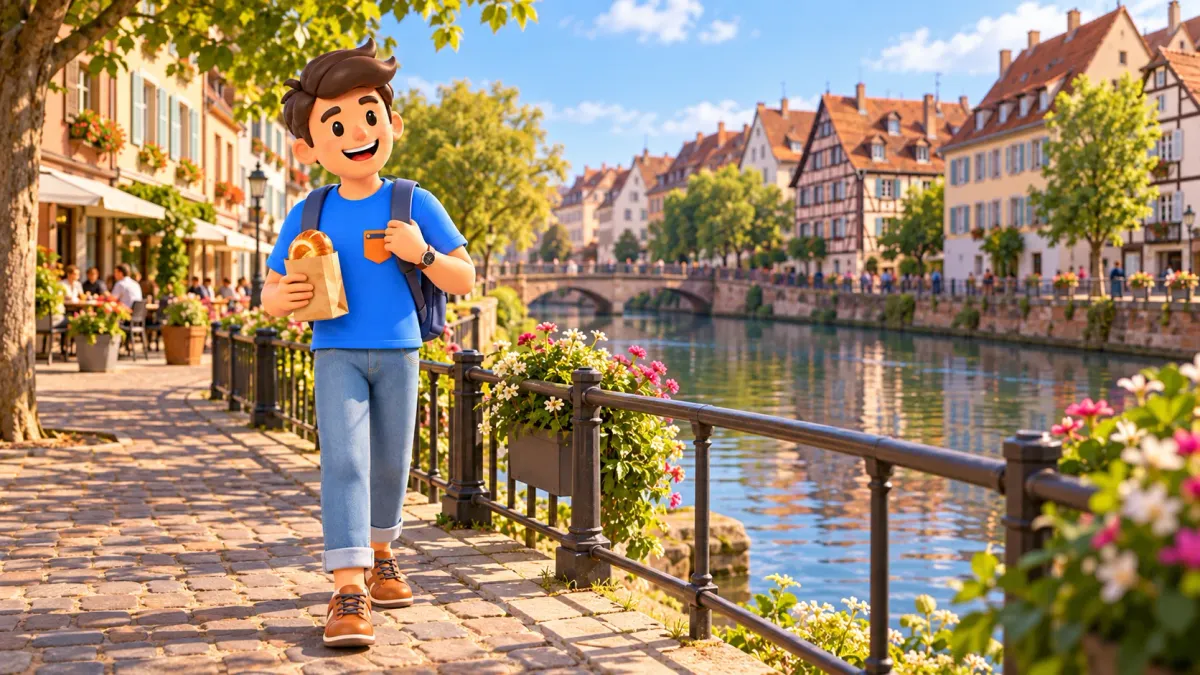
Go to Krutenau for another rhythm of Strasbourg. A medieval wall, a former tobacco factory, an art school and a quay overlooking the old town sit within the same district walk. Between them are ordinary streets, small squares and everyday city life that needs no special attraction label.
Begin at Place d’Austerlitz, walk through Sainte-Madeleine to the Zurich fountain, then continue to the former factory and art school. Return to the water at Saint-Guillaume Church and follow Quai des Bateliers. Allow roughly two hours for exterior stops, an unmeasured planning estimate. Add meals, interiors and your journey to the start separately.
A useful way to approach Krutenau
Look through three themes: water, work and creativity. Street names and bridges recall river occupations, the factory introduces production, and the school connects art with craft. These themes form one story without requiring a detailed study of every place.
In RoadMe, it is easier to get a personal Krutenau plan based on your interests, dates, pace and budget. The app works out your route and wider trip, connecting architecture, visits and rest in a sequence that suits you.
This walk fits well after the cathedral or Petite France. Change your way of looking: notice the transition from a residential street to an industrial building, or a small square to an open riverbank, alongside individual attractive façades.
Keep the name Krutenau for your map and signs. French place names will help distinguish neighbouring squares and churches. The route uses a compact district sequence rather than a complete itinerary along every waterfront or through all the city's Art Nouveau buildings.
Place d’Austerlitz: an easy beginning
The square connects the old centre with a neighbourhood walk. Notice how streets enter its open space and how people's movement changes. Before continuing, decide whether a short rest suits you now or whether you would rather keep it for the end.
The square's names have reflected different political periods. Austerlitz recalls Napoleon's victory in 1805; earlier names evoked monarchy and military presence. For a short walk, simply notice how historical memory survives in an everyday address.
There is no compulsory café to select. If you want coffee, use your own timing, the menu and available space rather than the idea of one perfect stop. A neighbourhood walk allows that independence, and it is useful to preserve it from the start.
Continue towards Sainte-Madeleine along available streets. Compare the scale on the way: the square gathers movement, while smaller connections bring your attention back to doors, windows and the distance between houses.
Sainte-Madeleine: traces of loss and rebuilding
At Église Sainte-Madeleine, look at the combination of parts rather than seeking one building from a single period. The former church's Gothic choir survived the 1904 fire, while the later church is associated with Fritz Beblo. Continuity and change occupy the same place.
This is a useful reason to question the assumption that an old appearance means everything is medieval. An ensemble may have survived fire, rebuilding and wartime damage. Its value comes from surviving fragments and from the way city life was organised around them again.
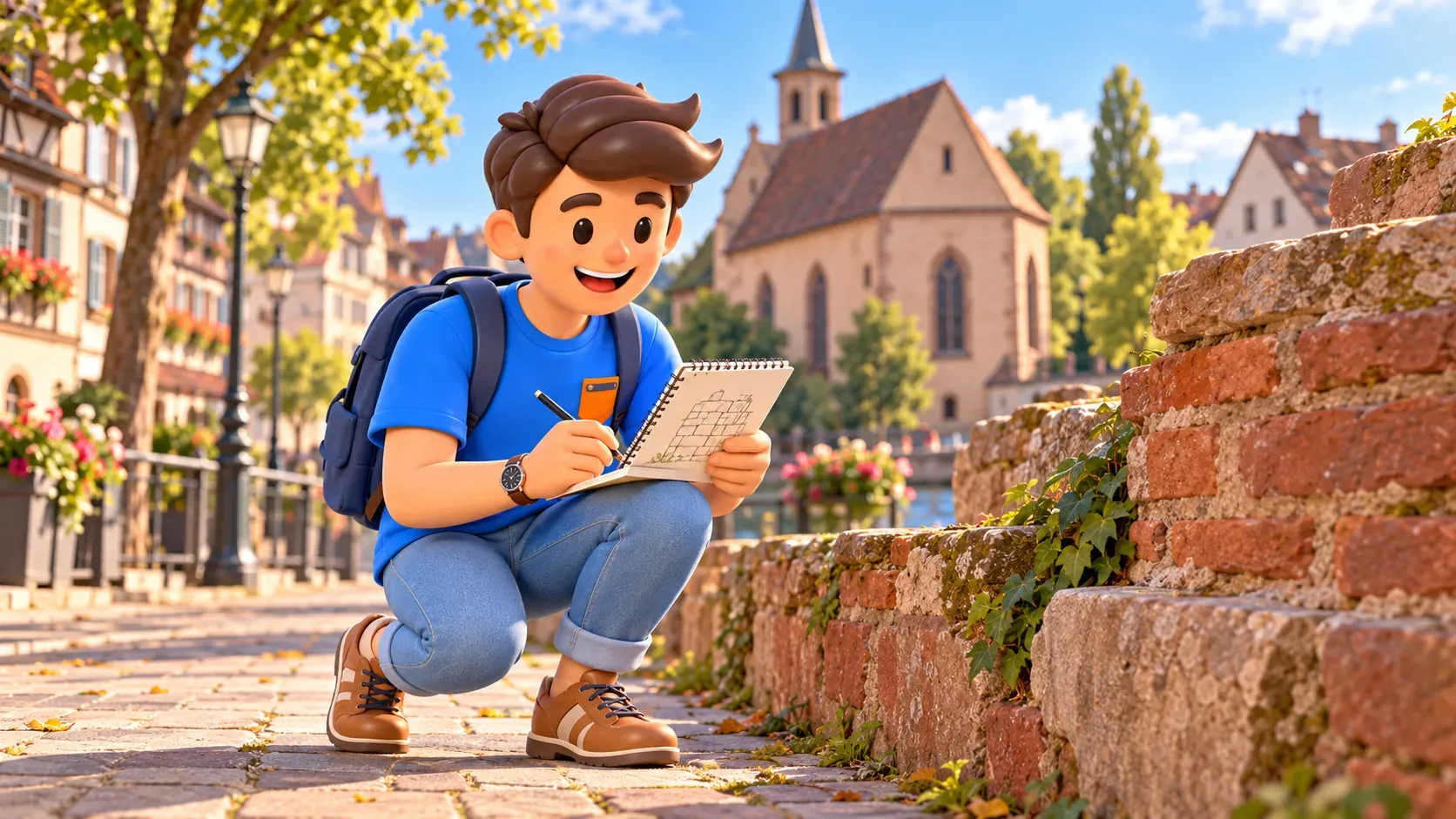
Nearby, a section of thirteenth-century brick city wall preserves another layer. Notice the masonry line and its position beside the street. The wall explains a former boundary even though much of the fortifications and ditch has disappeared.
The visible structure includes later repairs and restoration. Consider its material and direction instead of imagining every detail untouched since construction. History is legible through the surviving arrangement, without requiring every surface to be original.
An outside overview is enough for this stop. Choose one general church view and one wall view to remember their different scales, then continue towards the small square with the Zurich fountain.
The Zurich fountain: friendship, river travel and warm porridge
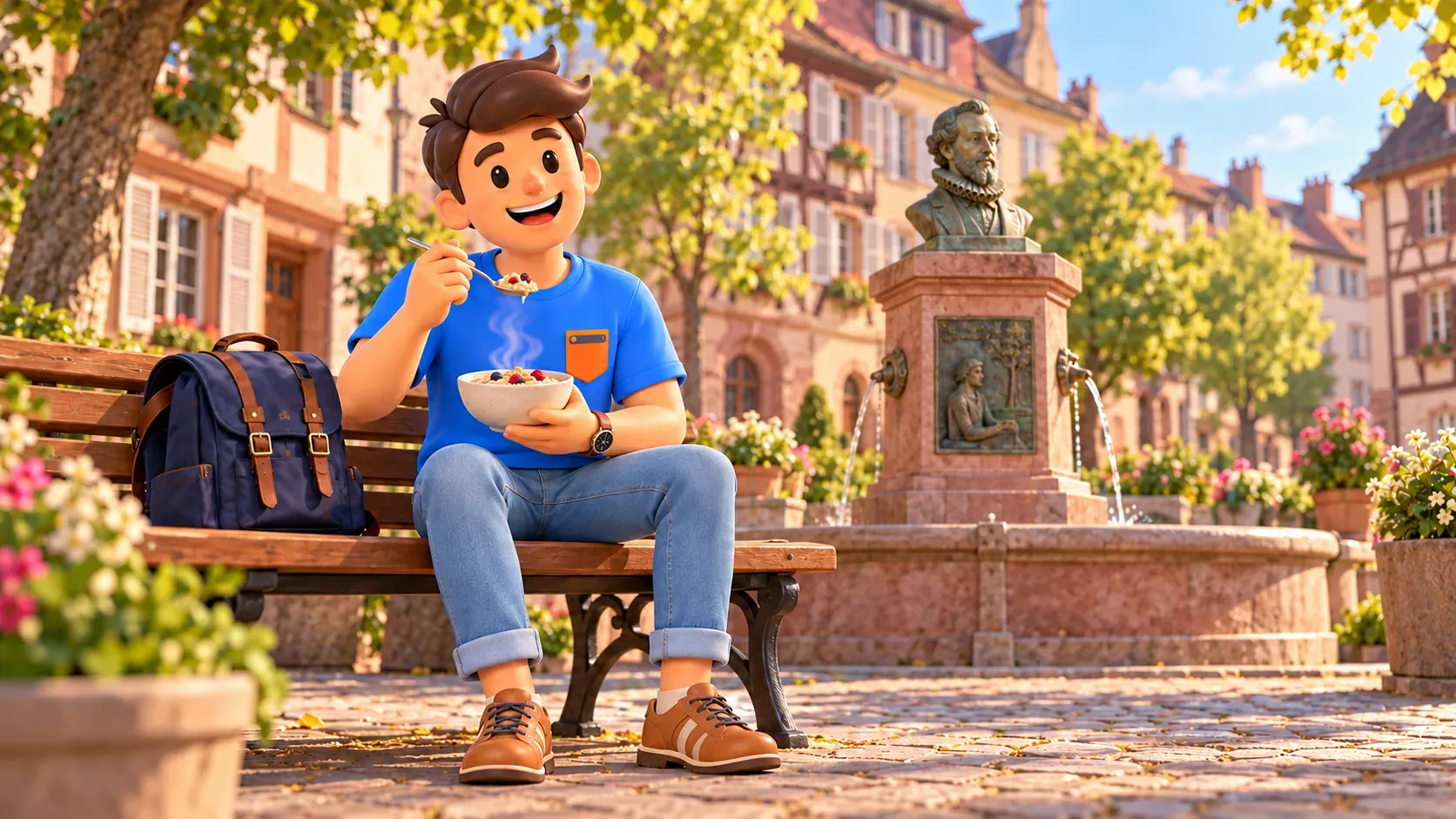
Fontaine des Zurichois stands on Place du Pont-aux-Chats. Remember this distinction: nearby Place de Zurich can point you to a different spot. The fountain was erected in 1884 and recalls a much earlier account of a journey in 1576.
In the commemorative story, visitors from Zurich brought Strasbourg a pot of porridge still warm, showing how quickly they could help their allies. The porridge's temperature is an expressive part of a friendship narrative, rather than a measured fact for reconstructing the journey precisely.
A bust of Johann Fischart, who described the trip in a poem, appears above. A narrative relief turns the story into an image below. Take in the whole monument first, then find the relationship between the writer's portrait and the arrival scene.
This small pause changes the river's meaning. In Strasbourg, water was a means of connection between towns as well as a pleasing view. Names and monuments retain that role even where former waterways are no longer visible.
Manufacture des Tabacs: a different scale of work
Compare the long factory buildings with smaller surrounding houses. Repeated windows and regular fronts grew from production needs. Architecture depended on organising work, lighting rooms and moving materials through a large complex.
Tobacco production ended in 1999. The complex was later adapted to new educational and cultural purposes. The important theme is the continued life of an industrial building, remaining part of its neighbourhood after the original production has gone.
You need not enter every available passage to understand this change. Scale, repetition and the relationship between a large enterprise and housing are already visible outside. Treat a courtyard as an addition when current access allows.
Compare the factory with the wall seen earlier. Both defined boundaries, for different reasons: one defended the city, the other organised work within a substantial site. That brief comparison makes the connecting street part of the walk's content.
Avoid turning the stop into a search for every current tenant. Historical form and its reuse matter more here. A particular event, exhibition or meal can become one separately chosen visit rather than another automatic obligation.
HEAR art school: a façade made through collaboration
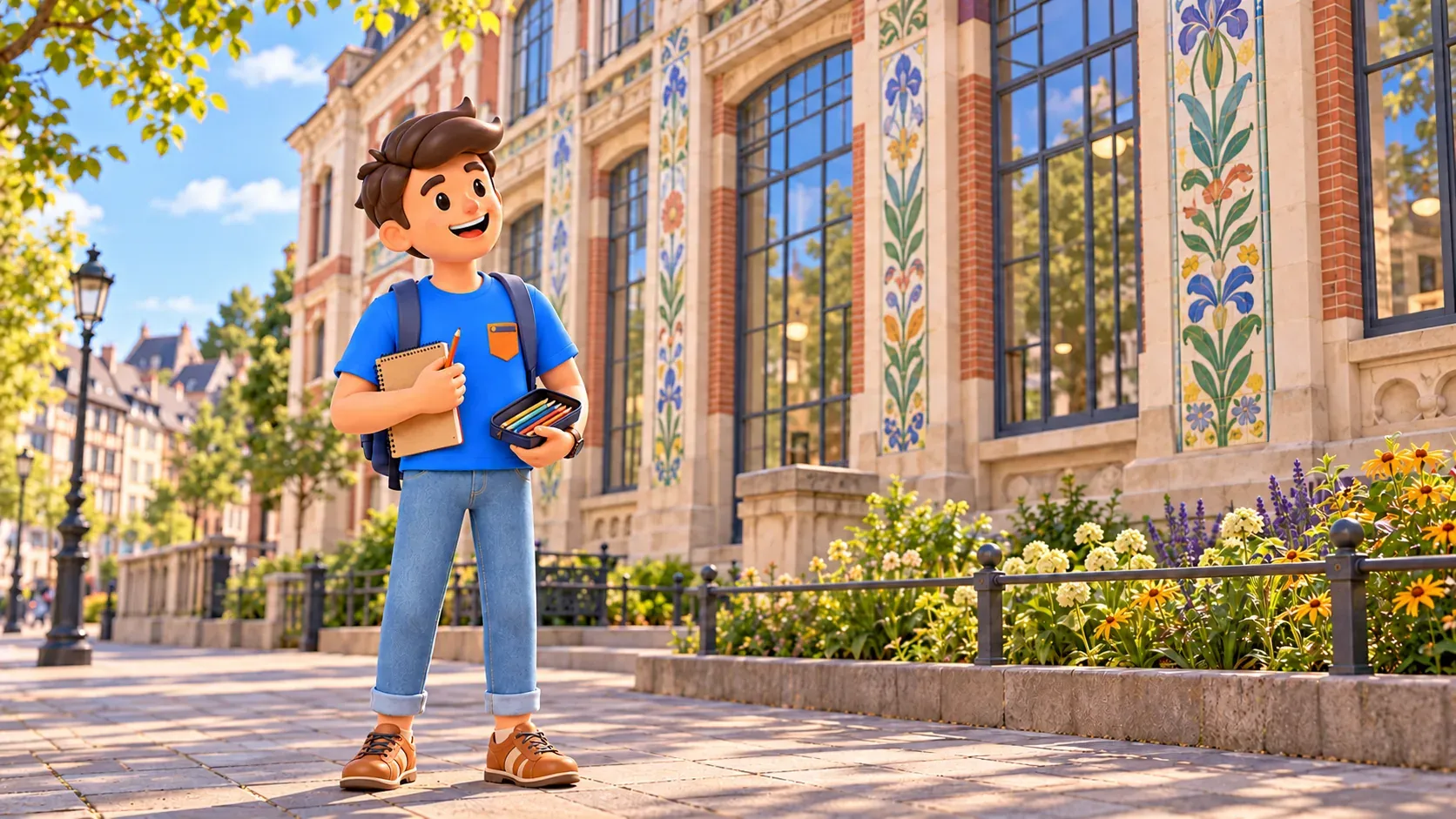
The historic decorative arts school building opened in 1892. Large windows met the studios' practical need for light, while ceramic decoration showed that artistic work began with the educational building itself.
Plant motifs and allegorical figures connect with Anton Seder and the Elchinger workshop. Teachers, students and craftspeople contributed to the decoration. The front offers a small story about shared work, visible in its surface.
Find one plant fragment and compare it with the overall window rhythm. A disciplined structure and freer coloured design support each other. A first introduction does not require decoding every figure or professional symbol.
Distinguish the school from the Decorative Arts Museum in the Palais Rohan. Here you are looking at a working art-school building rather than arriving for a museum tour of rooms. A suitable exterior position is enough; teaching continues to its own routine.
Saint-Guillaume: asymmetry beside the river
Continue to Église Saint-Guillaume. After the factory's regularity, its asymmetric front is particularly striking. Different building phases and the entrance arrangement explain the unusual tower position; the bell tower above the old entrance section was added in 1667.
This is not twin-spired Saint-Paul near Neustadt. Saint-Guillaume belongs to another setting and a history of river occupations. Its modest front is interesting for the way it adapts to the site rather than dominating surrounding buildings through size.
Inside are medieval tombs and André Silbermann's Baroque organ case. If that interior matters to you, give it separate time when access suits. For a neighbourhood walk, the exterior already maintains the principal thread.
Nearby Pont Saint-Guillaume reveals how church, banks and crossing relate across the Ill. Use the bridge as a place for an overall view. Water, church and urban buildings become one landscape, linking the places you have considered individually.
Quai des Bateliers: return with a different perspective
Follow the quay back towards the old-town connection. After the interior streets, water opens a broader view. Compare the district just explored with the dense buildings of the historic island opposite.
The quay's name recalls boatmen. Together with bridge and church, it returns to the walk's first theme: river life shaped work and the district's arrangement. An attractive view gains another meaning without a long historical diversion.
You do not have to end by exactly repeating your approach to Austerlitz. If the next part of your day leads to the old centre, finish at a convenient connection. To return to the initial square, include that final section in your own plan.
At the school, mentally separate the façade into two layers: windows and structural rhythm for work inside, then colour and ceramic patterns expressing art. Join them again in one view. At the factory, reverse the exercise: find a repeated element, then one entrance or corner that changes the rhythm. These short observations need no specialist vocabulary and make the large buildings easier to understand.
Keep the walk's neighbourhood character
Avoid placing long visits between every stop. Choose one addition: a church interior, a cultural programme or an extended meal. The route then stays connected, and streets remain part of the experience rather than corridors between appointments.
For a small photo collection, three themes are enough: a brick boundary, colourful ceramics and a view across water. This shows Krutenau's variety more clearly than similar photographs of every entrance. Add one personal note about a place where you wanted to linger.
RoadMe works out a personal route or full trip plan around your interests and available time. In the app, it is more convenient to connect Krutenau with other districts, visits and rest, so the programme reflects your way of travelling.
For another neighbourhood mood, try the short Petite France walk; for a contrast in scale, follow Neustadt from République to the university. Krutenau adds a city of work, art and everyday connections.


