
Tomi Ungerer in Strasbourg: Museum and Janus Fountain
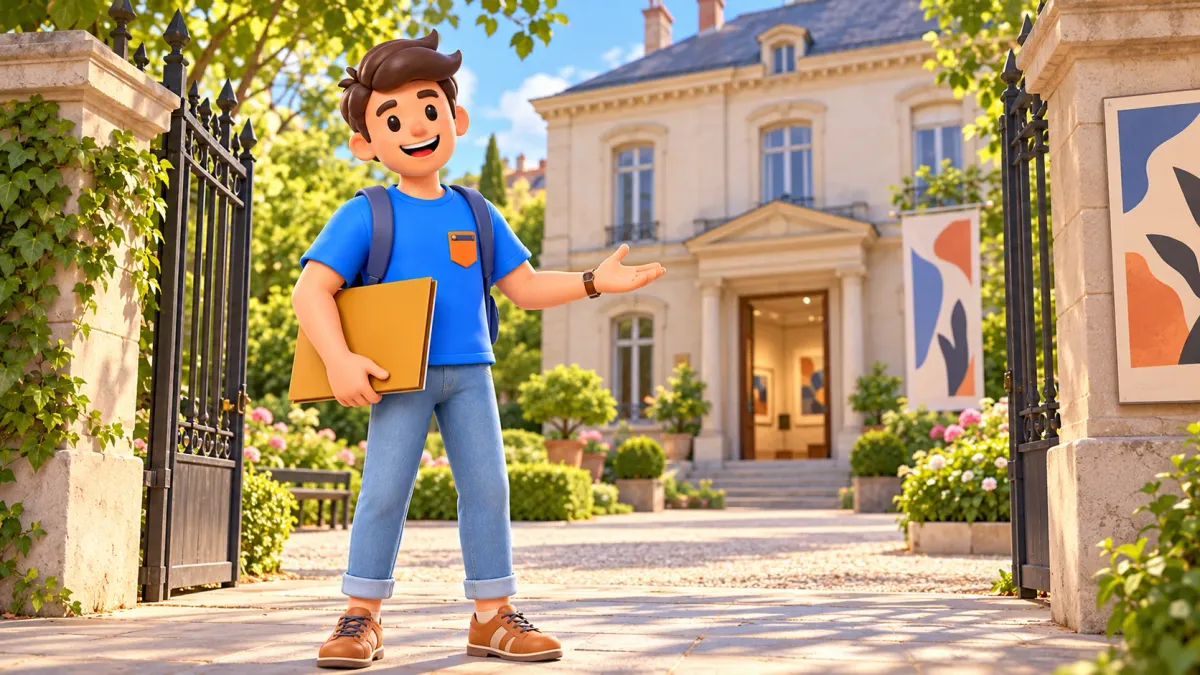
Tomi Ungerer left Strasbourg more than a familiar image. He offered several ways of looking: character through gesture and silhouette in children's books, an immediate response in advertising, and a change of meaning in satire. The Janus fountain brings a similarly clear but layered image into the city's public space.
This outing connects two anchors: the museum in Villa Greiner and the fountain near Place Broglie. Allow around two to two and a half hours, including roughly 60–90 minutes in the museum, the short walk and a pause. This is a planning estimate without on-site timing; your approach, return journey and a meal need extra time.
Plan a walk from drawings to a city symbol
Begin at the Musée Tomi Ungerer – Centre international de l'Illustration, 2 Avenue de la Marseillaise. Afterwards, follow available public streets towards the Janus fountain by Broglie, in Square Markos Botzaris. Meeting the drawings first gives the outdoor work a richer context.
RoadMe makes it much easier to work out a personal cultural walk or an entire trip, connecting your interests, dates, pace and budget in a suitable plan. Try building a day around your favourite subjects, with time for both the museum and a relaxed encounter with the city.
This is not a complete biographical trail through every home and address. It compares two forms of the artist's presence: original drawings in a changing display and an artwork in public space. For a first introduction, that focus avoids a long chain of stops.
If the museum is closed on your chosen day, the exterior outing will be shorter and offer a different experience. A facade does not replace the collection. If illustration is your main interest, reschedule the interior visit and see the fountain separately.
Why Ungerer matters to Strasbourg
The artist was born in Strasbourg in 1931. His international career involved different countries and forms of graphic art, but his connection with his birthplace became more than a memory. From 1975, he donated works that later helped establish the museum.
The museum opened in 2007. Its full name also identifies it as an international centre for illustration. Ungerer therefore sits within a wider conversation about books, posters, drawings and other artists rather than an isolated celebration of one name.
Strasbourg's history of printing and graphic art provides context. Gustave Doré is another important local figure, while a renowned illustration workshop began at the city's decorative arts school in 1975. That was a separate event from the start of Ungerer's donations in the same year.
Villa Greiner: a smaller scale of encounter
The museum occupies a nineteenth-century villa near the meeting of the historic centre and Neustadt. Its domestic scale differs from a monumental museum palace. For art made on small sheets, this setting helps shift attention from a city panorama towards a line, pose or detail.
Look at the whole building before entering, but do not infer the artist's life story from its facade. The villa houses the collection; it does not establish that Ungerer spent his entire life in this house.
For a separate introduction to the surrounding architecture, save the Neustadt walking route. Here, the neighbourhood frames an encounter with illustration rather than adding another long list of buildings.
Why a familiar drawing may not be on display
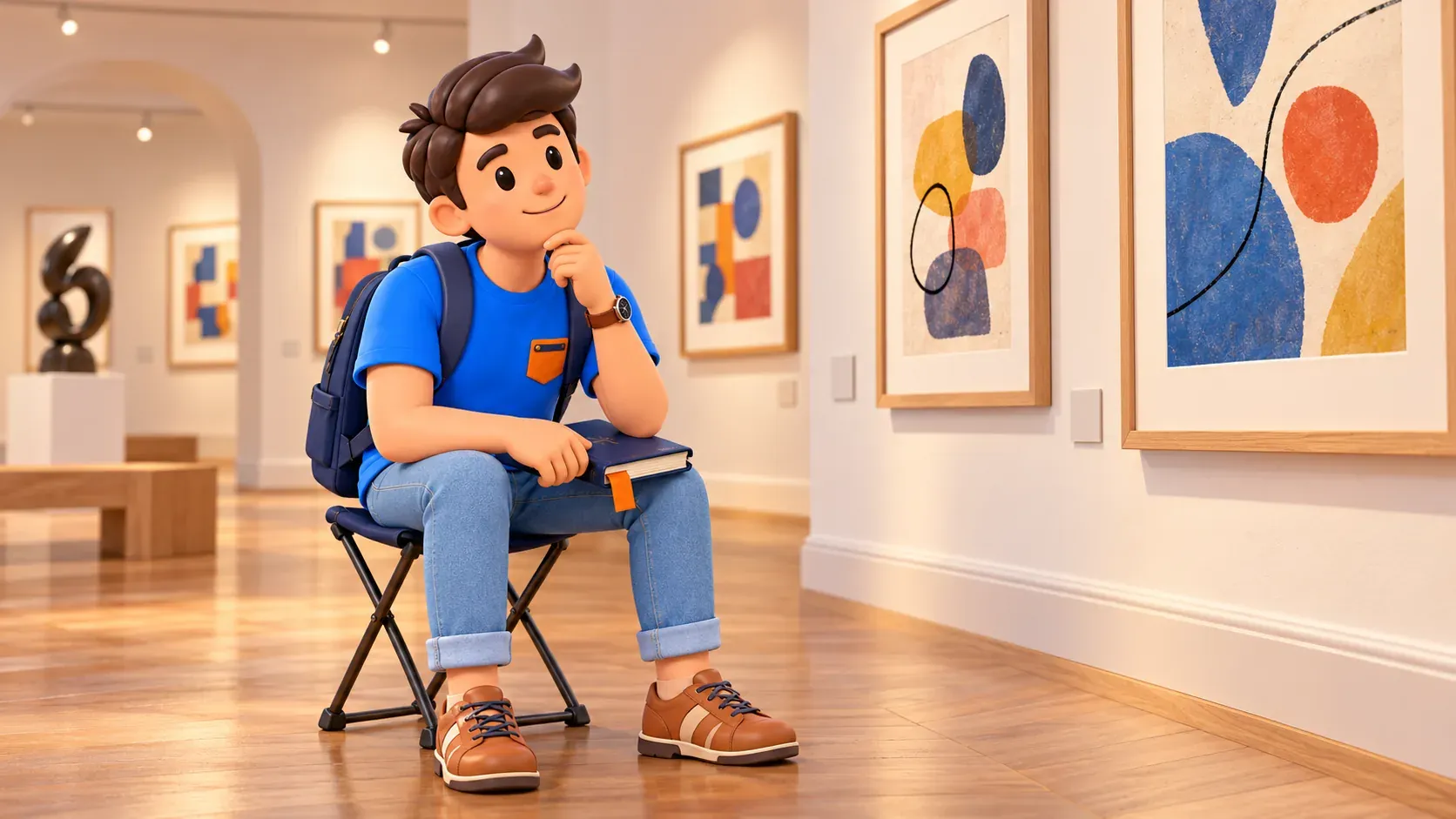
The holdings include thousands of drawings, but visitors do not see the entire collection at once. Paper is sensitive to light, so displays rotate for conservation. Arrive interested in how the artist works rather than depending on one compulsory image.
The current presentation may include other illustrators and temporary projects. The museum's name does not mean every sheet in every room is by Ungerer. Check the authorship and short explanation, particularly when moving between sections.
Look up the programme beforehand. If a particular original matters to you, ask whether it is currently shown; a book's fame does not guarantee its drawings are displayed. Once inside, choose several available works for closer attention rather than giving everything the same hurried glance.
How to look at a book illustration
Begin with one character. What does the pose tell you, where are the hands, and how large is the figure? Then examine the surrounding space. A small line or an empty area can change the action as much as an elaborate landscape.
Ungerer is known, among other books, for The Three Robbers. A familiar title provides an entry point rather than a reason to retell the entire plot beside a case. Look instead at how silhouette, contrast and relationships between figures create a story within an image.
If text accompanies a drawing, try looking first and reading afterwards. Do the two complement each other, or does an unexpected difference appear? This question reveals illustration as an artistic decision rather than simply decoration for a page.
Advertising and satire change how you read
A poster needs to attract attention quickly. A satirical drawing may appear immediately understandable before making you reconsider your response. These forms use graphic clarity differently from a sequence of pages in a children's book.
Choose a work and identify what you noticed first: an object, a face, a broad colour area or an unusual combination. Then find a detail that changes the meaning. You need not agree with an artist beforehand or search for one permitted reaction.
Ungerer also made collages and objects using everyday materials. The important idea is that a familiar thing can acquire a different purpose. This move from flat image to object prepares your eye for the next stop, where an image occupies a place in the city.
Plan a family visit around the current display
The museum is not limited to children's books. Ungerer's work includes social satire and erotic drawings, and the content depends on the present display. Ask staff which sections suit your family rather than assuming the same route suits every age.
For a short family visit, a few works with clear actions can be enough. Ask where a character looks and what might happen next. Let a child answer first, then add the explanation from a label.
A workshop is not guaranteed because it appeared in an earlier programme. Organised activities have their own dates and conditions. Independent looking and participation in an event need different arrangements.
Leave the museum and change your viewing distance
Pause briefly after concentrating on small sheets. Outside, your eye returns to larger distances, movement and neighbouring buildings. This transition is part of the outing: concentrated reading of images gives way to an encounter in everyday public space.
On the way towards Broglie, consider which device stayed with you: a strong silhouette, an unexpected transformation or an image with several meanings. You need not find literal copies of favourite drawings in every facade. The fountain has its own scale and material.
Follow available public routes and conditions on the day. If the museum took longer than expected, shorten the outdoor section. Two worthwhile encounters do not require filling every space between them with additional attractions.
The Janus fountain: a drawing becomes a public image
The fountain, also called The Birth of Civilisation, was created in 1988 for Strasbourg's two-thousandth anniversary. Ungerer supplied the idea and drawing; sculptor Denis Roth and architect Paul Ziegler participated in its realisation. A public artwork emerged through collaboration.
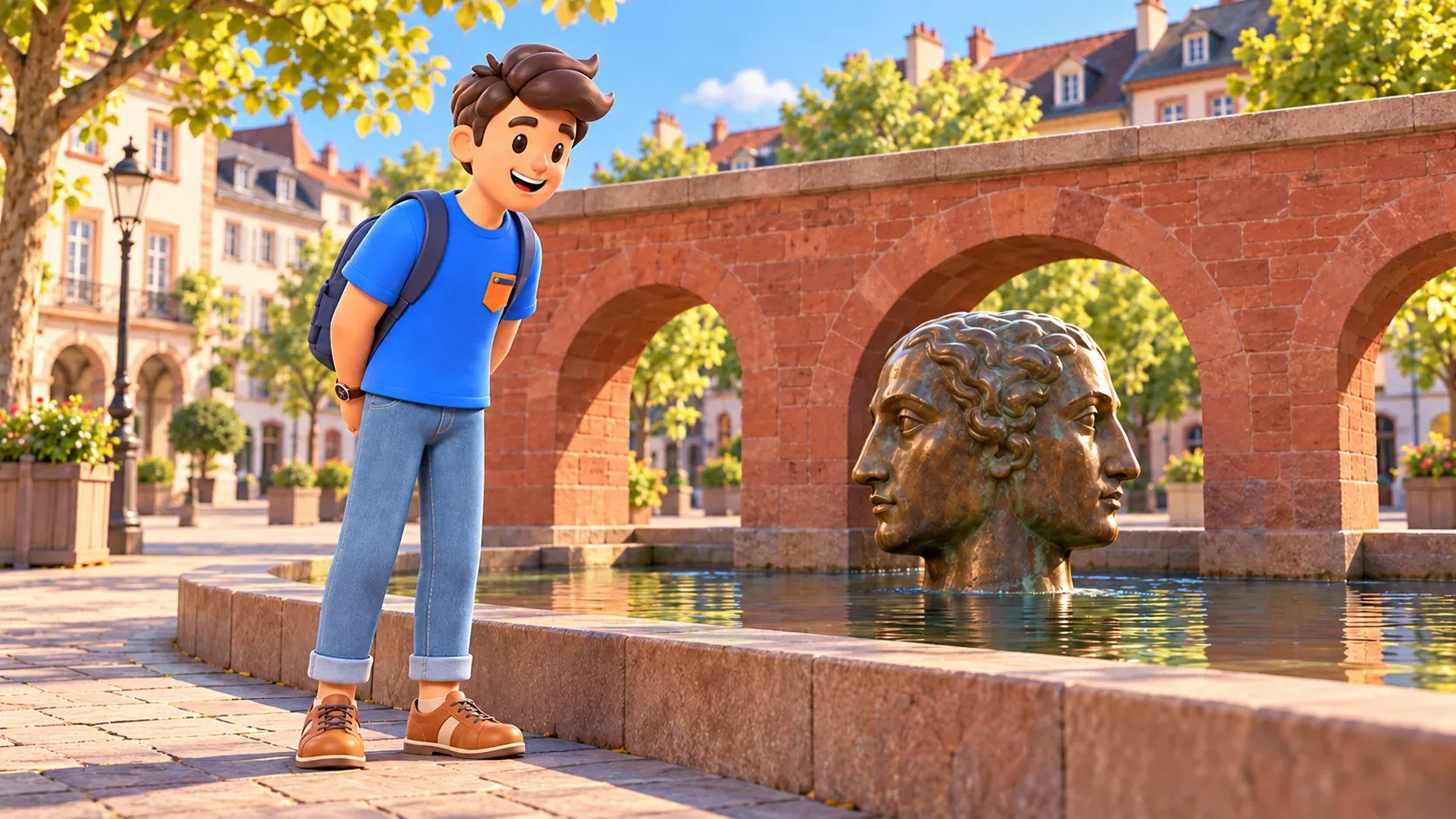
The brick construction evokes an aqueduct, while a bronze head has two faces. It is a modern reference to the city's Roman past rather than a surviving ancient water channel. The head sits at the base of the composition in the basin, below the arches.
Two-faced Janus introduces past and future and the French and German cultural worlds of Alsace. A complicated history becomes a clear visual image without being exhausted by a single straightforward explanation.
If public passages are available, change your viewpoint to find both faces. After looking at drawings, the action becomes particularly meaningful: this image cannot be fully read from one stationary position. Stay outside the basin, and do not depend on operating fountain jets.
Compare the museum with the fountain
On paper, an artist controls the frame. In a square, distance, weather and passing people become part of the experience. You choose your position and return to something already noticed from a different side.
The broad task remains similar: create an image recognised quickly that allows further thought. In the museum, a character's gesture may provide the key; at the fountain, it is two opposing profiles. A simple first impression can still contain several layers.
If you would like more outdoor art, save the Strasbourg sculpture and fountain walk. Treat it as a separate idea and account for having already seen Janus rather than repeating a whole day.
Make room for your own pace
Check your museum day in advance: there is a weekly closure, holiday exceptions and a weekday lunchtime break. The last ticket sale is not the start of a full-length visit. Avoid placing an hour of looking immediately before closing.
Try planning your next cultural day in RoadMe. The app helps work out a personal trip around your interests in art, history or architecture, making it easier to combine museums, walks and rest at a pace that suits you.
The interior visit involves a museum ticket; check current conditions and any reductions for your date. The outdoor fountain is a separate public stop. Ask about access to the rooms and approach that meet your particular needs rather than relying on a general building description.
Finish with one observation of your own: which image made you linger, and why? The museum and fountain then become two parts of meeting an artist who could turn a familiar form into a reason to look again.


