
Strasbourg Public Art Walk: Sculptures and Fountains
Art in Strasbourg does not always wait behind a museum door. It sends a human figure above a shopping square, turns two faces towards passers-by and keeps a city story inside a fountain relief. Meeting these works requires a walk and a willingness to look up, move around and occasionally examine something small.
This itinerary connects four places in the city selection: Woman Walking to the Sky near Les Halles, the Janus fountain by Place Broglie, Meiselocker on Place Saint-Étienne and the Zurich fountain in Krutenau. Allow around two hours for walking and thoughtful stops. This is a planning estimate, without an on-site timing test; your approach, return journey and a meal need additional time.
Plan a walk around four different works
Begin near Les Halles, continue towards Broglie and then reach Place Saint-Étienne. The last stop is on Place du Pont-aux-Chats in Krutenau. The sequence moves from a large contemporary gesture towards smaller works with more particular stories.
RoadMe makes it much easier to turn an interest in art into a personal walking plan or a whole trip. Let the app help work out your day around your interests, dates, pace and budget, with time for the places you actually want to examine.
The core experience involves outdoor viewing, so it needs no museum admission. However, these are living public spaces: temporary barriers, events or maintenance may change your approach. Use available public paths and follow conditions on the day.
This is a public art walk across different periods rather than a graffiti collection. Its subjects include the relationship between a figure and its setting, symbolic imagery, a small narrative and civic memory. You do not need to recognise artistic movements beforehand; start with what you can see.
Woman Walking to the Sky: begin by looking up
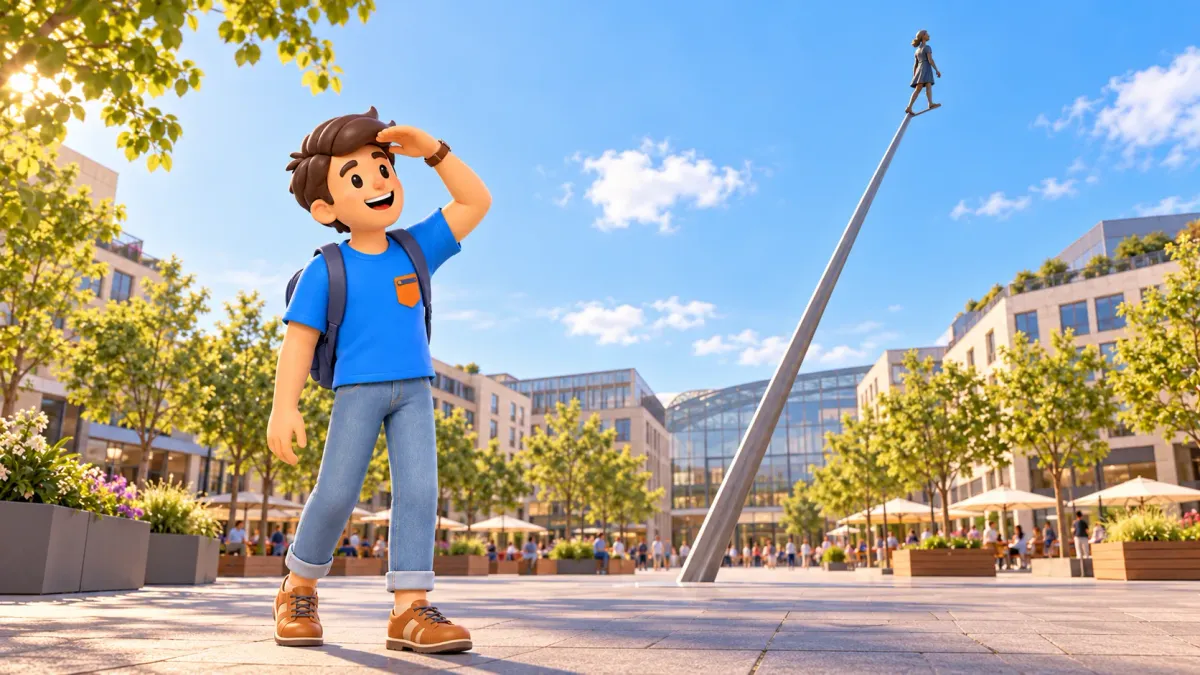
Near Les Halles, look for a long inclined pole extending from the ground towards the sky. A woman appears to walk along it. Jonathan Borofsky created the work in 1994, and its English title gives a direct description of the surprising action.
The construction combines painted steel with a polychrome fibreglass figure. The inclined axis measures 25 metres: that measurement refers to the support, not the woman's height. The distinction matters because the effect depends on the relationship between a relatively small human body and a much larger direction of movement.
Look from a distance first. Against the sky, the movement becomes clear before clothing or facial details. Then change your position a little within a safe pedestrian area: the incline and the figure's relationship to it will look different. Stay away from traffic lanes and tram tracks when seeking an angle.
The work belongs to Strasbourg's modern and contemporary art museum collection but stands in public space. It is an example of a collection meeting people in everyday life, between shopping, transport and appointments, without asking them to cross an exhibition threshold.
Find movement in a stationary sculpture
Spend a moment asking what actually suggests a step. The position of the legs, the body and the line beneath it act together. Without knowing an artist's explanation, you can recognise that this person seems to continue a journey rather than simply occupy a high position.
Ask a companion which word suits the movement: confidence, lightness, risk or a dream. These are personal responses rather than a single approved meaning. Describing your first impression before returning to the title can make the encounter more memorable.
You need not resolve every distant detail. The work makes use of distance and scale. Notice how an ordinary human action changes when the familiar horizontal surface of the city becomes a line rising into the sky.
The Janus fountain: see both sides
The next stop is the Janus fountain near Place Broglie, also called The Birth of Civilisation. Tomi Ungerer created it in 1988 for Strasbourg's two-thousandth anniversary. A modern artwork uses forms that call up a much more distant past.
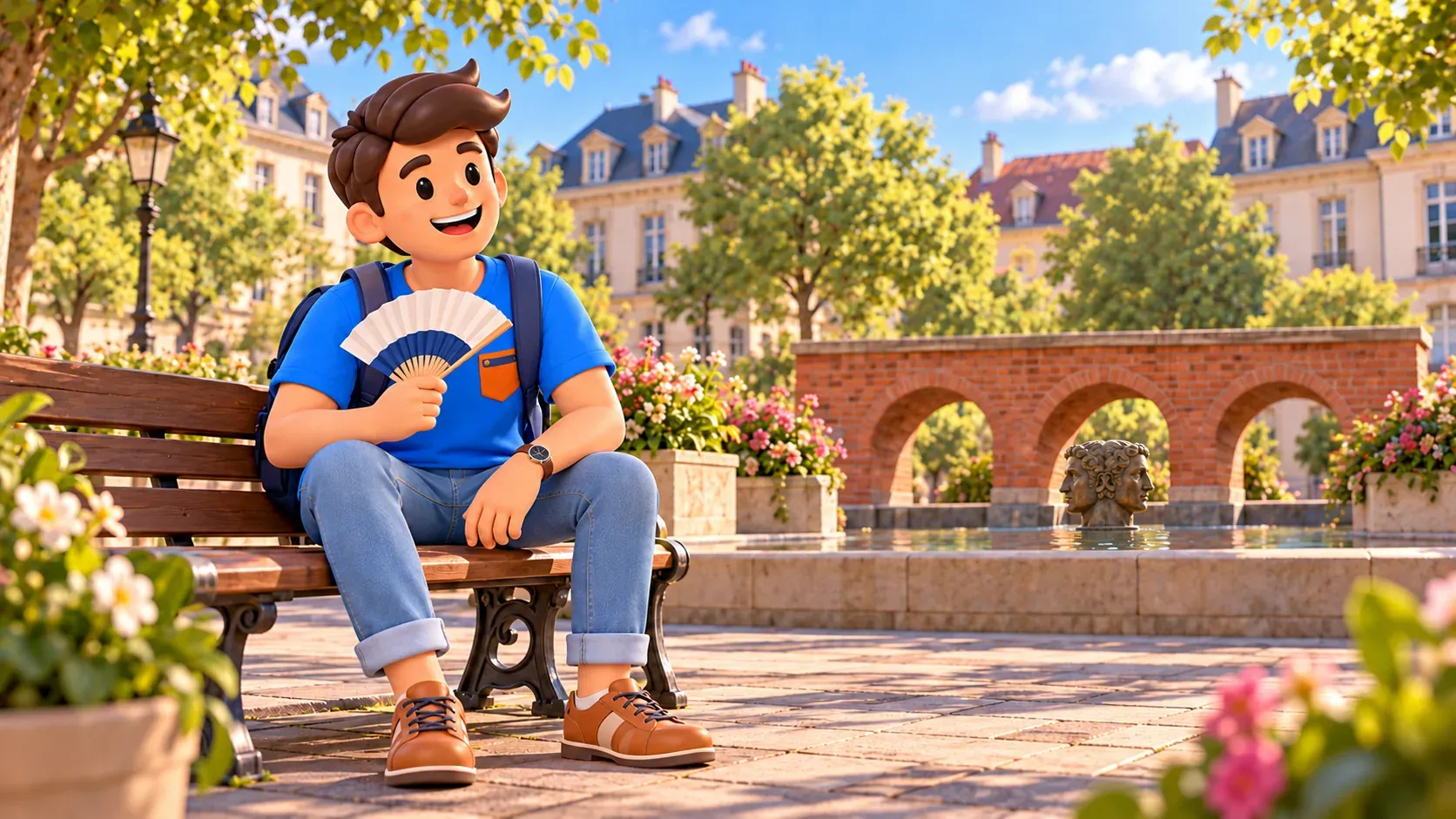
A brick structure evokes a Roman aqueduct, while a bronze head has two faces. The arches are a modern artistic reference to the city's Roman origins, not a surviving ancient water channel. Recognising the difference lets you enjoy the historical suggestion without confusing it with archaeology.
Janus introduces ideas of past and future as well as Alsace's relationship with French and German cultures. That is enough context for a first meeting. Return to the object itself and consider how the head, the arches and the surrounding water become one composition.
If the public route around it is available, change sides. One face gives only part of the experience. There is no need to lean across a barrier or enter the basin: the useful action is a change of viewpoint, not getting as close as possible.
A modern image beside a historic square
After the height at Les Halles, attention shifts to horizontal arches and opposing directions of sight. Changing scale keeps the itinerary from becoming four identical stops spent reading dates. Each work suggests its own way of looking.
Notice how a form that feels old can belong to a contemporary setting. Ungerer did not transport a genuine piece of Rome here. He made an image that a passer-by can recognise quickly and continue thinking about long afterwards.
For more about the surrounding urban spaces, save the old-town squares walk. Here the fountain remains an art encounter; the history of every neighbouring building would require a different afternoon.
Meiselocker: notice the flute and cage
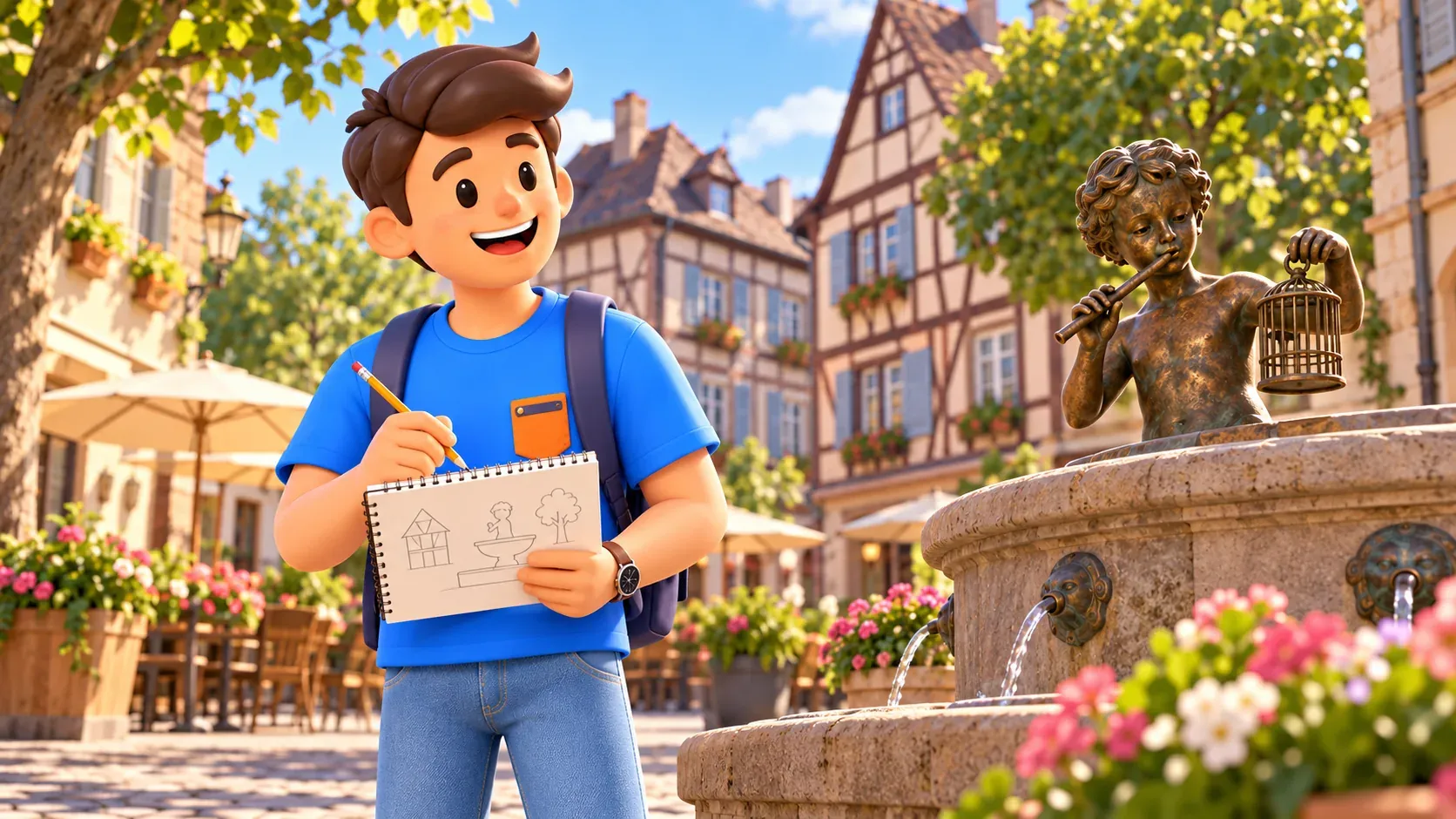
Continue towards Place Saint-Étienne. Its Meiselocker fountain offers a smaller scale: a character whose action becomes clear through objects in his hands. The name refers to luring tits, the small birds, and is sometimes explained as the bird charmer.
The bronze boy holds a small flute and a cage. Those attributes tell you more than the name alone. Try finding them before reading an explanation: music becomes part of the story, even though the sculpture itself offers no promise of sound.
The work dates from 1910 and was installed in Strasbourg in 1929; it is attributed to Ernest Weber. The two dates are a useful reminder that a public artwork has a biography. Its creation and its arrival in the setting you see today may belong to different moments.
Compare this with your first encounter. There, a human body became almost a sign against the sky. Here, small attributes turn a figure into the participant in a particular action. The walk moves from a broad gesture to an intimate narrative.
A simple looking game for children
Invite a child to describe the works without dates: a woman walks upwards, a head looks in two directions, a boy holds a musical instrument. Then add a name or a short explanation. This order leaves room for their own observation.
Choose one question for comparison: which work is easier to understand from far away, and which rewards closer looking? The Meiselocker stop need not become a search for real birds or the promise of a performance. A story already exists in the relationship between a few details.
If attention begins to fade, pause before the next stretch. Four images seen carefully offer more than a long chain of names. The game does not require sitting on a sculpture, climbing a fountain or touching its surface.
The Zurich fountain: a boat, a poem and friendship
The final section brings you to Place du Pont-aux-Chats in Krutenau. Installed in 1884, the Zurich fountain celebrates friendship between Strasbourg and Zurich. The monument keeps a story about being able to come to an ally's assistance.
According to the traditional account, people from Zurich travelled to Strasbourg by water in 1576 with a pot of millet porridge. It supposedly remained warm on arrival, demonstrating how quickly they could reach their allied city. Treat the warmth as an expressive element of the story, rather than a temperature measurement.
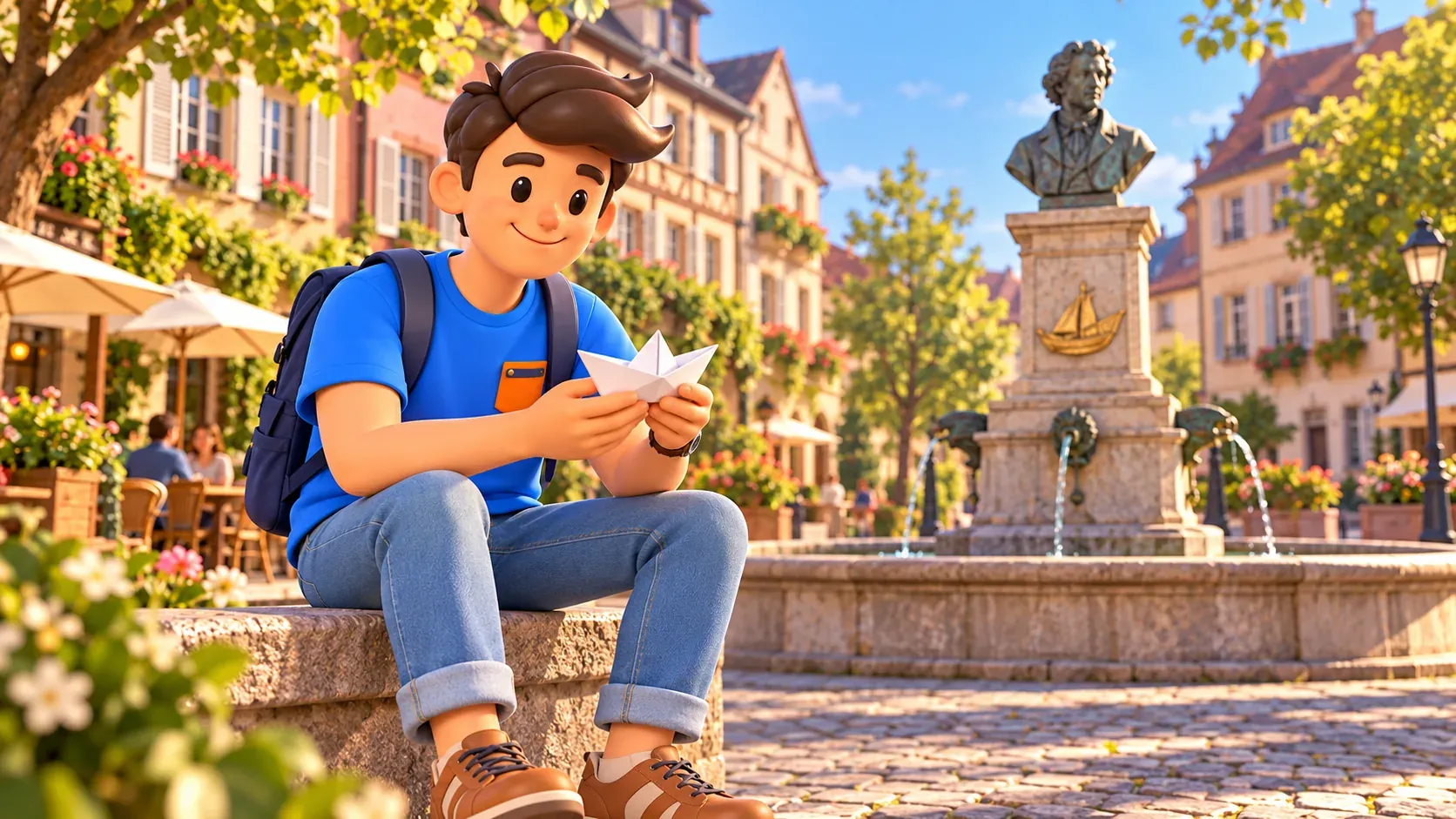
The fountain carries a bust of Johann Fischart, who told the journey in a poem, and a gilded bronze relief. Find the larger human image before examining the narrative detail. A small amount of context changes how the decorated surface reads.
Finishing in Krutenau creates an opportunity to explore the neighbourhood separately. After a pause, the Krutenau neighbourhood walk offers another subject for the day. Do not automatically fit the whole additional route into the original two-hour allowance.
What connects these four encounters?
Recall the walk through actions: look up, change sides, find objects, read a story. This can be easier to remember than a collection of surnames and years. It also shows how an encounter with art begins with ordinary movement through a city.
The stories differ. Borofsky presents an unusual human step; Janus offers a layered symbol; Meiselocker gives a small character an action; the Zurich fountain preserves a connection between cities. The four stops do not demand the same emotion.
Choose one work you would like to revisit and explain why. It may not be the largest. Your preference can help shape the rest of a trip: more contemporary forms, civic history, small details or simply a longer walk.
Give outdoor art a place in your own day
Dry, bright weather makes looking comfortable, although exact light depends on the season. Heavy rain may shorten the stops. Fountain jets are not guaranteed to operate either; the sculptural elements still have something to say without moving water.
Try building your next day in RoadMe. The app helps work out a personal trip plan around the art and city stories that interest you, making it easier to combine walking, rest and available time in an itinerary that suits your pace.
The core walk is exterior viewing without a museum ticket. Plan transport, café spending or separate visits around your own choices. Decorative fountain water should not be assumed drinkable, and the comfortable approach to each work depends on conditions when you arrive.
Between stops, put your phone away once you have checked the next direction. Art shares these spaces with bicycles, traffic and everyday meetings; attention is useful beyond the artworks. Take photographs from a clear pedestrian position without blocking others.
Leave the ending flexible. A break in Krutenau may conclude the outing or begin another part of your day. The main experience is already complete in four encounters that show how differently art can inhabit a city.


