
Strasbourg in 2 Hours: Walk from the Cathedral to Petite France
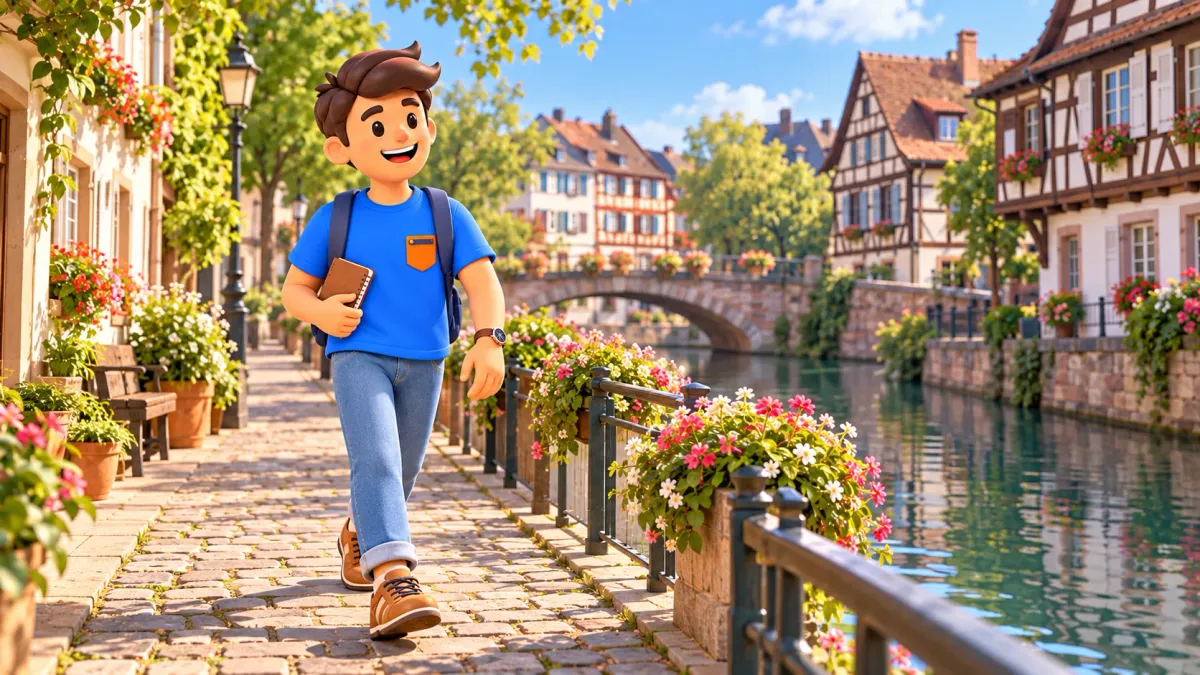
With two hours in Strasbourg, you can start at the cathedral, cross the old town into Petite France and finish near Vauban Dam. This is mainly an outdoor walk. It does not include a full cathedral visit, the astronomical clock presentation or a museum. The reward is watching the monumental stone centre gradually give way to timber-framed houses, waterways and bridges.
Start on the square in front of Notre-Dame Cathedral's west façade and finish in the area around Vauban Dam. Plan your onward or return journey separately. Two hours is a planning estimate for an unhurried walk with short stops, rather than a guarantee that applies in every season, at every walking pace or in every crowd.
The shape of the two-hour walk
The main sequence is straightforward: cathedral → Place Gutenberg → Saint-Thomas Church → Petite France → Covered Bridges → Vauban Dam. Each section reveals another part of the same historic centre. There is no need to enter every building along the way; the outdoor experience supplies most of the route's character and leaves substantial visits for another occasion.
As a rough planning framework, allow twenty minutes for the cathedral square, ten for Place Gutenberg, fifteen for the Saint-Thomas section, thirty for Petite France and fifteen each for the bridges and dam. These are approximate blocks including movement between neighbouring stops. Another fifteen minutes provides flexibility for your own pace and small delays.
For a more convenient way to plan a walk around your interests and starting point, try RoadMe. The app works out a personal itinerary around your preferences and pace, helping two free hours become a connected introduction to the city.
Treat this as a self-contained part of your trip. Getting from the railway station to the cathedral, and travelling back after the finish, are outside the two-hour outline. If this is exactly the time between trains, calculate those journeys first and reduce the number of stops accordingly.
Start with the cathedral: silhouette before detail
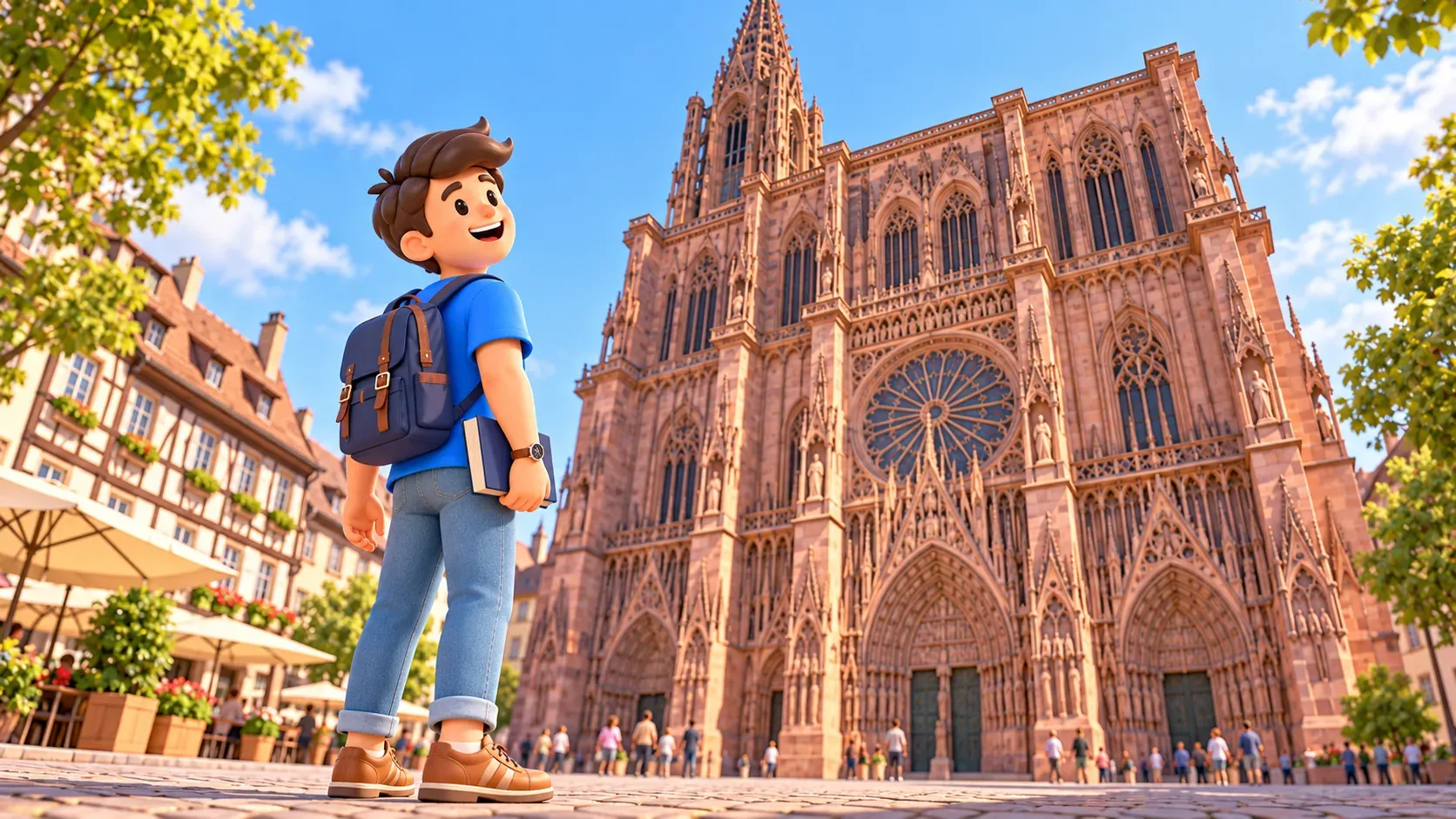
Do not head straight for the doors when you reach Notre-Dame. Stand back far enough to take in the front as a whole: the substantial tower forms, the large rose window and the delicate openwork spire. Different building phases shaped the cathedral, and the relationship between its large masses and fine stonework is central to the first impression.
Choose one way of looking for this short introduction. Compare the geometry of the rose window with the arrangement of the portals, or select a few sculpted figures. The aim is not to identify every celebrated detail. Noticing something for yourself is more rewarding than spending the entire stop searching for the next item on a long checklist.
Turn towards Kammerzell House. Its carved timber upper storeys work on a much smaller scale: after the cathedral's grand front, your attention can move to windows, individual figures and the texture of wood. These neighbouring buildings already show why Strasbourg rewards close observation as well as broad panoramic views.
If you decide to enter the cathedral, recognise that the plan has changed. Queuing, visiting and finding your way back out take time that must come from another section. The astronomical clock presentation and the cathedral platform are also separate experiences, rather than invisible additions that fit into an unchanged two-hour walk.
Place Gutenberg: a short pause for civic history
Continue from the cathedral towards Place Gutenberg. The square makes a natural transition from the city's religious landmark to its civic and commercial past. Look beyond the printer's monument to the surrounding buildings, including the Renaissance Neubau, the former town hall.
You do not need to study every relief on the monument during this walk. Recognising its central subject, printing and the spread of knowledge, is enough to give the stop a purpose. It also offers an opportunity to consider why Gutenberg's association with Strasbourg became part of a prominent public space.
After the cathedral square, slow down briefly and notice how people move across this one. The monument is part of a living city rather than a separate exhibit. Keep the explanation short so that the walk retains its rhythm; the shift between different settings matters more here than a complete account of every object.
Towards Saint-Thomas: smaller streets and the first water views
Use Saint-Thomas Church as your next anchor. The section leading towards it is valuable in its own right, moving away from two open squares into more intimate old-town streets. Keep a general direction towards the church, while allowing yourself to pause at an interesting house or small passage.
Saint-Thomas belongs to Strasbourg's Protestant heritage. Its interior contains notable artistic and musical monuments, but this short route does not attempt a detailed visit. Seeing the building and understanding that the city's religious history extends beyond its famous cathedral already adds another layer to the introduction.
If the church is open and particularly interests you, replace part of the later walk with a brief visit. Avoid adding an interior stop while keeping exactly the same expectations for the finish. Looking at an exterior and giving an interior meaningful attention are different uses of time.
Continue towards Pont Saint-Martin and Petite France. Water now becomes part of the walk rather than a distant feature in a view. On the following sections, look back as well as ahead: a changed angle can be more memorable than reaching another named sight.
Petite France: make room to stop beside the canals
Around Pont Saint-Martin, the walk changes character again. Small crossings, branches of the Ill and buildings close to the water define the scene. Continue towards Place Benjamin Zix and the Maison des Tanneurs, and give yourself a proper pause rather than immediately looking for the next turn.
The tall roof spaces and open upper sections of the old houses relate to former trades, including the drying of processed hides. This piece of context makes the timber-framed buildings more than picturesque scenery. Their shapes responded to the practical work carried out here.
If you wish, include Pont du Faisan. Its swinging span moves out of the way of passing vessels, so pedestrians sometimes have to wait. This is a working urban system in which people crossing the canal and boats travelling along it need to share the same space.
For a short walk, a handful of viewpoints is enough. You do not need to cross every bridge or trace every channel. If you want to photograph reflections, watch a boat or simply linger on the square, use the flexible time here. Those moments are part of the visit, not an interruption to it.
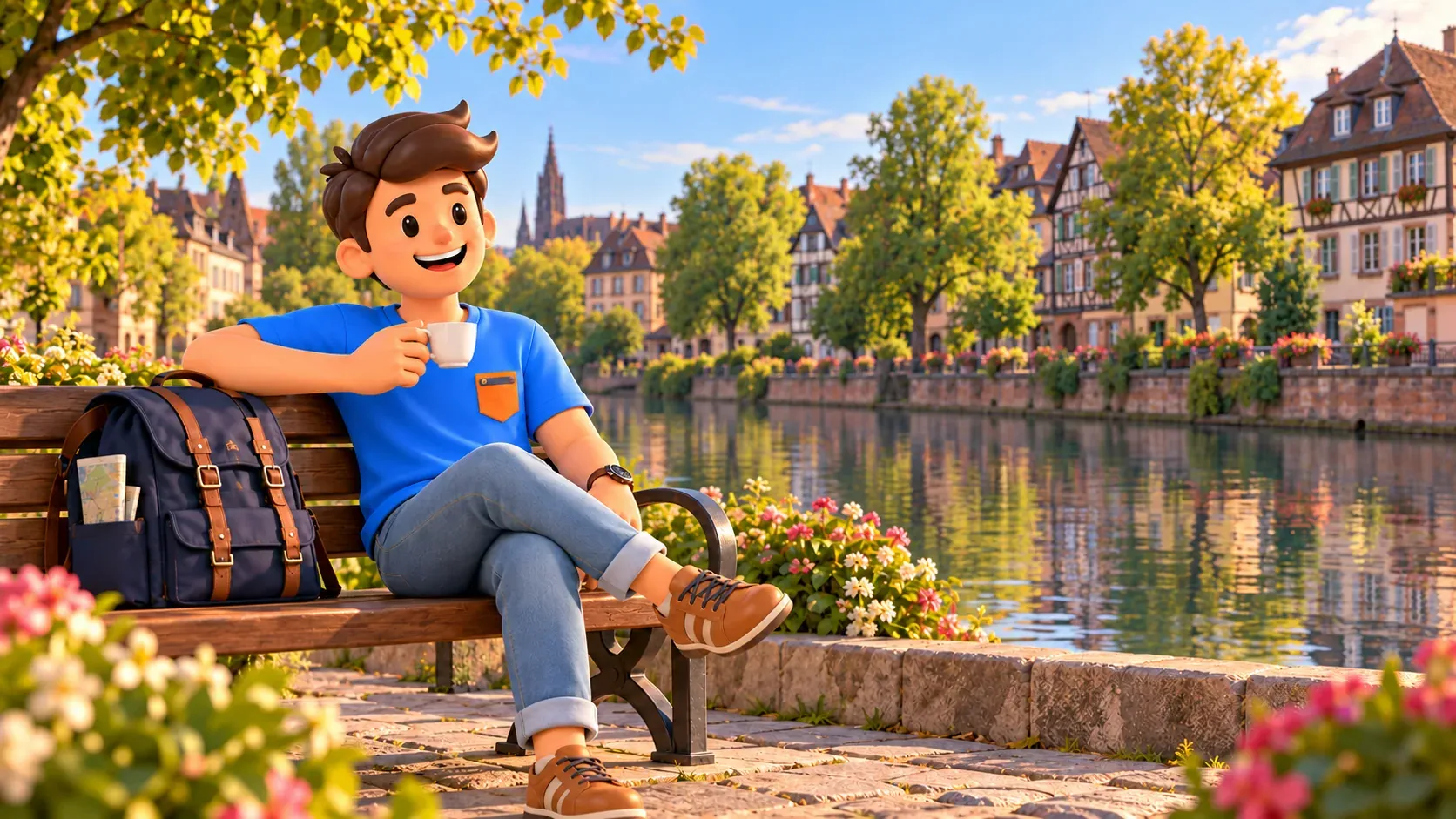
A café stop can be a welcome addition, but sitting down for an extended break changes the overall duration. With a fixed deadline, choose a brief pause or shorten the following section. The advantage of an independent walk is being able to adjust the rhythm when something appeals to you.
The Covered Bridges: see the old river entrance
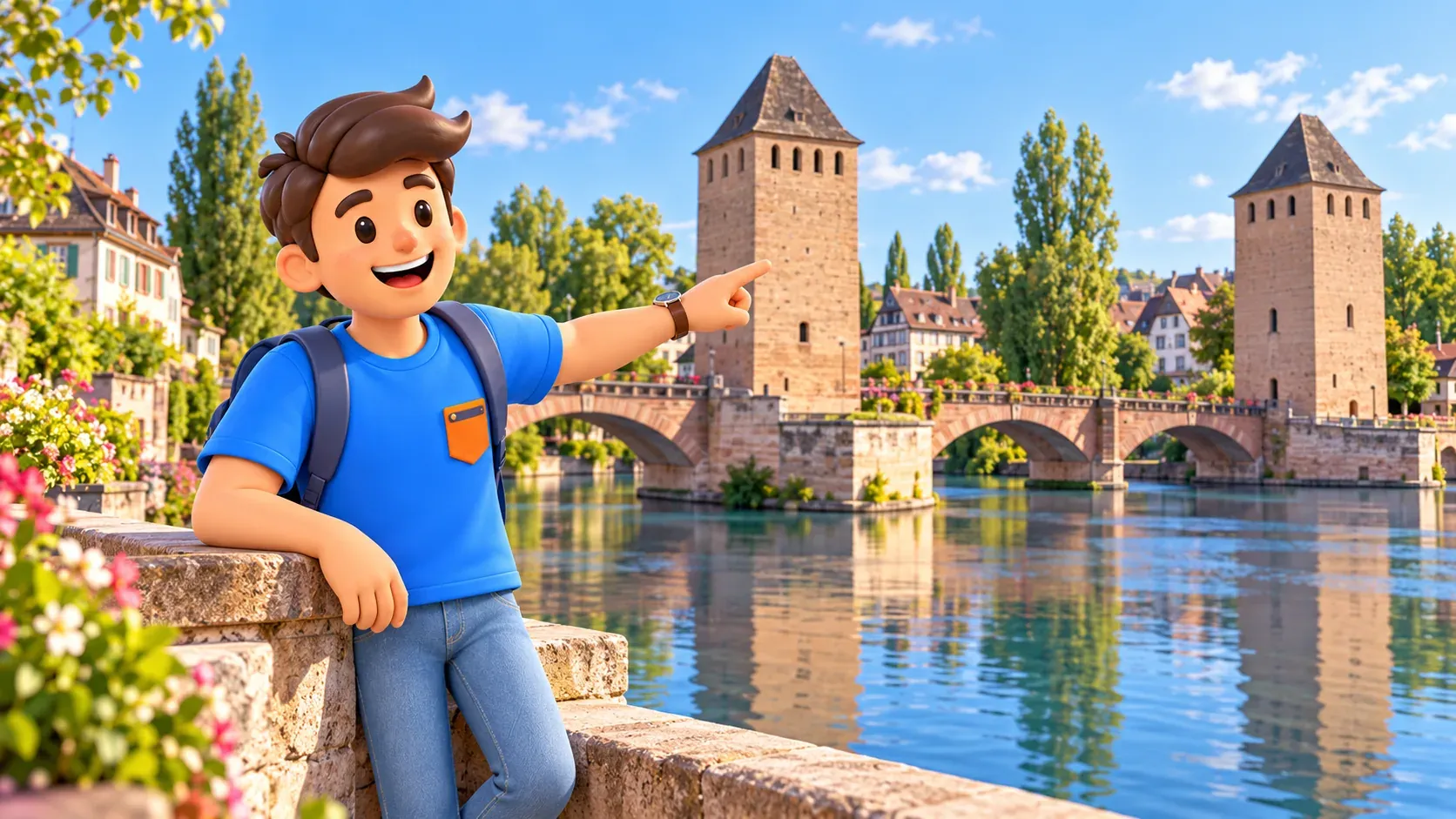
Continue towards the Covered Bridges. After the close views of Petite France, the overall composition becomes more important: water, stone crossings and medieval towers. Try to see how they form a line marking the city's former fortified river entrance.
The name preserves the memory of wooden covered galleries that are no longer present. That small historical puzzle can be appreciated on the spot. The towers and the placement of the crossings still explain the defensive purpose without requiring a detailed history of every alteration.
Give yourself a minute without looking at a screen. Establish the relationship between the towers and the channels before choosing a photograph. The picture can then follow your observation rather than replace it. If you are walking with others, agree on a nearby meeting point so separate photo stops do not consume the remaining time.
Vauban Dam: finish with a wider perspective
Vauban Dam stands nearby as a later element in the defensive system. It illustrates a different approach to protection, involving control of water as well as the position of towers. Comparing the two structures makes a small part of the city a useful introduction to changes in military engineering.
If the panoramic terrace is accessible and you have time, it can be added for the broader view. The walk does not depend on going up: an outdoor look at the dam and riverbanks remains a coherent finish. Do not assume that access to the upper level is guaranteed at any hour or in every season.
At the end, establish your next step, whether that is returning to the centre, reaching public transport or taking a longer break. Avoid leaving the return journey to the last minute. With an appointment afterwards, finish the main walk slightly early and leave yourself a calm transition.
Make the two hours suit your interests
If architecture is your priority, give the cathedral and Place Gutenberg extra attention. If water is the attraction, shorten the Saint-Thomas stop and linger in Petite France. With children, choose a simple thread, such as spotting the different ways bridges help people cross the river.
A personal plan is more convenient to work out in RoadMe, which shapes the walk around your interests and pace. You can focus on the experiences that brought you to Strasbourg instead of following the same programme as everyone else.
In rain or when you feel tired, do not force yourself to reach the final stop. Finish in Petite France and leave the dam for another day if that better suits the moment. For a longer stay, the guide to choosing your first Strasbourg itinerary helps you decide what to add after the historic centre.
Before setting off, check the forecast, wear comfortable shoes and keep a clear way back from the finish. Two free hours can deliver a connected walk and several discoveries of your own. The number of interiors visited is not the measure of whether this introduction has been worthwhile.


