
A belly measure, a chimera and a time capsule in Strasbourg
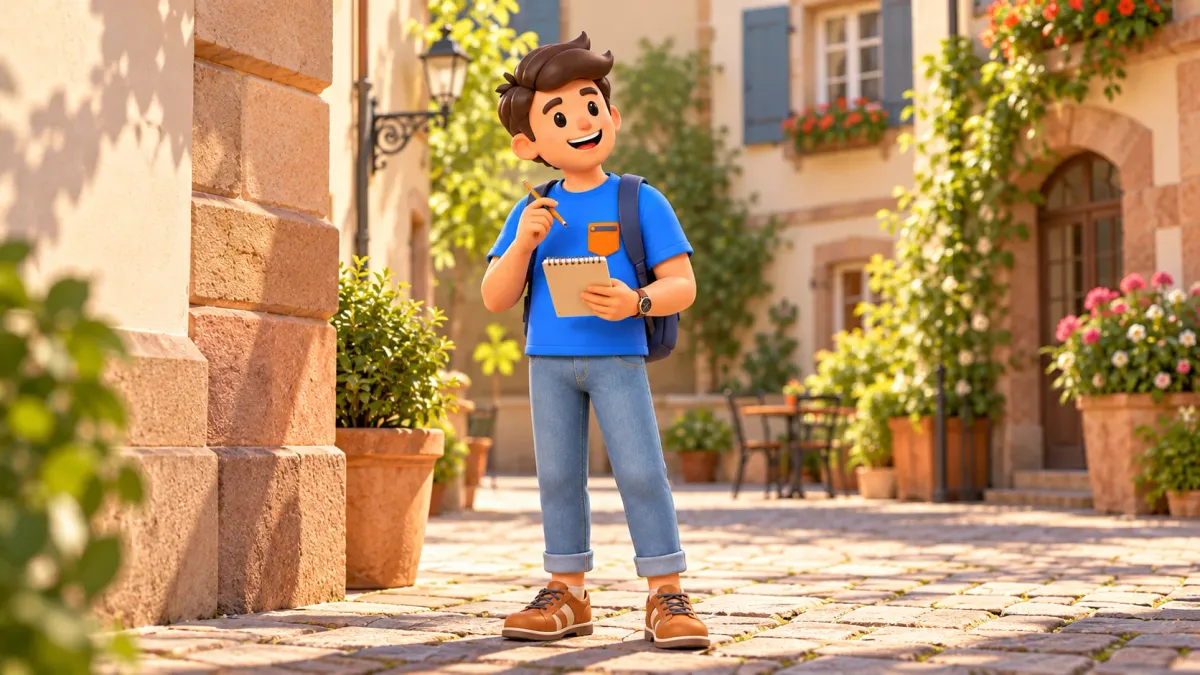
Strasbourg Cathedral makes looking upwards almost automatic. Yet a corner support, a low sculpture and a bronze cover in the paving offer another way into the same neighbourhood. They lead from a local legend to stoneworking and then to a message intended for a very distant future.
This short outdoor walk connects the Buchmesser at the former Cerf pharmacy, the chimera on Place du Château and the nearby Caveau pour le futur. Allow roughly 60–90 minutes with a pause. The interest lies in looking carefully at three modest details, without adding a cathedral interior, tower climb or museum to the plan.
A small walk with three different kinds of story
Begin at the corner of rue Mercière and the cathedral square, where the sandstone support belongs to the former Cerf pharmacy building. Continue around the cathedral’s southern surroundings to Place du Château for the chimera and the future vault. These are neighbouring exterior anchors, rather than stops spread across separate districts.
RoadMe makes it much easier to turn your interests into a personal route or whole trip. Try the app to build a day around unusual city stories, your preferred pace and comfortable pauses.
Keep one question for each stop. What does the column actually support? How does rough stone become an expressive figure? What could ordinary objects tell someone about our lives centuries from now? The sequence works through these changes of attention rather than through a growing number of sights.
Everything here can be considered from available public space, without arranging an interior visit. Actual works, events or barriers can still affect an approach. Leave arrival and the journey back outside the 60–90-minute estimate, and keep any additional cathedral visit as a separate choice.
The Buchmesser: a real support with a memorable nickname
The Buchmesser is a sandstone column supporting the corner of the former Cerf pharmacy facade. The support is dated 1567. Before hearing its famous story, look at the practical relationship: building above, stone beneath and a narrow gap beside the wall.
Its nickname is usually explained as a belly measure. The tourism office describes a local legend in which Strasbourg residents squeezed through the gap to assess their girth. That is a folk story attached to an architectural feature, rather than evidence of an official civic measurement system.
The distinction makes the detail more interesting. A piece of construction acquires another life through repeated storytelling. People remember an amusing name more easily than a structural description, so a modest support becomes a landmark without losing its original function.
There is no need to recreate the supposed test. Stand clear, notice how the support and wall relate, and keep the story separate from judgments about anyone’s body. You can appreciate the gap and the name without squeezing, taking measurements or making a comparison between companions.
Allow around 10–15 minutes here. The useful observation is simple: find the load-bearing relationship first, then consider what the nickname adds. A close detail photograph and a wider view of the corner can also preserve two different explanations of the same object.
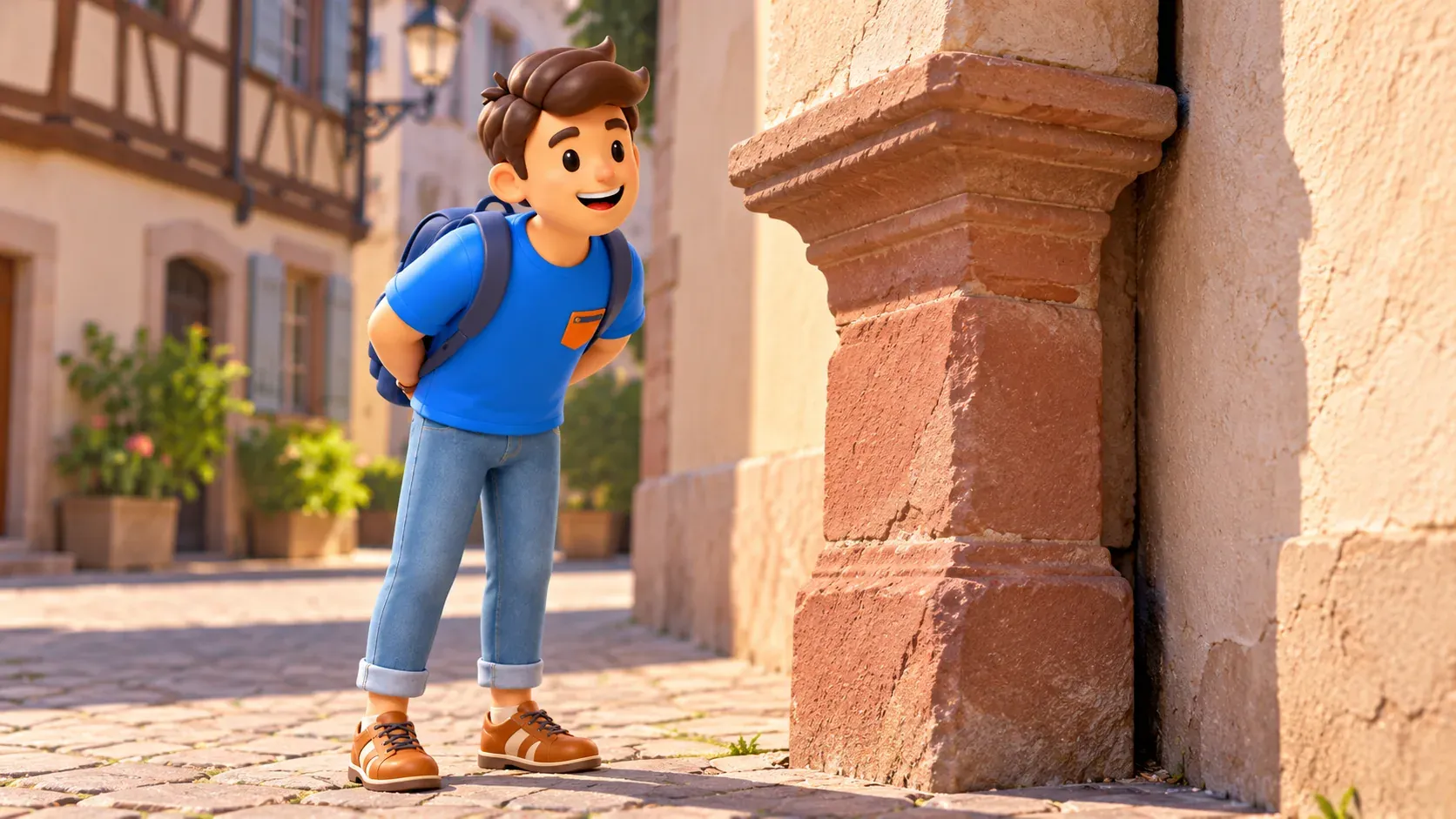
Look for function before following the legend
Try giving the corner two short descriptions. In the first, use only visible relationships: stone, wall, opening, upper facade. In the second, introduce the nickname and the story. The exercise reveals how quickly a legend directs the eye towards one feature and away from everything else.
This is useful with children, too. Ask what they think the stone is doing before offering the memorable tale. There is no right body shape or physical challenge to complete. The small discovery concerns a building and the stories people tell about it.
The date belongs to the support, while the story needs its own evidential caution. An old object does not automatically verify every custom associated with it. Nor does acknowledging folklore remove the enjoyment: the tale shows how a city makes its everyday surroundings easier to remember.
Continue towards the cathedral’s south side at an ordinary walking pace. You do not need to turn this short link into a search for every carving, sign or curiosity nearby. A few minutes noticing changing stone surfaces will prepare the next stop better than a hurried checklist.
The chimera: an image of making rather than a roof monster
On Place du Château, the chimera belongs to a modern composition about the work behind cathedral building. It is not a medieval gargoyle brought down from a roof, and its purpose should not be confused with carrying rainwater away.
The Fondation de l’Œuvre Notre-Dame describes a figure that is part human and part animal, emerging from a rougher world and leaning on a cube bearing the foundation’s arms. Its gaze turns towards the cathedral spire. The surrounding stone and tool imagery connect the figure with working a raw material into a finished form.
Begin with that transition. Compare less worked surfaces with the more articulated body. The sculpture encourages a thought about labour: the cathedral’s expressive forms depend on material, skill and repeated acts of shaping. The striking creature offers an approachable way to consider that process.
Plant forms and a lizard also belong to the composition’s references to nature. They broaden the connection between living forms, quarried stone and human work. You need not identify every tool or interpret every small feature to understand the central movement from raw matter to deliberate form.
Give the stop around 15–20 minutes. Look from an available position without climbing or handling the sculpture. If you encounter a foundation shop page, remember that its miniature’s dimensions and production date describe a souvenir, rather than the size or installation date of the public monument.
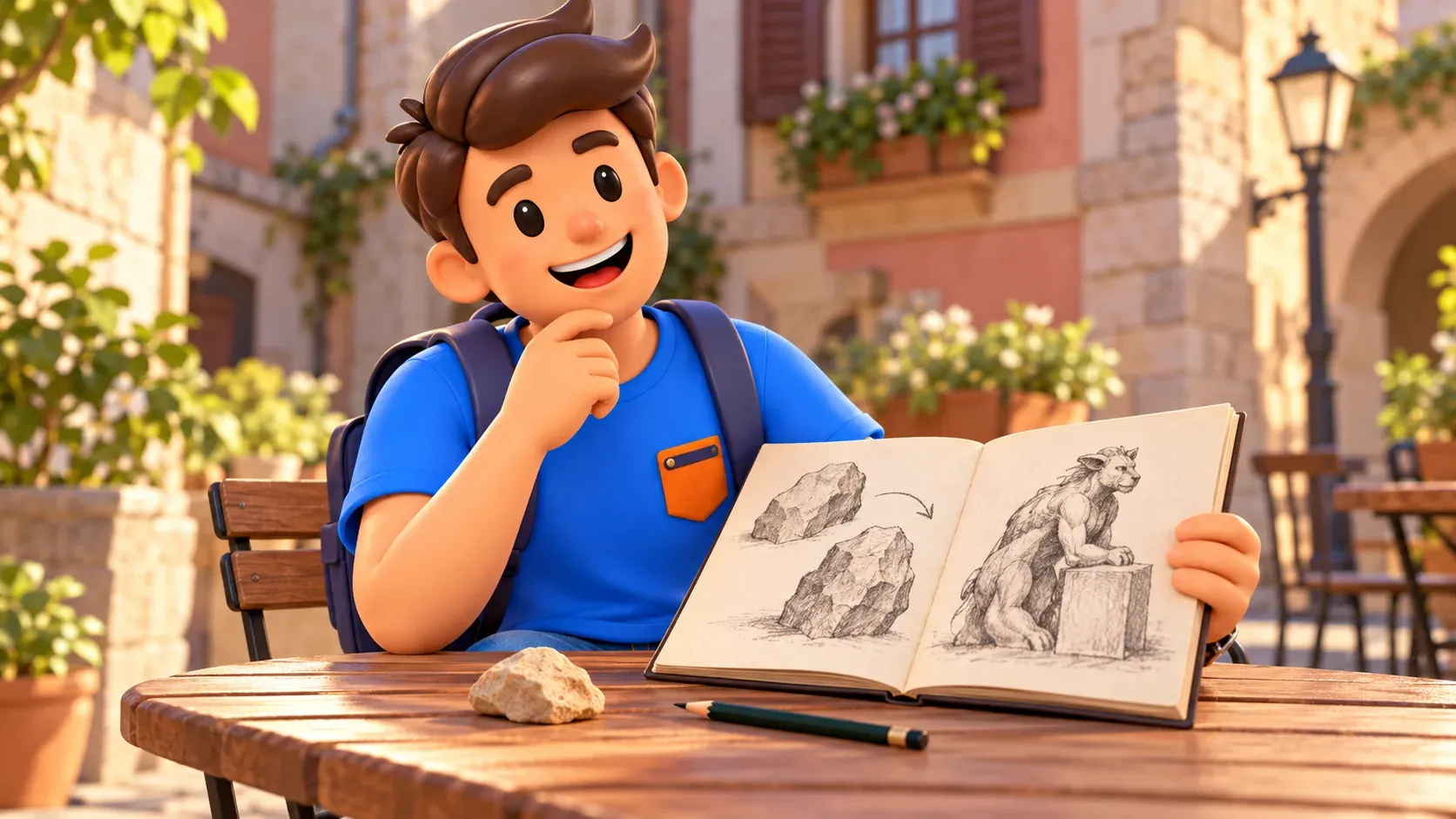
A future vault with a very small visible presence
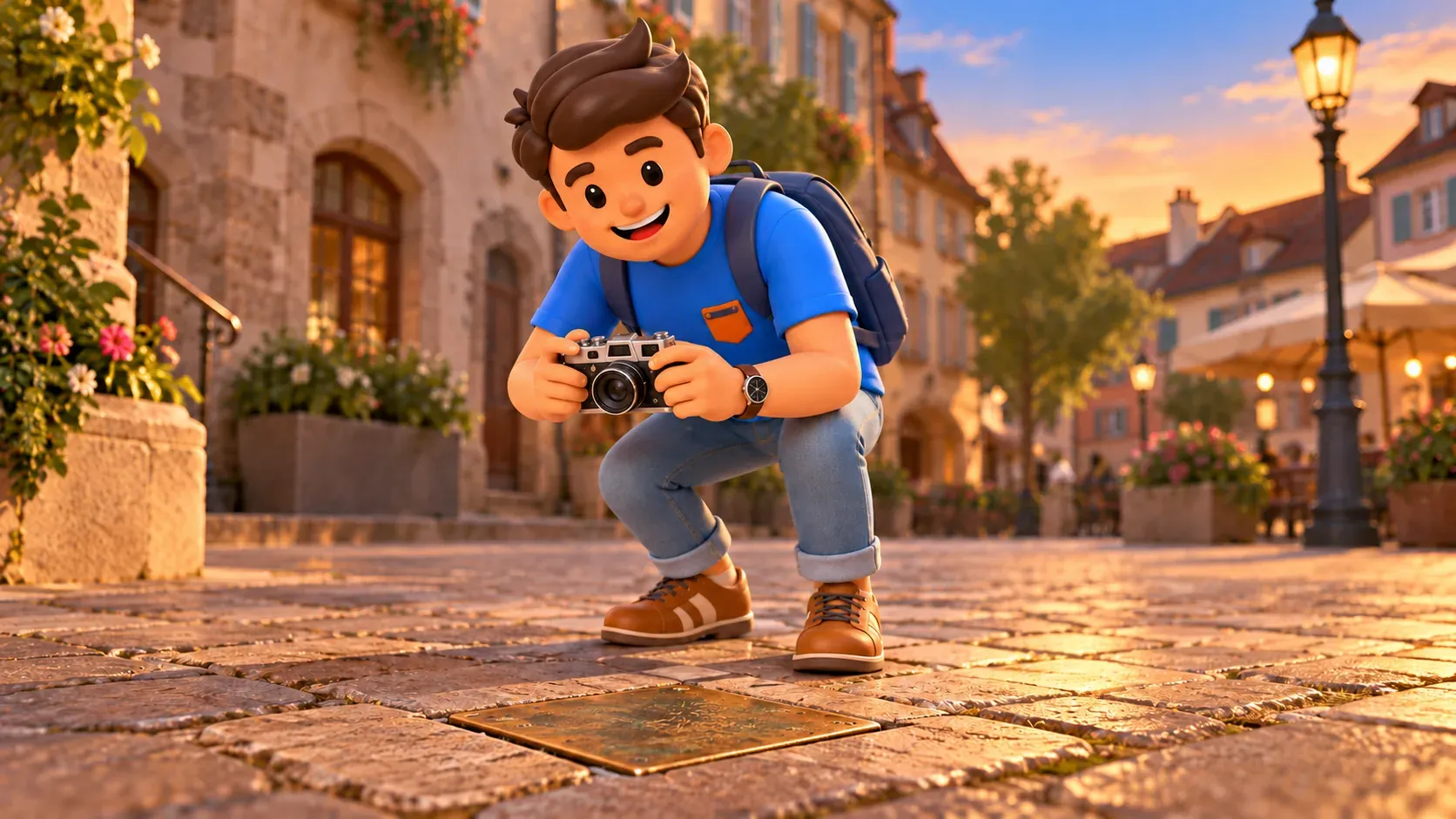
The Caveau pour le futur shifts attention from sculpture to the ground. Raymond-Émile Waydelich’s work, created in 1995, is marked by a bronze cover set into the paving of Place du Château. The visible sign is modest compared with the timescale of the idea.
A sealed space below contains traces gathered for future readers of our era. The artwork sets 23 September 3790 as its intended opening date. That is part of the project’s proposition, rather than a guaranteed future public ceremony or a present-day visiting slot.
You are looking at the closed cover, not at the deposited material. Accounts of messages and everyday objects help explain the work, but those things cannot be inspected through the paving. There is no underground tour or opening procedure attached to this walk.
The interesting reversal concerns archaeology. Usually we try to understand earlier lives through what survives. Here, people deliberately choose traces of their own time and imagine an unknown audience interpreting them. An ordinary object can become evidence once its familiar context has disappeared.
Allow roughly 10–15 minutes for the visible point and its idea. If the cover is obscured or the approach restricted, do not search under barriers or move anything. The question about what to preserve remains understandable without seeing into the sealed work.
Choose one thing to send to the future
Ask each person what single everyday thing they would leave for someone who knows nothing about their life. A shopping list, a transport ticket or a family recipe might say more than an expensive souvenir. This is a conversation prompted by the artwork, rather than a claim that your chosen object is inside it.
Then ask what an unfamiliar reader might misunderstand. A broken device could suggest a function it never had; an isolated photograph could hide everyone beyond the frame. The thought makes the bronze cover an invitation to think about evidence, selection and the gaps between surviving fragments.
Keep the exercise brief and concrete. Pick one object, explain why it matters, then name one piece of context a future viewer would need. The value lies in considering ordinary life carefully, without inventing an elaborate underground collection or predicting how every material will survive.
The three stops now form a small comparison. The column gains a tale through local memory; the chimera explains making through an artistic figure; the vault invites people to imagine memory still to come. Their proximity does not make them objects of the same period or function.
Fit the walk into an unhurried day
Plan around 10–15 minutes for the column, 15–20 for the chimera and 10–15 for the future vault. Add roughly 10–15 minutes for the short exterior links and 15–25 for a rest or free looking. These editorial ranges support a flexible total of about 60–90 minutes, rather than a timed performance.
No ticket or reservation is required by this exterior plan. A cafe stop, if you choose one, is separate. Daylight generally makes stone details and paving easier to read, but no particular hour is guaranteed quiet or free of temporary obstructions.
RoadMe can work out a personal plan for your whole trip around your interests, time and budget. Planning in the app is much more convenient for fitting this small discovery walk, other wishes and rest into a day that suits you.
If you want the cathedral interior, clock or platform as well, use our cathedral visit planning guide and allow a separate block of time. This outdoor sequence does not include their entry conditions, queues or visiting time.
Leave with a way of looking, not only three names
The walk asks for attention rather than specialist knowledge. Start with what is physically present, distinguish a story from evidence, and ask what an artist wants you to imagine. Those habits remain useful when the next intriguing detail has no explanatory label beside it.
The complete pavement route has not been audited for every kerb, cobble or mobility requirement. No stop requires squeezing, kneeling or touching. If a particular approach is unsuitable, observe from a comfortable available position and keep the conversation rather than forcing the view.
Finish on Place du Château, with onward travel or another visit counted separately. For a different slow-looking theme, our guide to Strasbourg’s timber-framed houses offers another day’s questions. Three nearby details are already enough to connect architecture, craft and the way a city imagines its own memory.


