
State Street in 90 Minutes: Macy’s, Chicago Theatre and Reliance
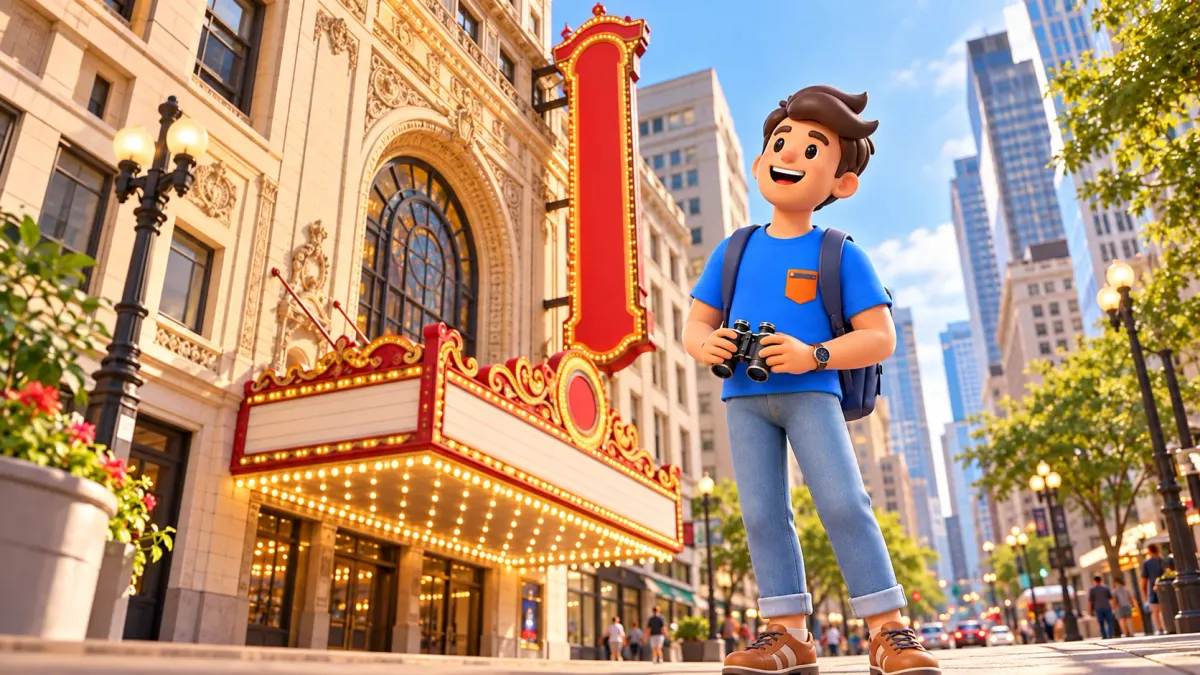
State Street brings several versions of downtown Chicago into one short walk. At the Reliance Building, an early skyscraper puts glass and pale terra cotta on display. At Macy's, the historic Marshall Field and Company building gives shopping an architectural setting. Farther north, the Chicago Theatre's vertical sign turns a building into a street landmark. You can compare all three without filling a whole day.
This ninety-minute route follows State Street north from Washington towards Lake, starting at Reliance, continuing to Macy's and finishing outside the Chicago Theatre. Its main programme works from the pavement. A brief look inside the department store is optional when the retail areas are open and access permits. A theatre performance or guided interior visit is a separate outing, with its own ticket and schedule.
Use ninety minutes to read one street at three different scales
Begin at the southwest corner of State and Washington streets, beside the Reliance Building at 1 West Washington Street. You may also find its State Street address listed as 32 North State Street. Cross at the signals to reach the Macy's side of State, then continue north along its frontage towards Randolph. Keep heading north to the Chicago Theatre at 175 North State Street, near Lake Street.
To place this walk within your whole Chicago stay, try RoadMe: the app builds a personal itinerary from your interests, travel dates and preferred pace. That helps combine a short State Street outing with longer visits across your available days.
- Reliance Building: around twenty minutes for its windows, surface and corner setting.
- Macy's: around thirty minutes for the exterior, with a short optional interior look within that allowance.
- Chicago Theatre: around twenty minutes outside for the sign and street presence.
- Keep around ten minutes for connecting movement and crossings, plus ten for a pause or small delays.
The ninety-minute total is an editorial estimate, not a measured walking guarantee. Travel to the start, shopping, a restaurant meal and an auditorium visit need separate time. If one building holds your attention, borrow minutes from another stop. The short distance between the anchors gives you room to look rather than a reason to add more destinations.
Daylight makes the Reliance facade easier to compare with the department store. If an interior look at Macy's matters to you, check its actual store hours before choosing a start time. An evening walk has a different atmosphere, but does not guarantee that the shop is open or that every sign is illuminated. Choose according to your main interest rather than trying to cover every version of the street in one visit.
Reliance Building: begin by looking at how much is glass
Start with an overall view of the Reliance Building, using a suitable public pavement position near State and Washington. It opened in 1895 and is an important example of Chicago's early skyscraper architecture. From outside, the generous windows and pale glazed terra cotta offer a clear subject even if you know little about architectural history. Let those visible features lead the visit.
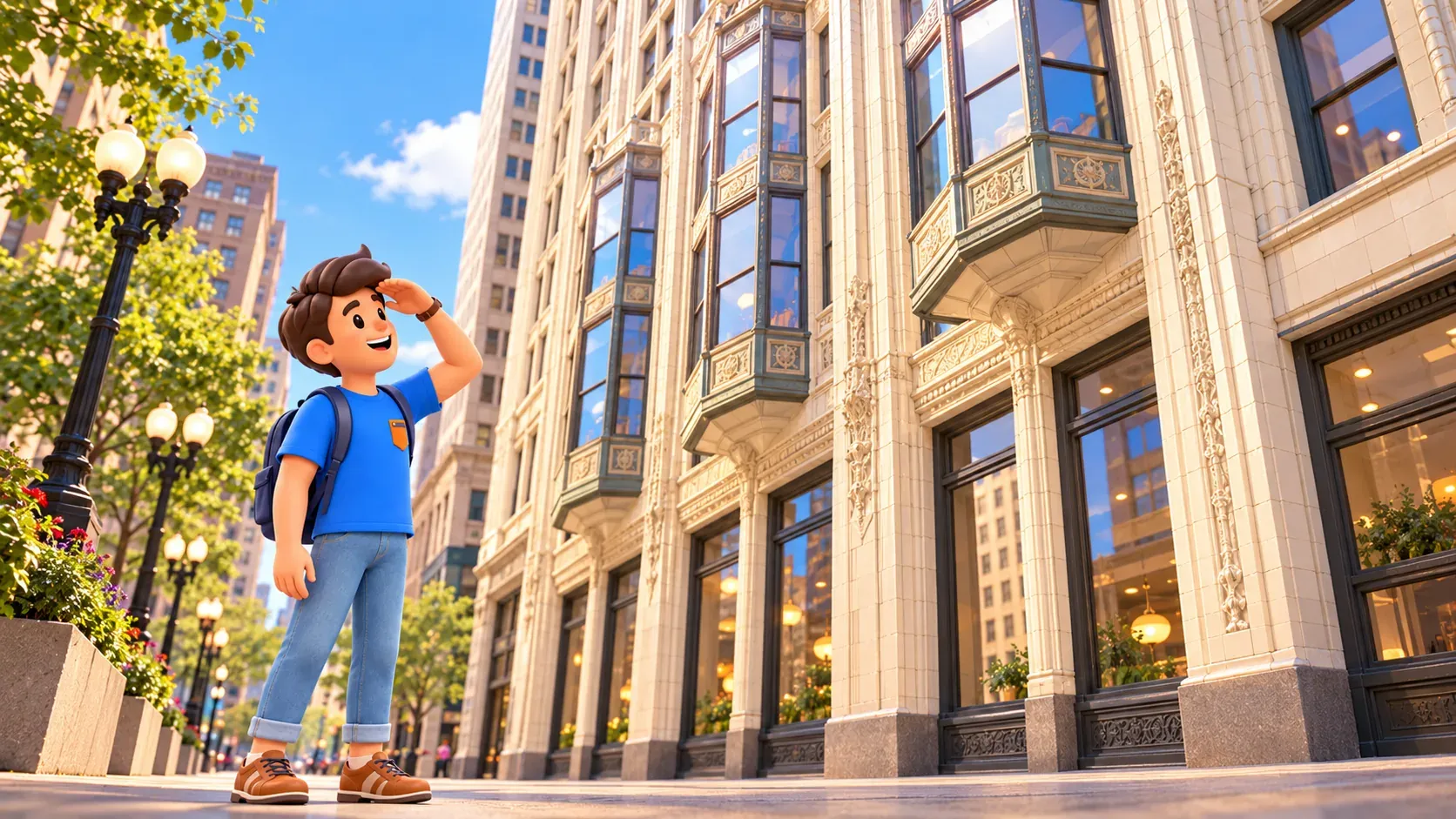
Look at a group of windows above the lower floors. How much of that section seems transparent, and how much seems solid? Then follow the windows upwards. The repeated openings help organise the building's height, while the pale material surrounding them keeps the facade visually distinct. You do not need to count floors or identify every decorative motif to recognise the effect.
Change your angle within permitted pedestrian space and notice the projecting bays. A straight-on view can flatten a facade; an oblique one makes its depth more obvious. Compare that depth with the relatively narrow bands and framing around the windows. Take one broad photograph if you want a record, then spend a moment looking without the screen, so the building's proportions remain part of the experience.
The original project involved Burnham and Root, with Charles Atwood responsible for the later upper-floor design after John Root's death. That history gives useful context, but this stop need not become a catalogue of architects. The immediate question is how an early tall building can feel light from the street. Keep that question for the larger department-store frontage opposite.
The building now operates as a Staypineapple hotel; Hotel Burnham is a former name you may encounter in older material. Its current use does not make guest corridors public sightseeing space. The exterior provides a complete stop, with no need to enter the hotel or search for an upper-floor viewpoint. Keep the corner and entrances clear while choosing your position.
Cross to Macy's and let the scale of the store become the subject
Use the pedestrian signals at Washington to reach the east side of State Street. Macy's occupies the historic Marshall Field and Company building at 111 North State Street. The present store and the older name refer to the same landmark in this itinerary. You do not need to look for a separate Marshall Field museum before continuing the walk.
Before entering, follow the State Street frontage northward and compare it with Reliance. The department store presents a longer sequence of windows, entrances and substantial architectural elements. Notice how the building addresses a shopper walking past it rather than someone studying a single tower from a corner. Look across the full frontage where possible, then come closer to one feature that draws you in.
The great projecting clocks are particularly useful street details. They make a small part of the building legible at pedestrian level, while also serving as recognisable landmarks along the facade. Look for how a clock sits against the corner and how it relates to the entrance below. A photograph of the clock can be a souvenir; the relationship between clock, doorway and street gives it context.
Give yourself time to notice the contrast between the building's broad scale and the small decisions at ground level. Where does an entrance become obvious? What attracts your eye before you look upwards? What can be understood from the opposite pavement, and what only becomes visible close by? These questions keep the store part of the city walk even if shopping itself is not your main interest.
An interior glimpse is a choice, not a condition of the route
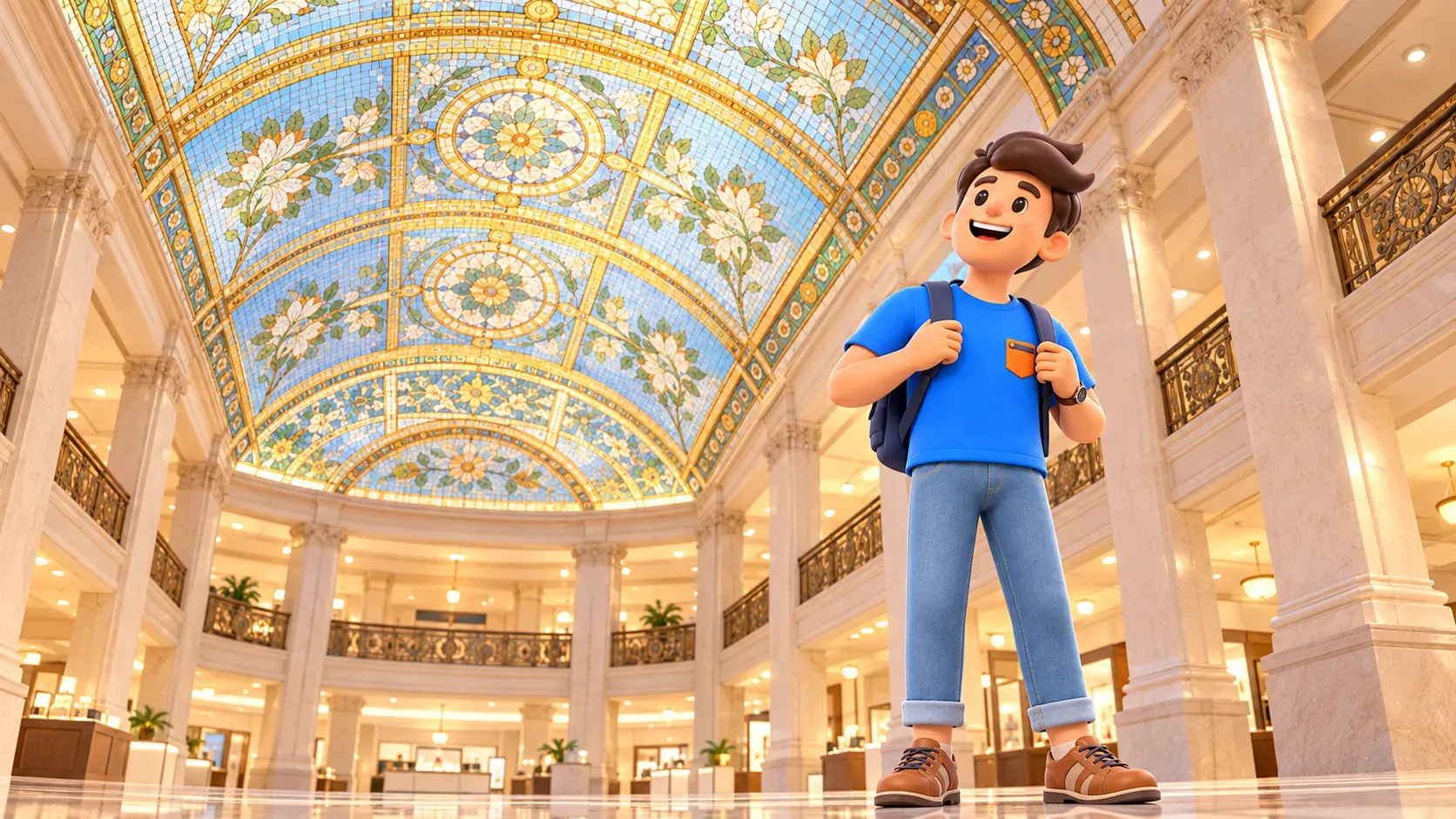
If the retail areas are open and the current visitor arrangements permit, use part of the Macy's allowance for a brief interior look. The celebrated Tiffany vaulted mosaic ceiling is the main architectural reason to consider going in. It adds a different surface and viewing direction to the walk: after looking across glass and along a street frontage, you may find yourself looking upwards at a richly detailed interior.
Ask staff for the currently permitted route to the ceiling if you cannot identify it easily. Do not assume that an old floor plan or an open door provides access to every part of the building. Limit the detour to the public retail spaces and the time you have set aside. A clear, unhurried view of one architectural feature is enough for this outing.
The Walnut Room is another well-known part of the store, but a restaurant visit belongs in a separate meal allowance. Neither a table nor immediate seating is included in this walk. Similarly, browsing several floors or taking a formal store tour will change the schedule. Choose one of those activities deliberately rather than letting an optional detour consume the remaining route by accident.
If the store is closed, busy or inconvenient for your group, keep the stop outdoors. The clocks, entrances and broad facade already explain why this is more than an ordinary shopping address. Continue towards Randolph and the theatre when you are ready. Missing an interior does not prevent you from comparing the three different uses of State Street.
Chicago Theatre: finish with a sign designed to catch the street
Continue north on State Street beyond Randolph towards the Chicago Theatre, at 175 North State Street near Lake. Use the crossings and pedestrian routes currently available; temporary works can change where it is comfortable to pause. The theatre is the final stop, so there is no reason to rush past its immediate surroundings in pursuit of another building.
The Chicago Theatre dates to 1921 and remains an entertainment venue. Its vertical CHICAGO sign and marquee are the obvious starting points for an exterior visit. First look from a permitted pavement position with enough distance to see how the sign projects into the street view. Then notice the relationship between the tall lettering, the lower canopy and the entrance.
Compare the sign with the clocks you have just seen at Macy's. Both make a building recognisable to people passing on foot, but they work at different scales and with different messages. The clock marks a corner; the theatre sign announces a destination. Think back to Reliance as well: there, repeated windows organised your attention; here, a few large letters can dominate it.
You can complete this stop without entering the theatre. Auditorium, stage and backstage access depend on a performance or an actually available guided visit and its conditions. Do not assume there is a daily tour you can join on arrival. The operator's schedule and booking availability determine what can be visited, and tour content can change.
If you choose a show or guided visit, give it a separate block in your day. A ticket for one activity does not turn all theatre spaces into general public access, and an open exterior entrance is not an invitation to explore. For this ninety-minute itinerary, the building's role in the street is enough: you finish by seeing how entertainment makes itself visible to the city.

Leave with a comparison, then decide what deserves more time
Before moving on, select one detail from each stop: a projecting bay at Reliance, a clock at Macy's and the theatre's vertical lettering. Together they show three ways a building can engage a pedestrian. You have followed a single street through architecture, shopping and entertainment without needing to turn each address into a full interior visit.
RoadMe can help develop the rest of your personal trip plan around the interests that stood out on this walk. Try it to balance architecture, shopping, performances and other visits across your days at a comfortable pace.
If Reliance was the highlight, save the two-hour walk among early Chicago skyscrapers for another part of your programme. It offers a closer comparison of windows, ornament and mass in the southern Loop. Give that route its own time; this short State Street walk is already complete when its three buildings start to feel like distinct parts of a working city.


