
A Zeyrek Walk: Byzantine Heritage, a Historic Hamam and an Aqueduct
Zeyrek offers an Istanbul walk shaped by different needs of a city: worship, bathing, water supply and ordinary life on a hillside. A former Byzantine monastic complex, historic Çinili Hamam and the Valens Aqueduct provide three clear references. Between them are everyday streets and a proper pause. Together they show how large histories become part of the smaller scale of a neighbourhood.
Allow about two and a half to three hours after reaching Molla Zeyrek Mosque. The basic version combines exterior viewing, public streets, rest and an aqueduct finish. These are editorial planning estimates, not measured times. The hamam museum, a bathing treatment, a substantial mosque interior visit and travel from your accommodation require additional time and their own access arrangements.
Choose your pace before the first slope
Begin at Molla Zeyrek Camii, continue through the neighbourhood towards Zeyrek Çinili Hamam on İtfaiye Caddesi and finish at the Valens Aqueduct around Saraçhane. This order connects three different subjects in a small area. Preserve time between buildings rather than automatically adding another imperial mosque. Slopes and urban crossings make short distances more noticeable than they first appear on a map.
Planning the whole walk or trip is much more convenient in RoadMe, which develops a personal itinerary around your interests, available days and pace. Choose more Byzantine history, architecture or relaxed pauses so Zeyrek becomes your own part of Istanbul and combines comfortably with the rest of your stay.
Give the mosque and surroundings thirty-five to forty-five minutes, streets twenty to thirty and the hamam exterior fifteen to twenty. Rest can take another thirty to forty minutes, followed by twenty to thirty at the aqueduct. Leave a margin for approaches and orientation. This is a flexible allocation: if one place matters more, extend it and reduce the next block.
Daylight helps when reading masonry and understanding streets. Choose weather that makes hillside walking pleasant and footwear for city surfaces. If step-free access matters, inspect actual sections before leaving. Three nearby names do not describe every crossing. With children or someone needing frequent rests, preserve the stops but reduce the amount of viewing required at each one and keep the sitting break.
Molla Zeyrek: see several buildings within one
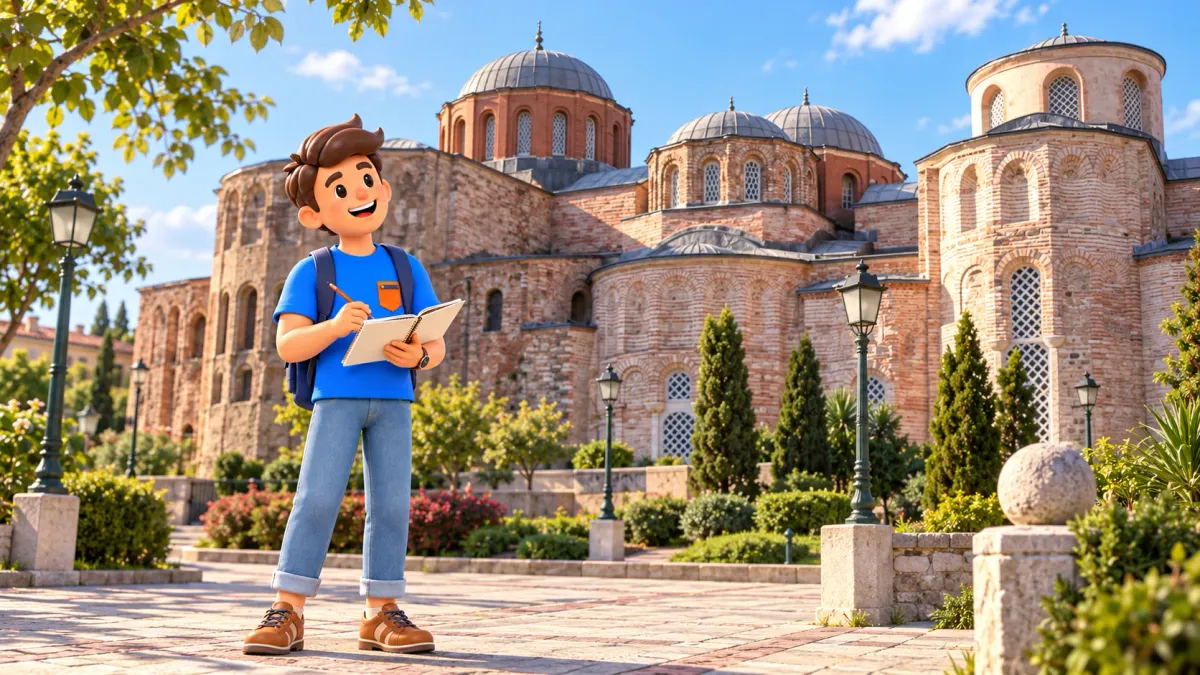
Today's Molla Zeyrek Mosque is associated with the twelfth-century Byzantine Pantokrator monastery. Three connected church buildings formed its architectural core. That is a useful starting point: this is a complex ensemble assembled from several volumes. Try following domes, projections and window rows before treating everything as a single familiar mosque silhouette. A little understanding can change the value of the first exterior look.
Start in an outside area available to visitors on the day. Find a position from which enough of the ensemble is visible, then turn towards brick and stone. Their alternation, small arches and transitions between walls suggest an architectural language worth noticing. One carefully observed fragment can make the next Byzantine building you encounter feel less unfamiliar, without requiring a specialist vocabulary beforehand.
Compare scales: domes organise the outline, while windows and masonry bring attention back to human height. Which parts seem independent, and which connect them? Professional measurement is unnecessary here. Simple observation explains why the complex matters as a sequence of spaces created for different actions and altered over time. It offers something more lasting than a name collected between other attractions.
Its use changed after the Ottoman conquest; today the building serves as an active mosque. If visitor entry is available and time allows, follow local instructions on conduct, clothing, footwear and head covering. Interior viewing should fit around worship. The exterior version still works: the relationship between Byzantine architectural fabric and present religious life already gives the stop its subject.
A former monastery's history extends beyond the area accessible today. Avoid imagining that every historic room survives and can be entered freely. Choose one question instead: how do volumes connect, or what happens to a building when its use changes? Carry it to the next stop, where the city's needs will be different. That connection makes the route coherent without a long timeline.
Zeyrek streets: give ordinary Istanbul some space
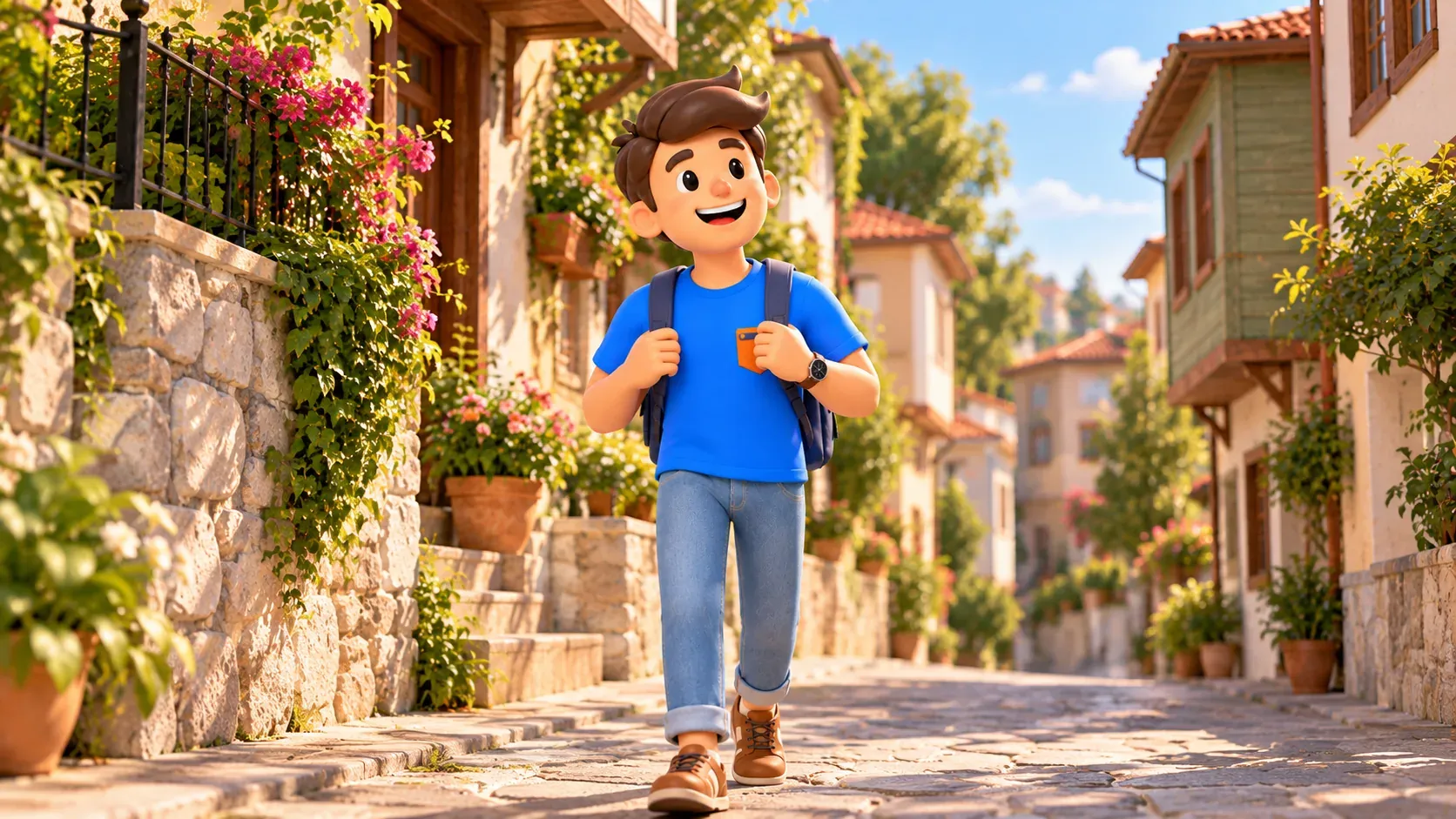
Take your chosen public streets towards Çinili Hamam, allowing twenty to thirty minutes for movement and observations. Look at the path before starting so each turn does not require another phone stop. The change of scale matters: substantial historical volumes give way to doors, windows and residential walls. A short section can connect major monuments with people who pass between them every day.
Traditions of timber residential architecture form part of Zeyrek's character. The walk does not depend on finding one house from another person's photograph or seeing every example in the same condition. Observe actual facades, combinations of materials and a house's relationship with the slope. Old districts change. Interest grows more naturally from attention to the place than from searching for promised scenery.
Select a small subject: a projecting upper storey, a window-frame colour or the transition from a stone wall to a residential facade. In company, each person can find a detail to share at the next stop. This makes streets a proper part of the outing. It also allows slower attention without lengthy stops in narrow passages or a photograph of every entire house.
The residential district remains a place of ordinary activities. View buildings from public space, keep entrances free and ask for close photographs of people when appropriate. An open gate does not establish public access to a private courtyard. An architectural fragment or a street view can preserve the memory. Let everyday life keep its rhythm while you discover the neighbourhood with curiosity.
Çinili Hamam: water at another scale
Zeyrek Çinili Hamam dates to the sixteenth century and is associated with Sinan and a commission by Barbaros Hayreddin Pasha. It reopened after restoration in 2023. Here it introduces another subject: water served not only urban supply but everyday cultures of bathing, rest and gathering. A bath treatment or museum visit can explore that subject separately when you have suitable time.
From outside, give fifteen to twenty minutes to its street setting and different scale after the former monastery. Consider how a building addresses a recurring human need. A city's architecture includes practical shared spaces as well as ceremonial ones. A public bath could also become an important architectural work. This makes the stop meaningful even when the indoor programme is outside today's plans.
The name Çinili belongs to the hamam's tile history. Much historic tile decoration was lost or dispersed; restoration and the museum address surviving fragments and layers of the past. Expecting endless intact walls of old blue tiles can therefore mislead. A more useful question is what survived, what was recovered and how absence is shown alongside the things that conservation brought back into view.
If you want the museum, check its specific calendar, admission and accessible spaces. For bathing, separately examine treatments, booking, duration and current price. These are different activities rather than interchangeable visits. The exterior walk continues without purchasing a service. If a substantial hamam experience becomes the priority, reshape the half-day around it and leave enough time afterwards instead of treating it as an invisible addition.

A pause between human and city scale
After the hamam, keep thirty to forty minutes for rest somewhere suitable along the way. Choose a café by its available menu, prices and position relative to the aqueduct. A table without a famous panorama can meet the purpose well. A real break restores attention and allows the next structure to introduce a fresh subject rather than becoming just another old surface to photograph.
Over a drink or small meal, compare the first two stops. One organised religious life, the other a recurring bodily ritual. Both worked with people, differently. Name a feature remembered from each: dome shape, wall texture or street position. That brief conversation gives history room in memory without rereading a long account at every turning or needing to retain every architectural term.
If the museum or a bath suits another day, save the name and a question for later. A purchase decision is unnecessary immediately. Small unfinished curiosities can help choose the next day around personal interests. Today's outing already has a subject and an aqueduct ending, even when no interior becomes part of it. Give the current walk enough space to feel complete.
Before leaving, compare remaining time with the journey afterwards. Reaching the aqueduct involves an urban setting where convenient crossings matter alongside distance. If tired, make the final exterior look short and comfortable. A long search for a particular photograph need not become the last task. Rest, water and a clear onward journey can be more useful than extending the programme for its own sake.
The Valens Aqueduct: how a city received water
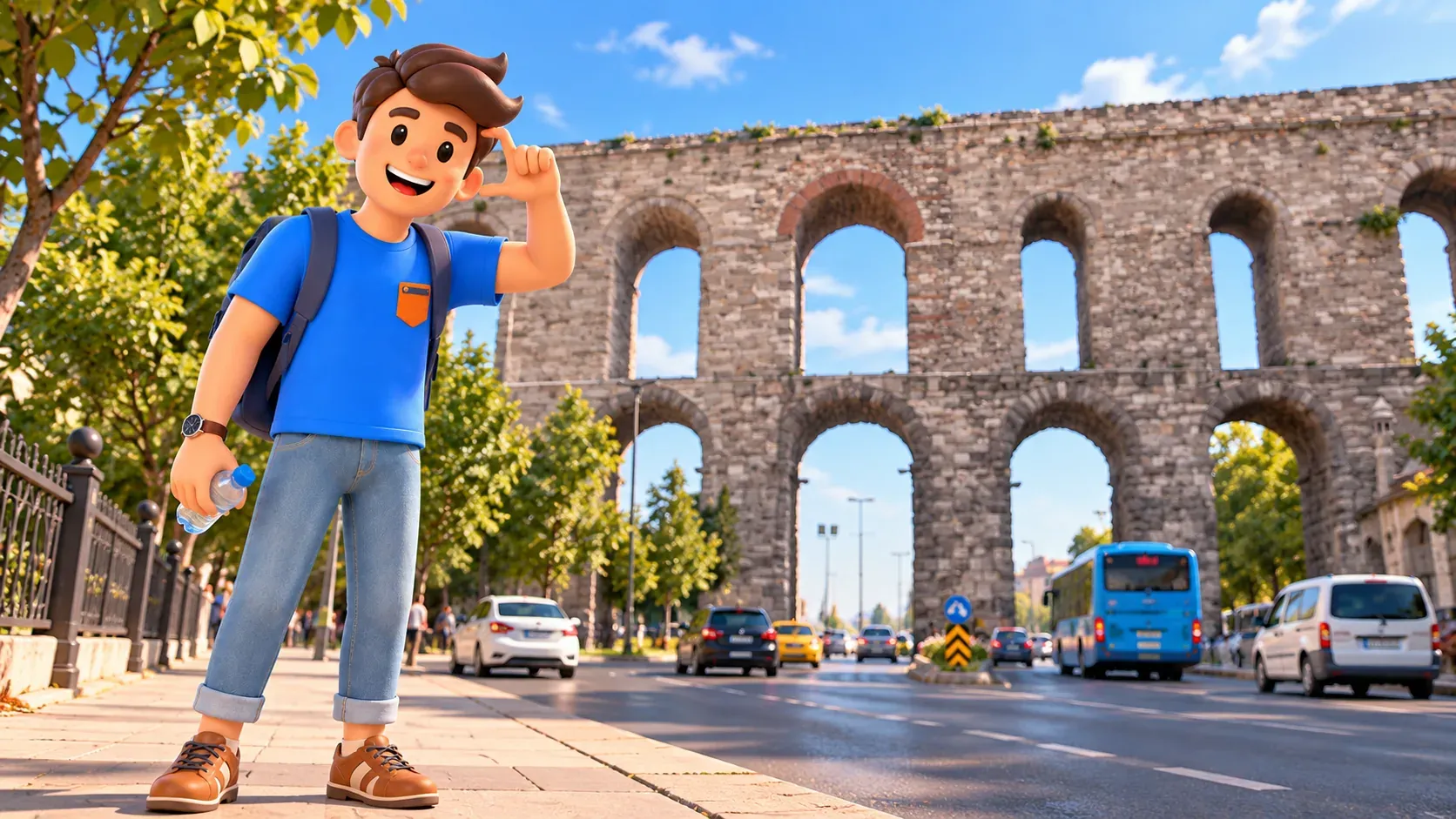
At the Valens Aqueduct, Bozdoğan Kemeri, the scale changes again. Instead of one building, you see part of a substantial urban water system. Ancient arches survived changing eras and were used during the Ottoman period too. Start with that idea: everyday Istanbul depended on infrastructure that became monumental in the landscape. Engineering history reveals a practical necessity behind the striking visible form.
View the arches from available public pedestrian space. Busy roads run nearby, so choose a stopping place and legitimate crossing before a photographic angle. The walk has no need to step into traffic for symmetry. It also requires neither climbing the structure nor walking along its top. Looking from a suitable pavement position can already convey length, height and the repetition of its construction.
First look along the arches, then focus on one opening. How does the impression change from the whole line to a single support? Stone, void and repetition work differently from the domes at the start. If taking pictures, include the relationship with the present city. Old infrastructure beside contemporary movement makes the ending expressive and connects the past to the surroundings you actually encounter.
Allow twenty to thirty minutes, including a comfortable viewing position and orientation. An engineering interest can justify longer, with more time added to the day. The aqueduct need not trigger a new sequence of distant attractions. After three distinct subjects, leave space for a conclusion of your own: what remains strongest, the complex Byzantine ensemble, the bathhouse idea or large stone arches in today's city?
Gather the impressions and choose what follows
The finish is around the aqueduct in Saraçhane; travel to your accommodation or another activity adds to the estimate. Choose transport according to your actual destination and group's energy. Returning to the start is optional. If Zeyrek has satisfied today's curiosity, change activity. If a specific question emerged, give it separate time instead of expanding this walk into another survey of the entire historical peninsula.
Using the whole personal plan is more convenient in RoadMe, where interests, days and chosen places become a coherent trip itinerary that stays easy to consult. Download Istanbul beforehand with an internet connection to use maps and navigation offline afterwards.
Zeyrek shows a city meeting different needs through religious space, bath culture, water and homes between monuments. Every interior need not be explored in one outing. A few attentive stops, a proper rest and a clear line between them create a neighbourhood story of your own. Keep the question you want to revisit and let the remaining Istanbul days follow your interests and energy.


