
Siam in Three Hours: Art, a Thai House and a Temple among Towers

Siam can give you more than an afternoon inside shopping centres. Within a small part of central Bangkok, a wooden Thai house, a public art centre and a working Buddhist temple offer three very different ways to look at the city. The interesting connection is their closeness to modern commercial streets. You can move between domestic architecture, contemporary culture and religious space without turning the outing into a journey across Bangkok.
Allow around three hours, starting on the Jim Thompson House side and finishing at Wat Pathum Wanaram. Choose either the house museum or a BACC exhibition as your main longer visit. Give the other a shorter role, with the house approach remaining an exterior neighbourhood stop if you do not take its guided tour. These are planning estimates, not measured walking times, and travel from your hotel is separate.
Give one visit the most time
The useful decision comes before you arrive: would you rather hear about a house and its collection, or spend time with art on the current programme? Both choices make a coherent Siam walk. Trying to complete both institutions and the temple within the same short window is what makes the afternoon feel hurried. Let one place be the centre of attention and the others create contrast.
RoadMe can turn these ideas into a personal Bangkok itinerary shaped around your interests, time and pace. The app makes planning the whole trip much more convenient, so an art afternoon, major sights and proper breaks fit together from the start.
For the house version, check the current admission arrangements and guided visit availability before setting the rest of the afternoon. For the art version, look at BACC’s programme for your date. Its usual Monday closure matters more than a list of exhibitions from somebody else’s trip. Choose a daytime window that leaves the temple accessible at the end, rather than assuming every cultural place follows shopping-centre hours.
| Suggested time | What to allow for |
|---|---|
| First 105 minutes | Western pair: one main visit, a brief second stop and local walking |
| 105–135 minutes | A drink pause and the transition east through Siam |
| 135–165 minutes | Wat Pathum Wanaram, according to visitor access |
| Last 15 minutes | Finish and prepare the next journey |
This outline assumes the chosen main visit takes roughly an hour to an hour and a quarter of the first block, including its arrival arrangements. A longer wait or a particularly absorbing exhibition changes the calculation. Extend the outing or shorten the optional stop. The numbers help decide what fits; they do not promise immediate entry or a fixed tour duration.
Jim Thompson House: start with the scale of a home
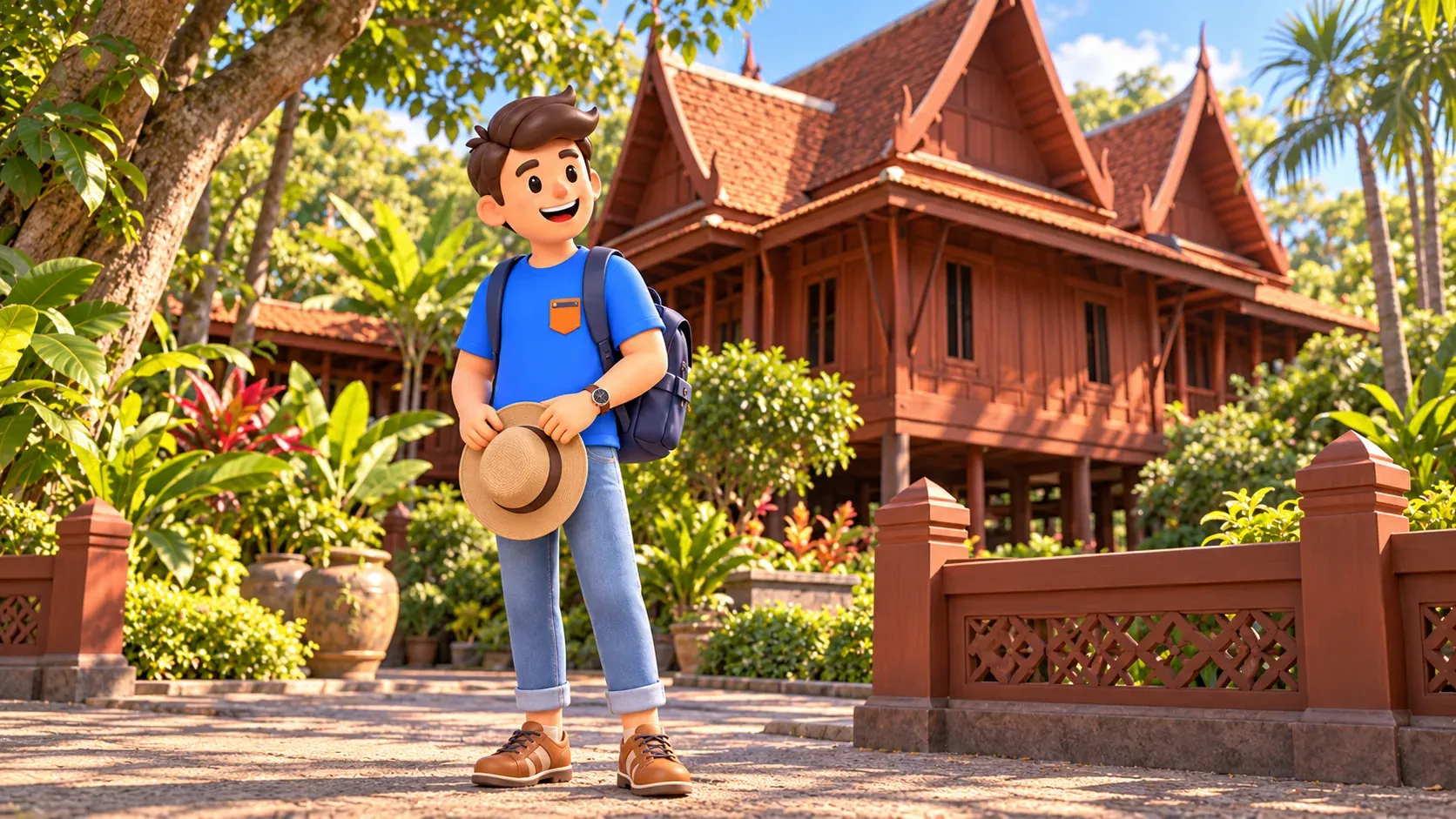
The house museum preserves the Bangkok home and Asian art collection of James H. W. Thompson, widely associated with the revival of Thai silk. That combination gives it a different appeal from a gallery of temporary exhibitions. Architecture, setting and collected objects belong to one visit. If you enjoy seeing how a house frames a collection, this is the natural place to give your longer attention.
The wooden architecture is also a useful starting point for the walk’s visual changes. Look at the relationship between raised living space, roof and greenery, where your visit permits. Later, the white curves of BACC and the temple’s rooflines will give you different subjects. You do not need to become an architectural specialist to notice the shift in scale and material. One comparison can carry the afternoon.
The main house is a guided visit
Admission to the main house is with a museum guide. Do not plan a quick independent circuit inside as if it were an open public building. Check the available visit language and arrangements for your date. Waiting, joining the tour and collecting belongings all belong in the time allowance. If the next suitable visit falls too late, decide whether the house deserves a longer afternoon rather than squeezing the rest.
In the art-focused version, use the Soi Kasemsan 2 approach as a brief change from the main road, then continue towards BACC. An approach does not guarantee a free garden visit, a view into the house from the street or access to museum interiors. You can omit this detour if you mainly want the exhibition. The separately named Jim Thompson Art Center has its own programme and should not be confused with either the house museum or BACC.
BACC: choose the art, not every floor
Bangkok Art and Culture Centre brings a public cultural setting into the commercial district. Its exhibitions change, so choose what is actually available rather than expecting the work shown in an old photograph. Read the short description before committing your main hour. A subject you want to spend time with is a stronger reason to enter than the assumption that every current exhibition will suit everyone.
The building itself gives the walk a new visual language: an open atrium, curves and movement around a central space. In the house-focused version, a brief look at the accessible public areas may be enough. That is different from seeing the main galleries. You can enjoy the architecture without describing the visit afterwards as a complete exhibition afternoon. In the art version, go to the chosen exhibition and let it have the time you saved elsewhere.
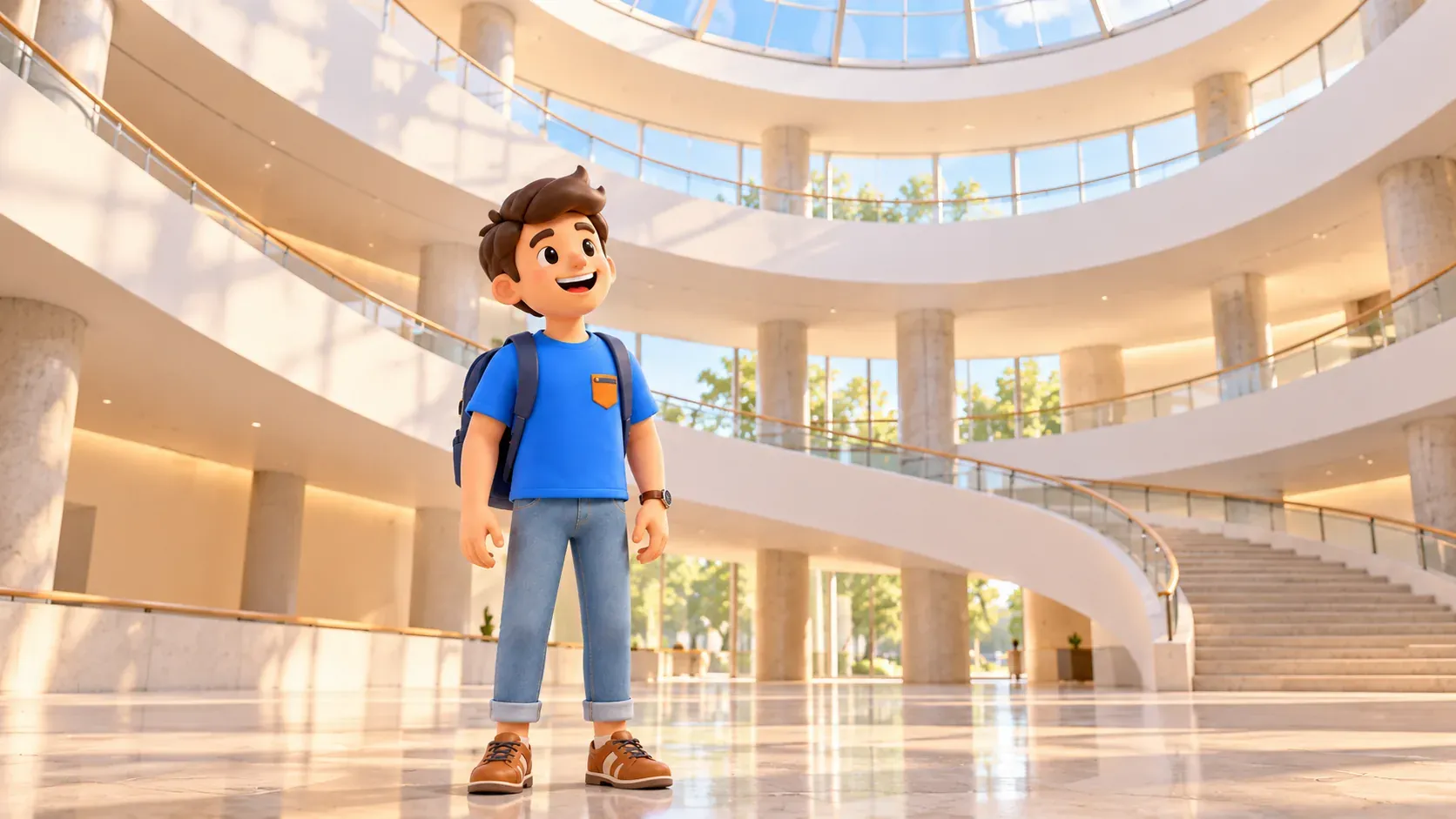
Before the main galleries, follow the current instructions for depositing your backpack and other required belongings. Keep food and drinks outside the gallery areas, and check photography rules where you are standing. An artwork may allow a photograph while another does not. The lower public atrium and the main exhibition spaces are different environments; access to one does not settle every rule for the other.
A small way to make the exhibition memorable
Pick one question rather than trying to absorb everything equally. Which work changes when you move closer? What material holds your attention? Does a short explanatory text alter your first impression? Choose a few works that reward looking and return to one before leaving. This gives an hour a shape without requiring you to photograph every room or read every label at the same pace.
If you are travelling together, compare one choice each afterwards. You may notice different things, and that can be the best part of a shared cultural stop. If no current exhibition interests you, keep BACC brief and give the house or another day more room. A cultural itinerary becomes more personal when interest determines the length of a visit, rather than the height of the building or the number of floors.
Pause before moving east through Siam
Choose a convenient place for a drink on your actual line through the district. A named café is not essential to this route. Sit, check the remaining time and decide how much attention you want to give the temple. The pause separates the exhibition or house story from the next religious setting. It also prevents the walk from becoming a sequence of entrances with no time to digest what you saw.

A full lunch requires more time than the short break in the table. If you want one, extend the outing openly or shorten the optional western stop. Use actual public crossings and the available pedestrian route as you continue east. Elevated walkways can be helpful where they connect with your route, but do not assume one continuous level path reaches every doorway. Follow a current map and signs at street level.
With RoadMe, you can plan a whole trip around what you enjoy, whether that means more art, local history or an easier pace. Using the app is a more convenient way to build a personal itinerary than piecing together separate lists after every visit.
Wat Pathum Wanaram: a religious place in modern Siam
Wat Pathum Wanaram is a royal Buddhist temple associated with the reign of Rama IV. Its nineteenth-century origins give this central district a longer story than the surrounding commercial skyline might suggest. The appeal here is the relationship between the temple and the modern city around it. A traditional roofline with contemporary buildings beyond can be enough to make you reconsider what Siam contains.
Arrive as a visitor to a functioning religious place. Cover shoulders and knees, follow instructions about shoes and enter halls only where permitted. Give worshippers space and avoid turning prayer or people into the foreground of a photograph. A modest, attentive visit belongs naturally after the art centre, but the temple does not have to behave like another gallery. Religious use determines what is appropriate on the day.
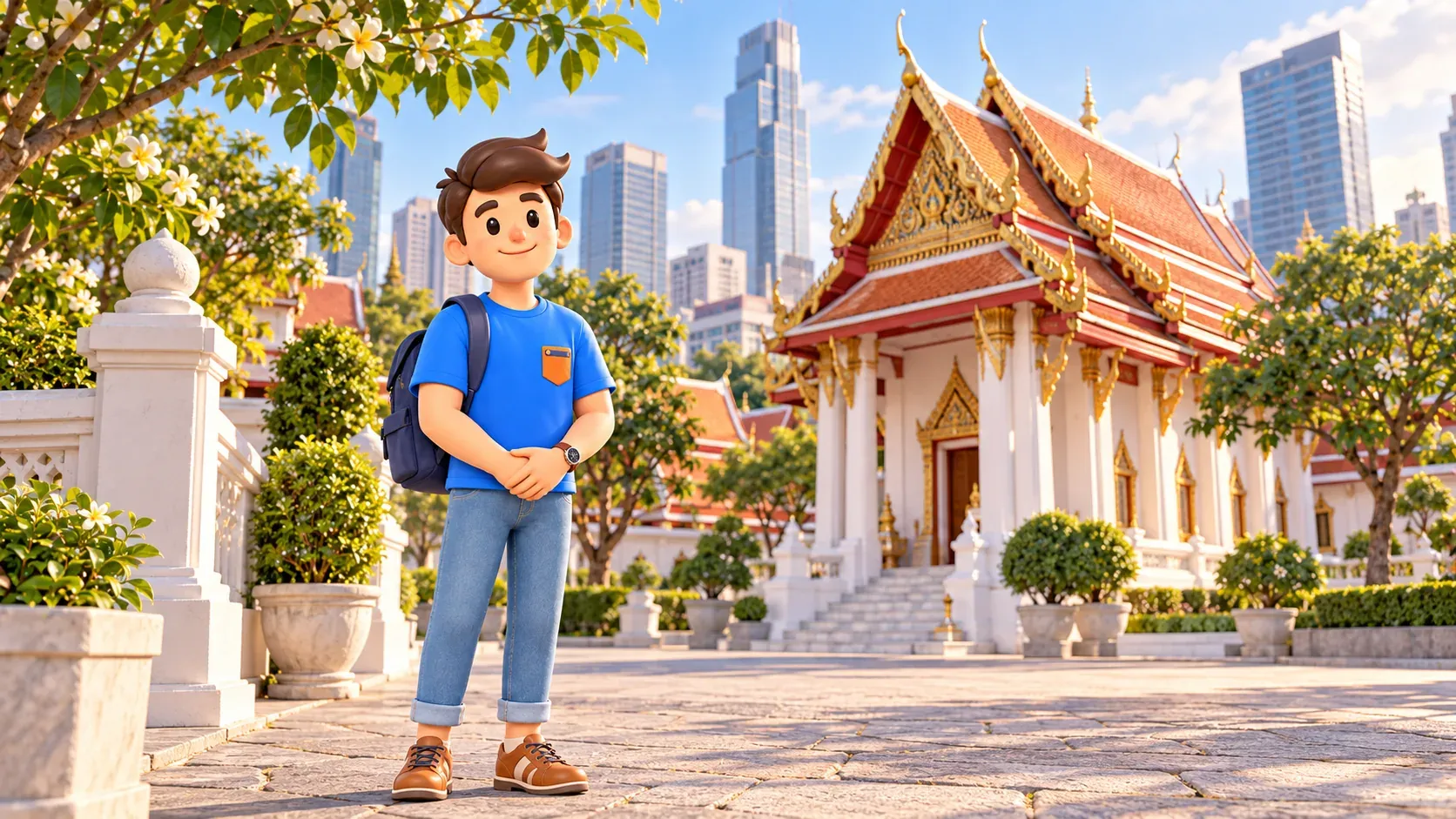
Begin with the accessible setting, then choose one detail: the roof against the surrounding buildings, an entrance or the way the courtyard changes your sense of scale. Do not count on every interior being open or the grounds always being silent. The contrast with the district remains interesting even when daily activity is visible. A short visit can be complete without a private meditation session or an exhaustive tour of every structure.
Finish with a clear idea of what comes next
Keep the last minutes for leaving the temple and choosing your onward journey. Shopping, dinner or another meeting can follow, but each takes its own time. The three hours describe this cultural walk, not an unlimited Siam afternoon. If the house or exhibition held you longer, ending after that main visit is also sensible; save the temple for a suitable daytime opening instead of arriving under pressure.
For another art-led outing, our three-hour Charoen Krung walk follows a different urban setting. For the broader stay, the Bangkok three-day itinerary gives the modern city its own place alongside temples and neighbourhoods. Keep these as separate choices unless you deliberately want a longer day. Siam’s house, art centre and temple already give a short outing a clear and varied story.


