
Sculptures by the Seine: A Two-Hour Walk in Jardin Tino Rossi
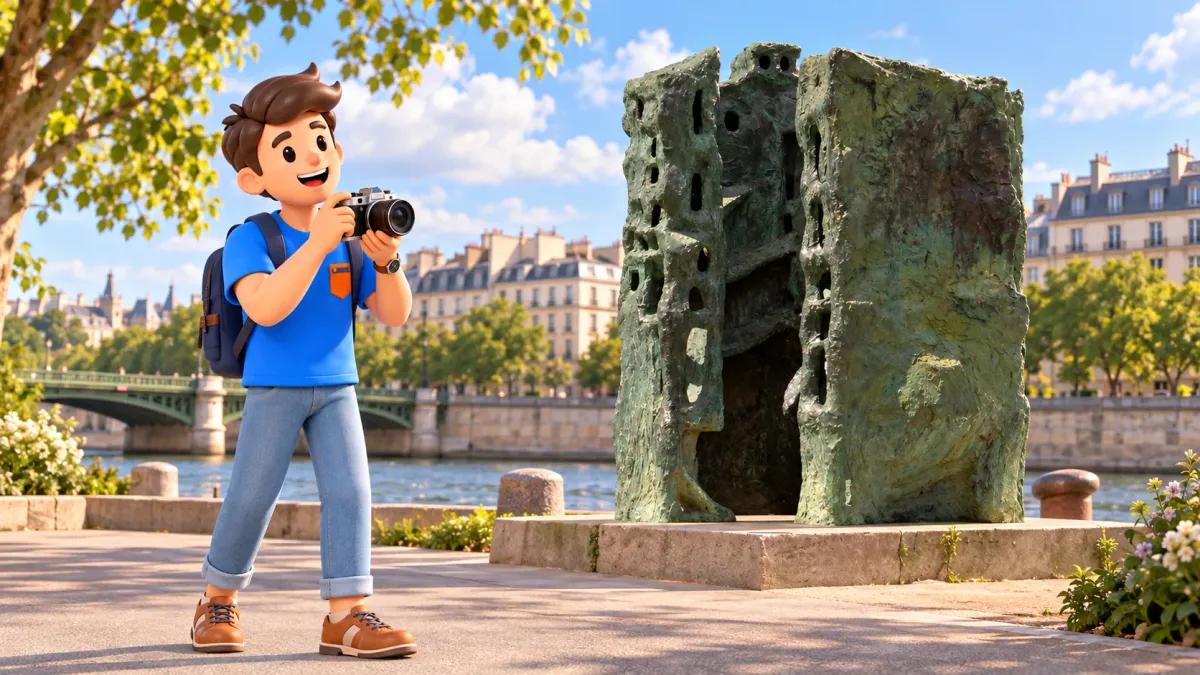
A walk along the Seine can combine art with the ordinary life of the city. In Jardin Tino Rossi, sculptures stand beside paths and trees, with the river close by. You can compare shapes, change your viewpoint and pause without moving through a prescribed sequence of rooms. A handful of works is enough for a first visit; the pleasure lies in looking carefully.
This roughly two-hour itinerary runs from Sully-Morland to Gare d’Austerlitz. Cross Pont de Sully, view the Arab World Institute from outside and continue through the open-air sculpture museum. The basic walk is free. Indoor exhibitions, the institute’s terrace and a river cruise require separate arrangements and time. The garden entrance used here has stairs, so this is not a wholly step-free route.
A two-hour art walk with a clear beginning and end
Begin at Sully-Morland on Métro line 7. Follow boulevard Henri-IV across both sections of Pont de Sully, passing the eastern tip of Île Saint-Louis to reach the Left Bank. Pause for a river view where there is room, leaving the pavement clear. The island is a connecting part of this walk; exploring its streets belongs in a separate outing.
On the Left Bank, head to the Institut du monde arabe at 1 rue des Fossés-Saint-Bernard, beside Place Mohammed-V. A short exterior stop lets you compare its geometric southern façade with the glazed side facing the river. Then return to quai Saint-Bernard and take the staircase opposite the institute down into Jardin Tino Rossi.
Follow the open garden paths along the Seine towards Place Valhubert and Pont d’Austerlitz. Choose sculptures that attract you, allowing time for a few considered stops. Leave at the Place Valhubert end and finish at Gare d’Austerlitz, served by Métro lines 5 and 10. The station is on the same bank: you do not need to cross Pont d’Austerlitz to reach it.
Try RoadMe to have a complete personal trip plan worked out around your dates, interests, pace and budget. Using a coherent day-by-day plan is much more convenient, with an outdoor art walk fitted alongside the other experiences you enjoy.
Allow about 15 minutes for bridge views, 15 for the institute’s façades, 40 for selected sculptures and 15 for a break. Add 35 minutes for all movement, including the station approach, bridge crossings, institute detour, staircase, garden paths and final station approach. That totals 120 minutes, an estimate for planning rather than a measured walking time. Travel from your accommodation is additional.
Choose daylight, perhaps 10am–noon or an early afternoon slot. There is no timed museum admission in the basic outdoor plan, so you can linger over a work that interests you. A restaurant lunch or indoor institute visit needs a longer outing. The two-hour allowance covers selected outdoor stops and a short rest, rather than every possible activity nearby.
For a shorter version, allow five minutes for bridge views, 15 for the institute, 25 for sculptures, ten for rest and the same 35 for movement. The total is around 90 minutes. Choose two works instead of rushing on the stairs or removing the break. If your walking pace is slower, retain two hours or extend the outing.
Pont de Sully: move from a river view to individual details
The bridge gives the walk a useful change of scale. You begin with the broad relationship between water and riverbanks, then move close to individual artworks. The Seine establishes the wider setting; a sculpture asks for a different kind of attention. You do not need to find a perfect panoramic photograph to notice the contrast between these two ways of looking.
Notice how the line of the bank connects the bridge with the garden. City façades occupy the opposite side, while paths and planting mark the near side. Keep that arrangement in mind before descending: your onward direction follows the water towards Valhubert. Save the French names Sully, Saint-Bernard and Valhubert so that they remain recognisable on signs.
If you are walking with someone, each choose one feature to notice later: reflections, shadows, repeated lines or a contrast of surfaces. Compare how it appears in a sculpture as well as in the riverside setting. This small exercise makes the walk engaging without demanding an art-history background. During the crossing, stay on the pavement and pause where others can pass comfortably.
The Arab World Institute: architecture before sculpture
The institute opened to the public in 1987. Its architects were Jean Nouvel, Architecture Studio, Gilbert Lézénès and Pierre Soria. For this walk, concentrate on the contrast between its two principal façades. The south side uses a geometric moucharabieh pattern, while the north side facing the Seine works with glass, curvature and reflections of the surrounding city.
Look at the repeating elements on the south side. Their design recalls photographic diaphragms and reinterprets traditional screens that filter light. The useful idea is simple: an ornamental pattern becomes part of a contemporary building. You do not need to wait for any particular mechanism to move or count the façade’s components to appreciate that connection.
Compare this with the river-facing side, where glass and reflected surroundings take a more prominent role. Observe from permitted public areas, keeping clear of service barriers. Even a brief exterior visit introduces a question that carries into the sculpture garden: how does a form change when you choose a different position from which to look at it?
An exterior stop and an indoor museum visit are separate activities. Exhibitions, the library and terrace have their own access conditions. If you want to continue inside, set aside extra time and check the relevant programme. In this basic itinerary, you continue towards the garden after looking at the façades, keeping the outing focused on outdoor art.
Jardin Tino Rossi: a former port with a different purpose
In the second half of the nineteenth century, Port Saint-Bernard was associated with the wine trade. This stretch of bank now combines a garden with the open-air sculpture museum, opened in 1980. The change from working riverside to a place for strolling is part of its appeal: the bank remains within the living city, while art provides fresh reasons to stop.
The collection introduces sculpture from the second half of the twentieth century. Its setting invites comparison between artworks and their surroundings. A tree’s outline, the riverbank and an opening of sky can alter your impression of a form. Indoors, the background is generally arranged for you; here, the view also depends on the spot you choose along the path.
Begin with a silhouette you notice yourself, then read the available information panel. A title or artist’s name can sharpen an impression without explaining everything immediately. If a label is difficult to read, leave the identification unresolved rather than inventing it. You can still compare the visible shape, its relationship to the ground and the space around it.
A useful first selection contrasts a dense volume, an open loop and a lighter-looking structure. The examples below offer these different ways of observing. They are choices for your walk rather than a compulsory numbered circuit. Stay on permitted paths, and move on if access to a particular work is restricted instead of spending the whole break searching for it.
Three ways to look at a sculpture
Demeure I by Étienne-Martin draws attention through its irregular surface and deep openings. His Demeures series relates to memories of his childhood home in Loriol. That is a useful interpretive clue, rather than a literal floor plan. You might consider the work through the relationship between shelter, an interior space and personal memory.
First take in the overall volume, then notice its hollows. Which shapes your response more strongly: the outer mass or the spaces within it? Take a few steps along the path and compare the new view with the first. Keep outside the openings and off the base; changing your viewpoint requires only a position on the public path nearby.
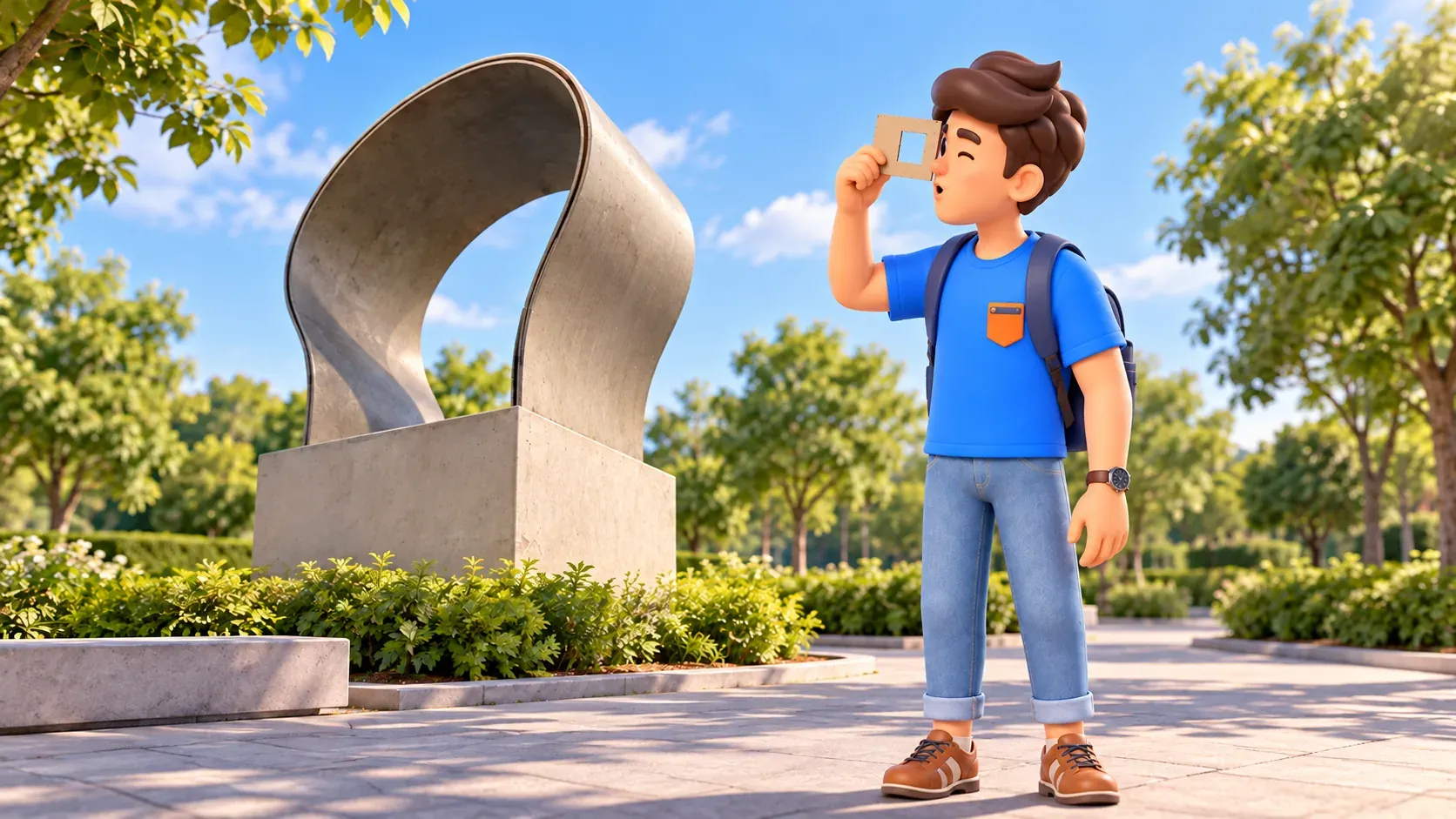
Belt II offers a different starting point. Its curving ribbon creates an opening through which the sky becomes part of the view. Look at the surface first, then at the shape of the empty space. One approach draws attention to material, the other to a frame for the surroundings. Both are ways of observing the same work.
Compare the curved form with the straighter lines of its base. Rather than seeking one definitive meaning, notice how stability and a sense of movement coexist. For a photograph, choose a position along the path without blocking it for long. Climbing onto the pedestal or touching the sculpture is unnecessary for finding an interesting angle.
Mind Accumulation by Micha Laury can be approached through repetition. Horizontal oval elements and slender supports make a different silhouette from the dense Demeure. Compare their apparent weight. This is an exercise in visual perception, rather than a claim about their actual mass or fabrication. The garden lets you make such comparisons at your own pace.
Give each chosen work a few minutes: an overall view, one feature and a short comparison. Stay longer if it catches your interest, or continue if it does not. Following your own curiosity makes the walk meaningful without a long lecture and leaves time for the river and a break. You are choosing a small experience rather than completing an inventory.
A riverside break, access and the onward journey
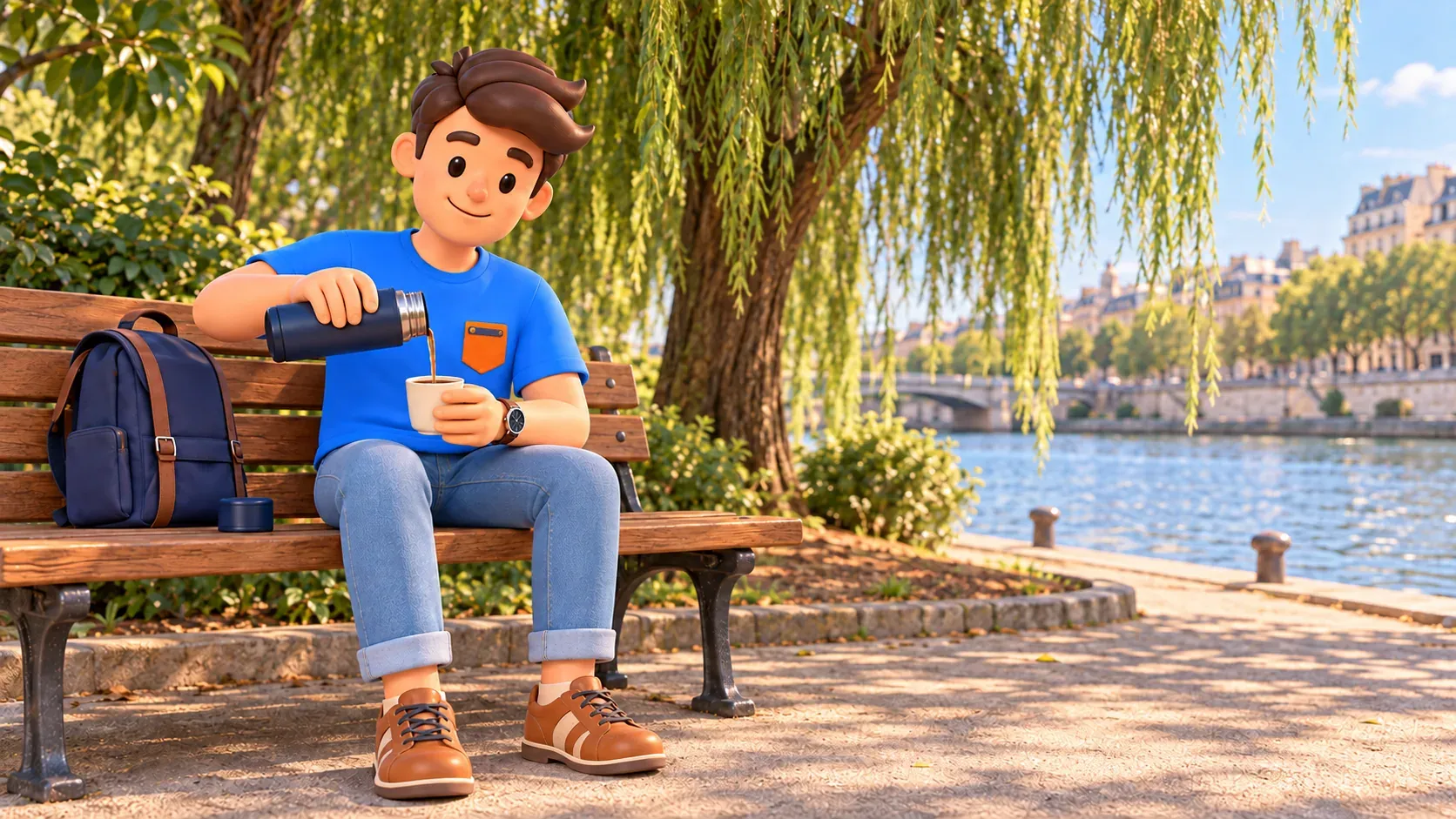
Rest on an available bench or another permitted place along the garden paths. The city lists drinking-water points and toilets accessible to visitors with reduced mobility. Keep away from the water’s edge when posing for a photograph, and keep your belongings nearby. With children, alternate sculpture stops with simple observations of the river rather than expecting sustained attention to every work.
At the check on 13 October 2026, the garden is open around the clock and entry is free. The city closes it in strong winds or bad weather. If it is closed, postpone the garden section and respect the barriers. Daylight helps when looking at surfaces and labels; summer evening dance sessions should not be treated as a guaranteed programme on any date.
The city marks the garden as accessible to visitors with reduced mobility, but the entrance opposite the institute used in this route is a staircase. This does not establish step-free access for the whole walk or its Métro stations. If stairs do not suit you, confirm an appropriate entrance and approach in advance. In rain, shorten the outdoor walk without assuming every institute interior offers free access.
Use RoadMe to turn your interests in art, walking and downtime into a fully worked-out personal plan for the whole trip. The app makes it much more convenient and effective to use a day-by-day itinerary shaped around your pace and budget.
After leaving towards Place Valhubert, finish at Gare d’Austerlitz. For another day nearby, choose our Jardin des Plantes walk with one museum, which focuses on nature and needs its own time allowance. From this walk, take away one observation: which sculptural form appealed to you, and how did the Seine and its surroundings change the way you saw it?


