
Jardin des Plantes Walk: One Museum and the Surrounding Streets
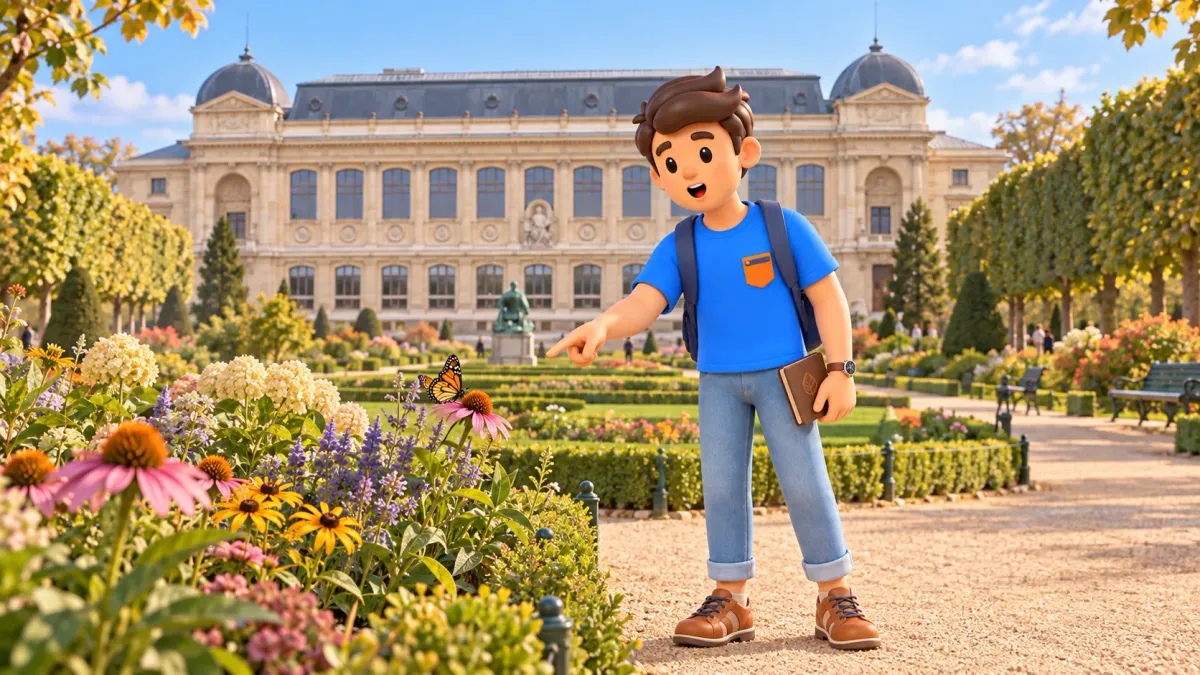
The Jardin des Plantes offers a Paris walk shaped by curiosity about nature. Plants, museum collections and architecture share a story about learning to observe, compare and explain the world. You can enjoy that story without mastering every scientific term. Choose a subject that interests you, make time for it, and leave space for the streets beyond the garden.
This plan takes roughly four hours: a selective garden walk, one museum, the exterior of the Grand Mosque of Paris and a stop at the Arènes de Lutèce. Choose the Grande Galerie de l’Évolution for the diversity of living things, or the geology and mineralogy gallery for crystals and Earth’s history. The itinerary includes one substantial museum visit, rather than both galleries.
A half day built around one museum
Begin at Place Valhubert, at the eastern end of the garden, approached from Gare d’Austerlitz on Métro lines 5 and 10. Follow the central perspective towards the western garden and your chosen gallery. Afterwards, leave towards rue Geoffroy-Saint-Hilaire, view the mosque from the street and continue via rue Lacépède and rue Monge to the arenas. Finish at Place Monge on Métro line 7.
Budget approximately 60 minutes for selected garden areas, 90 for one gallery, 15 for the mosque exterior and 25 for the arenas. Another 50 minutes covers all transfers, a short pause and entrance checks. That makes four hours: a planning estimate, not a measured walk. Travel from your accommodation and a full meal are additional. Extend an absorbing museum visit by shortening the stops that follow.
Prepare your stay with RoadMe, which creates a personal day-by-day trip plan around your dates, interests, pace and budget. A considered itinerary is much more convenient to use while travelling and helps this walk fit into your whole Paris visit.
For the museum version, choose a day when your selected gallery is open: both are normally closed on Tuesday. The garden and nearby outdoor spaces can instead provide a shorter walk that day. If an exhibition or children’s activity is the reason for your visit, select that session first and arrange the rest of the outing around it.
A garden that rewards observation
From the Place Valhubert side, discover the long perspective of straight paths and planted beds, with the Grande Galerie de l’Évolution at the far end. The garden is more than a green interval between buildings: its layout encourages comparison. Repeated planting areas help you notice different plant forms and understand how the overall composition changes through the seasons.
The site’s history began in the seventeenth century as a royal garden of medicinal plants. It was intended to train physicians and apothecaries and opened to the public in 1640. Practical knowledge, scientific study and a public walk were connected from its early history. Today, questions about plant diversity and conservation continue that habit of looking closely at living collections.
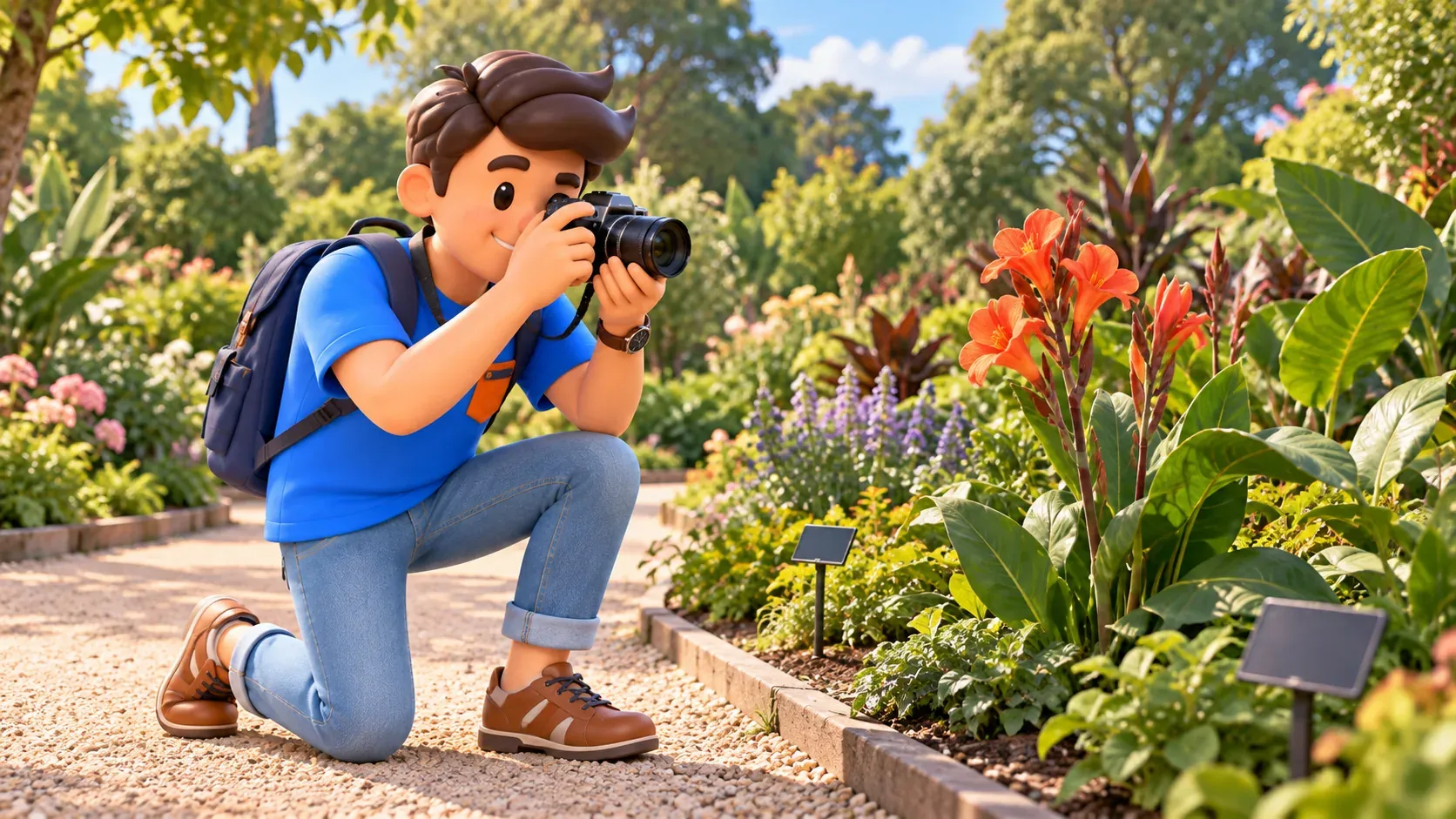
For your first hour, select the central beds and a small part of the École de botanique. Plants there are arranged with classification in mind, and labels turn casual looking into a small investigation. Choose one question: how leaves differ, how a stem is formed or why similar-looking plants belong to different groups. Comparing a few examples is more useful on a short visit than reading every name.
The season shapes the experience. Spring and summer draw attention to flowers; autumn brings fruit, leaves and the structure of planting. Winter makes branches, supports and the relationship between paths and buildings easier to see. Photograph from permitted paths and leave plants in place. These collections are for observation, and the next visitor deserves the same opportunity to examine an attached leaf or flower.
Individual gardens have their own conditions. The Alpine Garden opens from 8am to noon and closes annually from November to March. The ecological garden requires advance reservation. Neither is essential to the basic walk. Use accessible central areas for a straightforward visit, adding a specialist garden deliberately if its subject matters more to you than one of the later stops.
Choose a gallery: living diversity or minerals
Grande Galerie de l’Évolution
Choose the evolution gallery to explore how the diversity of life relates to environments and change over time. Its building has a separate history: Jules André’s zoology gallery opened in 1889, and the transformed Grande Galerie de l’Évolution opened in 1994. The stone façade and scale of the interior help place today’s displays within a longer history of presenting natural science to visitors.
Begin with the marine theme, then consider the celebrated procession of African savanna animals. These are museum specimens and scientific interpretation, rather than live zoo animals. Link what you see through a question about how bodies suit living conditions. Follow that with a selection of explanations about evolution or human influence on nature. Ninety minutes gives an introduction to chosen themes, rather than a complete visit to every level.
For a family visit, agree on a small shared task: each person selects an animal and notices one feature they want to understand. Discuss how that feature might help in its environment. The scale of the specimens then becomes the beginning of a conversation rather than the whole experience. If interest grows, give the gallery more time and save the arenas for another day.
As checked on 13 October 2026, the gallery opens daily except Tuesday, 10am–6pm. Last access to the ticket desks is one hour before closing; it closes on 1 January, 1 May and 25 December. The official address is 36 rue Geoffroy-Saint-Hilaire: follow museum signs to the operating entrance. The permanent collection and separate temporary programmes have different ticket conditions.
Galerie de Géologie et de Minéralogie
Choose geology and mineralogy if Earth’s structure, crystals and meteorites appeal more. This is separate from the MINES Paris mineralogy museum elsewhere in the Latin Quarter. Stay within the Jardin des Plantes complex; this gallery’s official address is also 36 rue Geoffroy-Saint-Hilaire, near the southwestern part of the garden. Follow the name and entrance signs for your selected exhibition.
The Trésors de la Terre display encourages you to see minerals as evidence of natural processes. Start with a large crystal: notice faces, repeated shapes and variations in colour. Compare it with other specimens and meteorites. Your question can move from whether an object is beautiful to what its form and composition reveal about its origin. A small selection of cases can then become a coherent visit.
Until 25 October 2026, published opening hours are 10am–6pm daily except Tuesday. From 26 October to 28 February 2027, closing is at 5pm. Last entry is one hour before closing. The gallery is currently temporarily inaccessible to wheelchair users. If you need that access, choose another visit after confirming suitable arrangements; the two galleries are not equivalent in their present accessibility.
The paleontology and comparative anatomy gallery at 2 rue Buffon has been closed for renovation since 19 January 2026, with reopening announced for summer 2027. It is therefore not a third operating museum option for this walk. Dinosaur programmes in the evolution gallery have separate conditions and do not mean that the closed paleontology building has reopened to visitors.
Beyond the garden: the mosque and Roman Paris
After your chosen museum, leave the western side towards rue Geoffroy-Saint-Hilaire. At Place du Puits-de-l’Ermite, make a short exterior stop beside the Grand Mosque of Paris. White walls, green roof tiles and a minaret provide a different architectural rhythm after the museum façades. Observe from the public street and leave the entrance clear for people using the building.
The mosque opened in 1926. Its Moorish Revival architecture connects North African and Andalusian motifs. For this itinerary, compare its silhouette and decorative surfaces with the stone galleries of the garden. A visit to the courtyards is a separate choice: ordinary tourist visits are paid, and visitor access closes on Fridays and Muslim festival days. Worship spaces have their own purpose and access conditions.
Return along rue Geoffroy-Saint-Hilaire towards rue Lacépède, head west to rue Monge, then north towards rue de Navarre and the arena garden entrance. This movement is included in your time allowance; the streets are part of the experience. Put your phone away at road crossings and stop for photographs where others can pass. Notice the shift in scale from scientific garden to residential neighbourhood.
The Arènes de Lutèce recall the Roman city that preceded modern Paris. Remains were rediscovered during construction of rue Monge in 1869, then preserved and restored. Understand the present setting as a combination of ancient traces and later conservation work. The broad open ground and stone seating help you imagine its earlier arrangement without needing an elaborate reconstruction of every vanished feature.
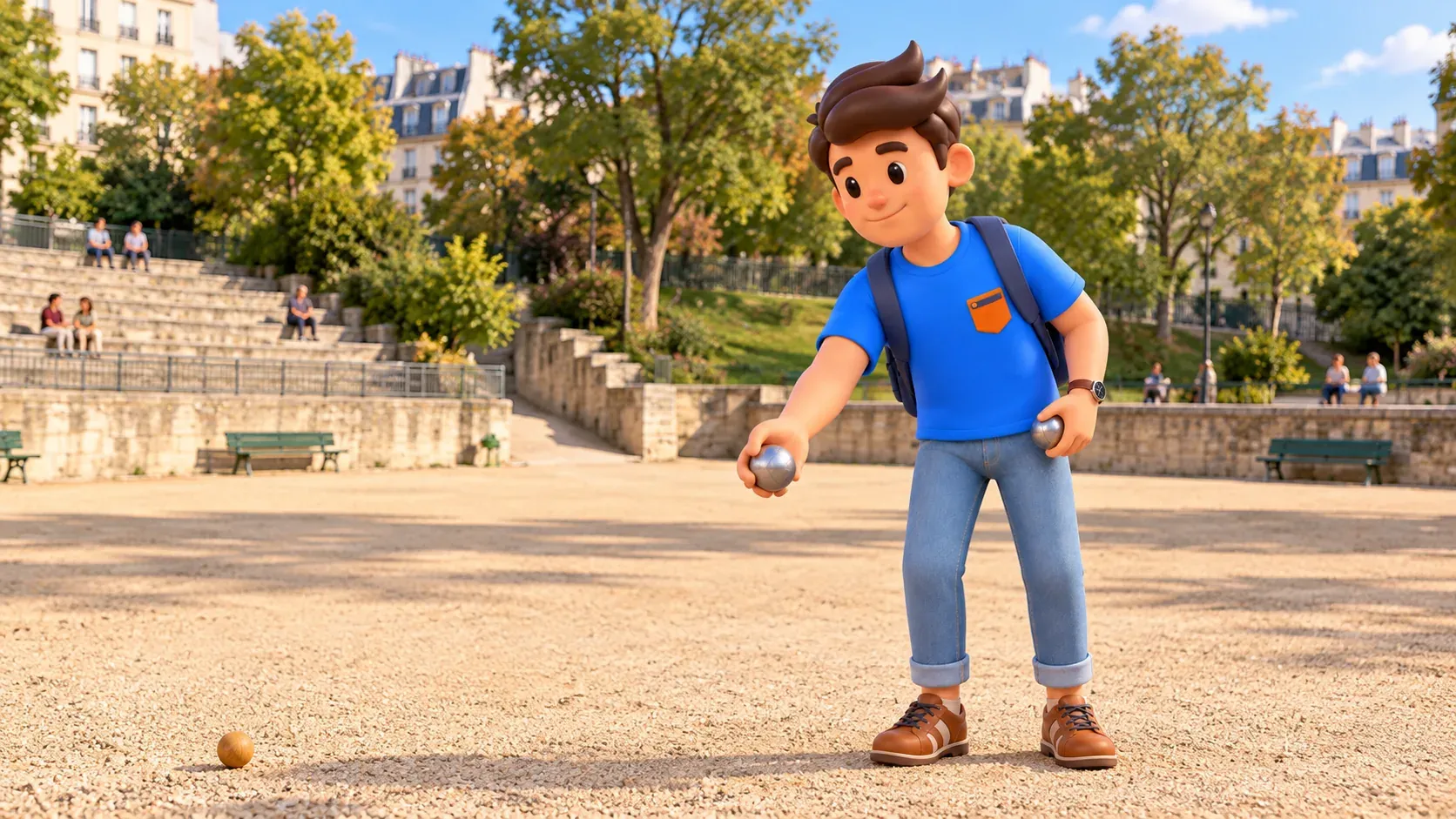
The arenas are still used in everyday city life, including walks and games of pétanque. Pause near the edge, leaving space for people playing. From 1 to 24 October 2026, the municipal timetable lists 8am opening on weekdays and 9am at weekends, with closing at 7.30pm. From 25 October, closing is at 5.45pm. This free space has seasonal hours, rather than unrestricted round-the-clock access.
Make the day comfortable
For the basic version, roughly 10am–2pm works as an example: garden, one gallery, mosque exterior and arenas. Each section has its own calendar. Until 24 October 2026, the Jardin des Plantes opens daily, 8am–6.30pm; the next published winter period runs until the end of February with closing at 5.30pm. Admission stops and evacuation begins 15 minutes before closing. Severe weather can close the garden.
Choose tickets for the specific venue. Free garden access does not include ordinary admission to galleries, the zoo or glasshouses; these have individual tariffs, concessions and programmes. For a short stay, selecting one interest and giving it enough time is more useful than collecting bookings just in case. Check your actual travel date, particularly if a museum activity is intended for a child.
The evolution gallery lists arrangements for visitors with reduced mobility; confirm the entrance and assistance you need with the institution. The arenas are partially accessible, and their toilets are not adapted for wheelchair users. Choosing central garden paths avoids making the maze hill an obligatory climb, but does not establish a step-free route throughout the outing. Assess entrances, surfaces and rest needs individually.
Use RoadMe to organise nature, museums and rest into a personal plan for the entire trip. An itinerary shaped around your interests and pace is much more convenient and effective to use in the app than assembling each day from separate lists.
After the arenas, finish at Place Monge. On another day, our Latin Quarter walk from Saint-Michel to the Panthéon focuses on streets, learning and architecture. Give the Jardin des Plantes its own theme: a small observation on a path, one museum question and an unhurried transition between different eras of Paris.


