
Sant’Erasmo in one day: a walk through lagoon landscapes
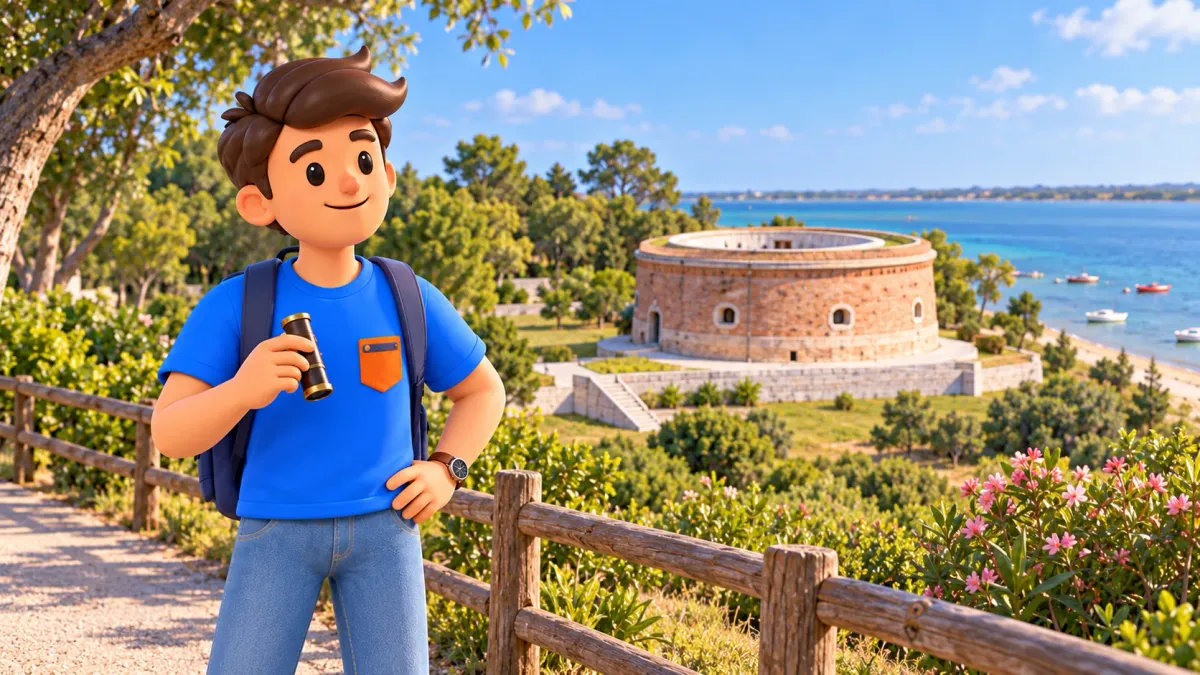
Allow about five and a half hours ashore for this Sant’Erasmo day trip. Start at Capannone, follow Via dei Forti to Massimiliana Tower and return along the same road. After lunch, take Via de le Motte towards the settlement around Cristo Re church, then retrace your route to Capannone. Two out-and-back walks give the day a clear structure without committing you to a full circuit of the island.
Boat journeys, waiting for services and reaching your departure point in Venice are additional. The basic plan includes the tower and church from outside, views across working farmland and a pause beside the lagoon. Farm tours, wine tastings and building interiors need separate arrangements.
Is Sant’Erasmo the right island for your day?
Sant’Erasmo is often called Venice’s vegetable garden. That description refers to working agricultural land, with vegetable plots, fruit trees and vineyards. Its appeal lies in seeing another part of the lagoon’s life, where the spaces between landmarks matter as much as the buildings themselves.
Try RoadMe for a fully worked-out personal trip plan based on your dates, interests and pace. The app makes it easier to give lagoon landscapes their own day and coordinate them with museums, walking and downtime throughout your Venice stay.
This can be a rewarding change after several museum visits. However, a green island still involves walking, and stretches beside fields may offer little shade. The generous walking and rest allowances below are part of the experience rather than spare time to fill with extra attractions.
If your Venice stay is very short and famous architecture is your priority, keep Sant’Erasmo for another trip. For a different island day, compare our Murano and Burano time plan, which combines a glass collection with colourful streets. Choose according to what you want to experience, rather than adding every island to the same checklist.
Arrive and depart at Capannone
ACTV line 13 connects Fondamente Nove with Murano Faro, Vignole and Sant’Erasmo, with services towards Treporti. Find a departure that calls at Sant’Erasmo Capannone on your actual date. Chiesa and Punta Vela are different stops on the same island; getting off there changes the route.
Choose a return service from Capannone before deciding when to leave Venice. Check the complete journey, direction and current operator notices. An old description of boats running roughly hourly is not a reliable timetable, and a seasonal connection from Lido should not be treated as an all-year service.
You do not need to bring a bicycle for this walking plan. If cycling appeals, confirm local rental availability, sizes and return arrangements first. A bicycle changes the day’s timing, but does not give access to private fields or vineyards.
Nearby Lazzaretto Nuovo is a separate island. Seeing it across the water does not create a pedestrian connection; visiting requires its own transport and access arrangements. Keep that excursion outside this day’s basic programme.
After landing, note the stop’s name and identify the two directions you will use. Via dei Forti leads towards the tower in the southwestern part of the island. You will come back before taking the road towards the village, so there is no need to work out an entire island circuit immediately.
A five-and-a-half-hour budget, including all walking
These are planning estimates, not personally measured walking times. The walking allowance includes both outward and return legs, plus short approaches. Time listed beside a building means time spent stopping there, so the return journey does not disappear from the calculation.
- 15 minutes for arrival and orientation at Capannone.
- 150 minutes for all walking on both out-and-back sections.
- 25 minutes outside Massimiliana Tower.
- 20 minutes beside an accessible stretch of southern shoreline.
- 20 minutes outside Cristo Re and around the settlement.
- 60 minutes for a lunch arranged in advance.
- 20 minutes for additional rest.
- 20 minutes of flexible time.
The total is 330 minutes ashore. Add time if you walk more slowly, or leave out the village section. Both boat journeys and their waiting time extend the outing beyond these five and a half hours; they are not hidden inside the flexible allowance.

Follow Via dei Forti to Massimiliana Tower
From Capannone, follow the public road Via dei Forti towards the southwestern tip. Stay on the road: a tempting opening between crops may be a farm entrance or a private track. Stop where there is space to do so without obstructing residents, rather than stepping into planted ground for a better photograph.
The island has an unexpected defensive history. It once formed part of the coastal barrier between lagoon and sea, before shoreline changes and sediment accumulation altered its setting. The fortifications make more sense when you think about the nearby sea entrance, rather than seeing them as isolated monuments among fields.
Massimiliana Tower is a circular nineteenth-century Austrian fortification occupying the site of an earlier French defensive work. Its low, solid form offers a striking comparison with Venice’s tall bell towers. Look from an accessible public position at its shape and relationship to the water. You do not need a long interior visit to understand why this location mattered.
Do not assume that an exhibition venue is open daily or that visitors can climb onto the roof. Current cultural activity does not establish those conditions. The base route works with the tower closed; if an interior visit is confirmed for your date, allow roughly 45 additional minutes and check the particular event’s entry arrangements.
Enjoy the shoreline without crossing the shoals
After the tower, pause beside the water from an accessible firm shore. Bacàn can refer to the coastal area and nearby shoals, whose appearance changes with water levels. It should not be understood as a promise of the same broad sandy beach on every visit.
For this itinerary, use an open public approach and stop on land. There is no need to wade out to a sandbank or search for a waterside shortcut. Swimming, a boat excursion and a long beach afternoon are separate activities with their own timing and conditions.
Look at the landscape as more than a background for pictures. The low land, open water and vegetation show a different scale from Venice’s built-up streets. A quiet pause can be more satisfying than finding another named attraction. If wind makes the exposed shore uncomfortable, shorten this stop and return earlier.

Plan lunch around the island’s real options
Return along the same Via dei Forti towards Capannone after the southern walk. Arrange your meal before arriving: this is not a neighbourhood where another café necessarily appears around every corner. Confirm that your chosen venue serves individual visitors at lunchtime, or bring food and eat where permitted, respecting private gardens and working property.
One useful detail concerns Il Lato Azzurro. Its restaurant describes lunch by prior arrangement for groups of at least fifteen people. A guidebook listing therefore does not make it a dependable walk-in lunch stop for two. The hour in our budget is your meal and rest allowance, not a restaurant reservation.
The island’s best-known crop is the violet artichoke. Its tender first apical buds are called castraure, with a short season around the beginning of the spring harvest, from approximately late April. If tasting them is your main reason for visiting, confirm the actual harvest and producer offerings. Autumn visitors should not expect fresh castraure simply because an artichoke appears on a sign; preserved artichokes are a different product.
If your trip combines food, nature and art, use RoadMe to prepare a personal day-by-day itinerary around your interests and pace. Planning in the app makes it easier to balance those experiences across the whole holiday while keeping room for leisurely meals and rest.
Take Via de le Motte towards Cristo Re
The second walk runs from the Capannone area along Via de le Motte towards the settlement around Cristo Re church. Return along the same road afterwards. Do not cut through vineyard rows: seeing where you want to go does not mean that the land between you and the village is a public passage.
Change what you look for on this section. The tower was the focal point beside the water; now the interest lies in houses, cultivated plots and small channels. Notice the boundary between domestic space and agricultural work, and the changing view along the road. You can appreciate this landscape without booking a tasting or entering a farm.
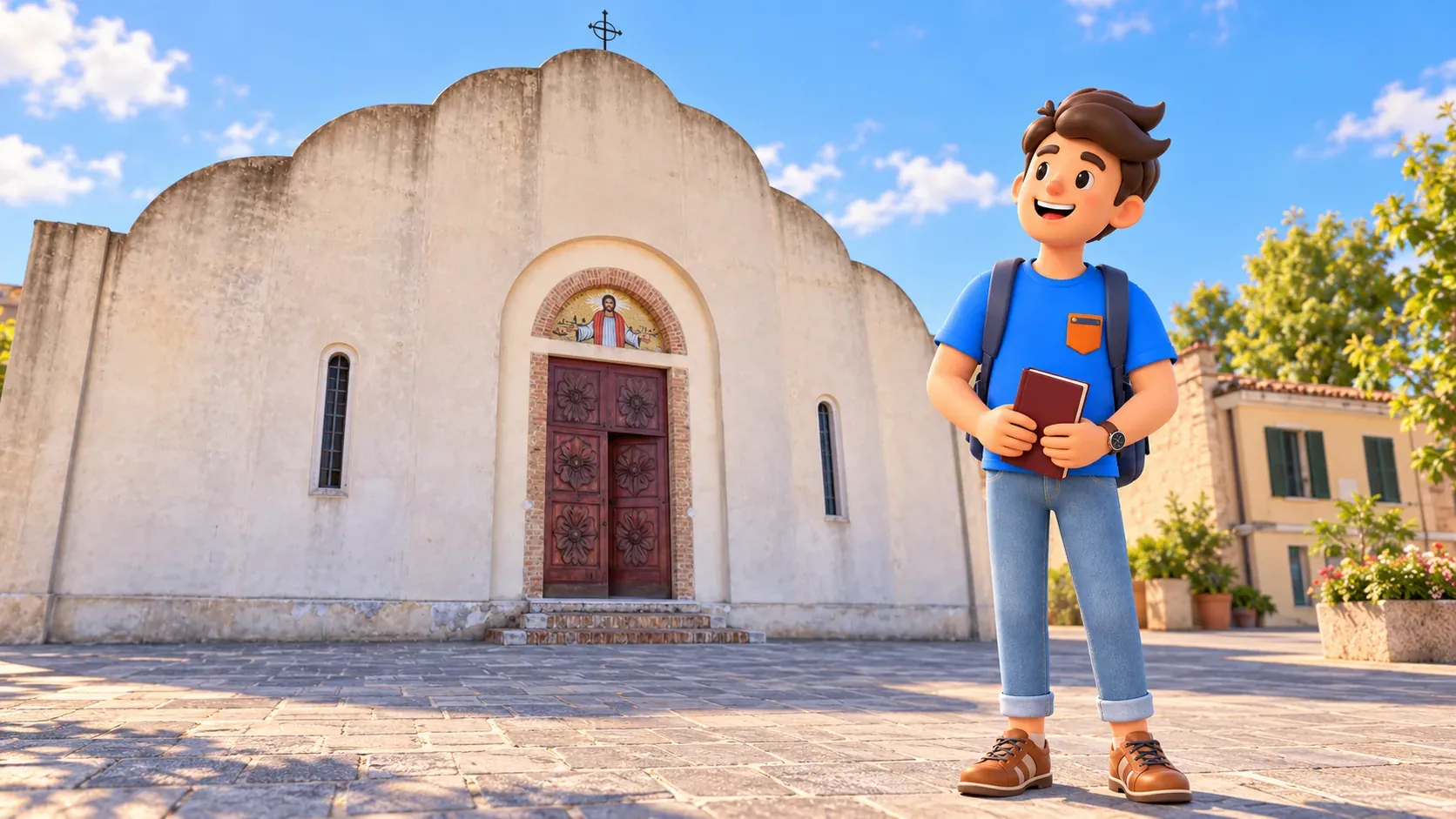
Cristo Re was consecrated in 1929 and designed by Brenno Del Giudice. Compared with the medieval churches of other lagoon islands, it represents a relatively recent layer of community life. From outside, look at the pale façade rising in curved stages towards the centre, suited to the settlement’s modest scale.
The basic programme stays outside. If visitor access is confirmed and worship allows it, add twenty to thirty minutes for the interior. A service time is not a general sightseeing schedule, and another Venetian church’s visiting hours do not apply here.
Vineyard gates are not invitations to explore independently. If you want a wine visit, contact the producer and confirm the format, date and duration. Make it the day’s main activity by replacing part of the walk, or extend the outing. Travel to the property, meeting your host and tasting cannot sensibly be squeezed into the twenty-minute flexible allowance.
Shorten the walk and return without rushing
For a shorter introduction, keep only the Capannone-to-tower section and its return: 15 minutes for arrival, about 60 for all walking, 25 outside the tower, 20 by the shore, 45 for food and 15 flexible minutes. That gives roughly three hours ashore, without Cristo Re or building interiors.
On the full route, walk back from the church to Capannone with your chosen departure in mind. Change to another landing only after checking its service and recalculating the walk. Do not turn the remaining flexible time into an unplanned trip around the northern end.
Bring water, suitable shoes and sun protection. After rain, ordinary roads are a more practical choice than speculative field paths. Flat terrain alone does not establish wheelchair accessibility: surfaces, the boat approach and individual needs require a separate check.
For a cultural island day involving buses and the seaside, compare our Lido route from San Nicolò to Malamocco. Choose Sant’Erasmo when long views, working fields and a few unhurried stops are the experience you want.


