
Murano and Burano in one day: how to divide your time
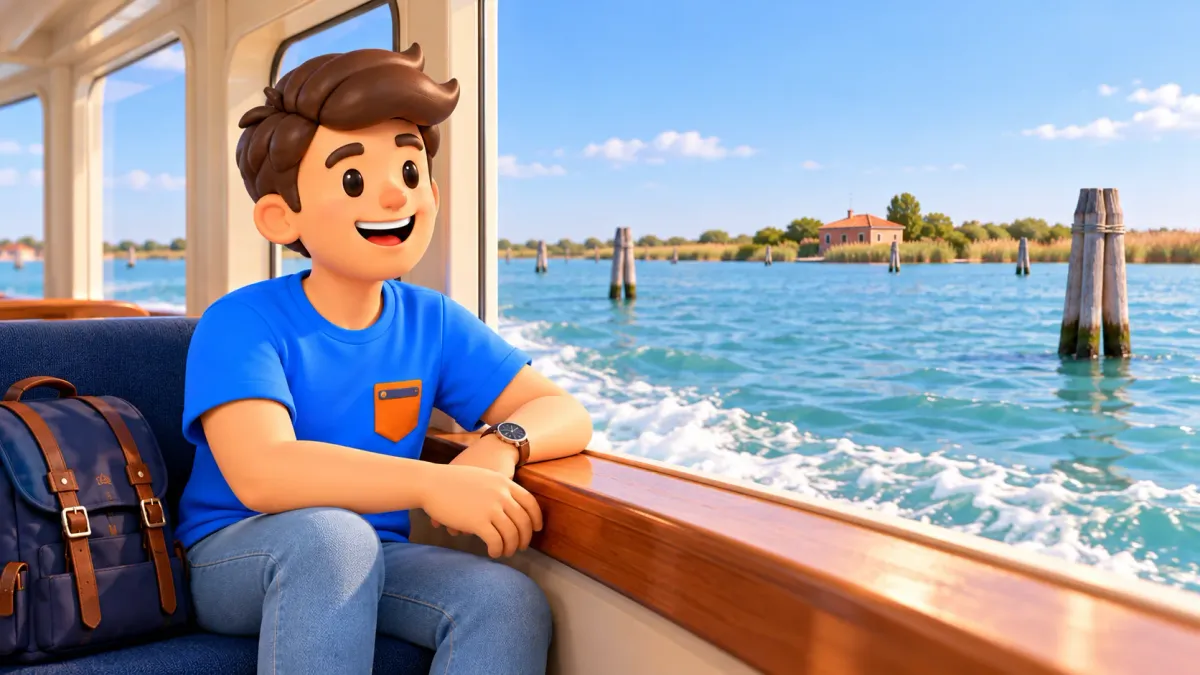
Give Murano and Burano a separate day: approximately three hours on Murano and two and a half on Burano, plus all boat journeys and waiting. The main plan below includes the Glass Museum, walks on both islands and lunch. The Lace Museum, church interiors and a glassblowing demonstration are separate choices rather than invisible additions to the same allowance.
Start at Murano Colonna and finish the Murano walk at Murano Faro, the departure point for continuing to Burano. If lace is your priority, consider reversing the islands: Burano’s museum closes earlier. Choose the main interest before the boats, so opening hours support your itinerary instead of disrupting it halfway through.
Choose your main visit before leaving
Murano offers glass, from the history of materials and forms to a living craft. Burano has a different scale: small houses, narrow canals and a lace tradition. Feeling the contrast does not require entering every museum and workshop. One substantial interior visit and two walks give the day a clear shape.
Try RoadMe for a fully worked-out personal trip plan based on your dates, interests and pace. Planning in the app makes it easier to distribute islands, art and downtime across your whole visit instead of repeatedly connecting separate sightseeing lists yourself.
For a first visit, the basic route chooses the Glass Museum. If textiles and intricate handwork attract you more, make the Lace Museum the main visit. This is about giving your strongest interest enough time rather than leaving it whatever remains after shops and transport.
For enthusiasts of both crafts, a longer day with two museums is outlined below. Check calendars and opening hours before choosing departures. Having a whole day available does not remove an individual collection’s earlier closing time.
The basic budget: five and a half hours ashore
These are planning estimates, not measurements from a personal walk. Walking is listed separately from time spent at stops and includes reaching the next departure point. Add all three water journeys—Venice to Murano, Murano to Burano and Burano to Venice—together with waiting and your approach to the Venice landing.
- Murano: 15 minutes for arrival and orientation.
- 25 minutes stopping beside canals and shop windows.
- 75 minutes inside the Glass Museum.
- 15 minutes outside Santi Maria e Donato.
- 45 minutes for all walking from Colonna to Faro.
- 5 minutes of spare time. Murano total: 180 minutes.
- Burano: 10 minutes for arrival and orientation.
- 35 minutes stopping beside colourful canals.
- 15 minutes for Piazza Galuppi and San Martino outside.
- 30 minutes for all walking, including returning to the landing.
- 45 minutes for lunch, 10 for a pause and 5 spare. Burano total: 150 minutes.
That makes 330 minutes on land. Insert your actual connections to calculate the time from leaving your accommodation to returning. If you want an hour or more for lunch, enlarge that allowance. An extended tasting menu cannot be fitted into forty-five minutes simply because the restaurant is beside the route.

Arriving on Murano: three different stops
For this sequence, choose an arrival at Murano Colonna. It gives you a convenient beginning along Fondamenta dei Vetrai towards the museum area. Murano Museo is closer to the Glass Museum; Murano Faro serves the onward journey to Burano on route 12. These names identify separate locations, not different doors at one landing.
Useful connections vary according to whether you begin at the railway station, Fondamente Nove or the San Marco area. Check ACTV for your date and intended arrival stop. If your chosen boat takes you directly to Museo, adapt the beginning rather than travelling back to Colonna merely to reproduce every step. Reconsider the walk to Faro accordingly.
An early start helps when it leaves time before the museum. It does not guarantee an empty boat, no queue or a working furnace in every workshop. The museum opens at 10:00, so use an earlier arrival for the waterfront rather than waiting outside a closed door.
Murano’s canals and the Glass Museum
Follow Fondamenta dei Vetrai from Colonna, cross Ponte Longo to Riva Longa and continue towards Fondamenta Giustinian. Shop windows offer an introduction to glass as thin and transparent, dense and colourful, simple in shape or intricate in pattern. A few attentive pauses can be more rewarding than stopping equally at every display.
The 1291 decree transferring furnaces from Venice to Murano belongs to the island’s production history. It does not mean glass was invented here that year. The craft has a much longer past. Remember the relationship between island, organisation of production and skill rather than a convenient but mistaken starting date for all glass.
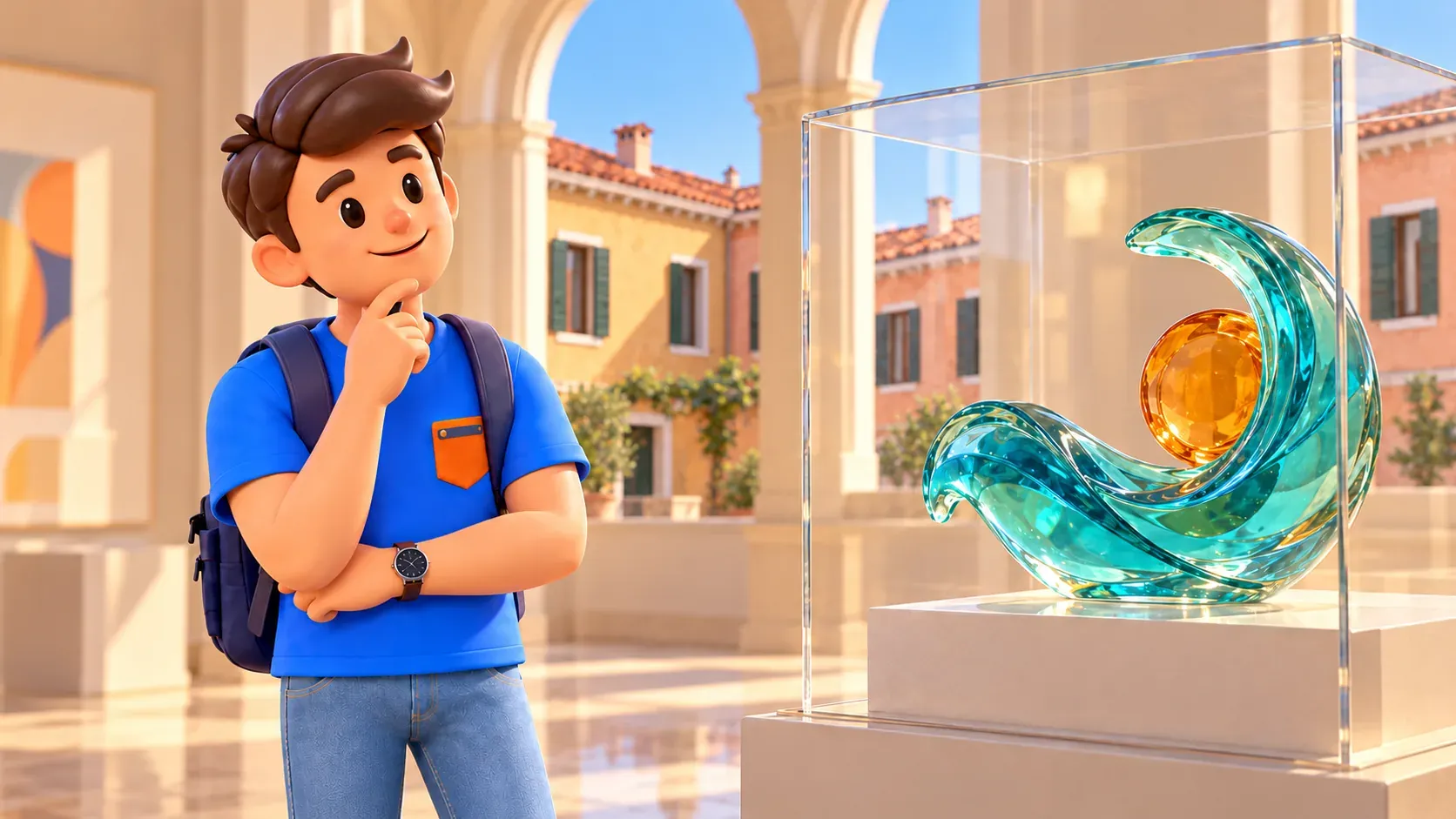
Founded in 1861, the museum provides a historical view of objects and artistic approaches. Its chronological story includes ancient pieces and Murano work from the fourteenth century to the present. Allow seventy-five minutes for a first visit, choosing several types of objects and comparing their forms, colours and techniques.
The current schedule is daily opening: 10:00–18:00 from 1 April to 31 October, last admission 17:00; 10:00–17:00 from 1 November to 31 March, last admission 16:00. Last entry is not enough time for a complete visit. The main sequence places the museum in the morning, with the onward walk to the boat afterwards.
Nearby Santi Maria e Donato adds another layer to the island, with a medieval appearance associated with its twelfth-century rebuilding. The fifteen minutes in the budget cover the exterior. Its celebrated mosaics are inside. To see them, add about half an hour and account for the separate tourist admission conditions.
From the museum to Faro and across to Burano
After the basilica, return through the museum area and Riva Longa to Ponte Longo, cross back, then head along Fondamenta Manin towards Bressagio and Murano Faro. This journey is included in Murano’s forty-five-minute walking allowance. Do not wait for a Burano boat at Museo simply because you are already near that stop.
At Faro, check route 12’s direction, the next useful departure and the current boarding point. The lighthouse helps explain the place name, but its interior or an ascent is not part of the itinerary. A landmark near a departure should not become another compulsory visit without checking access.
Give yourself permission to enjoy the lagoon during the crossing. Time aboard does not replace lunch: if the next section involves more walking, think about water and everyone’s comfort beforehand. Neighbouring islands do not imply an immediate connection or guaranteed space on the next boat.
Burano: colourful canals, a square and lunch
Begin around San Mauro and continue towards Via Baldassarre Galuppi. It is easy to linger beside the first appealing canal, so decide when to eat. Lunch is already allowed for in the basic schedule and can come immediately after arrival if hunger is making sightseeing less enjoyable.
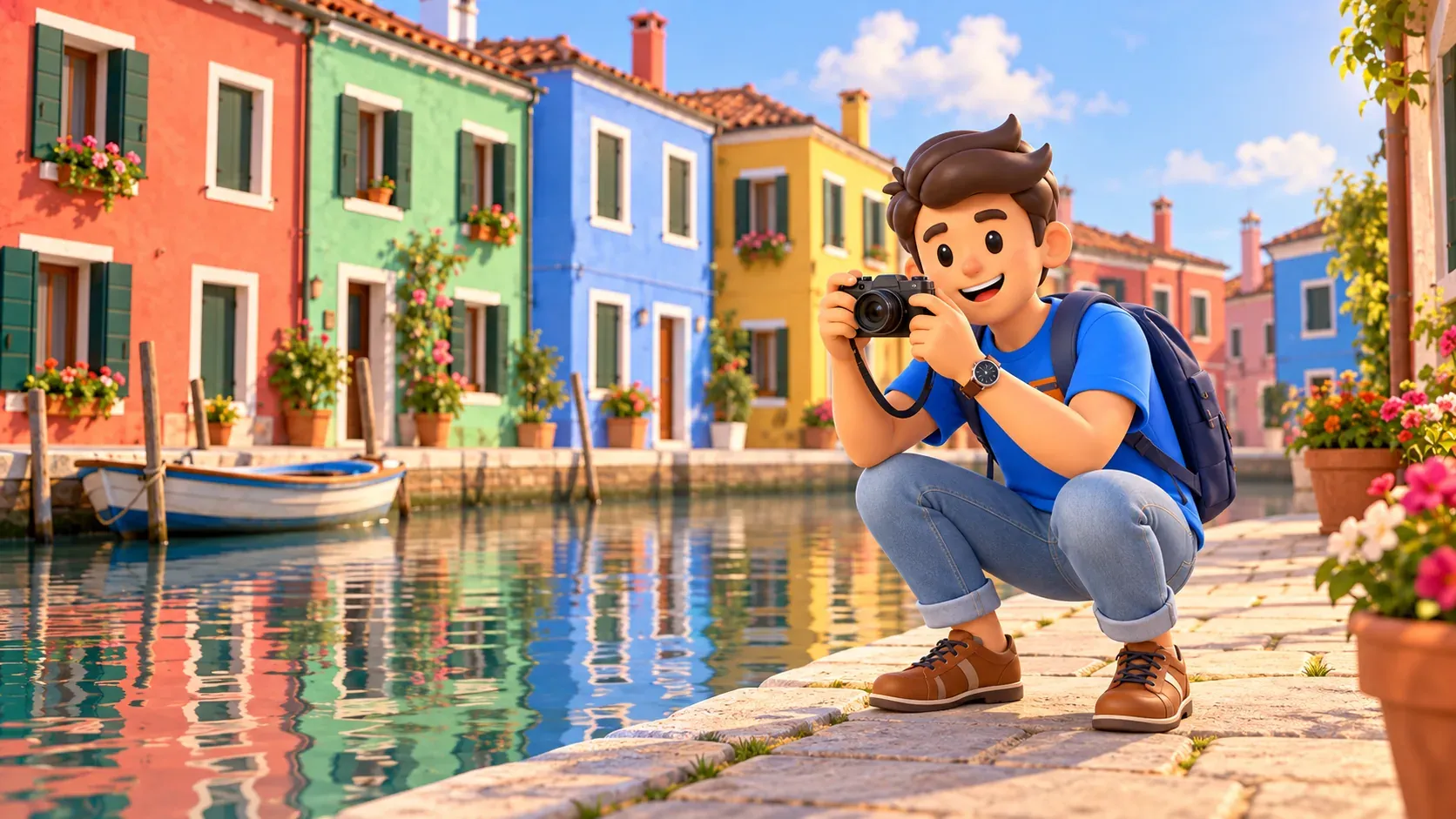
Distribute the remaining walk between canals, the square and the Tre Ponti area, then return to Burano’s landing. Choose several combinations of colour and reflection instead of trying to photograph every house. Keep residential entrances clear and ask before taking close photographs of people.
Piazza Galuppi and San Martino are exterior stops. The Lace Museum is nearby, but admission is not included in this section’s two and a half hours. That distinction lets you decide beforehand why to enter, rather than discovering halfway round that lunch and the return walk have disappeared from your calculations.
For a trip with different interests, use RoadMe to prepare a personal day-by-day itinerary around your preferences and pace. Planning in the app helps give your favourite craft and proper downtime a place across the whole holiday instead of rebuilding the next day’s programme every evening.
When lace comes first, or you want both museums
The Lace Museum opens 10:00–16:00, with last admission at 15:30, and closes on Mondays. It occupies the historic lace school, founded in 1872, and has operated as a museum since 1981. For an interest in handwork, it deserves an hour of its own rather than the final minutes before closing.
If lace matters most, begin on Burano: museum in the morning, walk and lunch, then a boat to Murano Faro. Walk Murano in reverse and finish at Colonna, checking the onward connection from there. Replacing the Glass Museum’s seventy-five minutes with one hour of lace gives an estimated five hours and fifteen minutes ashore, plus the boats.
For both museums, add an hour of lace to the basic five and a half: approximately six and a half hours on the islands, plus water journeys. Burano before Murano is often more practical because the Lace Museum closes earlier. For seventy-five minutes in the Glass Museum with breathing room, aim to enter by 15:00 in winter or 16:00 in summer rather than at last admission.
Insert the actual boats before deciding that this order fits both museums’ opening hours. Otherwise keep one main collection or divide the islands between separate days. The two-museum version does not work on Mondays: the Lace Museum is closed while the Glass Museum opens daily.
Museum tickets and a workshop are separate decisions
MUVE offers an Islands Museums ticket covering the Glass Museum, Lace Museum and Torcello Museum. It is valid for three months and allows one entry to each museum. It neither requires all three in a single day nor functions as a transport pass. Compare its coverage with your actual intentions before buying, rather than relying on the package name.
A glassblowing demonstration is also different from a museum visit. If you want to see the process, choose a specific available programme, establish its starting time, duration and conditions, then rebuild the day. Do not assume a demonstration is included in museum admission or available whenever you arrive. Shopping deserves a separate allowance too; ask about the origin of any piece that interests you.
Before heading back
Wind and rain matter on open water and around landings; the waiting allowance must be real. Avoid combining this outing with an evening commitment reachable by only one final suitable boat. If tired, shorten the walk while preserving the route to your confirmed departure.
Do not use the Glass Museum as assumed suitcase storage: bulky luggage needs to be left elsewhere before visiting. For limited mobility, check specific bridges and boarding as well as the museum’s lift. Walking between different parts of the island does not become entirely step-free because one building provides accessible facilities.
For more time on each island, see our half-day Murano walk and Burano itinerary. For a first combined outing, keep the choice clear: the craft you care about, food, walking and three water journeys that genuinely fit your day.


