
Two hours around San Marco: a Venice landmark walk
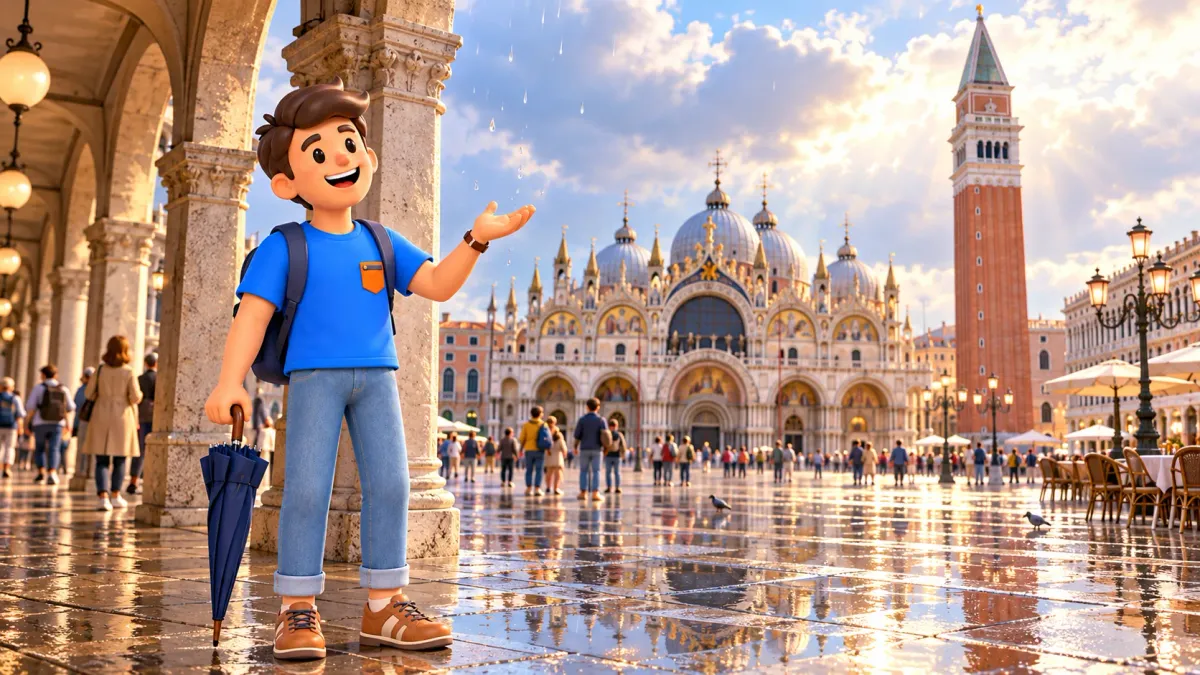
Two hours around San Marco can take in the square, Clock Tower, basilica facade, campanile, the outside of the Doge’s Palace and a view of the Bridge of Sighs. Finish near San Zaccaria. Distances are modest, so the useful decision is where to pause, rather than how to turn a few minutes beside every building into a complete museum visit.
This is an exterior walk. Admission to the basilica, palace and towers is not included in the two-hour estimate. If you already have a ticket, use the walk as a separate block before or after it. All durations are planning estimates rather than measured visits; pedestrian traffic, weather and temporary restrictions can change the pace.
How to spend two hours around San Marco
Start on the western side of Piazza San Marco, where you can see the basilica across the open space. Continue towards the Clock Tower, look at the basilica facade and campanile, then move onto the Piazzetta and waterfront. After Ponte della Paglia, continue towards San Zaccaria. There is no need to return to your starting point unless another part of your day requires it.
The two hours begin once you are at the square. Add the approach from Santa Lucia station, your accommodation or arrival stop separately. A gap between a train arrival and a booking is not the same as two hours of sightseeing here. Work out the time you actually have on site before deciding how much to include.
To make this short walk part of a complete day shaped around your interests, time and pace, try RoadMe: the app works out a personalized itinerary. It is much more convenient than fitting each short route into the rest of your plans and repeatedly rebuilding the day yourself.
| Section | Estimated time | Main purpose |
|---|---|---|
| Square and Clock Tower | 20 minutes | Understand the setting and find the clock |
| Basilica and campanile outside | 25 minutes | Choose a few details to notice |
| Palace and Piazzetta | 20 minutes | Connect buildings with the water |
| Waterfront | 15 minutes | Change perspective and pause |
| Ponte della Paglia and Bridge of Sighs view | 15 minutes | A short viewing stop |
| San Zaccaria | 15 minutes | Finish near the church square |
| Shared buffer | 10 minutes | Transitions and a change of pace |
Use this as a framework, not a stopwatch. If a facade interests you, shorten the waterfront pause or finish earlier. A coherent sequence matters more than keeping every number. Table-service coffee, shopping and extended photography also take time, so decide which of them belongs in this particular two-hour window.
If your group separates for a photo or coffee, agree on a recognizable meeting point. San Marco is too broad a description for finding each other quickly. A specific side of the square and a clear landmark can save the buffer from disappearing into messages and repeated crossings.
The square and Clock Tower: begin with the whole setting
From the western side, look along the Procuratie towards the basilica. Resist the immediate urge to join a queue or find a doorway. Pause to notice the change of scale between the broad square, the arcades and the tighter exits into the city. This helps the separate monuments make sense as parts of one place.
Move towards the Clock Tower on the northern side, near the basilica. Its astronomical clock and figures above add the theme of civic time to the architecture. The two large bronze figures are traditionally called the Moors because of the metal's dark patina. They form part of the bell-striking mechanism, rather than being purely static decoration.
For an exterior stop, look at the dial, the top and the passage below. You do not need to wait for a special display for the walk to count as a success. Visiting the mechanism inside is a separate activity with its own conditions. Looking from the square and entering the tower are different plans.
Choose two or three observations instead of trying to read a long explanation while watching everything at once. Find the dial, then the figures, then consider how the arch below connects the square with city streets. This simple sequence suits a short walk without requiring a complete interpretation of every astronomical symbol.

The basilica and campanile: surfaces and height
At the western facade of St Mark’s Basilica, notice marble, mosaics, arches and sculptural decoration. Stand back for a wider view before moving closer to one detail. Alternating between the whole and a selected feature prevents the richly decorated surface becoming only a background for a single photograph.
A few minutes cannot explain the entire iconography, and they do not need to. For a first exterior encounter, notice how different materials and artistic elements work together. Keep one question you might explore during a later interior visit. The facade is already a worthwhile part of discovering the building.
Entering changes the programme: you need an available admission time, security procedures and time inside. As checked on 17 October 2026, tourist access to the basilica normally starts at 2 p.m. on Sundays and religious holidays; the museum and loggia have separate arrangements. A morning museum queue does not mean the whole basilica is open to tourists.
The campanile stands separately from the church and gives the square its vertical scale. Its history includes a major break: the previous tower collapsed in 1902, and the rebuilt tower opened in 1912. The familiar silhouette therefore also tells a story of restoring a city image, rather than a monument surviving entirely unchanged.
Keep the ascent for another part of the trip. A lift does not make the whole visit instantaneous: admission, possible waiting and time at the top remain. You can choose to go up, but then shorten the walk and treat it as a different programme instead of keeping every other stop at its original length.
Distinguish the two towers before continuing. The campanile is the tall freestanding bell tower; the Clock Tower belongs to the building line on another side of the space. They are useful outdoor landmarks and different admission targets. A ticket mentioning a tower does not make the visits interchangeable.
The Doge’s Palace and Piazzetta: move towards the water
Continue to the space between the Doge’s Palace and the library side, opening towards the waterfront. The Piazzetta changes the direction of your gaze from square and basilica to the broader basin. Look back once to see how buildings frame the ceremonial approach to Venice from the lagoon.
The palace was the government centre of the Venetian republic. That brief context gives its decorative facade a meaning beyond an attractive residence. Notice the lower arcades, the lighter rhythm of the gallery above and the patterned upper wall. Stop where you leave room for others, rather than seeking the most crowded viewing position.
The exterior walk does not include palace rooms or the passage inside the Bridge of Sighs. A nearby entrance does not make them a five-minute addition. If the palace is your main purpose, choose that ticket and visit time first, then add a suitable part of this walk around it.
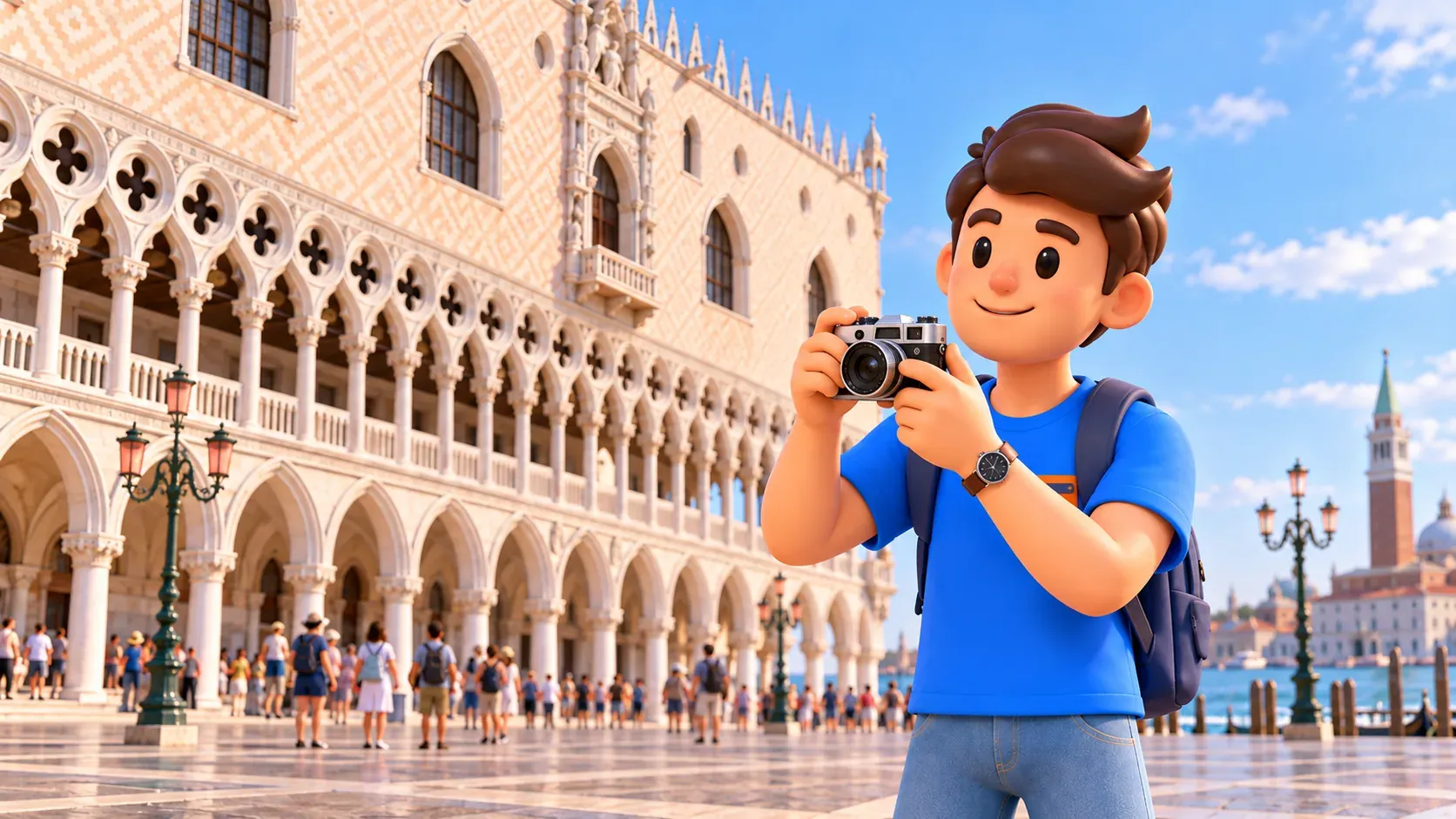
The waterfront and Bridge of Sighs: separate the viewpoints
Pause by the water for a more open perspective. Watch boats, opposite silhouettes and movement along the bank. A boat excursion is not necessary to make this section worthwhile: the waterfront is part of the walk in its own right. Keep a few minutes for looking and resting without blocking the route.
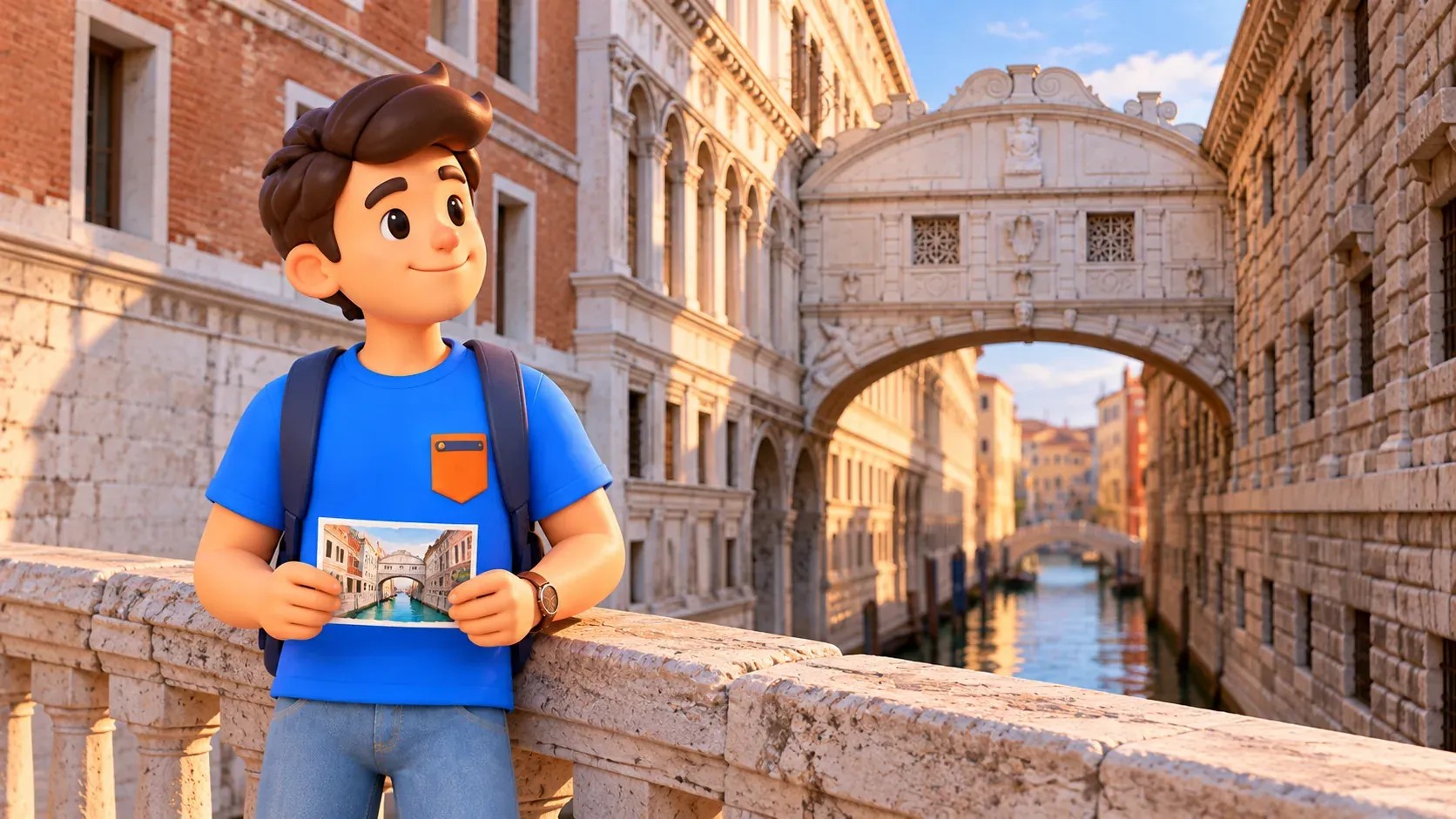
Continue to Ponte della Paglia beside the eastern side of the palace. From here, you see the Bridge of Sighs above the narrow canal. These are different bridges: you stand on one and look at the other. This distinction avoids confusing the famous sight with the crossing beneath your own feet.
The Bridge of Sighs connected the palace with the New Prisons. Its popular image can seem romantic, but its original role belongs to the republic's judicial and prison history. A little context and an exterior view are enough for this stop. Walking its internal corridor requires a separate palace visit.
Keep the pause on Ponte della Paglia short. When it is busy, look first, put your phone away and continue. Select a photograph according to conditions; an ideal image should not become a requirement for moving on. The remaining time is more useful than several attempts at the same crowded viewpoint.
San Zaccaria: finish at a smaller scale
After the bridge, continue along the water towards San Zaccaria and turn into the area around the church square. Narrower approaches and a more intimate space provide a different ending after the monumental ensemble. Decide whether to return to the waterfront, continue into Castello or pause. Entering the church is not included in the two hours.
If you want to continue with art, history or quieter lanes, try RoadMe and let the app work out a personalized plan for the rest of your day. It is a more convenient way to connect the next part with your available time, interests and pace than starting another itinerary from scratch.
You can finish here when time is limited. Add the journey to your next train, ticketed visit or meeting separately. San Zaccaria names both an area and a transport hub, but the actual pier and direction must match your journey. The first boarding point you see is not automatically the one you need.
Adapt the walk to time and conditions
For a shorter version, keep the square, basilica facade, Piazzetta and Ponte della Paglia view. For architecture, shorten the waterside pause and examine one facade more carefully. For a gentle arrival-day walk, choose fewer stops. A short route is more useful when it can end early without feeling incomplete.
With children, suggest a small observation task: find the clock, distinguish the towers or compare arches. This need not become a test. For photography, consider where the light falls on a facade, without expecting an empty square in the morning or evening. You can leave a particular image for another visit.
Use available arcade sections for rain pauses, but expect exposed stretches by the water and bridges. If high water is reported, check current information from the municipal tide centre; an older photograph of a dry square does not describe your day. Temporary access restrictions can also alter the order.
This is not a verified step-free itinerary. Check bridge, pier and building approaches individually for mobility requirements or a stroller. If you have more time, the first-day Venice itinerary can help you choose what comes next while preserving a proper pause after San Marco.


