
Half a Day in Veronetta: Verona Across the River
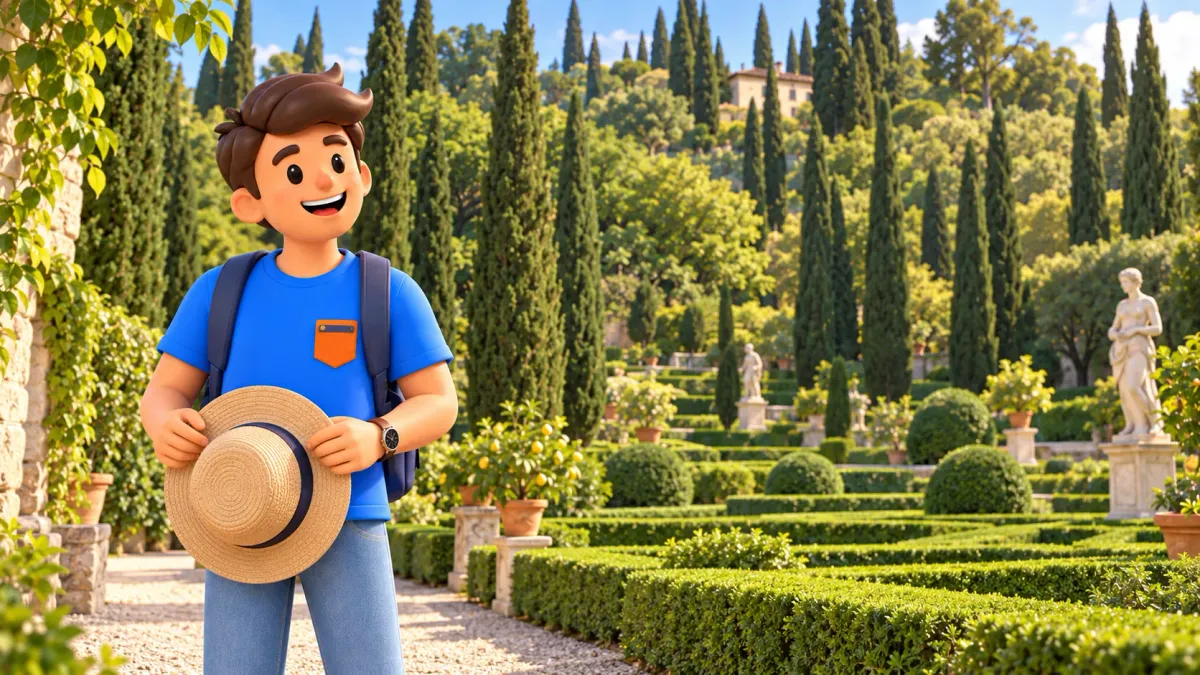
Veronetta rewards a half-day with its own rhythm: a bridge crossing, a small square, a church with remarkable woodwork and a historic garden. Start at the old-town end of Ponte Nuovo, cross into the district and leave the river behind for a while. The route returns to the same bridge, so the outing has a clear beginning and finish.
Allow roughly three and a half to four and a half hours, including a café pause, a garden visit and an optional visit to Santa Maria in Organo when public access is available. The times are estimates for planning. Your journey to the bridge, a full meal and any further sightseeing come separately.
Choose a half-day with room for a garden
The outline is simple: Ponte Nuovo, Piazza Isolo, Santa Maria in Organo, Giardino Giusti, then a return through the streets near San Tomaso to Ponte Nuovo. The garden is the main paid visit. The church adds an artistic stop when its visitor arrangements fit; its exterior can still give the walk a point of interest if the interior is unavailable.
Think of the outing as 55–65 minutes of walking spread through the half-day, 30–40 minutes for the church if open, 70–90 minutes for the garden, 35–45 minutes for a café pause and 20–30 minutes of flexibility. Together those allowances make three and a half to four and a half hours. They are not a measured route time or a promise that every stop will be open.
For a whole Verona stay shaped around your interests, try RoadMe: it develops a personal itinerary from your dates, pace and budget. It is a convenient way to give a neighbourhood like Veronetta enough time within a trip that suits you.
Check the garden’s admission window first, then see whether the church can be visited around it. Starting earlier in an afternoon can leave a more generous garden visit than arriving close to last entry. If you prefer the morning, fit the start to actual opening times rather than assuming that every place welcomes visitors as soon as the streets become busy.
Cross Ponte Nuovo and notice the change of setting
Begin on the historic-centre side of Ponte Nuovo and cross to Veronetta. Take a brief look along the Adige, then continue into the streets instead of following the water throughout the outing. This walk explores the district behind the riverfront. It does not depend on a continuous path immediately beside the water or a series of river-level viewpoints.
Veronetta occupies the left-bank side of the Adige opposite the historic core. It contains substantial history of its own, so there is little reason to treat it simply as a detour between the bridge and the garden. The interest comes from putting different surroundings together: open space, church architecture, ordinary streets and a deliberately designed green landscape.
Move towards Piazza Isolo at an easy pace. A short stop for a building detail is welcome, but keep the main garden visit in mind. The difference between a pleasant half-day and an overfilled schedule is often deciding which things can remain passing impressions. You can notice a doorway or a café without turning it into a compulsory additional stop.
The street scene will vary with time of day and local activity. There may be people going about everyday business, delivery traffic or visitors taking the same walk. Do not make perfect quiet the condition for enjoying the district. What matters is having enough time to look without expecting the neighbourhood to behave like an empty museum.
At Piazza Isolo, imagine the older water landscape
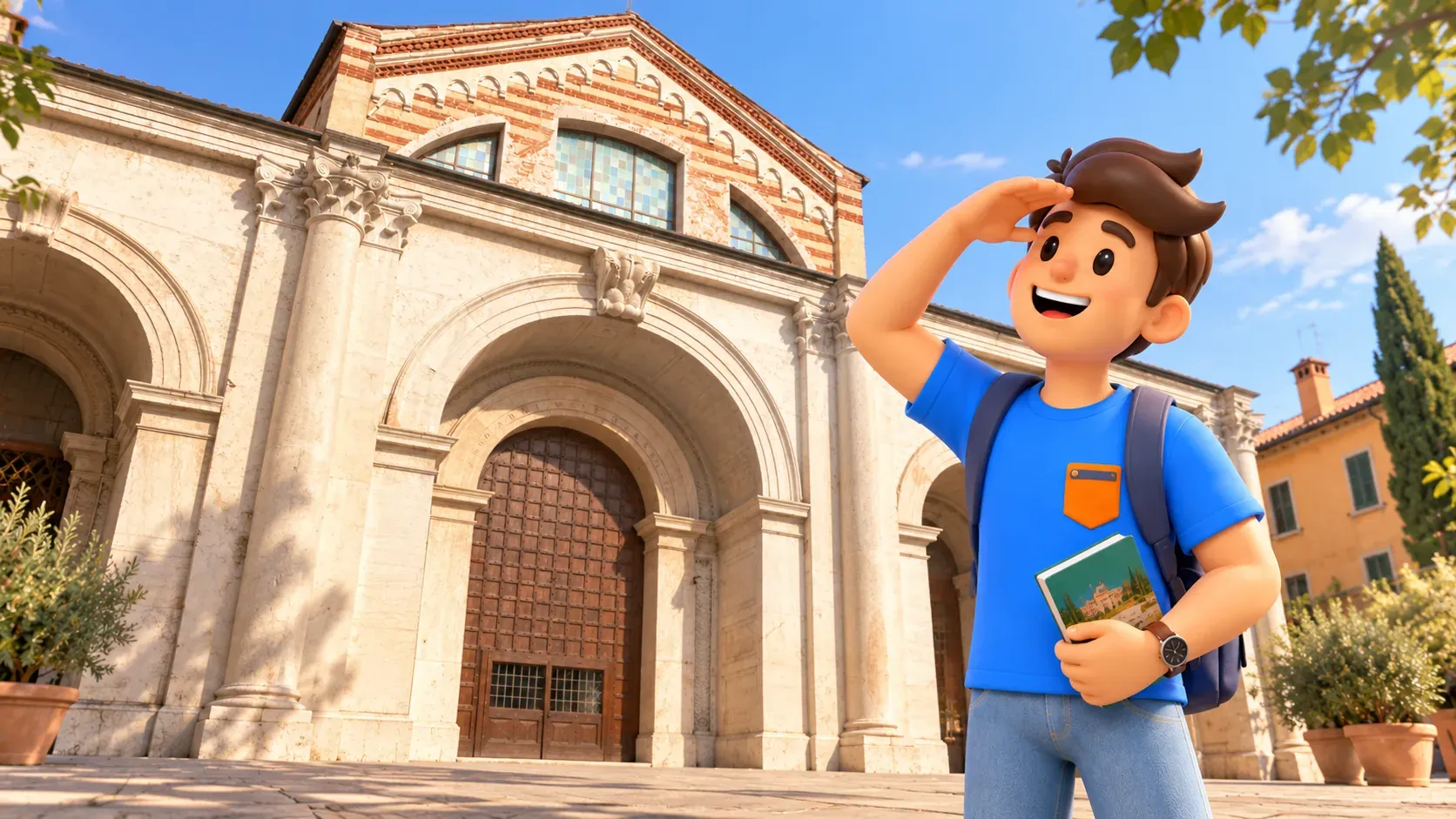
Piazza Isolo offers a useful pause before Santa Maria in Organo. The area once belonged to a different river landscape, with secondary channels, mills and working activity linked to the water. Remembering that background changes the way you see the surrounding streets. Their current form is only one stage in the story of this part of Verona.
You do not need to reconstruct every vanished channel to enjoy that idea. Look at the open space and the streets leading out of it, then think of the district as a place shaped by movement and work. This small piece of history gives the walk depth without turning the square into a long lecture or requiring you to locate invisible remains.
It is also a good point to decide on the church visit. If the public opening arrangements match your arrival, go in with enough time to enjoy the work you came to see. If not, look at the exterior and keep moving towards the garden. Repeatedly returning to a closed door would use the flexibility intended for the rest of the half-day.
Santa Maria in Organo: look for the skill in wood
The church is particularly associated with the inlaid woodwork of Fra Giovanni, including work in the choir and sacristy. Its appeal is the way flat pieces of wood can suggest depth and an arrangement of objects. Start by looking at the whole composition, then notice how tones and shapes create an effect that seems almost architectural.
A short visit can be very satisfying if you choose one or two details rather than try to see everything equally. Look for an apparent recess, an object or a change of perspective. Let your eyes work out how the illusion is made. You do not need specialist vocabulary to appreciate the precision and patience behind it.
Access for visitors depends on the church’s welcome arrangements, calendar and services. Confirm those for your day and follow the available route; do not assume that every part of the choir or sacristy can be entered independently. A church with volunteers and worship has a different rhythm from a museum with a single daily visiting circuit.
If there is a service, respect it and use the exterior as your stop. You can put the saved time into the garden or a longer pause. The half-day remains coherent because it has more than one type of experience. Its success does not depend on completing a fixed number of interiors or treating a closed section as a reason to hurry elsewhere.
Go on to Giardino Giusti without adding a hill climb
Continue through the public streets towards the garden entrance at Via Giardino Giusti 2, using the connections around Via Santa Maria in Organo and Via Carducci. Keep the walk at street level. Castel San Pietro, the Roman Theatre and the higher lanes can form another outing; they are not included in the time allowance for this loop through Veronetta.
Giardino Giusti is a ticketed historic garden, not an open public park. Its formal Renaissance layout brings clipped hedges, tall cypresses and a carefully organised sequence of views into the district. After the close attention needed for woodwork, the change to paths, plants and open air gives the half-day a different pace.
When checked on 17 October 2026, the owner’s main visiting page lists 10:00–18:00 with last admission at 17:00. Confirm the arrangements for your date, including seasonal changes and private closures. The earlier allowance of 70–90 minutes is a choice for this walk, not a substitute for the actual admission window or a suggestion to arrive at last entry.
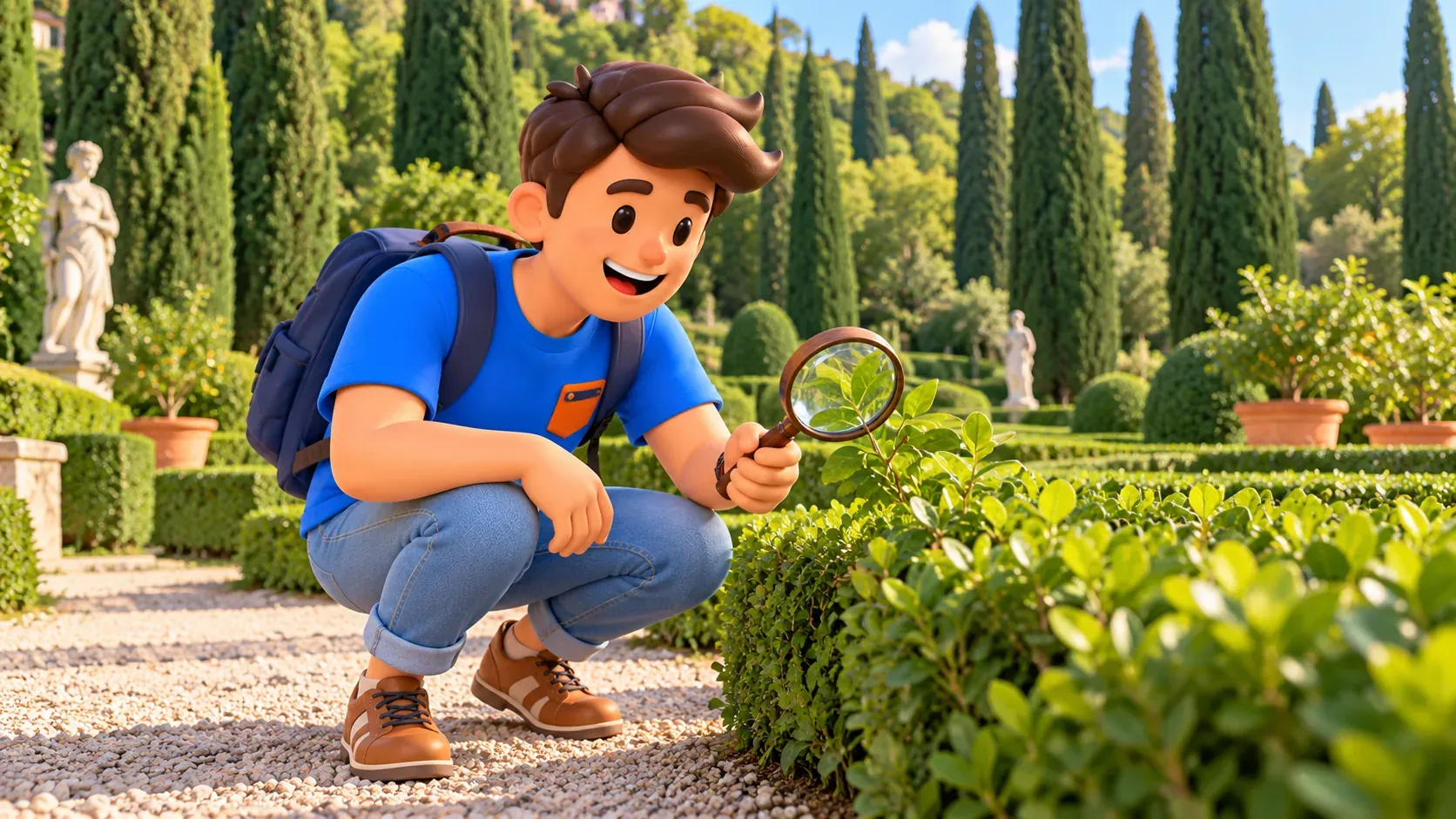
Begin with the lower formal part and see how the lines of the planting organise your movement and your view. You can enjoy the garden by following the contrast between the clipped shapes and the taller trees. There is no need to find every named feature immediately. Give one stretch of the garden enough attention before moving on to another.
The garden rises towards its upper parts, where stairs and changes in level matter. Decide how much climbing suits you rather than making the highest viewpoint compulsory. If mobility is a concern, ask about the accessible areas and the route that fits your needs. A garden visit should not be described as uniformly flat simply because its lower section feels open and level.
Take your café pause outside the garden
Keep food and the café stop for the streets outside, rather than planning a picnic among the formal planting. A pause of around 35–45 minutes gives the outing breathing space; a full restaurant meal needs more time. Choose somewhere that suits your appetite and budget instead of searching for one supposedly essential address before allowing yourself to rest.
This is a useful moment to consider how the experiences differ. The square gives a sense of an older working district, the church offers close craftsmanship, and the garden creates a world through design. You have not needed a long list of landmarks to feel those changes. Let the pause connect them before the return walk.
You can prepare that balance more conveniently in RoadMe, which works out a personal day-by-day trip plan around your interests and preferred pace. Try it when you want cultural visits, neighbourhood walks and time to rest to fit together across the whole stay.
If the church was closed or you chose a shorter garden route, there is no need to fill the saved minutes automatically. You may want a longer drink stop or an earlier finish. A half-day works best when it has a little spare capacity, especially after several days in which every available hour has already been assigned to sightseeing.
Return through the district to Ponte Nuovo
After the garden, make your way back via Via Carducci towards Via Interrato dell’Acqua Morta and the area of San Tomaso Cantuariense. Use the church as an exterior landmark for the return. Its interior would be another visit with separate arrangements; there is no need to add an unplanned final admission just before leaving the district.
The return is part of the walk, so keep a little energy for it. Choose ordinary public pavements and pause only where there is room. If the weather has become uncomfortable, shorten the remaining stops and head back towards the bridge. Wet conditions are a reason to adjust the garden and walking portions rather than force the original timing.

Cross Ponte Nuovo back to the historic-centre side to finish. That closes the loop described here; your next activity and the journey to your accommodation come afterwards. A clear finish helps you judge whether to continue exploring or to stop without feeling that a short outing has quietly become an all-day itinerary.
For a wider view of how to divide your stay, see our two-day Verona plan with San Zeno and Veronetta. Keep this half-day as a neighbourhood experience in its own right: a few well-chosen places, enough time to enjoy the garden and a return to the river without rushing through everything in between.


