
Rome with Kids: Balance Landmarks, Parks and Rest
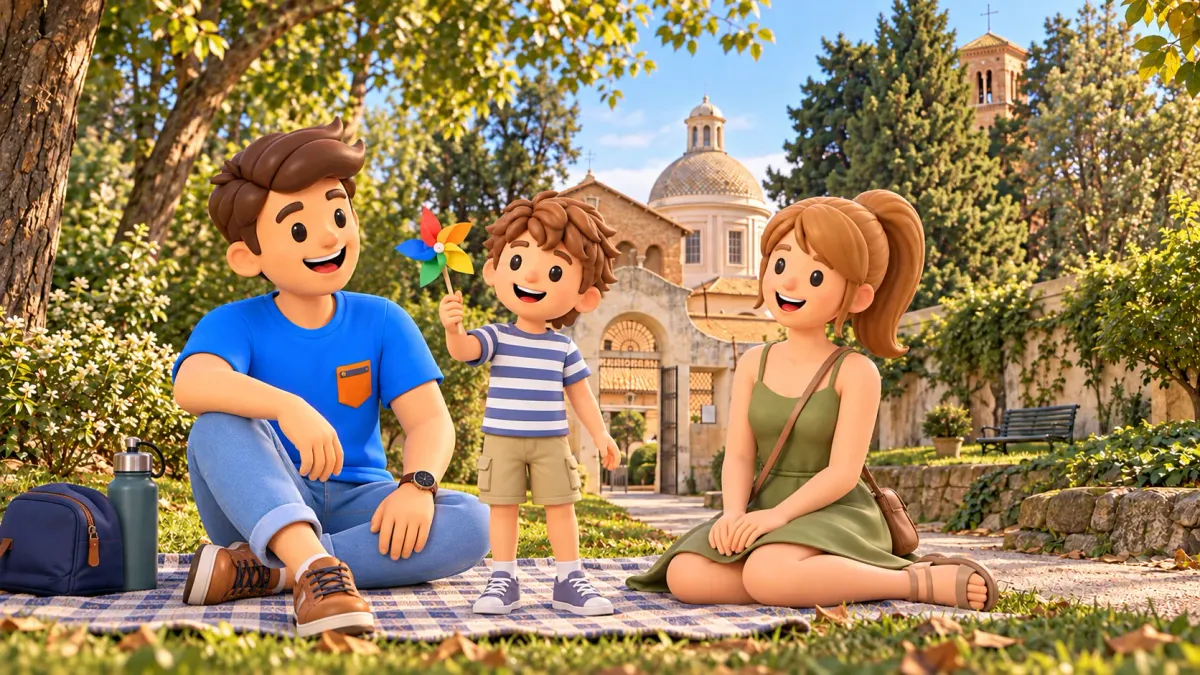
The Colosseum can provide a family morning’s memorable moment without an interior visit. Afterwards, Villa Celimontana on the Caelian Hill changes the pace: trees and paths replace another sequence of monuments. The useful combination is a recognisable landmark, enough time to reach the park and a break that belongs to the outing from the beginning.
This plan allows about two and a half hours for the Colosseum exterior, the uphill walk and Celimontana. Villa Borghese and the Aqueduct Park are independent alternatives for another day or a different starting area. Joining all three parks into one itinerary would spend much of the breathing space on travelling between them.
Choose the family’s pace before choosing the sights
Start with the next couple of hours rather than a list of must-sees. A child interested in large structures may enjoy the Colosseum stop. On a morning shaped by movement or tiredness, begin directly at the park instead. Different days within the same holiday can have quite different levels of sightseeing.
Try RoadMe to create a personal plan for the whole trip around your interests, dates, pace and budget. The app makes it more convenient and effective to distribute landmarks, park walks and rest across a programme that suits your family.
Give the morning one main idea and a clear ending: looking at arches, walking to a park and resting is easier to picture than five further attractions. A break should not depend on listening carefully or behaving well. Everyone needs time without a sightseeing task, including the adult responsible for the directions.
Age alone does not establish a suitable distance. Consider walking habits, sleep, mood, weather and the journey from your accommodation. Time already spent on public transport contributes to the effort, even when it appears outside the walking schedule. Keep an early finish available without presenting it as a failed outing.
Colosseum to Celimontana: a two-and-a-half-hour plan
Start in the public space beside the Colosseum after arriving from transport. Finish at your chosen Via della Navicella entrance to Villa Celimontana, returning to that gate after the park visit. These are different places: walking back to the Colosseum, reaching a station, lunch and the journey home are additional.
| Minutes from the start | Plan |
|---|---|
| 0–25 | Observe the Colosseum exterior and choose one detail |
| 25–60 | Follow public Via Celio Vibenna, Via Claudia and Via della Navicella uphill to the park |
| 60–85 | Explore a small available part of Celimontana’s public paths |
| 85–110 | Rest for twenty-five minutes in a suitable available place |
| 110–140 | Allow half an hour for play or observation where appropriate |
| 140–150 | Return to the same Via della Navicella gate |
The total is 150 minutes: for example, 9:30 to noon in suitable daylight conditions. These are planning estimates, not measured family walking times. The thirty-five-minute approach allows for orientation, road crossings and the hill. If walking takes longer, reduce observation or extend the finish rather than recovering time from the break.
For a shorter outing, begin at Celimontana’s gate. The park blocks then total ninety minutes: twenty-five exploring, twenty-five resting, thirty without a fixed sightseeing task and ten returning to the gate. Calculate your approach separately. The Colosseum can wait for a different morning when everyone wants to see it.
At the Colosseum, tell a story that can be seen
This first-century amphitheatre was built under the Flavian emperors for public spectacles. That brief context and the scale of the structure are enough for an introduction. Repeating arches help explain how a large building is organised. Choose further stories according to the child’s interest and sensitivity, without making detailed accounts of ancient violence compulsory.
Invite the family to spot a few neighbouring arches, compare the taller surviving section with the lower broken wall or notice the size of a person nearby. This is an invitation to look rather than a knowledge test. An uncertain answer can lead to shared observation instead of another long explanation.
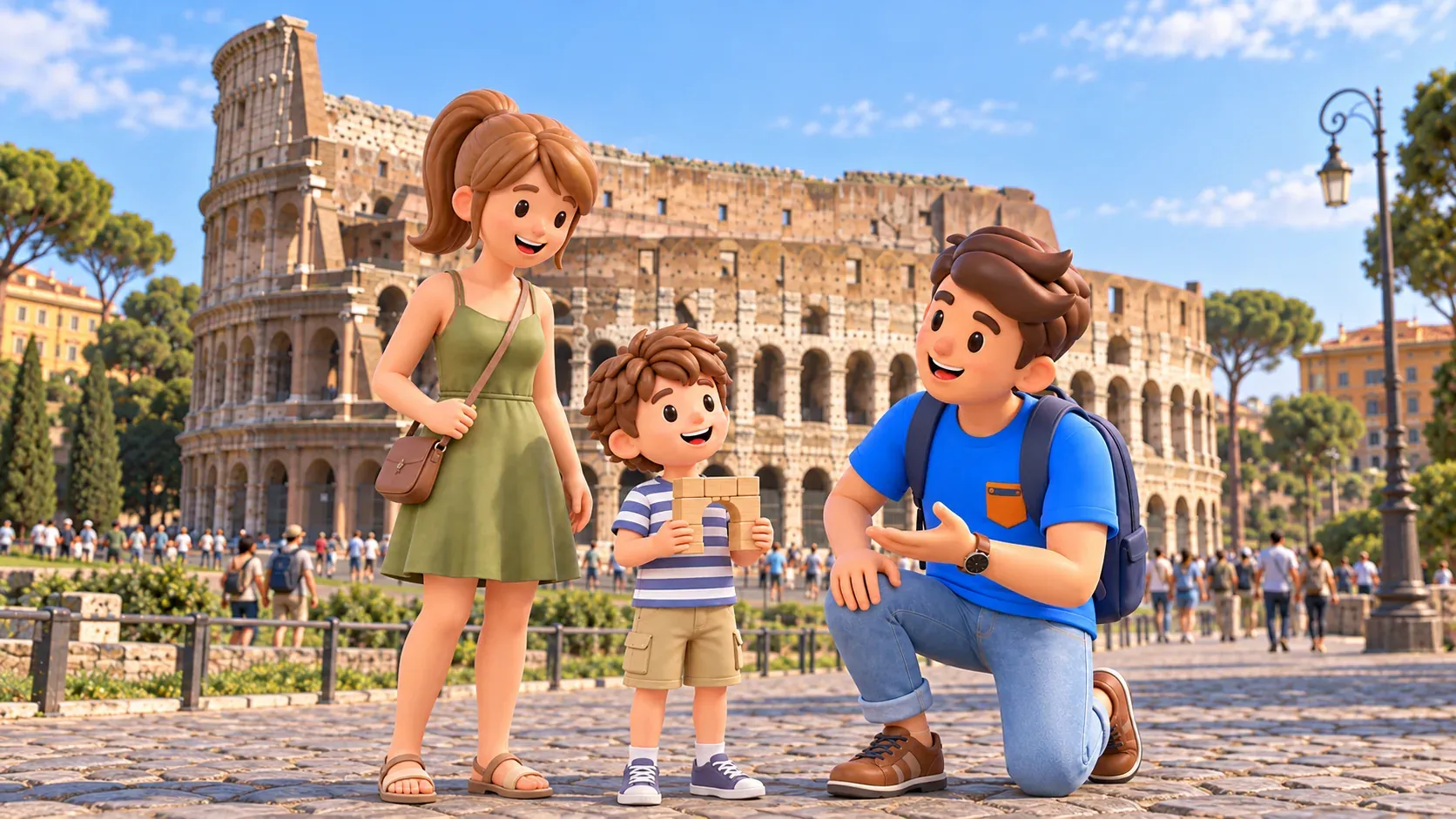
You do not need to circle the whole building for a photograph. Stop in an allowed public place without obstructing movement and leave when the main interest has been satisfied. Recognising the actual structure later in a book can be a worthwhile result of a short visit, even without memorising names and dates.
Going inside requires a separate programme and the relevant ticket arrangements. Adding the arena, Forum or Palatine changes the duration and effort. This outdoor plan includes neither admission nor queues and does not rely on facilities within ticketed areas. Decide about an interior visit before treating it as an extra stop.
The walk uphill is part of the effort
Use available public streets towards Via Claudia and Via della Navicella. This is an urban ascent with crossings and pavements, rather than a continuous park avenue. Follow actual crossings and current pedestrian arrangements. Temporary barriers can change the convenient side of a street; do not turn a general outline into a shortcut through restricted ground.
The chosen gate is at Via della Navicella, 12, beside Santa Maria in Domnica. A pin in the middle of the park is not an entrance. There is no need to pass through church rooms or private grounds. Explain that reaching the gate completes this walking stage, without attaching another compulsory church visit to it.
For a pushchair or particular mobility needs, assess the actual approach, including slopes, kerbs, surface and current path conditions. Being near a major monument does not establish universal accessibility. If this hill is unsuitable today, choosing a different starting area beforehand is easier than finding an unfamiliar detour after tiredness arrives.
Celimontana: a historic garden with room to pause
In the late sixteenth century, the Mattei family transformed a vineyard here into a garden with statues and fountains. Later owners repeatedly changed its appearance. For a family introduction, one contrast is enough: close to the enormous ancient amphitheatre lies a different kind of place, shaped for time among greenery rather than public spectacle.
Spend the first twenty-five minutes discovering a manageable section and retaining the route back. There is no obligation to find every monument or reach another exit. Palazzetto Mattei houses the Italian Geographic Society; walking in the public park does not establish unrestricted access to its rooms. Today’s destination is the garden itself.
Take the twenty-five-minute break properly. Use an available bench or your own small mat in a permitted dry place, keeping paths clear. A seat at the precise stopping point is not guaranteed. Water and a simple snack brought beforehand make it easier to rest without first locating a café that happens to be serving.
Afterwards, offer a choice: a short game in a suitable area, noticing different tree outlines or sitting a little longer. The municipality lists a children’s play area, but the availability and suitability of equipment should not be promised in advance. The outing remains useful without swings, rental services or organised entertainment.
Ordinary park access is free; paid summer performances have separate arrangements. The city lists opening from 7:00 until sunset, subject to current restrictions. Choose daylight and check notices before leaving. If the selected entrance or park is unavailable, change the programme beforehand rather than fitting a distant transfer inside the same two and a half hours.
Villa Borghese: a separate morning around the lake
Consider this alternative when your day already belongs to the northern part of the centre. Choose the park entrance by Piazzale Flaminio and allow about two hours from that entrance back to it. Giardino del Lago supplies one main destination; the gallery, zoo, theatres, rentals and boat ride are separate choices.
Allocate thirty minutes to entering and approaching the lake, twenty-five to observation from the public shore, twenty to a break, thirty-five to returning gently and ten to finishing at the entrance. The sum is 120 minutes. These estimates do not promise identical walking conditions everywhere. Transport and the approach from your station or accommodation are additional.
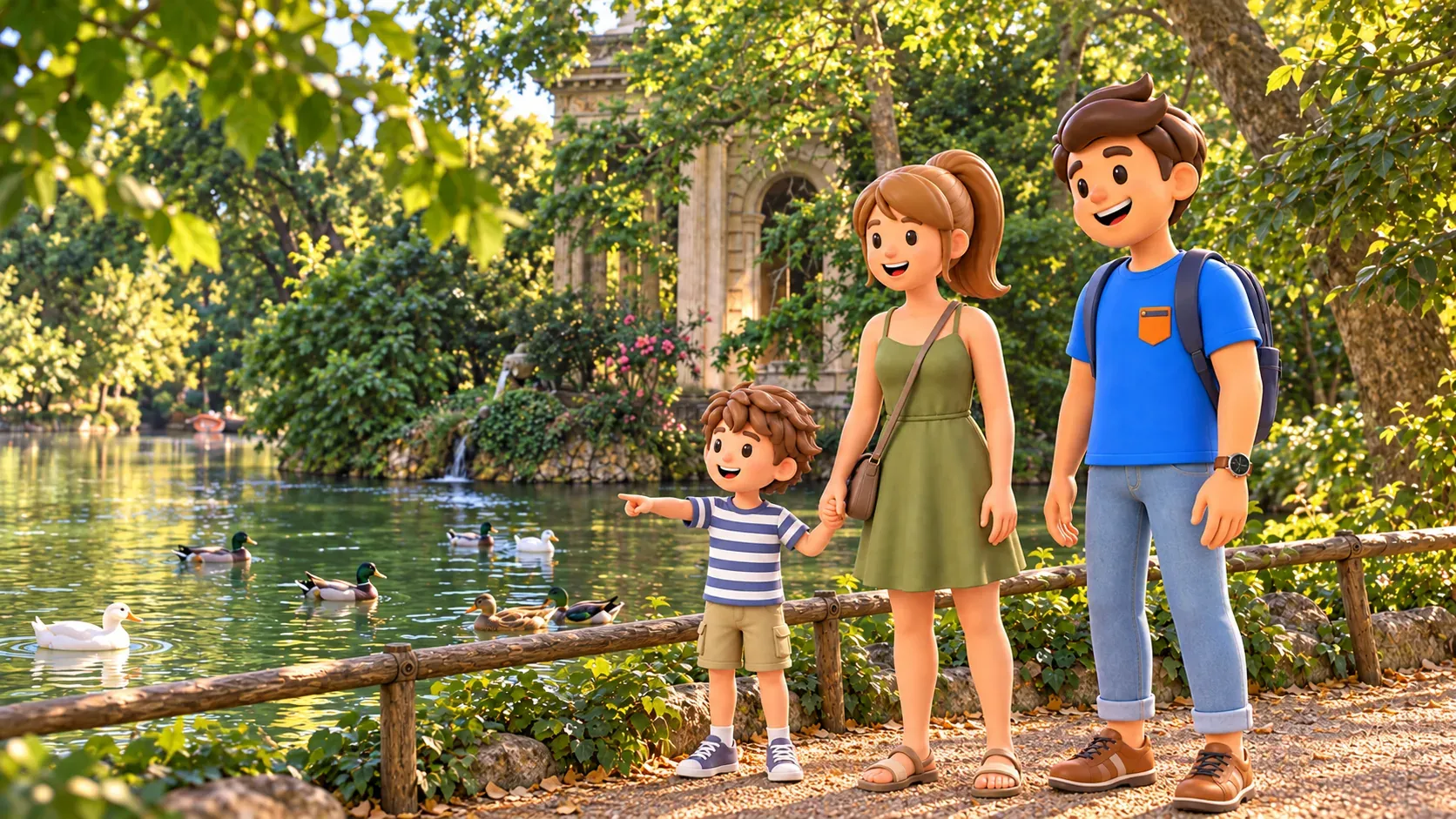
The estate is associated with Cardinal Scipione Borghese’s early-seventeenth-century residence. The lake composition, artificial island and Temple of Aesculapius belong to a later eighteenth-century garden design. The temple glimpsed through the trees is part of that landscape arrangement, rather than an ancient ruin discovered beside the water. That distinction gives the view its own story.
Watch reflections, birds and movement on the water without feeding animals or making a close approach to the edge part of the activity. For a boat or another service, check its actual arrangements and add time. Free access to the public park does not include admission to the Borghese Gallery.
The Aqueduct Park: choose a day for open landscape
Choose this outing for space and ancient engineering. It lies beyond the usual central walks, so travelling there needs its own allowance. Start at one selected Via Lemonia entrance near San Policarpo and return there. From metro line A’s Giulio Agricola or Subaugusta, the urban walk to the park is additional.
A two-hour block allows fifteen minutes for entry, twenty-five approaching the Claudia arcades, twenty-five observing, twenty resting, twenty-five returning and ten leaving. Turn back sooner if needed. A path continuing towards a distant arch is an option, rather than a reason to make that arch a compulsory family objective.
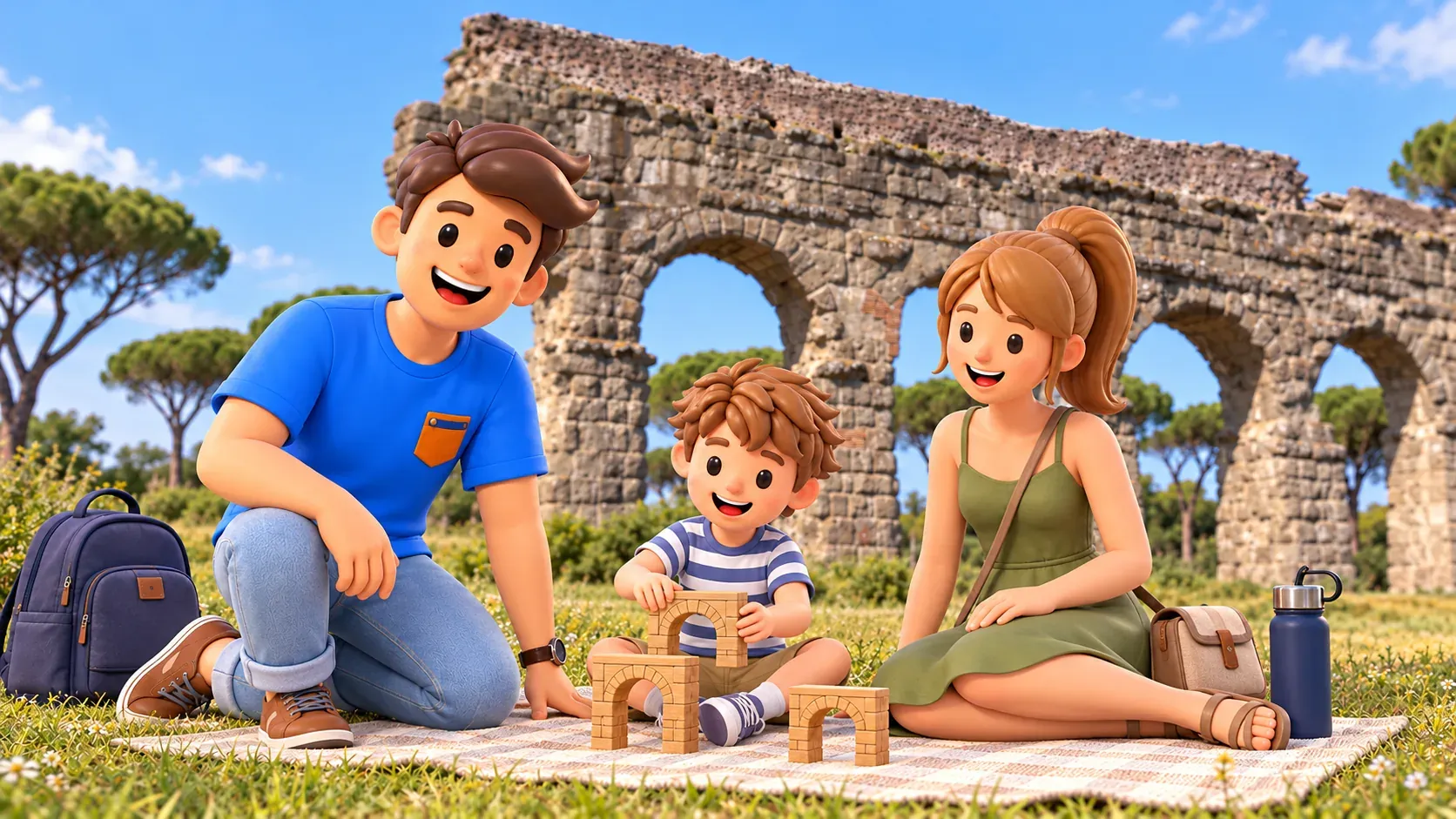
The aqueduct carried water towards Rome in a channel above the arches. Imagine that movement from ground level. If you saw the Colosseum another day, compare the repeated openings and their different purposes. Climbing ancient masonry is unnecessary; a drawing or a small model of your own can support the conversation during the break.
Ordinary independent park access is free, but the landscape offers neither continuous shade nor a promise of dry, even surfaces. Assess earth paths after rain and the exposed sections in warm weather. Our two-hour Aqueduct Park walk explains this separate outing more fully; it is not a continuation of the Celimontana morning.
Keep enough energy for the journey afterwards
Before starting, decide where water, toilets and the next meal belong. A park does not guarantee that every service will be available simultaneously. A planned rest is not automatically a café stop with a children’s menu. Carry the basics for a short outing and check the operating facilities your family actually needs.
Use RoadMe to build a personal plan for the whole Rome trip around your interests and preferred pace. In the app, distributing concentrated sightseeing, park mornings and return journeys is more practical than reconnecting separate ideas every evening.
When weather or tiredness changes, change the scale of the programme. A short outing near your accommodation can still be a worthwhile Roman day. The best finishing point is the one that leaves everyone enough energy to return and enjoy what they noticed, even when it comes earlier than the schedule suggests.


