
Rome’s Aqueduct Park: A Two-Hour Walk beyond the Centre
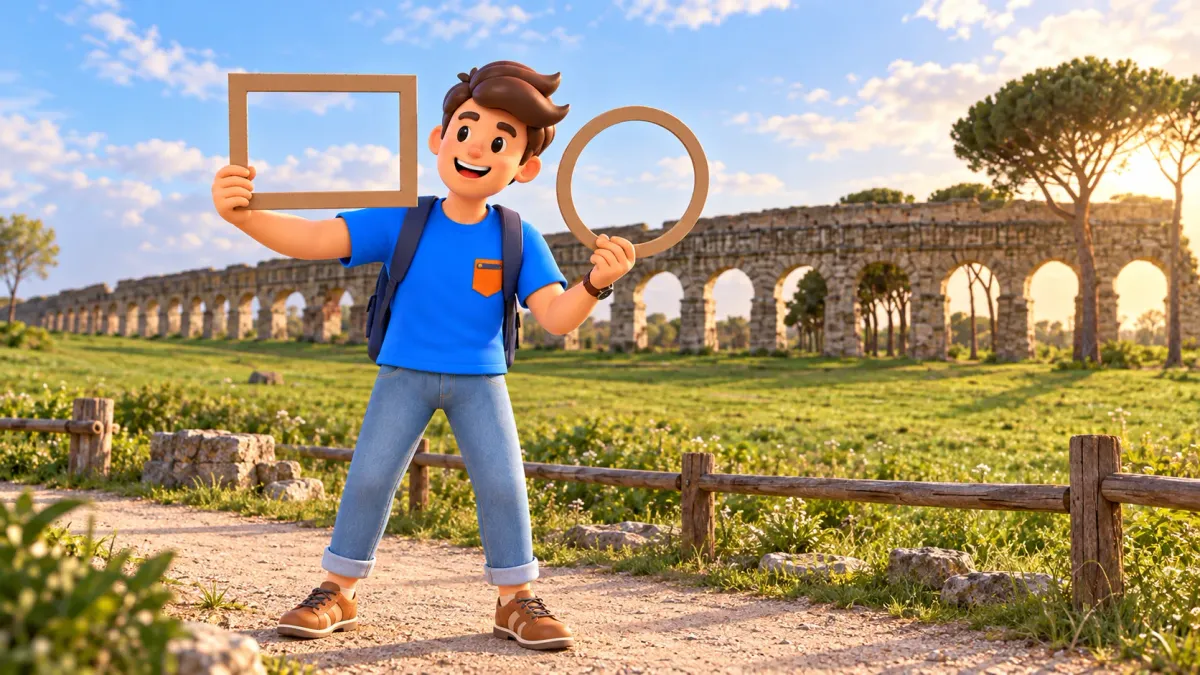
At Rome’s Aqueduct Park, distance becomes part of the experience. A field replaces the narrow street, a line of arches stretches across it, and sky appears between the stone supports. Come when you want a different scale after museums: a walk shaped by one engineering monument and room to look, rather than another sequence of rooms.
This version allows about two hours inside the park, including a twenty-minute rest and a return to the same entrance on Via Lemonia. The surviving Aqua Claudia arcades are the main focus. Metro travel, the walk from the station and the journey afterwards are additional. It is an introduction to one area, not a survey of every aqueduct or the entire park.
Decide whether this outing belongs in your trip
Choose the Aqueduct Park for ancient engineering, photography, open landscape or an unhurried outing after a concentrated museum day. A simple programme works well: approach the arches, see them from several distances and stop. Collecting similar photographs does not require walking to every end of the masonry line.
Try RoadMe to fit this outing into a personal plan of the whole trip, based on your dates, interests, pace and budget. The app helps distribute museums, walks and rest across your days, making the considered itinerary easier and more effective to use while travelling.
With only one short day in Rome and the historic centre as your priority, decide what matters first. Travelling beyond the centre takes time in both directions. Free admission does not make the park an obligatory addition. Its value is easier to appreciate when arrival leaves time to enjoy the landscape itself.
Ordinary independent access to the public park is free; a guided outing or bicycle rental is a separate choice. This walk does not require a ticket to an archaeological museum. Check the park’s current notices and the weather before leaving, because open grounds do not offer identical conditions every day.
Two hours from Via Lemonia and back
| Minutes from the start | Plan |
|---|---|
| 0–15 | Enter from Via Lemonia near San Policarpo and the information-point area; orient yourself and notice the lower Felice line |
| 15–40 | Follow public park paths towards the open Aqua Claudia arcades |
| 40–65 | Observe the arches from available paths and walk a short distance alongside |
| 65–85 | Rest for twenty minutes in a suitable available place |
| 85–110 | Retrace the same route towards Via Lemonia |
| 110–120 | Leave through your chosen entrance and orient yourself for onward travel |
The sum is one hundred and twenty minutes. These are planning estimates, not measured walking times. The approach includes gentle movement and orientation; it does not promise equal distances from every entrance to a large park. Retain the name of your selected entrance and follow available public paths rather than a straight line through barriers.
In suitable weather, for example, start at 10:00 and finish around noon. There is no reserved session. If the metro, station approach or water purchase takes longer, the start of the two-hour block moves. Do not recover those minutes by removing the rest or hurrying over uneven ground.
Choose a station and keep the starting point clear
For entrances on Via Lemonia, the park lists Giulio Agricola and Subaugusta on metro line A. Choose one beforehand according to the actual entrance and your starting point in Rome. There is an urban walk from the station; the platform does not open directly beside the aqueduct. The park entrance near San Policarpo starts this itinerary.
Several entrances serve the grounds. Via Viviani and the approach to Tor Fiscale involve different geography; sharing the word aqueduct does not make them interchangeable without recalculating. For a first visit, reaching one chosen side and returning there is simpler than finishing at an unexpected edge.
Check current line operation and the return direction with the transport operator. An invented universal hotel-to-arches duration would be unhelpful: it depends on accommodation, connections and the station exit. Leave a clear gap after the park before your next timed visit, allowing the journey back its own place.
At the entrance, distinguish ancient and later structures
Begin by looking around after entering from Via Lemonia. Different water-supply lines share this landscape. The lower Felice Aqueduct belongs to the late sixteenth century and Pope Sixtus V’s programme. It reused the earlier Marcia alignment, rather than simply being a smaller copy of the Aqua Claudia.
For this walk, notice contrasts in height, material, rhythm and direction. Identifying every fragment or constructing a full chronology is unnecessary. The useful idea is that water continued shaping the area long after the Roman period, with later builders using infrastructure inherited from earlier ones.
Continue into the public grounds on available paths towards the substantial Claudia arcades. The official plan places them on the side away from urban Via Lemonia, beyond the Felice line. Use an existing passage. This version does not require approaching the railway, going underneath it or seeking a private access road.
Aqua Claudia: look at a structure made for water
Work on the Aqua Claudia began under Caligula and was completed under Claudius in AD 52. Its powerful stone arches supported a water channel at the required elevation. Start with that practical purpose: this was infrastructure supplying a city, although its remains now appear almost like a landscape monument in their own right.
Stop at a distance first. Repeated openings suggest length, with sky, trees and field visible through the gaps. Then approach on an authorised path to examine stone blocks and visible later brick strengthening. The structure changed over time; every detail should not be imagined as untouched first-century construction.
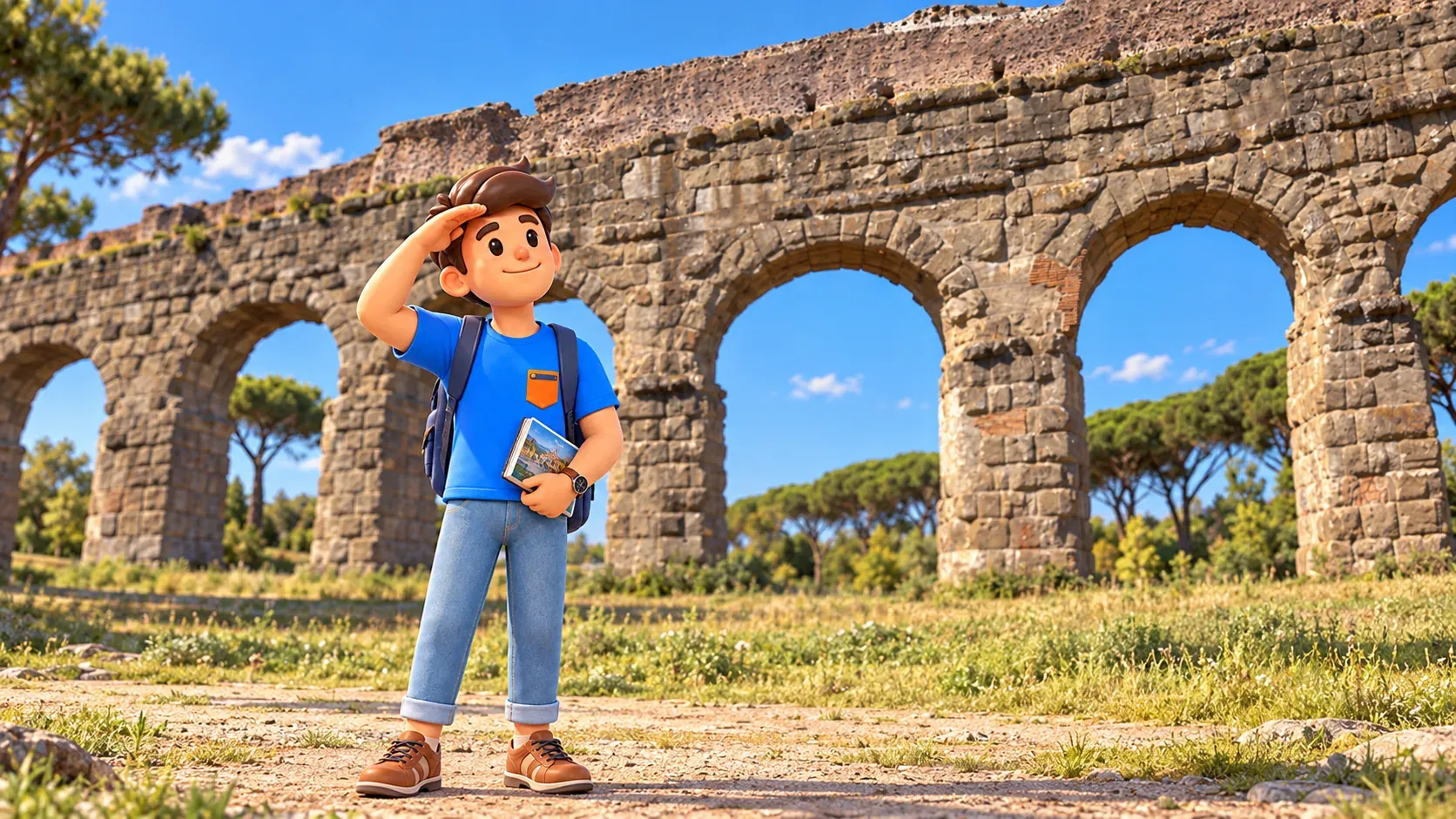
The arches are not a walking bridge. Water travelled in a channel above them, rather than cascading openly through each opening. Understanding the arrangement does not require climbing the masonry or searching for a way onto its top. A view from below and slightly to one side already explains why height and continuity mattered.
Consider the Anio Novus too: its channel shared the supporting alignment above the Claudia channel. Two names therefore need not mean two independent rows of arches side by side. This relationship helps a first visit more than trying to find a separate spectacular wall for each ancient water supply.
Find different views without making the walk longer
Share twenty-five minutes among the overall view, details and a short movement along an available path. Staying beside one pier can produce more photographs without changing the impression. A few steps sideways sometimes reveal the rhythm more clearly than another long stretch of walking.
For a wide photograph, leave space around the structure. For detail, choose the meeting of stone and brick or the surviving edge of an opening. A picture need not include the whole aqueduct to suggest scale. People on a public path may show size, but their own outing should not become a compulsory photo session.
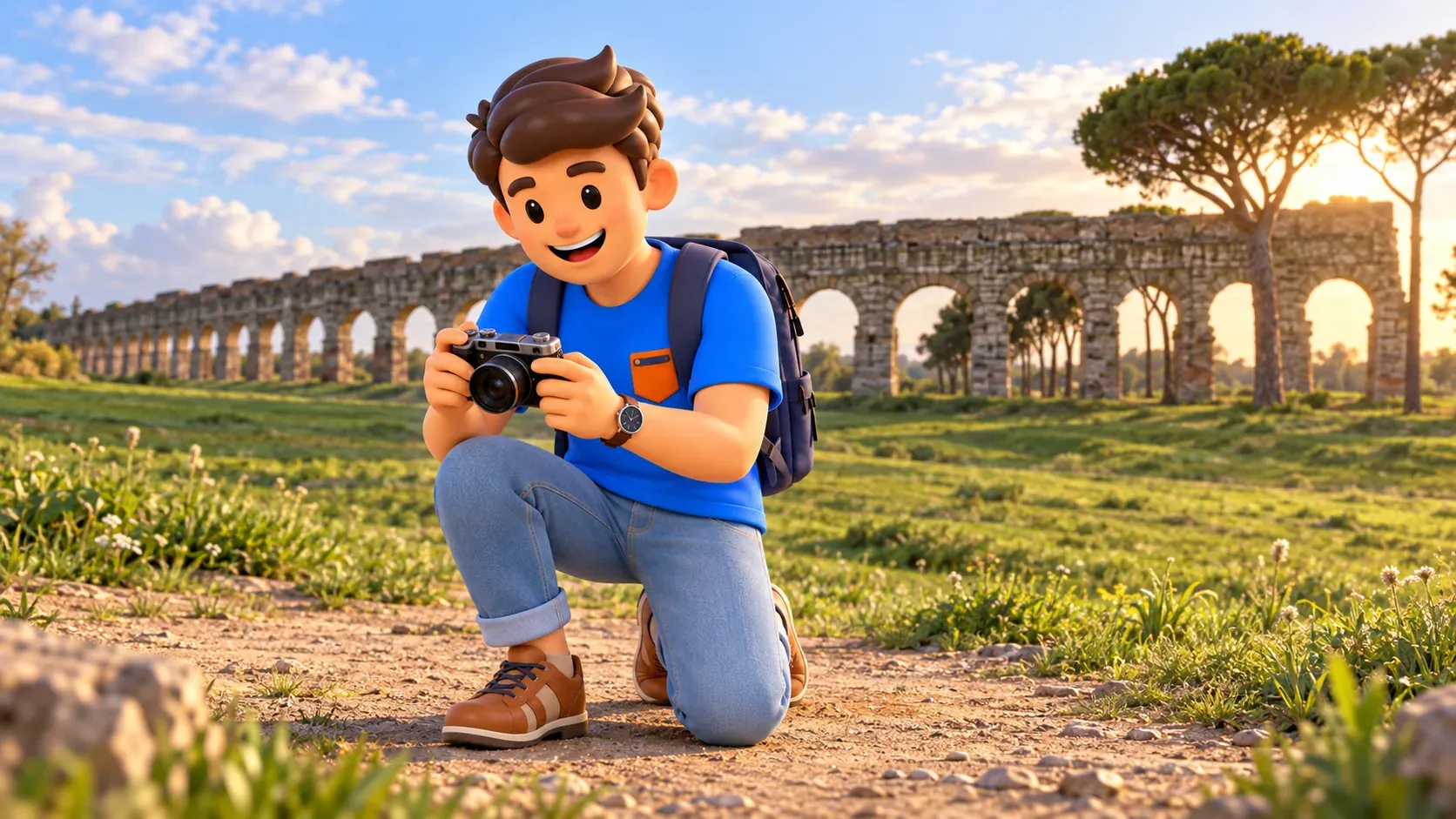
Light changes how the arches appear, but an interesting photograph needs neither a secret spot nor a guaranteed sunset sky. Daytime makes the ground and return route easier to read. For later light, leave a margin to reach the familiar exit before darkness instead of budgeting only for the final photograph.
The rest is part of the itinerary
Stop for twenty minutes in a suitable available place off the path and away from historic masonry. A bench or table is not guaranteed precisely where sightseeing ends. With a small picnic mat, choose a dry public area, keep the route clear and avoid using the monument as a backrest or table.
Water and a simple cold snack brought beforehand suit this allowance. A full meal with service needs another margin. Do not expect the information point, rental, café and toilets to operate at the same time as your walk. Free access to the park does not establish the hours of every service.
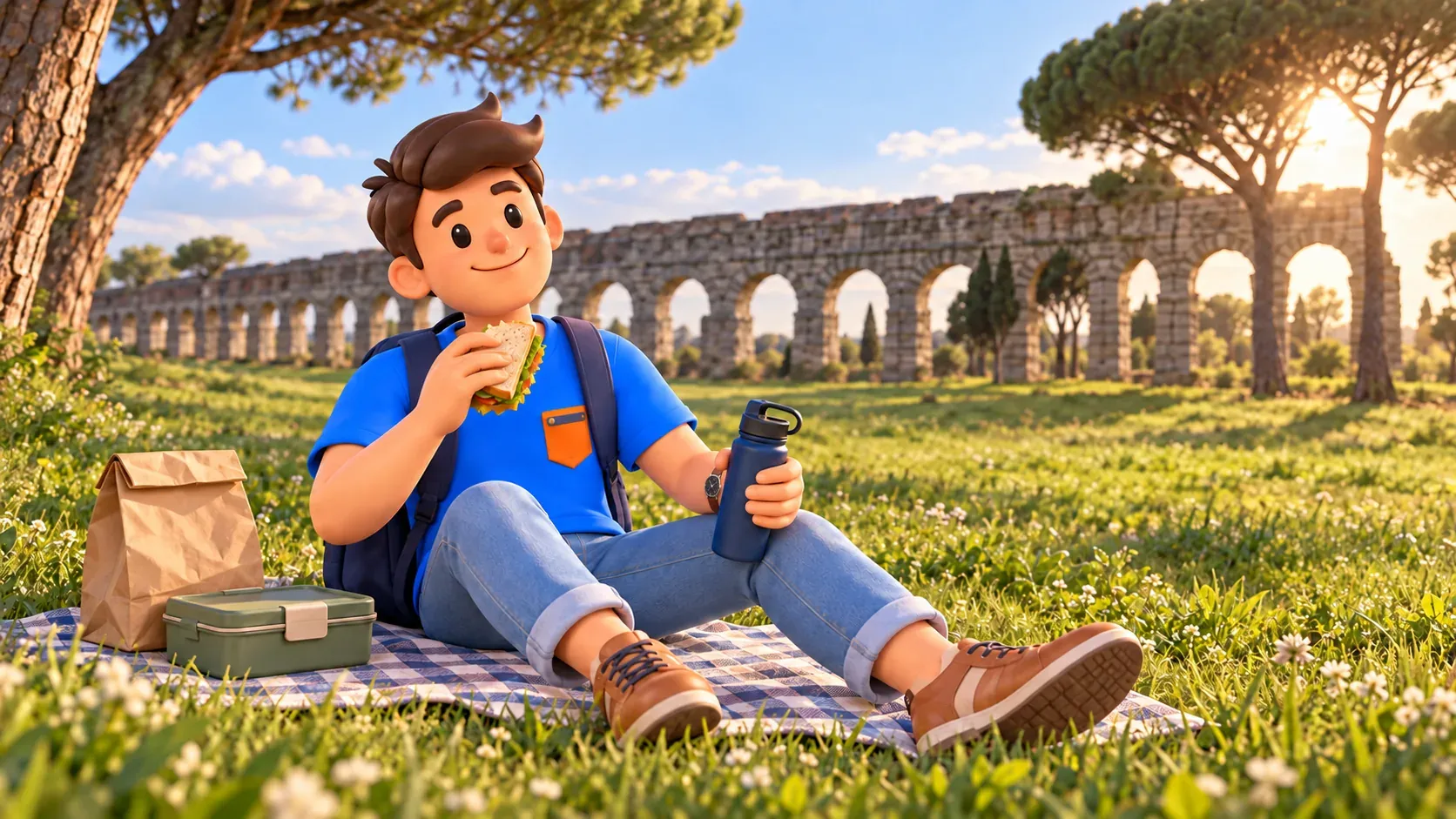
The park lists drinking fountains among its facilities, but carry water and avoid making the outing depend on one particular tap working. Take packaging away. Portable cooking is unnecessary for this short visit: a cold picnic gives you the pause without fire or a search for special permitted arrangements.
Weather and paths can change the right version
Do not plan on continuous shade across open fields. In warm weather, choose a comfortable daylight window and carry water and sun protection. After rain, assess the earth paths on arrival. A generally good description of their condition does not make every section dry and firm. Postpone the walk in severe weather.
The park describes its principal entrances as accessible, but that does not automatically promise an independent barrier-free outing for every wheelchair or mobility requirement. Paths are unpaved. For particular needs, confirm an appropriate entrance and current conditions with the administration, then adapt the distance rather than relying on a general label.
The connection to Tor Fiscale underneath the railway has separate gradient and surface difficulties and is excluded here. With children, establish beforehand that the arches are observed from ground level. Share paths with cyclists and other visitors, avoiding a group stop across the whole route for a picture.
Return while the outing still feels manageable
After resting, follow the familiar way back towards the Felice line and your Via Lemonia exit. Retracing is intentional: it keeps the walk compact and offers a changed direction of view. An outing does not need a circuit to be worthwhile, and the same path can make its conclusion clearer.
For a wider Rome stay, RoadMe can create a personal plan of the entire trip around your interests and pace. The app makes it more convenient to distribute journeys beyond the centre and central walks beforehand, keeping room for connections and proper rest.
Avoid automatically adding the Appian Way or another large park: belonging to one protected area does not make their entrances adjacent. Our separate Appian Way half-day walk addresses a different outing. Today, one line of arches, a twenty-minute pause and a clear return are enough. If tiredness or the surface intervenes, shorten the sightseeing and leave earlier; exactly two hours are a guide, not a required measure of enjoyment.


