
Rome’s Optical Illusions: Sant’Ignazio to Palazzo Spada
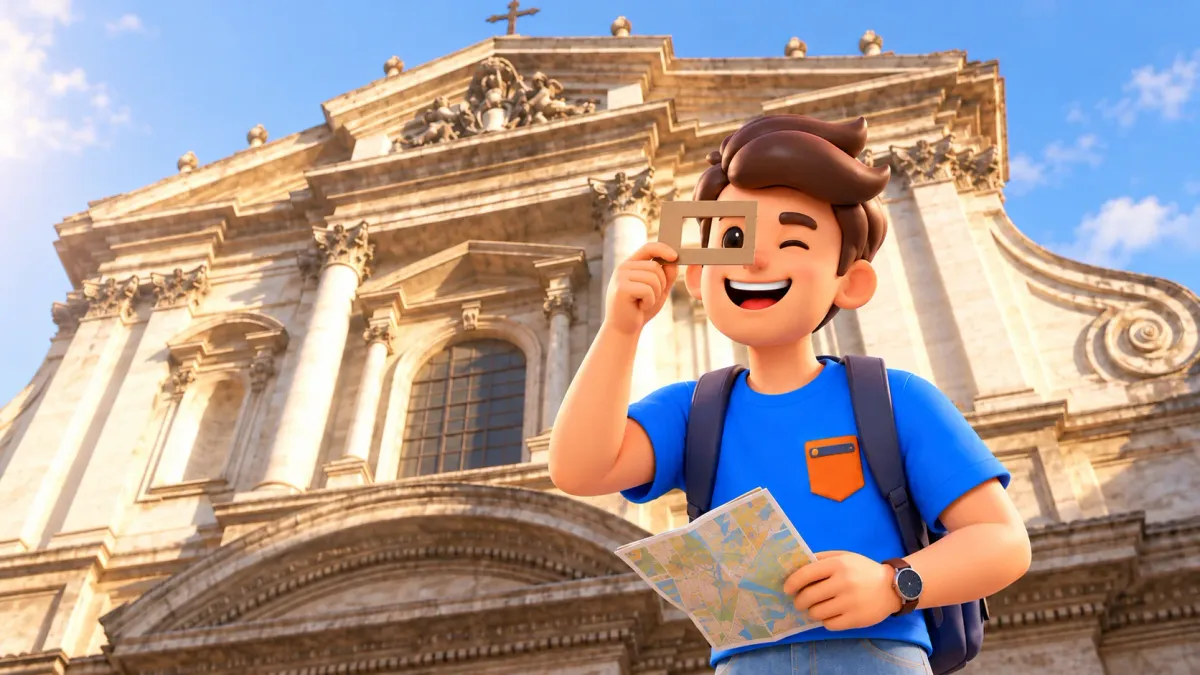
Rome can make space pretend. A dome appears overhead without a corresponding dome outside, while a short colonnade seems to lead into a distant garden. You do not need a citywide sightseeing marathon to explore these effects. Sant’Ignazio and Palazzo Spada form a compact pairing connected by a walk through the centre.
Allow about three hours for two visits, a walking connection and a proper break. The pleasure lies in comparing painted depth with built architecture that deliberately changes scale. This guide explains a few useful details and practical choices, leaving room to enjoy the day rather than catalogue every artwork.
Two stops, with your viewpoint as the connecting idea
This walk suits curious visitors who enjoy surprising artistic ideas without wanting an entire architectural history lesson. Bring one question: what changes when I move a little? It makes your position part of the experience and offers more than immediately searching for the photograph everyone else has taken.
To fit this walk comfortably into your whole trip, try RoadMe: the app creates a personal plan around your dates, interests, pace and budget. It makes arranging architecture, museums and rest across different days much more convenient, with a considered itinerary to use while travelling.
Choose an ordinary Monday, Wednesday, Thursday or Friday morning for the example, after checking both venues’ calendars. Starting outside Sant’Ignazio at 9:30 aims to finish around 12:30 at Palazzo Spada. Tuesday is unsuitable for the full version because Spada’s museum normally closes that day.
The title does not promise every optical illusion in Rome. There are two principal stops, with two separate painted effects inside the first. Between those and the constructed colonnade, you have time to think, see the streets and take a break without adding another compulsory attraction.
A three-hour outline
| Minutes from the start | Included programme |
|---|---|
| 0–40 | Sant’Ignazio: entry, painted nave vault and false dome |
| 40–65 | Twenty-five minutes of rest outside |
| 65–100 | Walk through the centre to Piazza Capo di Ferro |
| 100–115 | Spada admission and orientation |
| 115–160 | Selected looking in the four picture-gallery rooms |
| 160–180 | Secret Garden and the permitted colonnade viewpoint |
That totals one hundred and eighty minutes. A 9:30 start places the church exit around 10:10, the end of the break at 10:35, arrival at Spada at 11:10 and the museum-and-garden finish around 12:30. These are planning estimates, not measured queue times or guaranteed fifteen-minute admission.
Begin outside Sant’Ignazio’s façade on its namesake square. Finish in the museum part of Palazzo Spada, entered from Piazza Capo di Ferro, 13. Reaching the start, returning afterwards, a full lunch and any extra interior visits require additional time. This is a one-way outing rather than a loop.
Sant’Ignazio: distinguish the vault from the dome
Give your eyes a moment after entering. You need not head straight for the mirror queue: the purpose is to see painting in relation to space. Start with the large nave vault, where Andrea Pozzo depicted the glorification of Saint Ignatius and the worldwide mission of the Jesuits.
Real architecture seems to continue into painted columns, cornices and open sky. The actual nave vault is curved. Calling the entire church ceiling a flat picture misses the achievement: an existing architectural surface and perspective painting work together, rather than one identical trick being repeated everywhere overhead.
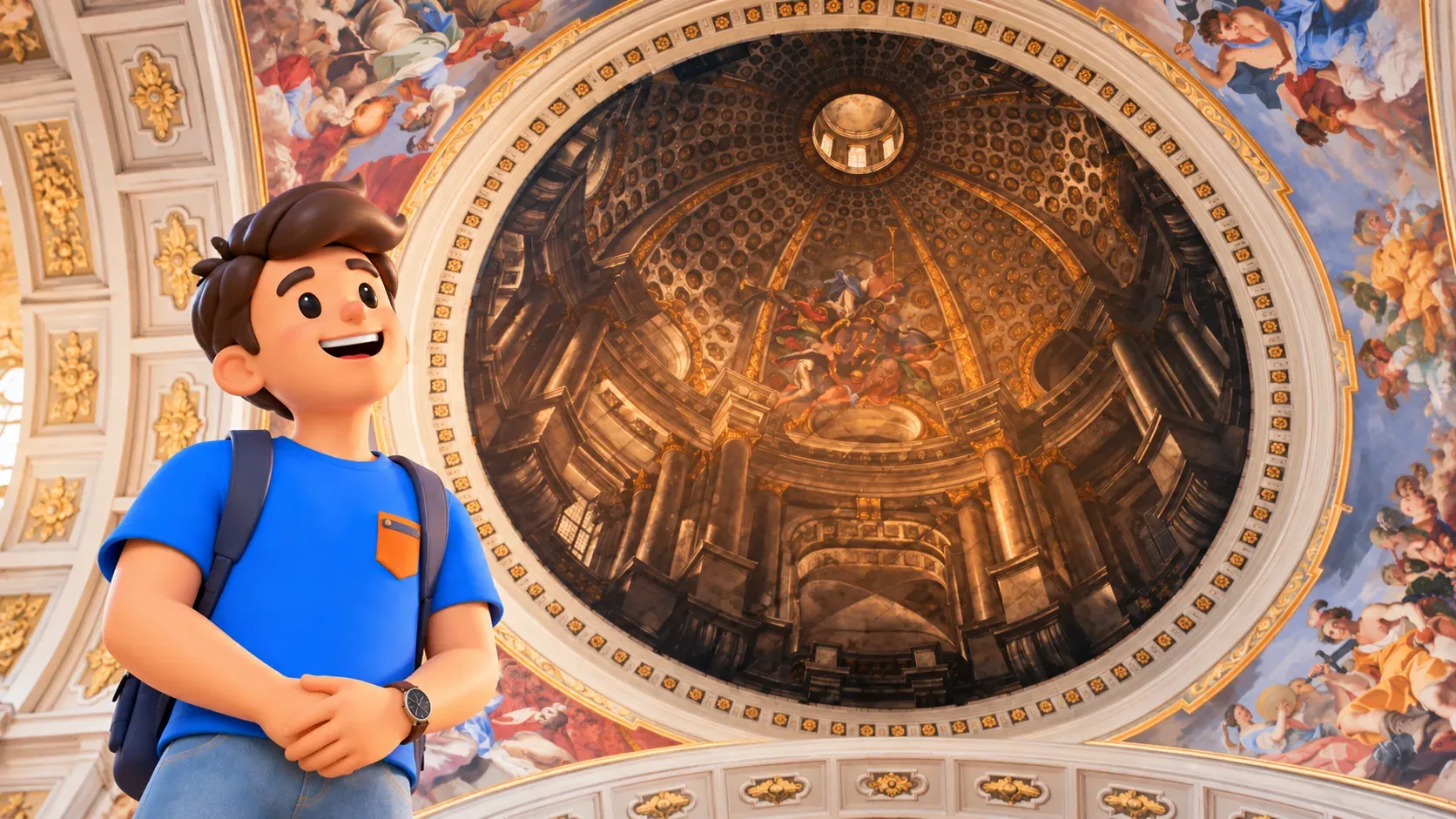
Floor markers identify viewing positions. When the area is available, look from the indicated place, then move a little without obstructing circulation. Notice how the painted lines relate to one another. A brief comparison is enough; you do not need to occupy the central position for a long time.
Farther towards the crossing of nave and transept is a different illusion: the painted dome. This is a separate composition on canvas that represents three-dimensional architecture. Keep it distinct from the broad, figure-filled vault painting you have just examined. They reward related but different acts of looking.
Pozzo’s design belongs to the seventeenth century, but the image has a history of damage and recreation. Following a fire, Francesco Manno reproduced the dome in 1823 using the master’s surviving material. Its interest includes the endurance of an artistic idea, rather than the survival of an entirely untouched original.
Compare an available position where the dome appears convincing with a nearby view. The changing image is part of the design, not a failure. The painter calculated an effect for a viewer in a particular relationship to the surface. Moving gently reveals that relationship between painted architecture and your eye.
Is waiting for the mirror necessary?
The mirror offers a reflected view of the nave painting and has become a popular photographic stop. Its queue is not included in our forty minutes. If waiting would consume the visit, leave the mirror photograph and look directly from an available place. Seeing the art does not depend on making a selfie.
Do not promise that the mirror will be free of people, available in the same way every day or part of a compulsory entrance ticket. The church explicitly describes independent admission as free. A paid tour offered by an outside guide is a separate service, not a requirement for ordinary entry.
Checked in October 2026, the church publishes daily opening from 9:00 to 23:30. Mass is daily at 18:30, with an additional 11:30 celebration on Sundays and holy days. Opening does not establish unrestricted sightseeing during worship: follow current instructions and respect the areas available to visitors.
If looking upwards feels uncomfortable, use short intervals and rest. An ideal viewing position is not worth discomfort. Families can try a simple game: each person chooses one detail that first appeared real. There need not be one winning answer, and nobody needs specialist vocabulary to contribute.
Rest, then walk towards Spada
Keep twenty-five minutes for a break outside the church. Choose somewhere suitable and available instead of counting on a particular empty café table. A substantial order may take longer, in which case extend the outing. After looking upwards, it is pleasant to let the city return to eye level.

Continue through the area around Piazza della Minerva towards Largo di Torre Argentina, then towards Piazza Benedetto Cairoli, Via dei Giubbonari and Piazza Capo di Ferro. The thirty-five-minute allowance includes orientation and crossings. This is a general public-street connection, without assumed shortcuts through private courtyards or closed buildings.
Shops, squares and neighbouring attractions can easily interrupt the connection. A Pantheon interior or another church is not included. If one becomes irresistible, make the programme longer honestly. Keeping one artistic theme in focus is more useful than quietly turning a modest outing into an entire tour of central Rome.
Palazzo Spada: distinguish the palace and the museum
Outside, notice the façade’s stucco decoration and niches. The palace originated in the sixteenth century, before its famous perspective colonnade; the entire building is not a Borromini work. Italy’s Council of State occupies part of the complex. Museum admission does not open every institutional reception room to ordinary visitors.
Our programme includes the Spada Gallery and Secret Garden. Forty-five minutes in the four picture rooms allow a selection of works rather than every label. The closely arranged paintings retain something of a historic family collection: pictures can be experienced beside and above one another, not only as isolated individual masterpieces.
If painting is a particular interest, lengthen this part beforehand. A small museum does not automatically mean a quick visit. Keep the garden’s twenty minutes, because comparing two methods of creating depth is the purpose of the outing, and the final architectural experience deserves its own time.
Borromini’s colonnade: real columns, altered scale
In the Secret Garden, observe the colonnade from the permitted visitor area. Walking inside is prohibited for conservation. You do not need a compulsory demonstration with someone standing at the far end. If a staff demonstration does not happen, the main idea remains visible and the visit is still worthwhile.
Built in 1653 for Cardinal Bernardino Spada, the colonnade involved Borromini and mathematical assistance from Giovanni Maria da Bitonto. Its real length is under nine metres. Shrinking columns, converging sides and a rising floor make the space appear substantially deeper than its actual dimensions suggest.
At the church, an image generated the apparent volume. Here the dimensions of actual architectural elements were manipulated. Look at the whole first, then the repeating columns and direction of the floor. Remain within the designated area rather than approaching the small figure or testing the mosaic pavement yourself.
The statue at the back was added later, in the middle of the nineteenth century. It reinforces the impression of scale but was not part of the original 1653 arrangement. Published measurements of the figure differ; for this walk, simply notice how a small object gains apparent size from its setting.
The museum also presents the perspective as a reminder that worldly grandeur can be deceptive. That adds another layer beyond a photographic trick. You can understand the construction and still let the first impression surprise you again. Knowing the mechanism need not remove the pleasure of looking.
Check the day and the particular access you need
Checked in October 2026, normal gallery hours are 8:30–19:30, with Tuesday closure. Ticket sales end at 19:00 and Secret Garden access at 18:30. Our morning example leaves ample room before those limits. A one-off special opening does not establish a new weekly Tuesday schedule.
Ordinary admission is paid, and individual visitors do not have compulsory advance booking. Groups follow different rules: they are not admitted on weekends, while groups of more than six require advance arrangements on other museum opening days. School groups should check their specific conditions separately.
Access is partial. Ramps serve the Secret Garden, but the first-floor picture collection involves a historic staircase, and reaching the small lift also involves steps. Discuss your particular requirements with the museum beforehand. A ramp into the garden does not establish a completely step-free walk and collection visit.
Prepare the whole trip more conveniently in RoadMe, arranging unusual architecture and your other interests across suitable days. The app provides a personal travel plan to use on the journey, while opening notices and admission conditions should be checked before each chosen visit.
If Spada is closed, keep the church, break, walking connection and ten minutes outside the palace: approximately one hour fifty, without a promised colonnade visit. Choose another day for the full theme. If only the church is inaccessible, ten minutes outside instead of forty inside reduces the main outing to two and a half hours.
For a further encounter with the architect, save our Borromini architecture walk for another day. Today, one thought is enough: the experience of space sometimes depends less on its size than on how an artist directs your attention.


