
Romantic Verona: a Two-Bank Walk for Two
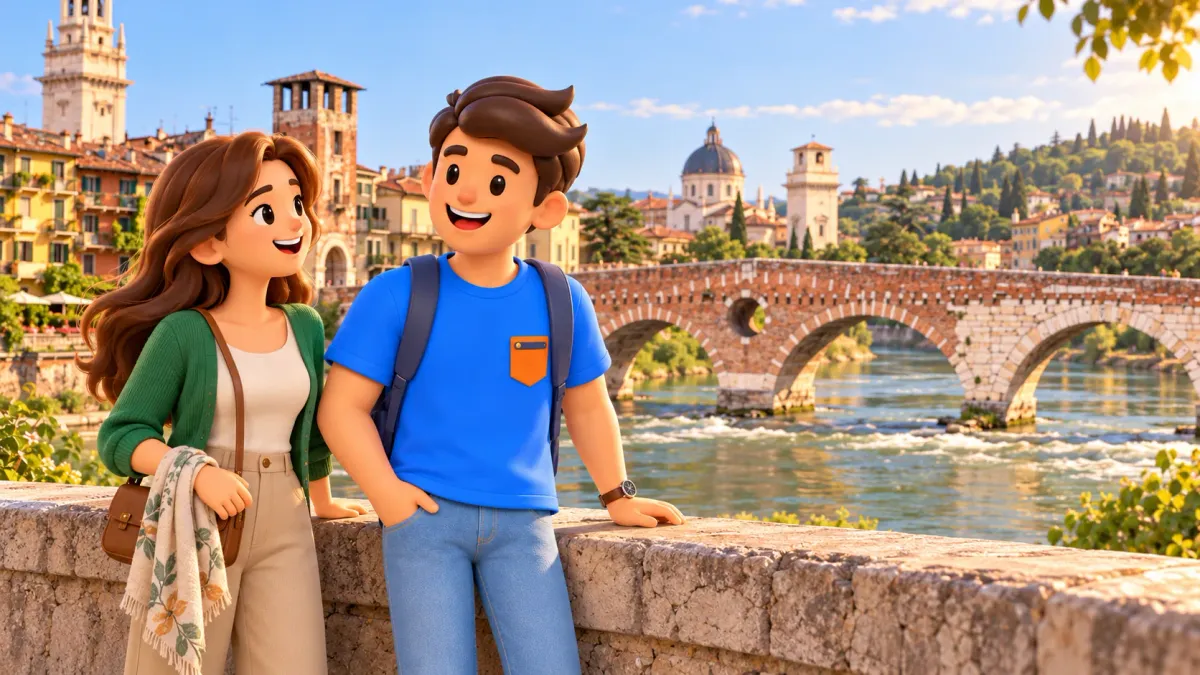
A walk together can have a very small plan: follow an old street, cross the river, sit down and return by the opposite bank. In Verona, the stretch between Ponte Pietra and Ponte Nuovo is enough. Views and façades change without requiring a new sightseeing decision every few minutes. Allow around two to two and a half hours, leaving room both for the city and for each other.
Begin at the old-town end of Ponte Pietra, continue through Sottoriva to Ponte Nuovo, cross into Veronetta and follow its riverfront back to Ponte Pietra. Crossing that bridge returns you to your starting bank. A hill climb, museum interiors and a long dinner are not included. They can belong to another part of the day rather than becoming hidden commitments inside a short outing.
Agree on a simple shared plan
Your common pace matters more than speed. Decide only how much time you have and whether a seated break sounds appealing. If one person enjoys photography while the other prefers conversation, allow a few distinct photo stops. That keeps the phone from directing the entire outing and leaves opportunities to look at the water without immediately needing to record it.
RoadMe makes it easier to develop a personal plan for the whole trip around your interests, bringing walks, cultural visits and rest together. Try arranging your Verona days in the app so time together does not disappear inside an overfilled schedule.
The sequence is Ponte Pietra's old-town entrance, Via Ponte Pietra, Piazzetta Brà Molinari, Via Sottoriva, Piazzetta Pescheria and Ponte Nuovo. Cross into Veronetta, then follow Lungadige Re Teodorico and Rigaste Redentore towards Ponte Pietra before crossing back. It is a compact two-bank loop. Following the riverfront does not mean descending to the waterline or using every visible riverside access.
Allow roughly 120–150 minutes: forty-five to fifty-five minutes of movement, twenty-five to thirty-five minutes of short stops, thirty to forty minutes for a break and twenty minutes of flexibility. These are planning estimates, not timings measured by the author on site. Your approach, a substantial dinner and ticketed visits need additional time. With very few stops, the route will naturally finish sooner.
Daylight makes a comfortable starting point, with early evening included if it suits. Seasonal light and weather determine how the sky looks, so avoid making a few sunset minutes the condition of success. Soft morning light or an overcast afternoon can work too. This walk has a sequence of its own, rather than depending entirely on an ideal lighting effect.
Sottoriva: a little history at walking pace
From Ponte Pietra, follow the old-town streets to Piazzetta Brà Molinari, then walk along Sottoriva towards Piazzetta Pescheria. Do not expect an uninterrupted open river view. The street is near the embankment, but its character comes largely from houses, arcades and the depth of the urban setting. Water appears in separate glimpses rather than as a permanent backdrop to every step.
Sottoriva lies below the neighbouring embankment, and its past is closely connected with life beside the Adige. Mills once worked in the area. That short explanation is enough to suggest a former working place within today's attractive street. You need not turn the outing into an economic history lesson; simply remember that riverine Verona once depended on more than beautiful views.
The arcades invite you to notice repeated openings, wall materials and the meeting of older and renewed sections. Choose one fragment you both like and pause briefly. A small shared observation can stay with you longer than a list of every building. An unfamiliar doorway does not need an invented famous association to deserve your attention.
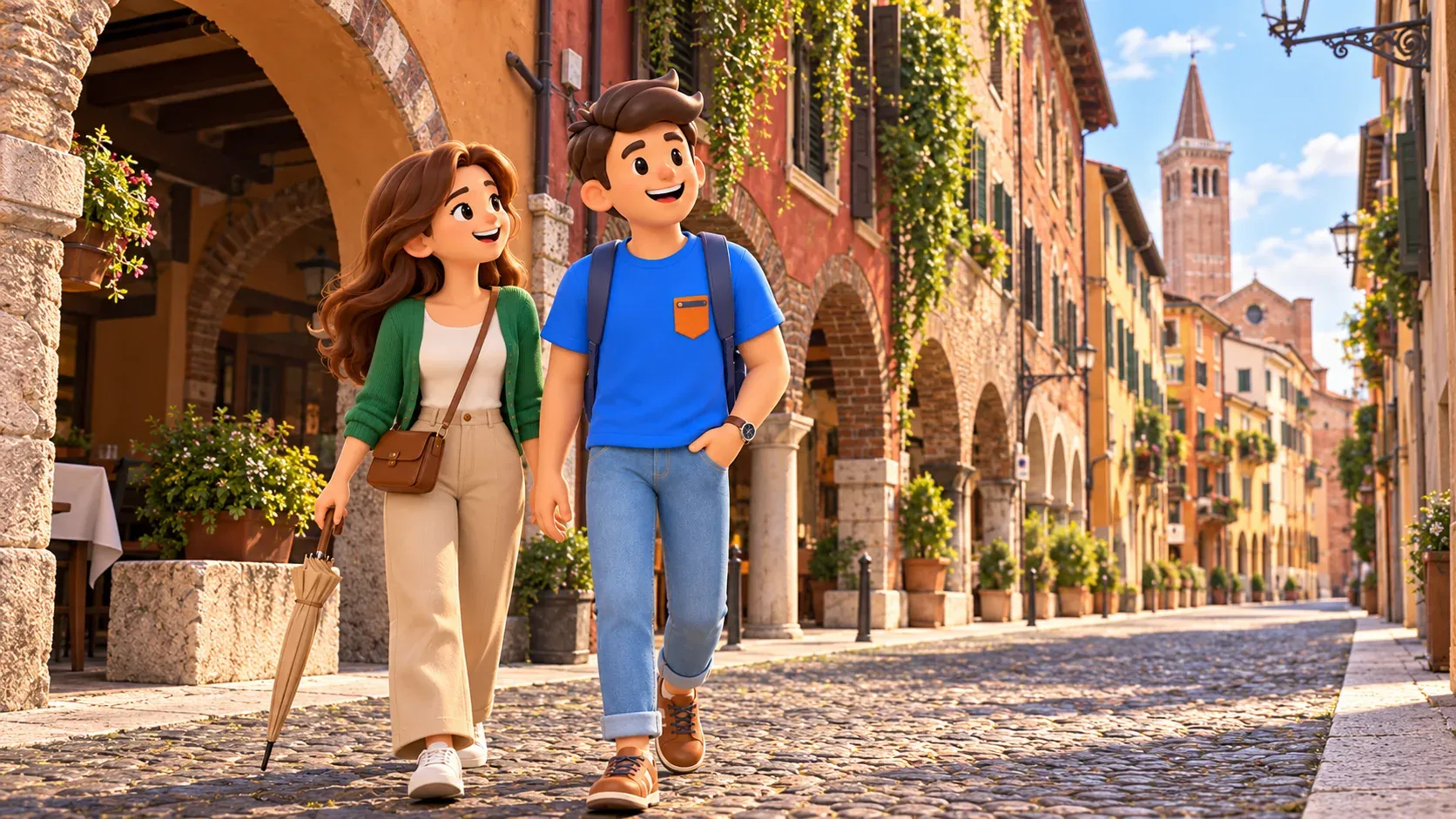
Some short lanes connect the street with the embankment by steps. These are optional branches, not requirements. If stairs do not suit, keep to the planned sequence via the ends of the street, considering surfaces and available crossings. This older setting does not guarantee a completely step-free route, but enjoying it does not require exploring every side passage.
Do not expect permanent silence. Sottoriva has residents, businesses and ordinary activity. Leave doorways and narrow passages clear when stopping to look at a façade. An unhurried outing comes from your chosen rhythm rather than a promise of an empty neighbourhood. Everyday life helps the city feel inhabited rather than arranged exclusively as a setting for a date.
A break that leaves time for two
The thirty-to-forty-minute pause can happen here or later, when you find somewhere suitable. One preselected café need not determine the route: available tables and your mood may change. Preserve the opportunity to rest instead. The point is a chance to sit and talk about what you have seen, not another attraction to complete for the itinerary to be correct.
Choose what you actually need: perhaps coffee and water, perhaps a small snack. Count a long lunch or dinner separately so the finish does not become hurried. If you have a restaurant reservation afterwards, leave time to reach it. Finishing near Ponte Pietra does not mean every table booked elsewhere in the centre is only a few steps away.
At the table, you might each name a favourite view and one place you would like to revisit. That can clarify the remaining days: more architecture, a garden, art or another river walk. Interests need not match perfectly for a trip to work well. They need enough room in the time you share, without every decision becoming a negotiation at the next corner.
If sitting down does not appeal, keep the break optional. Leave more time beside the river or finish earlier. Skipping a café does not oblige you to add more monuments. Part of this walk's value is the free portion of the day it leaves afterwards, rather than its ability to expand until it occupies all available time.
Ponte Nuovo changes your side of the view
From Piazzetta Pescheria, reach Ponte Nuovo using public streets and crossings. Its main purpose here is to take you to the other bank. It need not compete with Ponte Pietra's historic appearance: an ordinary urban crossing offers a useful angle of its own. After crossing, the old town stands opposite and separate building volumes begin to form a continuous cityscape.
Consider traffic and the width of pedestrian space. Stop only where others can pass comfortably; if walking is easier, save photographs for the embankment. A romantic route does not need the same length of pause on every bridge. Sometimes a crossing is best experienced in motion, with a more settled view available immediately after it.
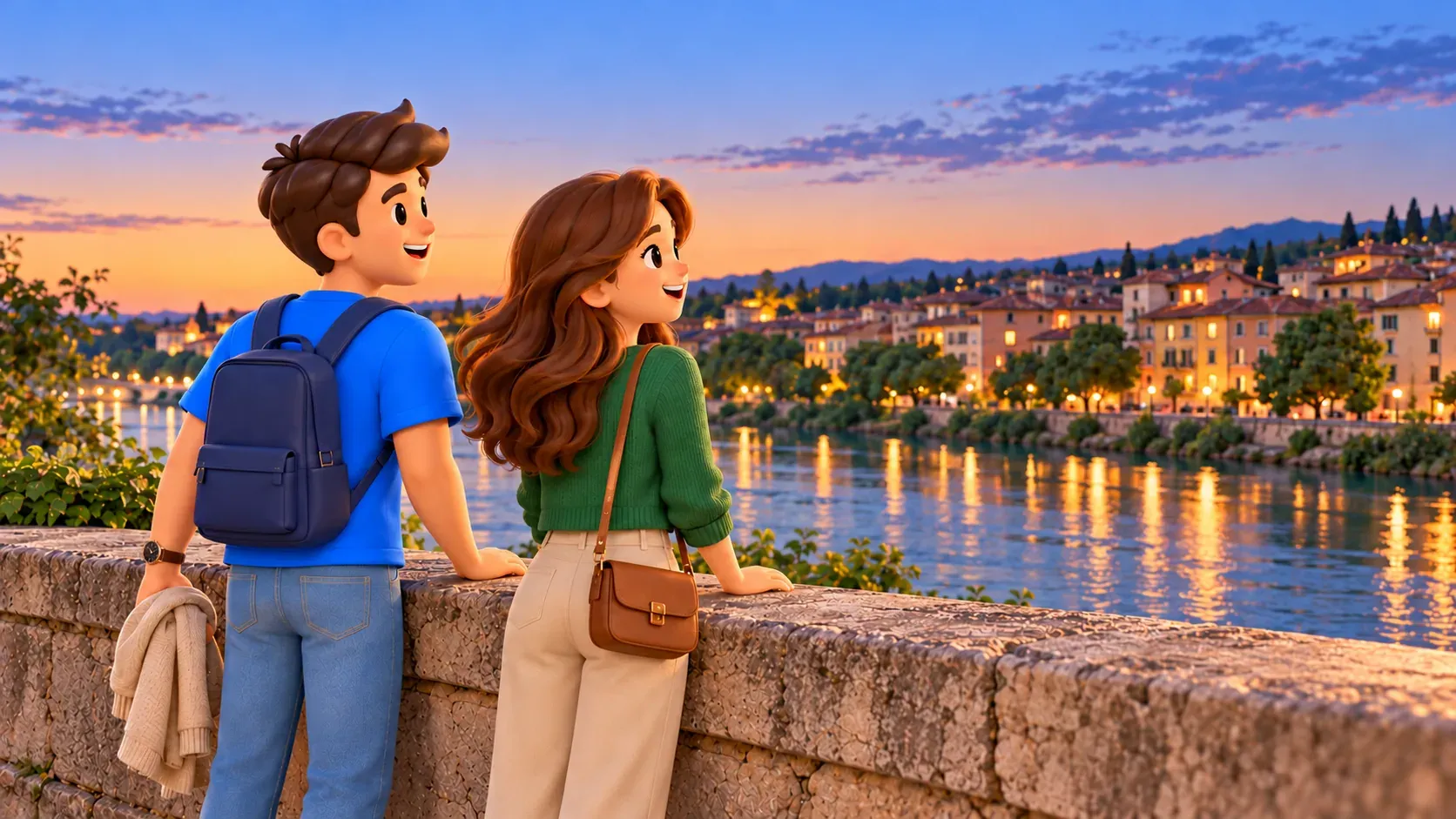
In Veronetta, turn along the riverfront towards Ponte Pietra. The return half of the loop does not repeat the outward one: distance from the façades and your relationship with the water have changed. Sottoriva offered close views of walls and openings. Here you can see the city more broadly without continually selecting one building as the next principal attraction.
If you are tired or conditions change, shorten the outing by a convenient public route. Completing the circle at any cost is unnecessary. Understanding the full sequence helps planning, while enjoying it includes the freedom to stop. Allow separately for the journey after a shortened version, particularly if a meeting or dinner reservation gives the evening a fixed deadline.
Veronetta's riverfront: look across the Adige
Lungadige Re Teodorico and Rigaste Redentore lead towards Ponte Pietra on the Veronetta side. Remain in public pedestrian space and follow current signs. This is an urban riverfront, not a promise of access along every metre of water. Docks, service areas and descents to the bank are not necessary stops, even if they seem attractive for a photograph.
Try one pause for a broad view and another for a detail. In the first, notice roofs, façades and water together; in the second, a reflection, stone colour or the movement of the river. This prevents the walk becoming a repetition of identical pictures. It also offers a simple way to share the different things each person notices.
The useful change of perspective does not require climbing a hill. The centre remains nearby while beginning to read as a panorama. Save an ascent to Castel San Pietro for a separate outing when you want it and have time. It is not a concealed compulsory stage inside the two hours described here, nor necessary to make the river walk feel complete.
Keep a few minutes free from photography. A conversation about what you like in the city, or ordinary silence beside the water, needs no special scenario. An attractive setting need not become the backdrop to an important announcement or a perfect photograph. Lowering those expectations can make it easier to notice more and feel less tired by the finish.
RoadMe can turn your interests into a personal route or trip plan combining walks with culture, food and rest. Plan Verona in the app to spread experiences more conveniently across your days and leave some free time for each other.
Ponte Pietra closes the loop
Ponte Pietra has Roman origins, but its present appearance reflects several periods and reconstructions. Five unequal arches, pale stone and brick make those layers visible. Following destruction in 1945, the bridge was rebuilt in the postwar years. Its interest includes preserving and recovering a city connection, rather than a claim that every stone has remained in place since antiquity.
Cross back towards the old town to finish. On the bridge, briefly look towards the hill or along the water if you can do so without blocking the passage. Even beautiful light does not guarantee an empty crossing. At a busy moment, walk through comfortably and keep your final view for a suitable spot on the approach.
The loop ends on the bank where it began, convenient for a meeting point or a familiar return journey. Reaching your hotel, dinner or transport is outside the time estimate. It can be satisfying to finish while you still have energy and interest, rather than adding another target simply because a sign points to something nearby.
Choose what comes afterwards
For a separate outing involving height and evening light, see our sunset walk from Ponte Pietra to Castel San Pietro. It has a different purpose and time allowance. You need not join both routes into one long day: the small river loop works as an experience in its own right.
In heat, choose a comfortable time and carry water; in rain, consider slippery surfaces and shorter outdoor stops. Continuous shade and available café tables are not promised. These ordinary details matter more than identifying a universally romantic hour. Comfort for the two of you leaves more attention for the city and for the person walking beside you.
Three images remain: the close view of an arcaded street, the old town seen across the river and a return over an ancient-origin bridge. They are enough for a complete walk together. Verona reveals itself through a small change of rhythm and perspective, leaving room for conversation and for the way you choose to remember the day.


