
Verona at Sunset: Ponte Pietra and Castel San Pietro
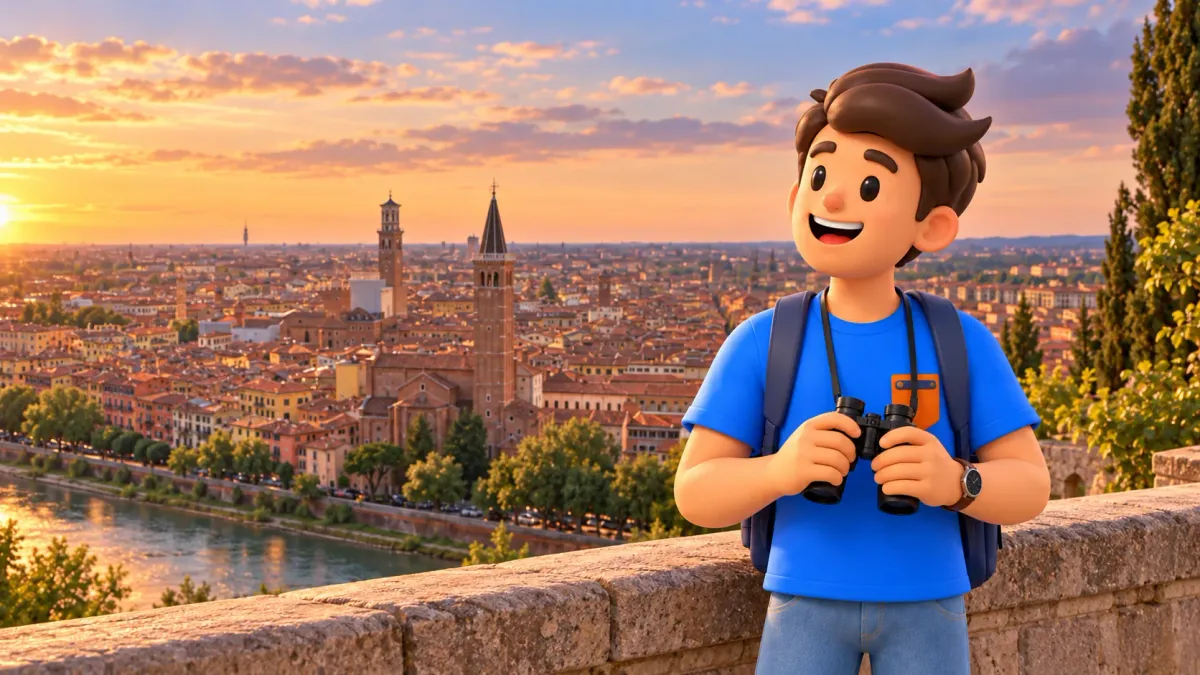
For an evening with one clear destination, cross Ponte Pietra and go up to the outdoor viewpoint at Castel San Pietro. The pleasure is the change in perspective: first the river beside you, then the roofs and towers spread across the opposite bank. You can make the ascent on foot or use the paid funicular when its timetable suits your plans.
Allow roughly two to two and a half hours from the old-town end of the bridge back to the same place, including pauses. This is a planning estimate, not a measured walking time. The useful decision comes before you climb: choose how you will return, and let that determine how late you stay above the city.
Make the viewpoint the main event of the evening
This walk works best when the afternoon leaves some energy for a hill. Finish your museum visit, have something to eat if needed, and travel to Ponte Pietra without squeezing another major attraction into the gap. The starting point here is the bridge on the historic-centre side; the journey from your accommodation is additional.
Check the local sunset time for your actual date. Aim to reach the viewpoint with daylight to spare, so you can settle, look around and decide when to descend. A sunset outing need not mean remaining until the sun has disappeared, especially if your preferred way down closes earlier.
For a whole trip that makes room for evenings like this, try RoadMe: it builds a personal itinerary around your dates, interests, pace and budget. It is a convenient way to give a favourite experience enough space within a plan that suits you.
Think of the excursion in four parts: around 40–50 minutes for the bridge, approach and ascent; 35–45 minutes to enjoy the view; 30–35 minutes for the descent and return crossing; and 15–20 minutes of flexibility. Those allowances produce roughly two to two and a half hours. Waiting for the lift or a slower walking pace can extend the outing; dinner and the journey home come afterwards.
Start with Ponte Pietra beside the river
Before crossing, take a moment on the public approach to look towards the hill. Castel San Pietro stands above the Roman Theatre on the far side. Seeing the destination from below makes the climb more satisfying: you are about to exchange the close view of masonry and water for the broader shape of Verona.
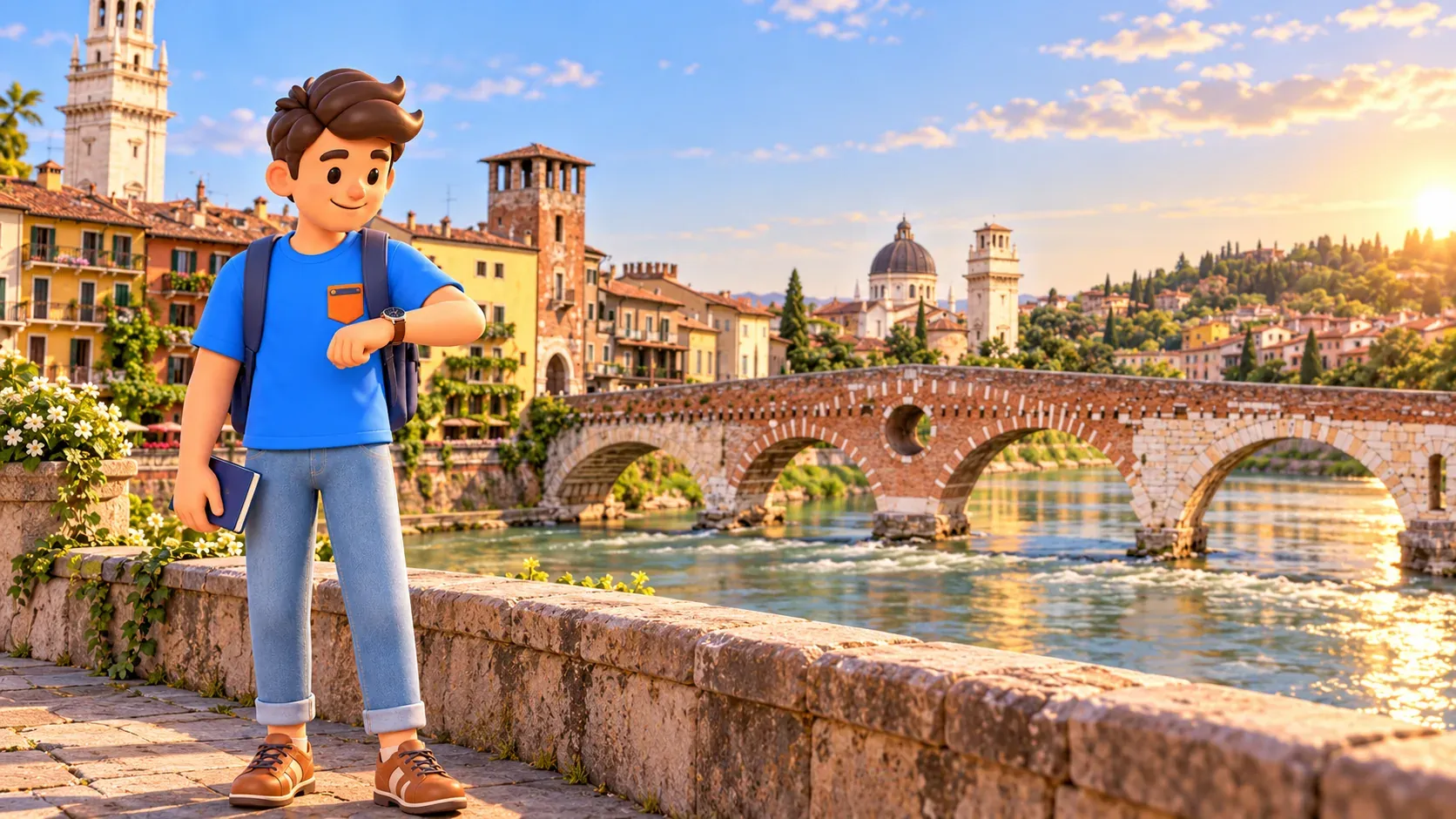
Ponte Pietra has Roman origins, but its present appearance brings together different periods and rebuilding. The contrast between pale stone and red brick is part of its interest. Rather than treating the bridge as an untouched Roman structure, notice how those materials make its long life visible.
Cross at an ordinary walking pace. If you stop for a photograph, move out of the flow instead of turning the centre of the bridge into a prolonged photo session. One river view now and another on the way back are enough to give the evening a beginning and an ending without using up the time reserved for the hill.
Once across, choose the ascent you have already considered. The walking stairway climbs beside the Roman Theatre; the funicular has its own lower station on Via Fontanelle Santo Stefano. These are alternative ways uphill, not two attractions you need to complete in succession.
Choose the stairs for a gradual change of view
The foot route gives the evening a physical rhythm: stone steps, short pauses and glimpses back towards the city. It is a climb, so allow more time if you have already spent the day walking. Comfortable footwear and a small bottle of water are more useful here than carrying extra equipment for every possible photograph.
Follow the public stairway towards Piazzale Castel San Pietro beside the theatre area, observing the signs and any local restrictions. A route past the theatre does not include entry to its archaeological museum. That is a separate visit with its own admission and opening conditions, best planned earlier rather than improvised during the climb.
Pause where there is room for others to pass. There is no prize for reaching the terrace in the shortest possible time, and repeated stops are quite compatible with this outing. If the climb feels harder than expected, reduce the time at the top or turn back before tiredness turns the descent into a problem.
The important question is whether you are also comfortable walking down. A short ascent can still be demanding on knees or on wet steps. Choosing the funicular upwards does not solve the return if you arrive after its operating day has ended. Consider both directions together instead of treating the downward journey as an automatic detail.
Choose the funicular when its return fits
The lower station is at Via Fontanelle Santo Stefano 6. The modern service reopened in 2017 and offers a paid alternative to the stairway. Allow time for reaching the station, buying a ticket and waiting; the movement of the cabin is only one part of the journey.
Checked on 17 October 2026, the operator lists summer opening hours of 10:00–21:00 and winter hours of 10:00–17:00, with closure on 25 December and 1 January. Verify the schedule for your particular day, especially around the seasonal changeover or a maintenance notice. A winter closing time can make a late descent by lift impossible even when the viewpoint itself is your evening goal.
Confirm the last practical time to join the downward journey before going up. Tourist information also states that the ticket office closes 15 minutes before the installation. Do not interpret the headline closing time as an invitation to reach the queue at the final minute; leave a comfortable margin for the trip back.
If you need to avoid stairs, check the station approaches and the connection to the viewpoint for your own requirements as well as the lift service. Availability of a cabin does not by itself establish that the entire outing from your hotel is suitable. If the return cannot be arranged comfortably, move the hill visit earlier and keep sunset for the river below.
At Castel San Pietro, look across the city
The destination is the outdoor forecourt and its panorama. From here the Adige, the old town and its church towers form a scene that is difficult to understand while moving through narrow streets. Begin by looking without a screen: find the river, follow the roofs behind it, then pick one tower or church that catches your attention.
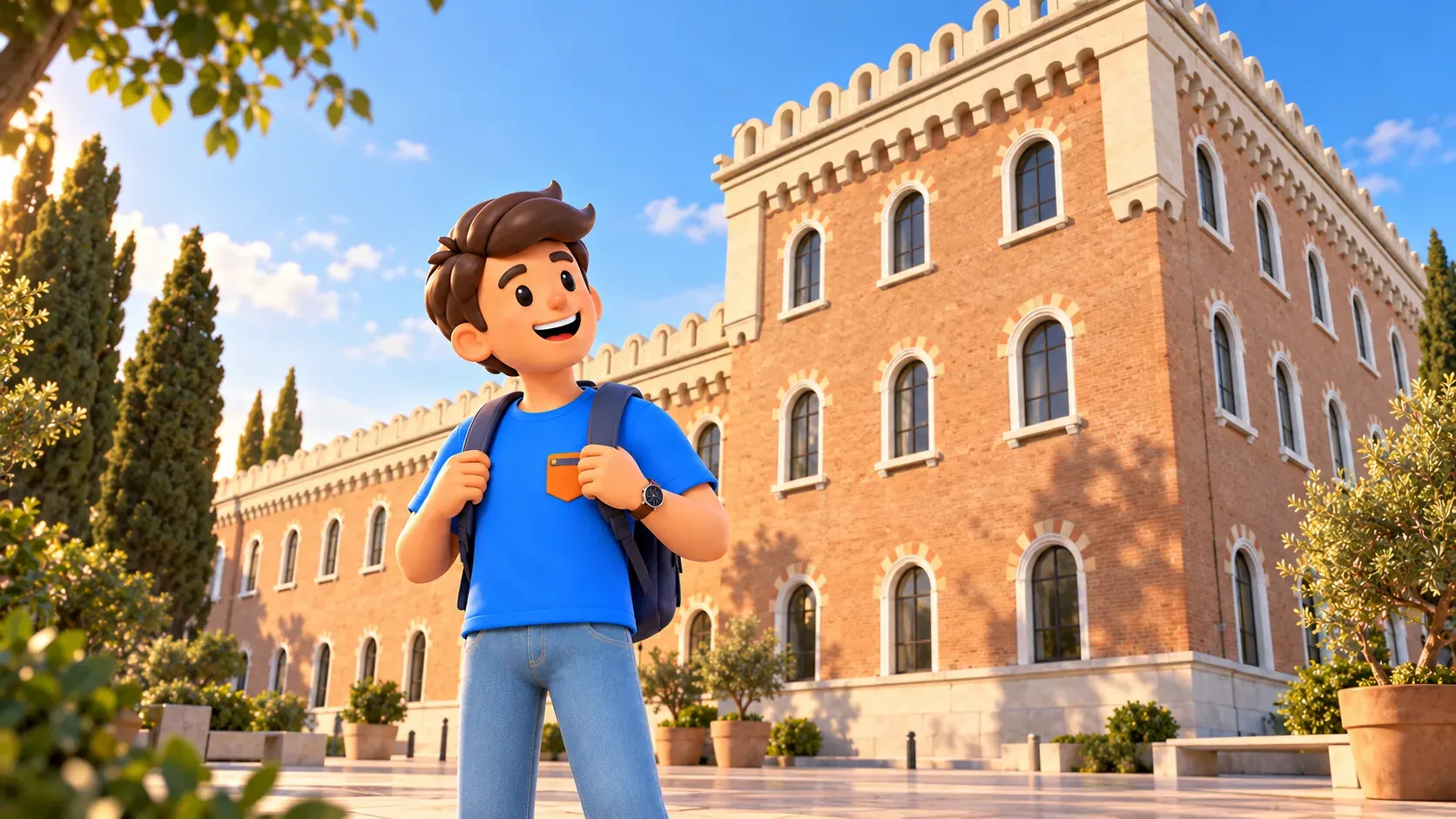
The building behind the viewpoint is a nineteenth-century Austrian barracks, despite the historic name Castel San Pietro. The hill had earlier fortifications and a longer history of occupation, but the imposing structure you see today belongs to another chapter. Its military position helps explain why this place commands such an expansive view.
The interior is not open for a castle visit. Plan your time for the outdoor setting rather than expecting exhibition rooms or a museum circuit upstairs. That makes the pause pleasantly simple: enjoy the relationship between the building, the hill and the city instead of adding another timed admission to the evening.
Choose a position where you can stop without blocking other visitors. You do not need the frontmost spot for the entire pause, and a wide view often works better after you have stepped back and looked carefully. If the terrace is busy, take a few photographs, move aside and let the changing light be part of an ordinary shared public space.
Cloud can make the roofs look subdued; haze can soften distant details. Neither condition means the outing has failed. The panorama is also about the curve of the river, the close-packed buildings and the difference between hill and city. Avoid judging the evening against a single heavily edited image.
Let the rest of the day support this pause
If you enjoy art, give the earlier part of the day to one substantial museum and leave the hill as an open-air finish. If streets and architecture interest you more, a shorter city walk can leave enough energy for the ascent. The aim is to arrive with attention left for the view, rather than with a list of unfinished stops.
You can prepare that balance more conveniently in RoadMe, which develops a personal day-by-day trip plan around what interests you and the pace you prefer. Try it when you want museums, walks and time to rest to fit together across the whole visit.
A meal is another part worth deciding in advance. Eat before the walk if hunger will make you rush, or leave dinner until after you are back by the river. A restaurant stop on the hill would need its own time and arrangements; it is not included in the estimate for this excursion.
Keep any meeting or booking after the walk comfortably separated from the descent. Watching a clock throughout the best part of the evening defeats the point of having left space for it. If there is a firm commitment later, choose an earlier panorama and accept that the exact sunset moment is optional.
Return to the bridge with a clear margin
For a walking return, use the public stair route back towards the theatre and Ponte Pietra while conditions suit you. Do not extend the outing into unfamiliar hill paths simply because they appear close on a map. This plan finishes by crossing the bridge back to its old-town end; it does not include a longer Torricelle walk.
If using the lift down, leave the forecourt early enough to reach the station and complete the journey within the service arrangements confirmed that day. From the lower station, return towards Ponte Pietra and cross back to the historic centre. Dinner and your onward journey can then begin without being confused with the walking allowance.
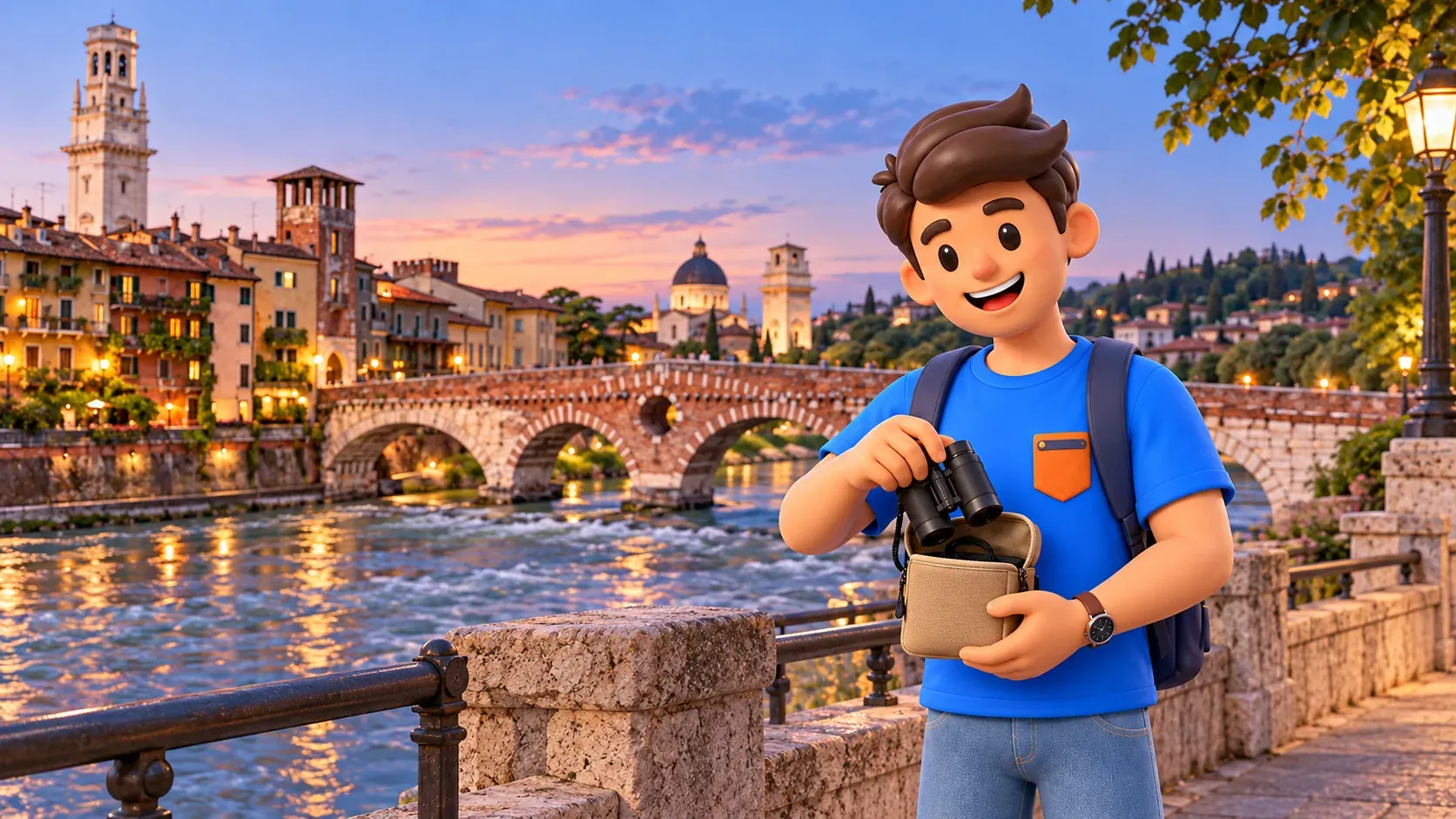
Rain, slippery steps or an uncomfortable return are good reasons to stay lower. After crossing Ponte Pietra from the old town, the upper public pavement towards San Giorgio offers a riverside alternative without the hill ascent. Stop only where there is suitable public space; there is no need to seek a path down to the water.
For a longer walk centred on the river, see our Adige route between Ponte Scaligero and Ponte Pietra. Choose that as a separate outing if the hill does not suit the evening. This shorter excursion is complete when you return across Ponte Pietra, with one view from below and, when conditions fit, one from above.


