
Roman London Beneath the City: A Walk Through Londinium
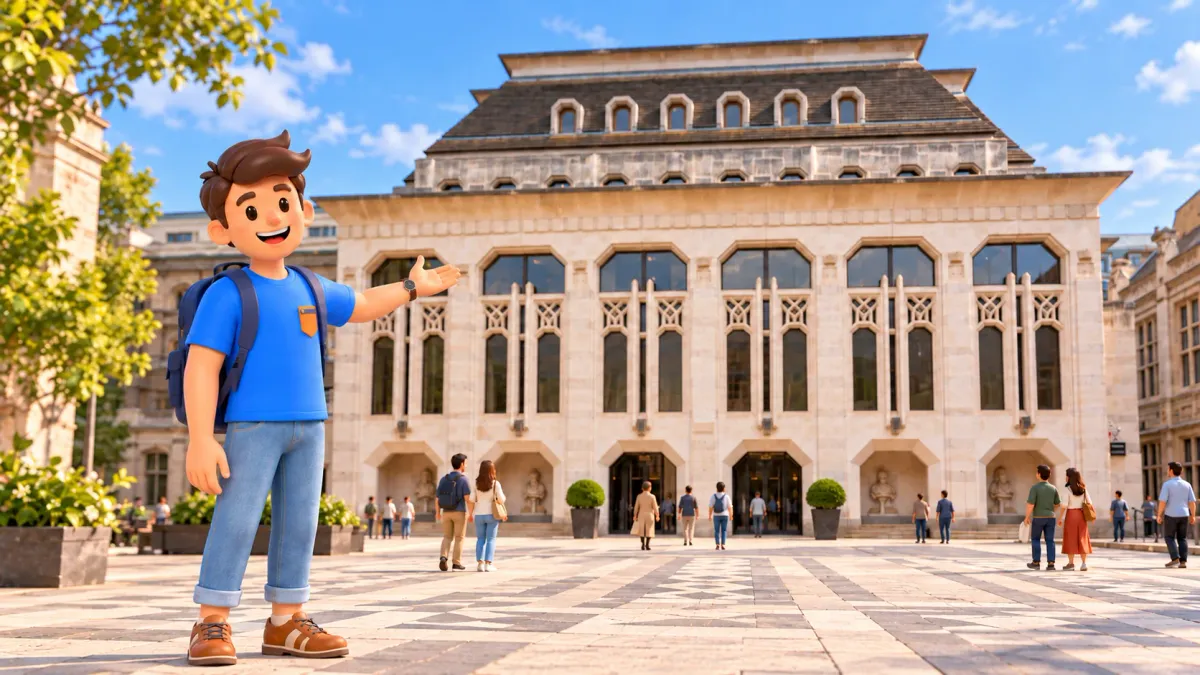
For a first walk through Roman London, connect London Mithraeum, the amphitheatre beneath Guildhall Art Gallery and the wall area at St Alphage Garden. Allow about three and a half hours for selected visits, the walks between them and lunch. The route moves through the modern City while showing three different ways its older past survives: reconstructed remains, archaeology displayed underground and a boundary rebuilt across several periods.
Do not expect a complete ancient town standing between the offices. Some evidence is below street level; some visible masonry belongs to the Middle Ages. That distinction makes the walk more interesting. You are learning how London kept, moved, reused and interpreted parts of Londinium, rather than treating every old-looking stone as Roman.
A compact introduction to Londinium
- Start at 12 Walbrook: a reserved free visit to London Mithraeum, with the temple remains and a selected look at the archaeological display.
- Continue to Guildhall Yard: compare the marked arena outline outside with the surviving amphitheatre remains inside the Art Gallery complex.
- Finish around St Alphage Garden: consider how the city wall continued into medieval London, including what is visible and what remains buried.
Try RoadMe to develop a personal London plan around your interests, dates, budget and pace. In the app, it is more convenient to give this history walk a place in the whole trip, alongside the visits, meals and neighbourhoods that matter to you.
For the basic version, look for a late-morning Mithraeum slot on a Tuesday, Thursday, Friday or Saturday, after checking both museums’ calendars. This avoids treating every weekday as identical. Your booked temple time fixes the start; it does not make every later door open automatically. Travel to Walbrook and the journey after the finish are additional.
London Mithraeum: a temple returned to its setting
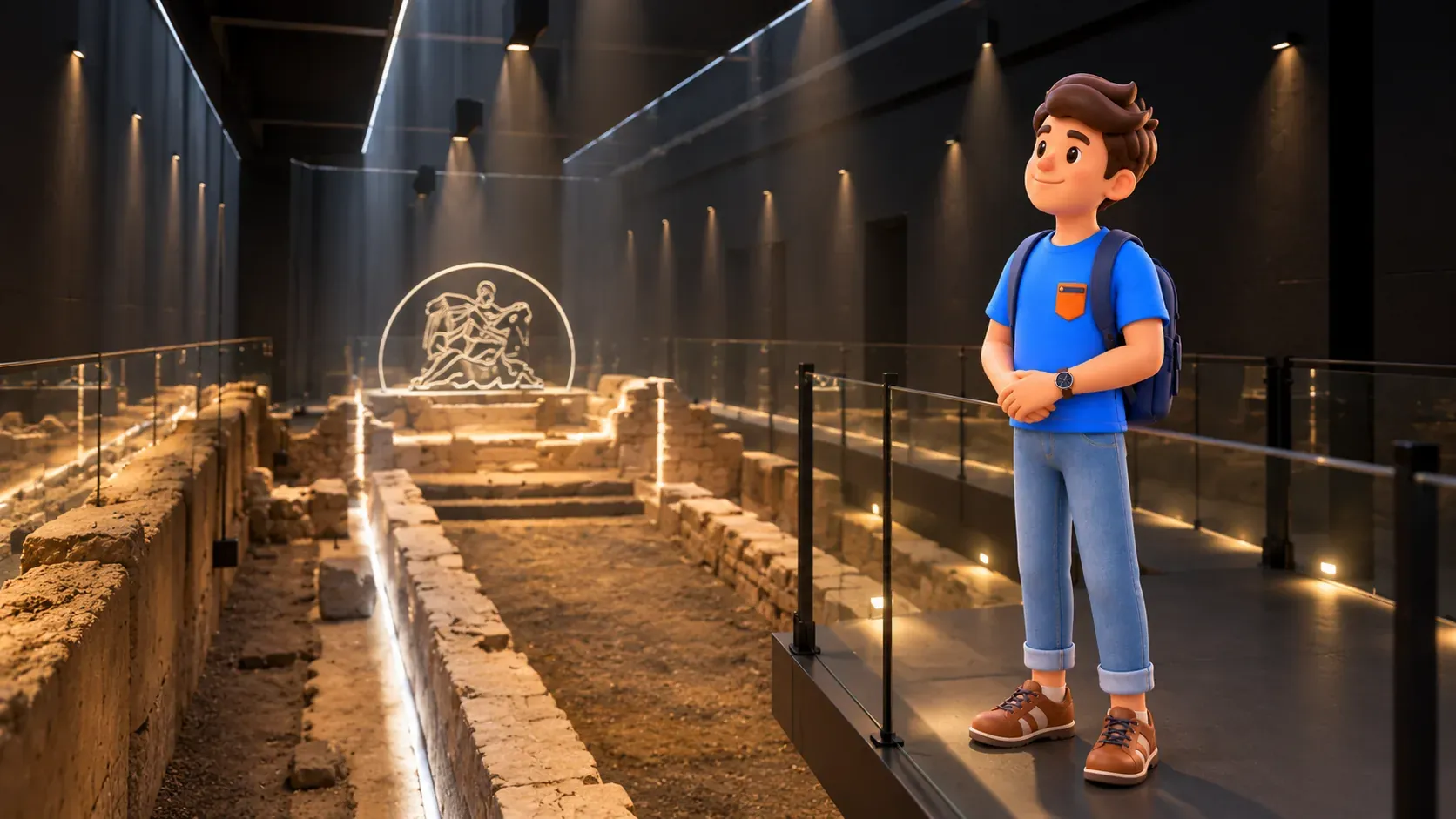
London Mithraeum Bloomberg SPACE sits at 12 Walbrook beneath Bloomberg’s European headquarters. A Roman temple of Mithras, built in the third century AD, became a major archaeological discovery in 1954. The present experience brings the remains back to their original Roman location and level, beneath a very different city.
The word reconstruction matters. After excavation, the remains were displayed elsewhere in an earlier reconstruction; they were not left untouched below the same office for centuries. The current setting opened to the public in 2017. Its value lies partly in the decision to return and interpret the surviving material, rather than in an illusion that a complete ancient building has simply been opened again.
Light, haze and sound evoke the temple’s atmosphere. Those effects are modern interpretation, not evidence that anyone has recovered an exact recording of ancient ritual. Give yourself time to notice the low surviving walls and the relationship between the long space and its presentation. You do not need to resolve every question about the cult to understand why this fragment belongs to London’s history.
Look at a small selection of the objects found on the site as well. They shift attention from a mysterious temple to people who worked, traded and lived in the city. Contemporary art commissions also form part of Bloomberg SPACE, but the current commission can change. Do not arrive expecting an installation pictured in an older review to remain permanently on display.
Arrange the free visit in advance and follow the selected slot. The normal visiting week runs from Tuesday to Sunday, with different Sunday hours and a later Wednesday opening during term time in published visitor information. Check the available session for your date. Monday is not an ordinary day for this starting point. If darkness, haze or sound affects your comfort, ask the team about arrangements before reserving.
Guildhall Yard: find the shape before going below
Return to street level and head north towards Guildhall Yard. The modern streets are part of the contrast: a Roman subject does not require walking on an exposed Roman road between each stop. Allow time to identify the Art Gallery entrance rather than assuming every entrance in the historic Guildhall complex leads to the same visitor space.
In the Yard, dark paving marks the original extent of the amphitheatre. It is a modern way to communicate a building’s scale, not a Roman arena surface left in use. Looking at the outline first helps you understand why the remains downstairs occupy only part of a much larger place. A small surviving section does not mean the original building was equally small.
The amphitheatre was discovered in 1988 during work connected with the new gallery. Its public display opened in 2002. These are different dates and different stages: finding a site, studying it, conserving it and opening it are not one event. The modern gallery above is part of the story of how the archaeology could be kept in the working City.
The amphitheatre: remains and interpretation
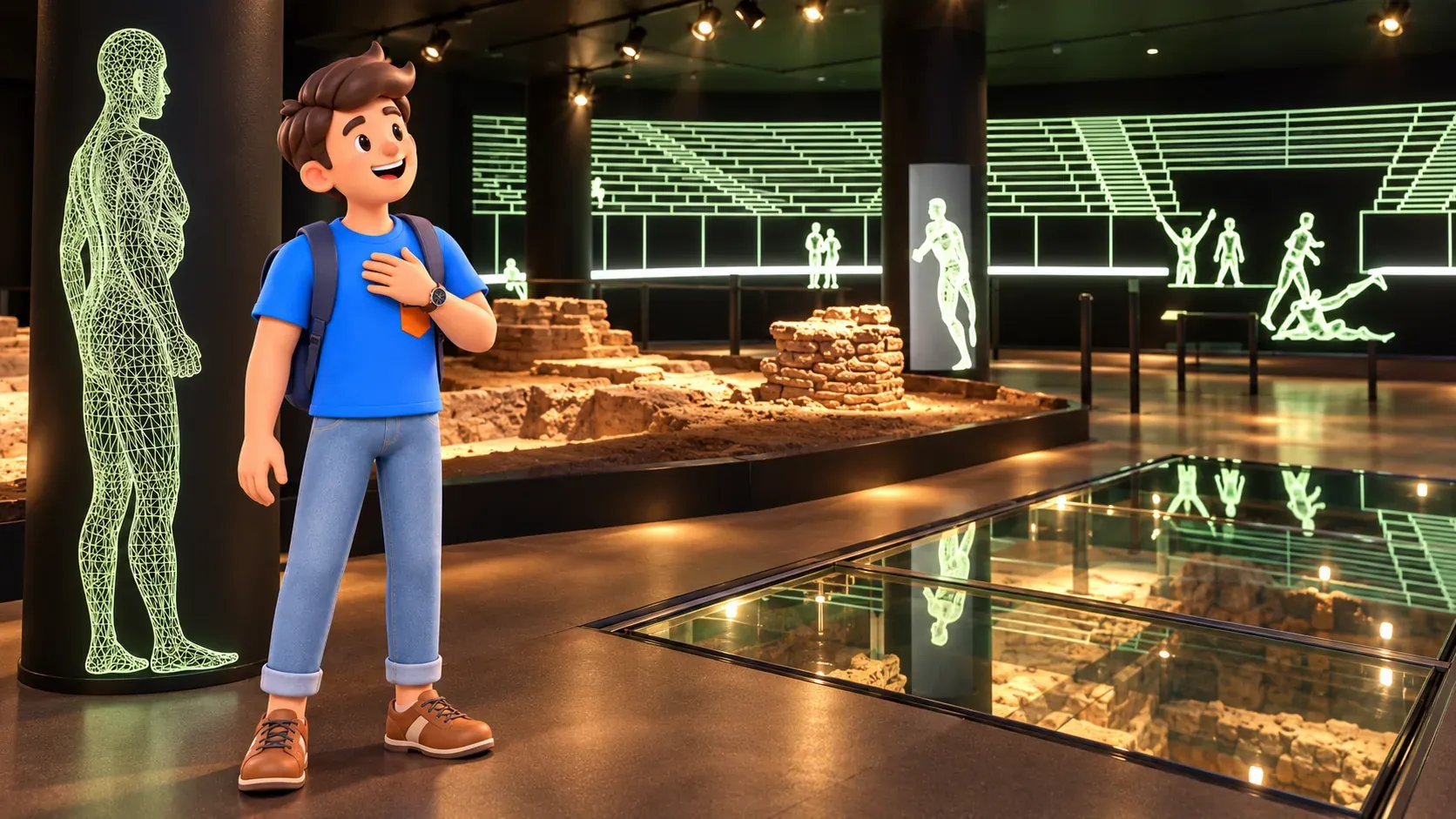
Entry is through Guildhall Art Gallery, with ordinary admission to the gallery and amphitheatre free. Advance general admission is encouraged, while walk-up visits are also available. The surviving elements include part of the stone entrance tunnel, the east gate and arena walls. You are seeing conserved remains within an exhibition, not an intact miniature Colosseum with all its seating still in place.
The dark interior and illuminated outlines help suggest the larger structure and its spectators. Separate those modern visual explanations from the archaeological fabric. The venue once hosted public spectacles, including gladiatorial combat. A simple question is enough to guide your attention: how did people enter, and how does the exhibition help you imagine what no longer survives?
For this walk, choose the amphitheatre and a brief orientation in the gallery rather than adding a complete art visit. If the paintings become your main interest, give them their own longer allowance and shorten the outdoor ending. A free guided introduction, when scheduled, is a separate activity; do not assume that every visit includes an amphitheatre tour at a particular hour.
St Alphage Garden: not every visible wall is Roman
Continue towards the St Alphage Garden area near London Wall. This is a useful ending because it challenges the habit of assigning one date to everything old. London’s city wall was built and altered across Roman and medieval periods. At this particular garden, Historic England identifies the Roman fort and town-wall remains as buried features, rather than visible Roman masonry above ground.
The standing stonework and brick crenellations belong to later rebuilding. That does not make them less interesting: they show how a boundary could continue to shape London after its original construction. Look for changes in material and height without trying to date an individual stone from its colour alone. The relationship between periods is the subject here.
The nearby church ruins are another layer, not a Roman temple. The surviving arches associated with St Alphage should not be confused with the garden’s wall or described as Roman gateways. Stay on the open public paths and respect any closed section. If access to the garden is restricted that day, end around Guildhall instead of looking for a way into private premises.

Give the walk a realistic half-day
A useful initial allowance is forty minutes at the Mithraeum, forty for Guildhall Yard and the selected amphitheatre visit, thirty for the walking connections, twenty around the garden wall, forty-five for lunch and thirty-five for arrival procedures and spare time. That totals three and a half hours. It is an editorial estimate, not a measured route or an official maximum stay at either museum.
A longer wait or greater interest in the displays needs more time. The lunch allowance is included, but no table is reserved by this outline. Choose a suitable seated stop if anyone needs one. Journeys to the start and away from the finish remain additional. Billingsgate’s separate guided visit is also outside this timetable.
Check the date before relying on ordinary opening hours. Guildhall’s regular opening is ten to five, with last entry at 16:45, but its visitor notice lists complete closures on 21 October, 16 November and 7 December 2026. Other dates have altered hours. A usual timetable, or an older spreadsheet entry, is not confirmation that the amphitheatre will open on your chosen day.
The museums’ arrangements and the streets between them are separate access questions. Ask about any needed lift or sensory accommodation and check the approach from your station. A destination reached below ground does not by itself tell you whether the whole outing is suitable for your needs. For the wider planning question, our guide to what to book before visiting London explains how to keep space around important visits.
Billingsgate: choose a separate booked visit
Billingsgate Roman House and Baths offers another way to see ancient domestic life, beneath an office building at 101 Lower Thames Street. It belongs to the same broad Roman story, but it is not a walk-in stop to add because a map places it nearby. Visits use a separate paid guided tour with limited places and advance booking.
The published 2026 programme runs on Saturdays from 11 April to 28 November, with sessions at eleven, twelve and one. The tour lasts about an hour, is for ages eight and above, and access is by stairs only. Check the actual available date and conditions. Choose it as an alternative focus or allow a longer outing with its own journeys, rather than silently adding it to this walk’s three and a half hours.
With RoadMe, it is easier to turn your interests in archaeology, architecture and everyday city life into a personal programme for the whole journey. Try the app to work out London at your pace, giving the Roman story enough time without making every day a race through separate bookings.
The most rewarding discovery may be the change in how you look. A conserved wall, a modern paving outline and a medieval rebuilding each tell a different kind of truth about the past. Notice the distinction, and the City becomes more than offices above a vanished Roman town: it becomes a place where different Londons still meet.


