
What to Book in London Before You Go—and Where to Stay Flexible

Book the London visits you would be disappointed to miss once your dates are firm, then protect space around them for walking and meals. A free viewpoint with a suitable ticket, a paid historic interior and a museum exhibition may all deserve advance attention. They do not all need the same booking timetable, and buying more tickets does not automatically make a better trip.
Start with what matters to you rather than a list of places everyone supposedly must reserve. Sky Garden, Horizon 22, the Tower of London, Westminster Abbey and the free museums illustrate different arrangements. The useful distinction is between a reservation that secures a chosen visit, one recommended for a smoother arrival, and an outing that can remain flexible within its opening hours.
Reserve the experience, not every hour of the day
- Decide first: which interior, exhibition or view is important enough to shape a day around?
- Check next: what does its own visitor page say about tickets, dates, entry and capacity?
- Keep open: a nearby walk, an ordinary meal stop and time to recover after a substantial visit.
Try RoadMe to develop a personal London plan around your interests, dates, budget and pace. In the app, it is more convenient to work out the whole trip, giving your chosen visits a sensible place among walks, meals and time to enjoy the city.
As a starting point, give a sightseeing day one main booked visit. This is a planning suggestion, not a limit on what anyone can manage. A second booking can work when the experiences, geography and available time genuinely fit. The problem is committing to several clocks before accounting for journeys, security, the visit itself and the way out.
Free high-level views still need planning
Sky Garden offers free general-access tickets for a stated date and time, currently available up to three weeks ahead. The general ticket allows one hour from entry. A date missing from the calendar may be outside the release window or have no availability; it is not evidence that a paid package is the only way to enjoy London from above.
The operator recommends advance booking, particularly for busy periods. Walk-ins depend on spare capacity, with no ideal arrival time promised; they are not accepted after five on weekdays. Treat that possibility as uncertain rather than as the main plan for a short trip. Restaurant reservations follow their own arrangements, and a paid meal should not be presented as a free sightseeing booking.
A ticket also does not remove every delay. When checked in October 2026, Sky Garden was warning that a visitor lift was out of service, reducing capacity and potentially delaying some ticket holders beyond their booked time. Read the current notice before placing another reservation immediately afterwards. The date and time printed on a ticket are not a guarantee of an uninterrupted journey through a working building.
Horizon 22 has a different free standard-ticket arrangement: choose a preferred date and time and obtain the access QR codes. Its additional experiences and optional extras are separate choices. Do not assume that a free standard visit includes every event shown on the same website, or that one viewpoint’s release window applies to another.

Choose one view for the experience you want before searching for tickets. Our comparison of London hills, rooftop gardens and viewing galleries explains the different settings. That is a separate choice from booking: an outdoor walk and a timed gallery visit do not use your afternoon in the same way.
Paid history visits: choose the right ticket and day
The Tower of London is worth booking ahead when it is a main reason for your trip. Its official ticket page also allows ordinary tickets to be bought at the ticket office on the day, so advance purchase should not be described as a universal compulsory rule. Availability and your own limited dates are the practical reasons to organise it earlier.
Read what the ticket includes. The ordinary Tower ticket covers its open public areas, including the Crown Jewels and White Tower; Yeoman Warder tours are subject to availability. Conservation work can reduce access or close rooms and routes. Admission to the Tower is not admission to the Tower Bridge visitor attraction, and an extra experience is not automatically included because it takes place within the same historic site.
Westminster Abbey recommends booking ahead, especially during busy periods. Pick the date from the sightseeing calendar rather than from the fact that the church is open in some form. Sundays are for services, and special services can change the visitor schedule on other days. Attending worship is a different purpose, not a substitute sightseeing ticket.
The Abbey’s role as a coronation church gives the interior its meaning, but it remains a working place as well as a visitor destination. A small number of important visits can make a London day richer than a series of entries collected for their names. Choose the history you want to spend time understanding before paying for another interior.
Free museums have different reservation rules
The National Gallery’s general collection is free to visit. You can book a free ticket for fast-track entry and advance information, while walk-up entry is also available. Some exhibitions carry a separate charge. A reservation for the ordinary collection should not be mistaken for a ticket to every temporary exhibition or special activity.
The Natural History Museum’s London galleries are also free. The museum recommends a free entry ticket to secure admission; people without a reservation are admitted when capacity allows. This makes a booking useful when the museum is central to a short visit, rather than a reason to declare that nobody can ever enter without one.
At both kinds of destination, separate general admission from the particular exhibition you want. Check its own date and ticket rather than assuming a familiar museum name tells you everything. Allow for security and bag checks even where a ticket gives entry priority. The practical benefit of booking is not permission to arrive at any time or bypass every procedure.
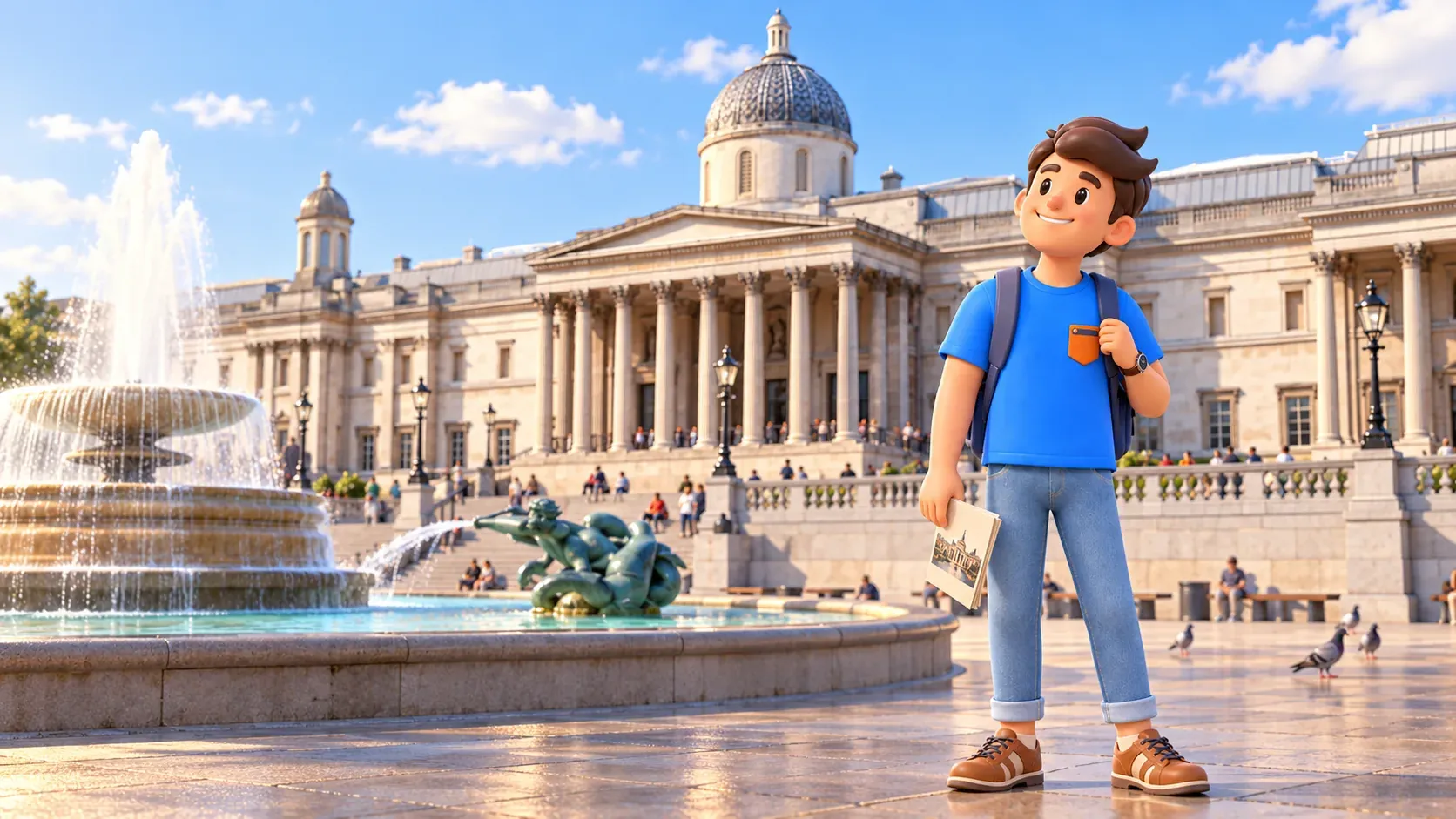
Choose a subject rather than attempting an entire large collection before lunch. Paintings at the National Gallery and the natural world at the Natural History Museum lead to different experiences. Their ordinary free admission makes it easier to select a manageable visit; it does not turn them into quick, interchangeable shelters that can be inserted between appointments without time.
Count the time outside the booked visit
Give every important booking an arrival sequence: travel, walk to the actual visitor entrance, any wait, security and the visit. Then account for leaving the building and continuing to the next place. An online map’s station-to-station estimate is only part of that sequence. Do not use it as the complete interval between two ticket times.
Lunch needs a place in the plan too. A café marked inside a museum is not a reserved table, and a short drink does not necessarily replace a meal. If someone needs a seated pause, identify a suitable option before the day becomes tiring. Leave the nearby walk flexible enough to shorten it without rushing the experience that mattered most.
Keep geography simple. The Tower fits an outing in the eastern part of the central city; Westminster Abbey belongs to the Westminster area; the Natural History Museum is in South Kensington. These are broad planning relationships, not a route connecting all three. A gap that looks empty on a calendar may already be doing the useful work of getting you comfortably from one neighbourhood to another.

Check the conditions before committing
Read the actual ticket type, date and entry conditions before payment or confirmation. General admission, a guided tour, a special event and a restaurant reservation are different products. If your dates may change, check the applicable change and cancellation terms rather than assuming every ticket can be moved or refunded. A reassuring badge elsewhere on a website is not the full set of conditions for your selected visit.
Keep the confirmation in a form you can retrieve. Check whether the venue expects a digital code, printed ticket or other information, and whether anyone in your group needs a different ticket or prior access arrangement. These checks concern the chosen venue; do not infer a universal rule for every London attraction.
Bag rules matter before departure from your accommodation. Westminster Abbey has no cloakroom or left-luggage facility and does not admit large backpacks, suitcases or wheeled bags. A ticket does not solve that problem at the door. If an access requirement needs advance contact, settle it with the venue rather than relying on a general description of an accessible entrance.
Leave London room to be a city
Before the trip, revisit the current opening calendar and any notice for the selected day. Before leaving for the attraction, confirm the entrance and the journey. Do not add a last-minute booking simply because a space remains on the page. Ask whether you still want that experience and whether it leaves a comfortable day around it.
With RoadMe, it is easier to turn your preferred mix of history, museums and neighbourhood walks into a personal programme for the whole journey. Try the app to work out London around your interests and pace, keeping the important visits without filling every spare hour with another commitment.
A useful booking secures something you value. The time around it lets you notice the street, stop for food and enjoy arriving somewhere rather than merely reaching the next slot. Reserve the visits that give your trip its character, then allow the rest of the day to support them.


