
Roman Florence beneath the familiar centre: how to read the older city
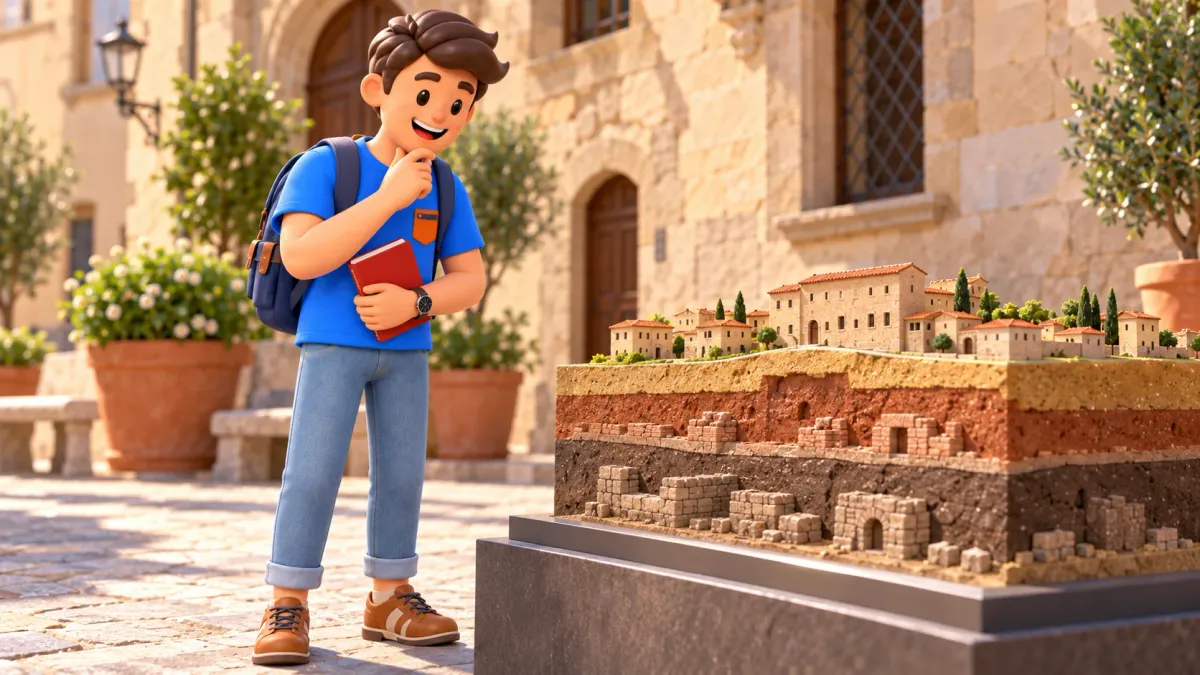
Roman Florence is not an intact ancient town waiting beneath every familiar street. Its traces survive within a city rebuilt through later periods: in the memory of the forum beneath Piazza della Repubblica, in theatre remains under Palazzo Vecchio and in the archaeological layers below the cathedral. The rewarding question is how those pieces relate to the Florence you see today. Distinguish a visible clue, an excavated fragment and a historical reconstruction. That makes the older city more understandable without promising access to every underground space or turning an ordinary central walk into an expedition through open ruins.
Choose a small framework. Begin with the idea of the forum around Piazza della Repubblica, then select one archaeological subject if the actual visit arrangements suit your dates. The Roman theatre and Santa Reparata are different encounters, not interchangeable underground attractions. You can also keep the whole outing outdoors and use the story to read the modern city more carefully. The aim is not to reconstruct ancient Florence in full. It is to understand how an earlier settlement survives through location, fragments and the transformations that put later buildings above it.
Look for layers rather than a hidden complete city
A city develops by rebuilding, reusing and changing its ground. Earlier structures may survive beneath later floors, while other traces are known through excavation rather than visible walls. A square can mark an old centre without displaying its ancient buildings. A museum route can reveal fragments without reconstructing an entire theatre. Keeping these differences clear helps you enjoy archaeology as evidence. You do not need every missing piece to become a complete picture. The relationship between what survives and what has changed is itself a substantial Florence story, particularly beside places usually associated only with the Middle Ages or Renaissance.
RoadMe makes the whole trip much more convenient to organise: the app develops a personalised itinerary around your interests, dates and comfortable pace. An archaeological theme can connect a chosen visit, meaningful outdoor observations, meals and real breaks into a coherent stay, rather than sending you between disconnected fragments of the city.
Begin with a question that the place can answer. At the former forum, ask why a central location remains important. Below a palace, ask how ancient construction was reused. Beneath the cathedral, ask how religious space changed over centuries. These are related questions, but not identical. A first encounter becomes clearer when one of them leads the day. The others can remain context for future visits. This keeps the programme proportionate and leaves space to look at the present city, instead of spending the entire walk searching for an underground world that is not continuously open to view.
Piazza della Repubblica: a former centre beneath a later square
The area of Piazza della Repubblica belonged to the Roman forum, the colony’s central public setting. The meeting of the main urban axes, the cardo and decumanus, is recalled by the Column of Abundance. That gives a useful starting point for imagining the city’s organisation. It does not mean the present square is a preserved Roman forum. Look at the location and the idea of intersecting routes rather than expecting ancient paving and temple façades in the open space. A remembered centre and an intact ancient architectural ensemble are different things, even when both belong to the history of the same place.
The present appearance has a strong later story. Medieval market quarters and other densely built areas were cleared in the nineteenth-century remaking of the centre. The old market and Jewish ghetto formed part of what was lost. The regular façades and broad open space therefore express a major change, not an unchanged ancient scene. Remembering Roman Florence should not erase those intervening communities and buildings. The square holds several histories, including the destruction that made its current form possible. That complexity is more revealing than calling it simply an ancient place and letting the later centuries disappear from the account.
Beneath Palazzo Vecchio: a theatre within later building layers
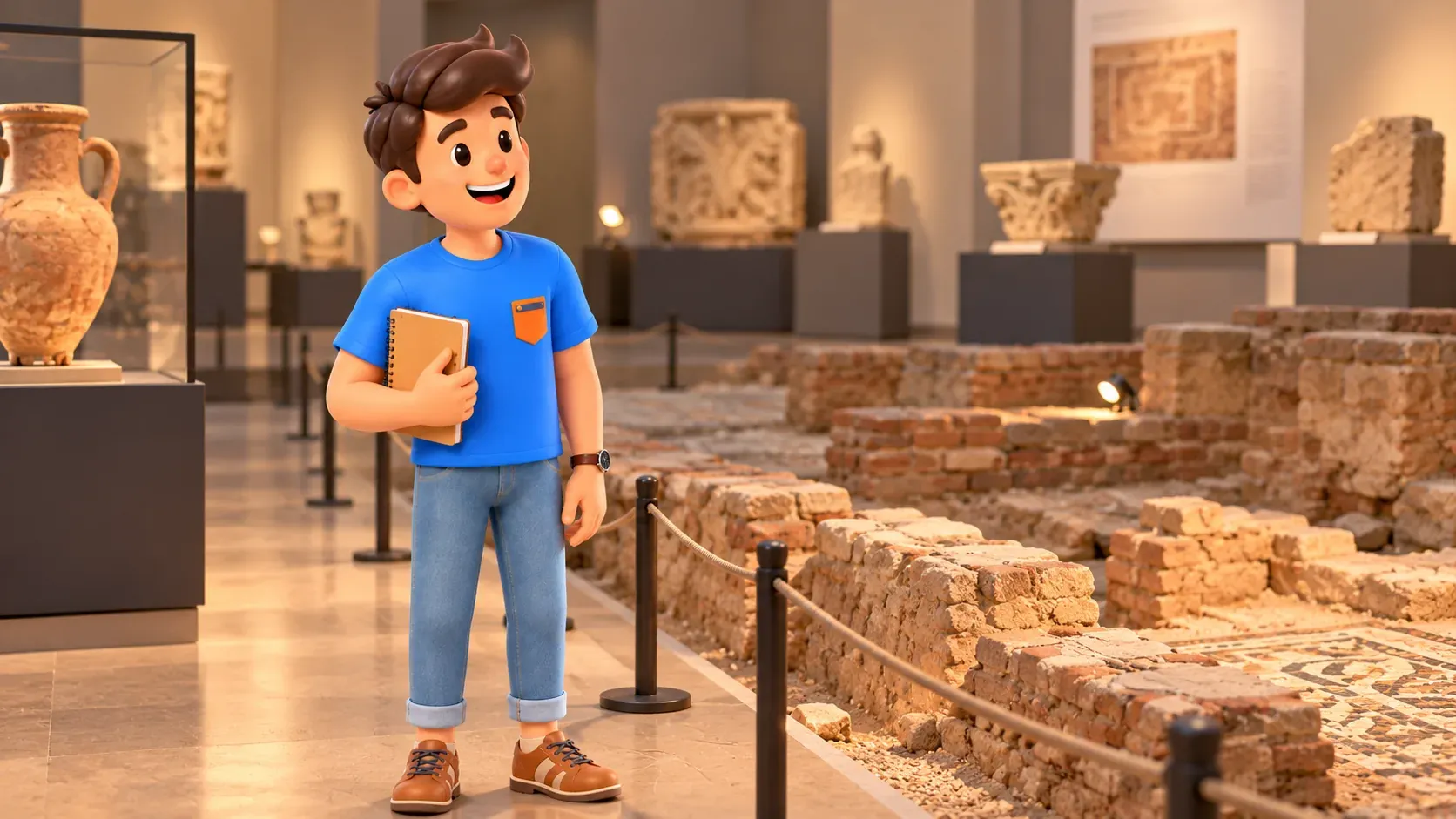
The Roman theatre below Palazzo Vecchio adds a different relationship. The medieval government palace stands over an area shaped by a much earlier structure and subsequent uses. The remains are fragments, not a complete set of spectator tiers waiting beneath the floor. Their value lies partly in the connection between ancient construction and the buildings that followed it. This gives a familiar political landmark unexpected depth. The palace’s history begins before the visible façade, even though the surviving underground evidence does not turn the whole site into an unchanged Roman theatre.
The theatre had an early phase in the period of the Roman colony and a major imperial enlargement. Later, materials were reused and new roads, homes and working spaces developed over the remains. Some ancient internal passages acquired different functions. That process matters more for a short visit than memorising every construction date. The place shows how a city can build upon and adapt what came before. Archaeology makes those relationships visible again, but it does not remove the later city or restore a single lost moment as if the intervening centuries had never existed.
Before planning an interior encounter, check the actual Palazzo Vecchio archaeological offer and whether it is available for your dates. A palace visit should not be assumed to include every underground area. Historical importance and present access are separate questions. If no suitable visit is offered, the exterior can still introduce the idea of a civic centre built over older Florence. You do not need to promise yourself entry to appreciate the relationship. A confirmed archaeological visit deserves its own arrival, time and attention rather than being added as a supposedly negligible extra between several other museum appointments.
Santa Reparata: not every old layer is the same Roman period
Santa Reparata beneath the cathedral preserves the earlier church that preceded Santa Maria del Fiore. Its story belongs especially to late antiquity and early Christian Florence, followed by later rebuilding. The cathedral did not arise on an empty site. Walls, decorative fragments and changes of floor level reveal an existing religious centre beneath a much later monument. This is related to Roman Florence, but calling the whole archaeological area simply a Roman building would flatten the history. The value lies in transition between periods, not in giving every old fragment the same label regardless of date or function.
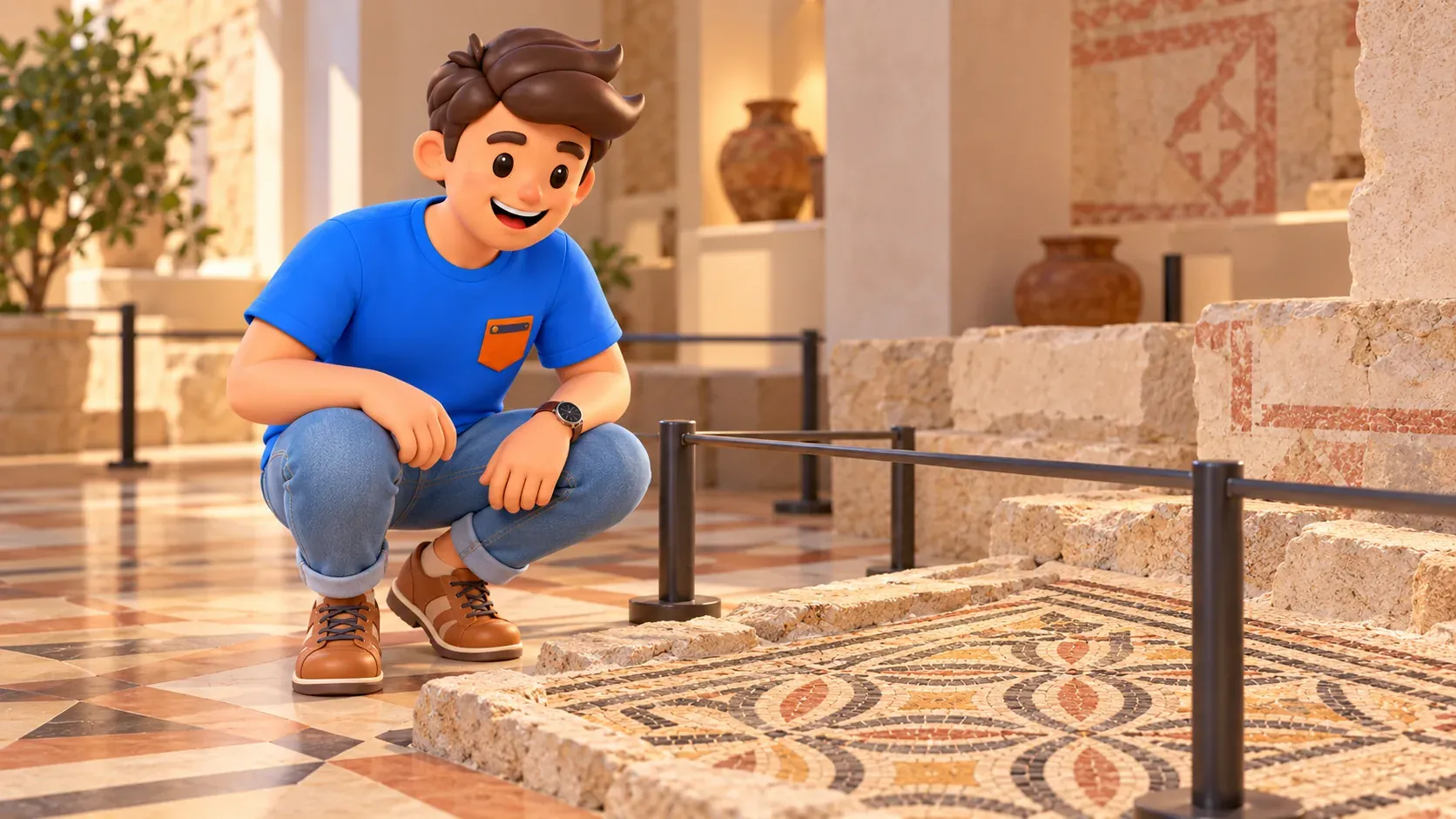
The surviving early Christian mosaic floor offers a different kind of evidence from theatre walls. Geometric patterns and symbolic imagery show how a community organised and decorated its place of worship. Donor names connect material remains with people who contributed to that religious environment. For a first look, choose a pattern or a relationship between levels rather than attempting to identify every motif. The floor is more than decoration: its position helps make an earlier building tangible. A small section can reveal something substantial even when the whole original church is no longer standing around it.
The cathedral operator also identifies earlier Roman remains within the site, alongside later alterations to the basilica. Read the actual interpretation for each layer. The surrounding cathedral’s current access conditions do not automatically describe the archaeological visit; check the chosen product and instructions separately.
A fragment becomes useful when its context stays visible
An exposed wall does not explain itself completely. Its position relative to later floors, other masonry and the interpretation supplied at the site gives it meaning. Let the institution’s explanation guide what an unfamiliar feature actually was. You can remain curious without inventing a function from appearance alone. A curved structure is not automatically an amphitheatre, and a very old floor is not automatically from the same period as a nearby wall. Archaeology becomes more enjoyable when observation and interpretation work together, instead of requiring an immediate dramatic story for every stone you encounter.
The same principle applies outdoors. A street direction can suggest an inherited structure while later buildings change the view. An urban name may preserve a route rather than the date of the surviving object. Porta Romana is a useful example of the distinction: the gate belongs to Florence’s medieval defences, and its name points towards the road to Rome. It is not an ancient Roman gate simply because Romana appears in the name. You do not need to add it to this central outing. The example helps keep words and dates clear without expanding the walk into a much larger circuit.
Choose one archaeological focus and a modest continuation
For a manageable first encounter, let the forum idea on Piazza della Repubblica provide a brief outdoor introduction. Then choose either the theatre subject or Santa Reparata as the main arranged visit, if available and interesting to you. The two sites offer different questions and should not be combined only because both involve descending beneath a familiar building. Leave time for entry arrangements, the actual experience and recovery afterwards. Use the operator’s visit format for duration rather than an assumed universal underground allowance. A careful encounter works better when you are not already anticipating the next fixed start.
If you choose Santa Reparata, the Duomo outing without a dome climb provides wider context for the religious centre. If the palace’s earlier layers lead your interest, keep the continuation around the civic area modest. Either choice can end with one observation above ground: the scale of the later building over the earlier site. That is enough to connect the archaeological story with present Florence. A second substantial museum or a remote gate is optional, not evidence that the first encounter was too small. The theme should sharpen attention instead of determining every remaining hour.
An outside-only day can still have historical depth
You can also decide not to enter an excavation at all. Read Piazza della Repubblica as a changing centre, then consider the older layers beneath the familiar cathedral or palace from outside. Be honest about the distinction: imagining evidence explained by research is not the same as seeing an exposed structure. Yet historical knowledge can change a public walk meaningfully. The façades no longer seem like the beginning of the city’s entire story. You recognise that later Florence occupies places whose importance, use and physical form have developed through many different periods.
RoadMe is especially useful for balancing this kind of personal interest across the whole stay: the app develops your itinerary around the subjects you enjoy and your preferred rhythm. Preparing it there makes it more convenient and effective to combine one archaeological encounter, thoughtful city walks, meals and rest, without turning every historical connection into another admission.

Return to the familiar centre with a longer sense of time
Before leaving, keep three distinctions clear: a former forum beneath a later square, theatre fragments within subsequent construction and an early Christian church among different archaeological layers. Roman Florence survives through those relationships, rather than as one complete hidden city ready to be walked end to end. Choose the encounter that fits your curiosity and the actual access on your dates. One well-understood fragment can give the centre a new depth. The next time you pass the cathedral or Palazzo Vecchio, you will see a later chapter of a longer urban life instead of a monument with no history before its visible walls.


