
Around Florence’s Duomo: what to see without climbing the dome
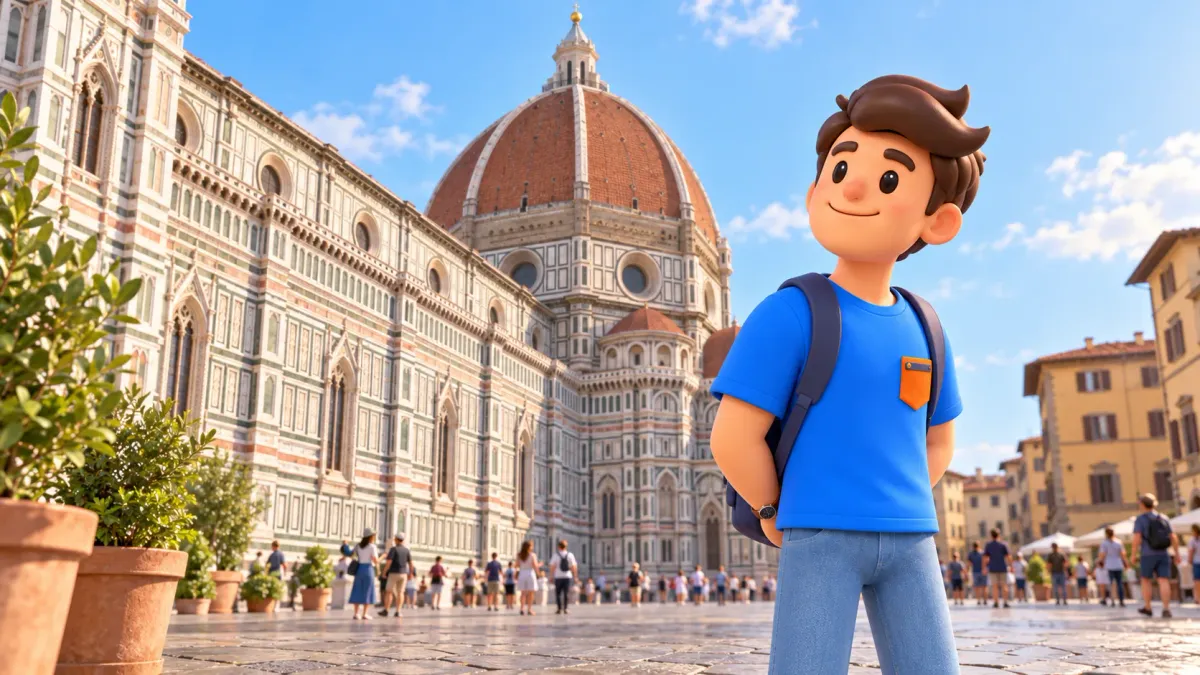
Florence’s cathedral area offers much more than the route to the top of Brunelleschi’s dome. If climbing is not part of your trip, you can still have a satisfying visit built around architecture, original artworks and the changing view from the square and neighbouring streets. The useful decision is what interests you about the ensemble, rather than which high point should automatically replace the one you have ruled out.
Begin outdoors with Santa Maria del Fiore, Giotto’s bell tower and the Baptistery, then choose one substantial addition if you want it. The cathedral museum can provide a focus on the works made for these buildings. Nearby streets or the Oblate library offer a different direction, subject to the access actually available. The outline does not certify a step-free route: skipping a major climb and having no steps anywhere are different requirements that need separate planning.
Choose your interest before choosing an entrance
There are several distinct experiences around the Duomo. The cathedral is a place of worship and architecture; the dome is a structure you can appreciate from outside as well as a separate climbing visit. The campanile adds another architectural story, while the Baptistery and museum have their own subjects and access arrangements. Treat these as choices. A visitor who wants geometry, sculpture or a quiet exterior circuit may reasonably choose a different combination from someone seeking a panorama.
Decide on an outdoor-only version or one main interior before checking the actual visiting conditions for your date. Roughly forty-five minutes to an hour can be an initial allowance for an attentive exterior sequence, with pauses adjusted to crowds and comfort. A museum or other interior requires additional time, not merely the unused minutes at the end. These are editorial estimates, and any entrance procedures, waiting or travel from your accommodation need their own margin.
Planning the whole visit is much more convenient in RoadMe: the app works out a personal itinerary around your interests, dates and preferred pace. If a climb does not suit you, architecture, artworks and other experiences can form a complete day chosen for you, rather than a standard checklist with one attraction crossed out.
For a broader stay, the first-visit Florence guide helps put this area alongside other priorities. Here the task is narrower: give the cathedral ensemble a clear subject without making a summit the measure of success. You can leave with a stronger memory of the buildings and their history even if you never see Florence from above during this visit.
Start with the relationship between three buildings
Find a suitable public position where you can understand how the cathedral, campanile and Baptistery sit together. Move out of entrances and passing flows before stopping. Instead of beginning with a close-up of decoration, compare scale and shape: the cathedral’s long body, the vertical tower and the Baptistery’s compact octagon. The ensemble becomes easier to read when these different forms are seen as neighbours, rather than as three separate photographs to collect.
The buildings also belong to different historical layers. The Baptistery’s Romanesque character, the cathedral’s medieval development and Renaissance dome, and the later completion of its facade do not form one moment of construction. That small distinction helps explain why the ensemble rewards comparison. You are looking at a city’s religious centre shaped across generations, not a single project whose entire meaning is resolved by reaching the highest available terrace.
Read the cathedral facade, then look along its sides
Santa Maria del Fiore’s front presents a rich composition of marble, openings and sculpture. Its nineteenth-century facade belongs to a different period from much of the building behind it. Notice the way the design gives a coherent face to a much longer history. There is no need to identify every figure. Choose a repeated shape, a colour relationship or the contrast between a doorway and the wall around it, then give that detail a little attention.
Moving towards a side view changes the subject. The cathedral’s length and the dome’s relationship to the rest of the structure become more apparent. Here you can think about building rather than decoration. The dome is not merely a destination overhead; it completes the mass of the cathedral and changes the skyline from many ordinary positions. A side street can sometimes make its scale more striking than standing as close as possible beneath the front.
Keep movement practical. Follow usable public space and do not step into traffic or block a doorway to obtain a photograph. Works, barriers or crowds can change the best position. The point is not to reproduce a supposedly obligatory image. It is to see how your impression shifts between front, side and a little more distance. That sequence provides a meaningful architectural visit without any claim that a particular view will be empty or uninterrupted on your date.
Brunelleschi’s dome can be the subject from below
The dome’s significance does not disappear when you skip its stairs. Its brick construction and double-shell design form an engineering story as well as a visual landmark. The achievement belongs to the early Renaissance and to the problem of completing a very large cathedral. You can keep that context brief and let the exterior do part of the explanation. Looking at the dome’s shape and scale is already a different encounter from seeing a photograph without its surroundings.
Notice how the dome appears between streets or above the cathedral’s body, rather than searching only for a panoramic viewpoint. Distance can clarify its proportions. Close positions may emphasise height while hiding much of the form. There is no single correct way to look. If architecture interests you, compare two positions and ask what each makes visible. This gives the walk an active subject without turning it into an imitation of the climb you did not want.
Do not replace the dome automatically with Giotto’s bell tower. That is another climbing experience, not a universal solution for a visitor avoiding steps, heights or exertion. If a different panorama is genuinely the aim, choose it separately and assess the actual approach and access. Otherwise, allow yourself an entire cathedral visit at ground level. Your preference is a planning input, and not a problem that must be corrected by finding another high point nearby.
Let the campanile tell a sculptural story
Giotto’s campanile is worth attention from the square. The vertical marble structure and its changing openings provide a contrast with the cathedral. Lower decorative cycles introduce subjects of human work, knowledge and faith, connecting the monument with medieval ideas about the world. You can notice that sculptural dimension without going up. A short outside stop gives the tower a role beyond being a second set of stairs competing with the dome.
Look at the relationship between the richly articulated lower area and the building’s upward rhythm. Some details are easier to understand in a museum setting than high on a facade. This is a useful reason to consider the cathedral museum if original works and their meanings interest you. It is not a reason to force both experiences into every visit. Architecture outside and selected objects inside can complement each other when there is enough time and attention for both.
The Baptistery: a different geometry and history
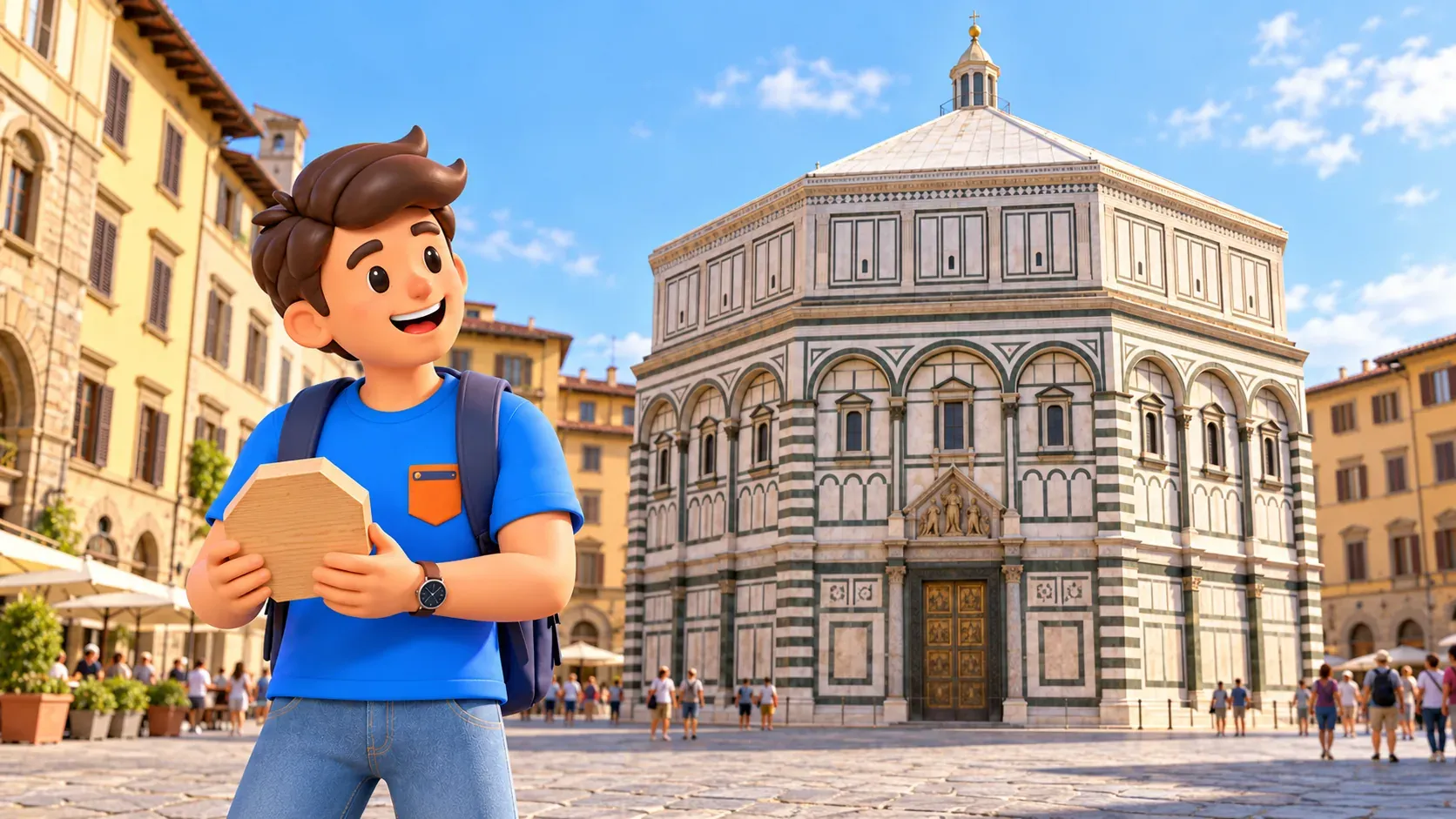
The Baptistery offers a compact octagonal counterpart to cathedral and tower. Begin with its shape and marble pattern. Its long role as a place of baptism connects the building to generations of Florentines, giving the exterior a human story in addition to its geometry. The bronze-door tradition is another important thread. You can introduce it briefly without needing to turn the walk into a specialist account of every competition, workshop or panel.
Distinguish the exterior encounter from seeing original doors in the museum and from entering the Baptistery itself. They are separate experiences. The actual condition of an interior, including any works or restrictions, needs checking for your date; this article does not promise an unobstructed mosaic view. If you choose to enter, give that visit its own allowance and follow current instructions. If not, the octagonal form still contributes a clear and different subject to the outdoor sequence.
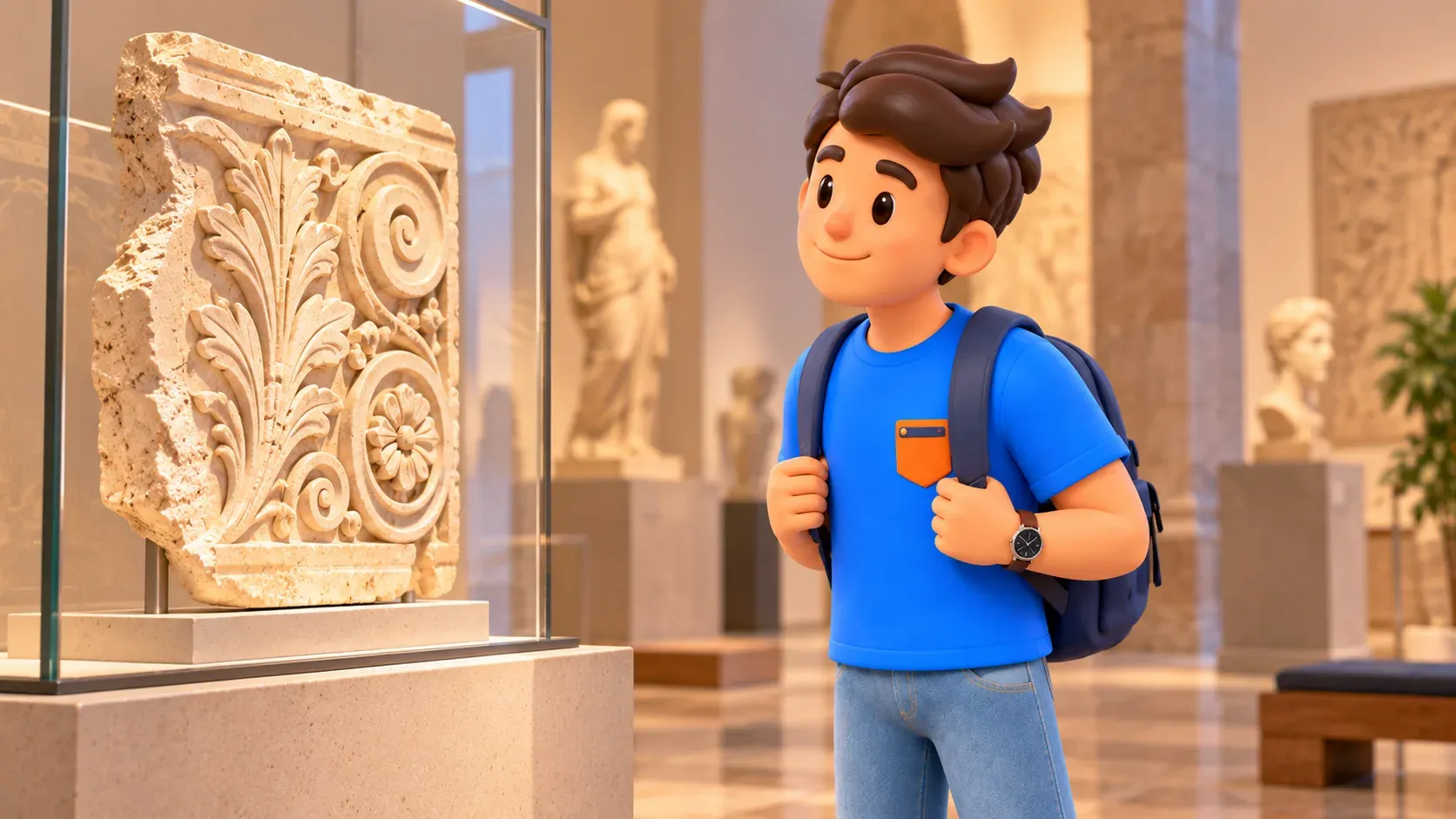
The museum becomes particularly useful when you want to understand the relationship between originals and the architectural settings they were made for. Choose it for that interest, rather than because an attraction list says every ticket component must be used. Your visit can have one thread: sculpture for the ensemble, the craft of a major commission or the way artworks changed setting over time. A clear question helps a collection feel manageable and connected to what you have just seen outside.
Add the Museo dell’Opera del Duomo only if it fits
The cathedral museum holds original works associated with the cathedral, Baptistery and campanile, including Ghiberti’s doors and works by Donatello and Michelangelo. This is a substantial cultural option, not a short covered shortcut. An initial allowance of roughly an hour to an hour and a half can support a selected visit, with more time if your interest is broad. Check real access, entry conditions and any needs related to mobility or luggage before finalising the programme.
Choose a few works and connect them to the buildings outdoors. You do not need to give equal attention to everything. If you already planned another large museum that day, consider whether this addition improves the experience or merely makes it denser. Skipping the climb does not create a duty to fill its imagined time with another ticketed visit. The right amount depends on what you want to learn, your concentration and the other experiences already chosen for the day.
Finish with distance, a pause or a nearby change of subject
After the ensemble, a small change of setting may be enough. The nearby Oblate library belongs to a former religious complex and can offer a different relationship with the dome, subject to actual public access and the areas open. It remains a working library. Respect its users and do not treat a hoped-for view as an unconditional attraction, an always-open café or a guaranteed seat. Check the practical arrangements if this is important to your visit.
Another nearby direction is the Opificio delle Pietre Dure museum, if stone inlay and craft are your particular interest. Treat it as an alternative planned visit, not another automatic stop after every part of the cathedral museum. You can also simply choose a meal or return through surrounding streets. This article’s outdoor version has already answered its main question: there is plenty to notice around the Duomo without making a climb the centre of the visit.
Using the complete programme is easier and more effective in RoadMe, where your interests shape a personal route for the available days. Download Florence in advance while online if you want maps and navigation available offline, and include your practical access needs when choosing the experiences that suit you.
Finish when the main subject has become clear rather than when every possible entrance is used. You have seen relationships between buildings, a dome from below, a different geometry at the Baptistery and perhaps original works indoors. That is a full encounter with the cathedral area. Its quality comes from attention and choice, leaving you free to continue Florence in the direction that genuinely interests you next.


