
Richmond in Half a Day: Riverside, Hill and a Taste of the Park
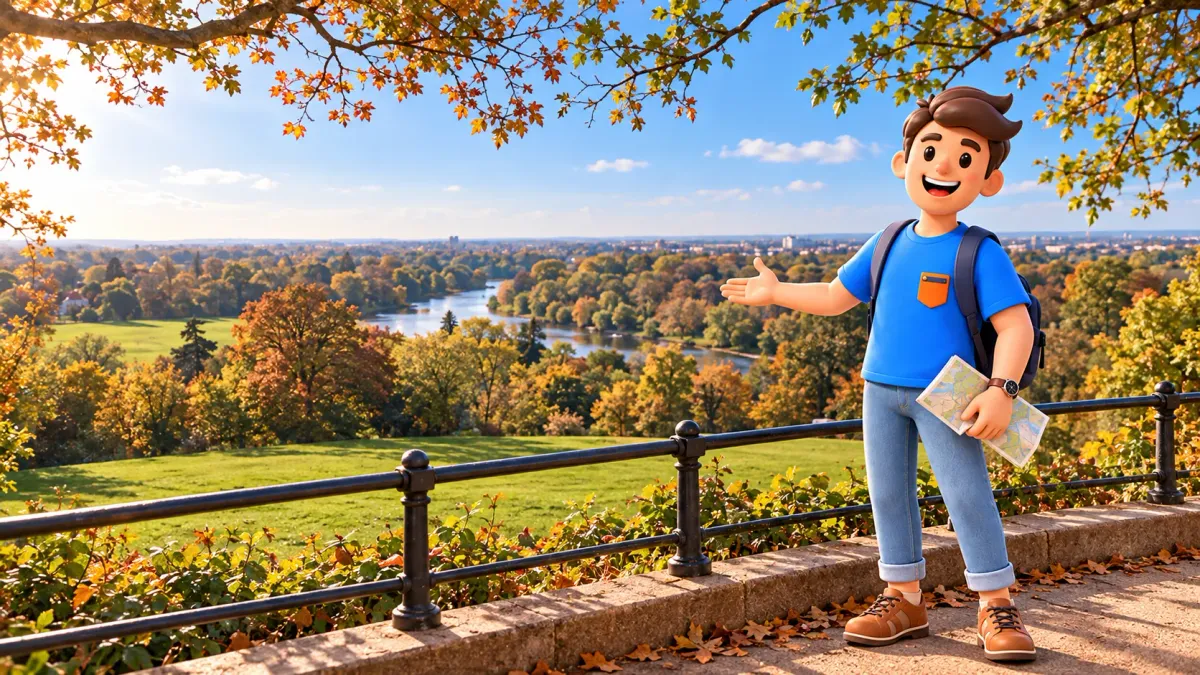
Richmond offers a London walk with three distinct settings: the Thames beside a stone bridge, a hillside terrace overlooking the river valley, and the open landscape of a Royal Park. You can enjoy all three in a generous half day if the park remains a small final chapter. The aim is a change of scale, from the town’s waterfront to a wider horizon, rather than a complete circuit of Richmond Park.
This plan starts and finishes at Richmond station and takes approximately four and a half hours. It includes a short riverside walk, Richmond Hill, a light lunch and about an hour near the park’s northwestern edge. The ordinary outdoor stops are free to enter; travel, food and any chargeable facilities are separate. Kew Gardens, Ham House and the park’s more distant attractions belong to other outings.
Set a manageable half-day plan
Allow roughly four to six kilometres on foot, depending on your choices beside the river and inside the park. That is a planning estimate, not a measured track. The main climb is from the town towards Richmond Hill. Wear comfortable shoes suitable for uneven ground and bring a layer for a breezy viewpoint. The suggested start is ten, with a return to Richmond station around half past two; getting to and from Richmond takes additional time.
Try RoadMe to arrange a complete personal London trip more conveniently around your interests, dates, pace and budget. The app helps give riverside walks, cultural visits, meals and rest their place across your days, so you spend less of the outing assembling a plan on your phone.
- River and bridge: forty-five minutes. A selected stretch on the Richmond bank and time to look at Richmond Bridge.
- Hill and terrace: forty-five minutes. The climb from the town and a pause at Terrace Walk.
- Lunch: thirty minutes. A light meal before the park.
- Park edge: sixty minutes. A short walk from Richmond Gate and back through the same entrance.
- Other connections: sixty minutes. About fifteen from the station to the river, ten from the terrace to the gate and thirty-five back from the gate to the station.
- Reserve: thirty minutes. Space for slower walking, a queue or a longer view.
These blocks total four and a half hours. The uphill section belongs in the hill allowance, while the park hour includes its return to the gate. The final station walk is also counted. If lunch becomes a long restaurant visit, shorten the park or extend the day. Do not hide the extra time by assuming that Richmond station sits directly beside the park entrance.
Begin beside Richmond Bridge
From Richmond station, follow the town’s public pavements through The Quadrant and George Street towards Water Lane and the riverside. Use the designated crossings and the open public route down to the water. The first fifteen minutes are an estimate for this approach, not a promise about your platform exit or a particularly busy shopping street. Once by the Thames, slow down and let the character of the river replace the journey there.
Stay on the Richmond bank for the main version. Look towards Richmond Bridge from a comfortable public spot, then choose a short stretch of riverside path. You do not need to cross to East Twickenham or add a boat trip to appreciate the scene. The bridge’s arches, the water and the relationship between the town and its opposite bank already offer plenty to notice. Leave room for other people passing along the waterfront.
Completed in 1777, Richmond Bridge replaced an earlier ferry crossing. Its pale Portland stone gives it a different character from the more heavily engineered crossings familiar in central London. The bridge was later widened, so its appearance also tells a story of adaptation. Look at the arches and balustrade as parts of a working crossing, rather than imagining a monument unchanged since the eighteenth century. Traffic above and river activity below keep it connected with everyday life.
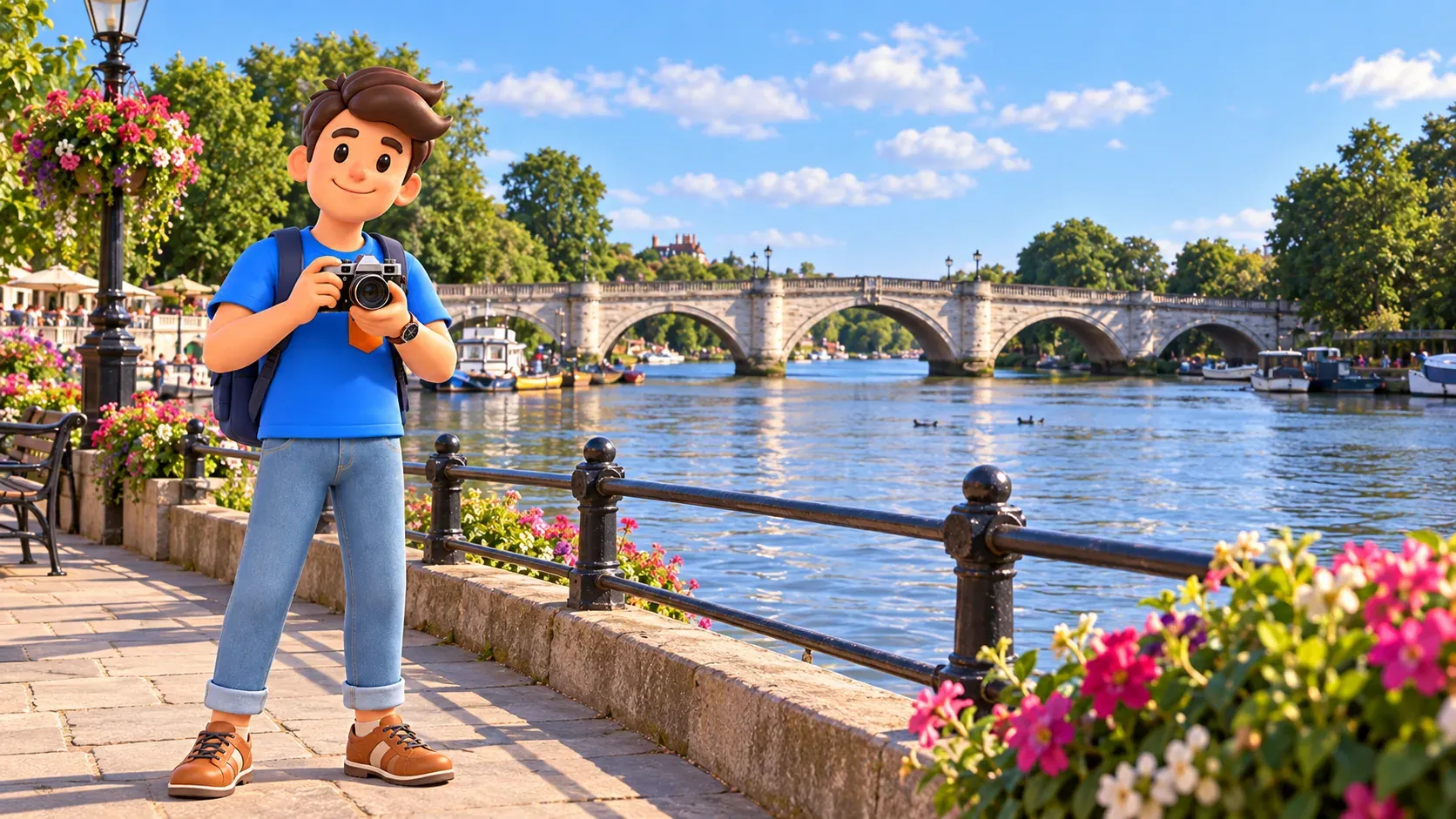
Spend the river block on looking and a short walk, not on trying to reach the next distant landmark. If a low riverside section is closed, obstructed or covered by water, use the public streets instead. Do not squeeze around a barrier to preserve an exact route. Return towards the town near Bridge Street and Hill Street when it is time for the climb. The outline does not depend on a particular passage under the bridge being available.
Climb Richmond Hill at an easy pace
Follow Hill Street towards Hill Rise and continue uphill on Richmond Hill. The change in level is real, even though this is an urban walk rather than a hike. Give yourself time to pause where the pavement allows it, and keep entrances clear. Looking back at the relationship between shops, houses and the slope can make the approach enjoyable in its own right. There is no prize for reaching the terrace before everyone has caught up.
The streets help explain why Richmond feels like a town with its own centre. Smaller commercial frontages give way to a more residential setting as you climb. Notice changes in brickwork, the proportions of windows and the glimpses between buildings. These are observations you can make without learning every address. The route stays on public pavements; an inviting courtyard or hotel entrance is not automatically another public viewpoint.
The forty-five-minute hill block includes both the ascent from the town and time on Terrace Walk. You can adjust the balance: a slower climb simply leaves a shorter pause above. If the slope is unsuitable for your group, keep the day beside the river and in the town rather than describing the whole itinerary as step-free. A route containing public gardens and pavements can still involve gradients, steps on optional paths and uneven surfaces.
See the Thames valley from the terrace
At Terrace Walk, look out across the river valley and the green land below. This is a broad landscape view rather than a central London skyline checklist. Let your eye follow the relationship between the bend of the Thames, trees and open ground. Visibility and foliage change the scene, so the experience need not depend on reproducing one photograph. A short quiet pause can be more memorable than searching for a particular angle among other visitors.
The view has long attracted artists. Turner exhibited his painting “England: Richmond Hill, on the Prince Regent’s Birthday” in 1819, giving this landscape a place in the story of British painting. You do not need to identify an exact spot where an artist stood to enjoy that connection. Think instead about what makes a familiar river into a composition: foreground, a changing line of water and the distance beyond.

Terrace Gardens descend below the hilltop walk. They are a separate, more formal garden setting, with slopes and planted areas rather than the open character of Richmond Park. The main half-day plan does not require a full descent and climb back up. If you choose a garden detour, use part of the reserve and watch the time. The viewpoint itself is not a paid observation deck, despite what a generic attraction price list might suggest.
Have a light lunch around the hill before continuing. Thirty minutes is appropriate for a straightforward meal, not a long service or a reservation that requires the whole morning to run precisely. Look at the actual menu, queue and opening arrangements. This pause is also a good moment to decide whether the group still wants the park. Finishing after the terrace is a complete shorter outing if the weather has changed or the climb has been enough.
Keep Richmond Park to its edge
From the terrace area, continue along the public pavement towards Richmond Gate, using current crossings at the entrance. The ten-minute connection is a planning allowance. Enter only through an open pedestrian access and orient yourself with the operator’s map and signs. A point labelled Richmond Park on a city map represents a large landscape; it is not necessarily the entrance you need. For this outline, Richmond Gate is the relevant starting point.
Richmond Park is managed by The Royal Parks and is a National Nature Reserve. Open grassland, older trees and more wooded patches give it a different feel from the formal gardens below the terrace. Keep the visit small: follow a suitable established path near this side of the park, turn around after about twenty-five minutes and allow a similar return, with time left for looking. The whole hour belongs inside the same gate-to-gate visit.
The park’s long association with red and fallow deer adds interest to the landscape, but the animals are not an appointment in the schedule. You may see them, or you may not. Enjoy trees, open ground and light without turning the walk into a search across the entire park. A smaller area seen attentively can provide the contrast you came for. Crossing the reserve for a guaranteed wildlife photograph is neither necessary nor promised here.
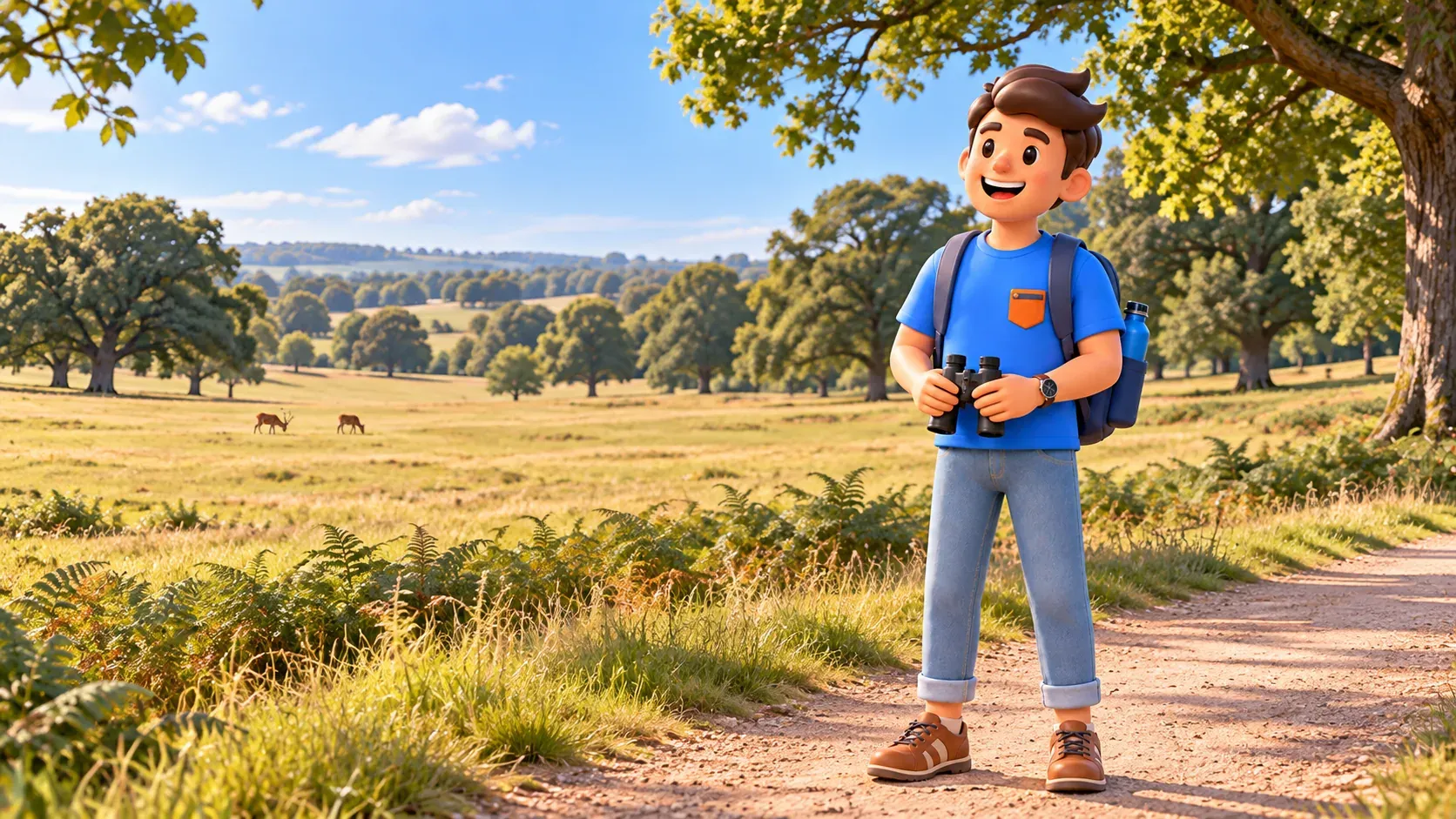
Keep at least fifty metres from deer and never feed, touch or approach them for a closer photograph. Follow restrictions around refuge areas and give animals more space when needed, particularly during the autumn rut. If deer occupy your intended path, wait or choose another open route without cutting between them. Their freedom to move is part of the place’s value. A zoomed image or simply watching from a distance is enough.
Choose a park visit for another day
Isabella Plantation, Pen Ponds, King Henry’s Mound and the grounds around Pembroke Lodge can justify a more extensive park outing. They are not concealed extras in this hour at the edge. The well-known viewpoint at King Henry’s Mound is also distinct from Richmond Hill’s Terrace Walk. Decide which experience matters before adding distance. If a particular garden or viewpoint is the priority, build the day around its approach and current conditions instead of attaching it to this schedule.
Pedestrian gate access and vehicle gate hours are different. Although pedestrian access is normally around the clock, seasonal deer-management periods bring night restrictions, and temporary notices can affect individual arrangements. Check current information rather than relying on a bare “open twenty-four hours” label. This plan is intended for daylight. There is no need to push the park section towards darkness simply because an entrance might ordinarily remain open after the afternoon.
With RoadMe, organising the whole trip around your preferred balance of town walks and nature is more convenient. Let the app develop a personal plan for your available days, giving Richmond its own breathing space instead of adding every nearby attraction to one afternoon.
Leave through Richmond Gate and return on the public pavements of Richmond Hill, Hill Rise, Hill Street and George Street towards the station. Allow the final thirty-five minutes, adjusting for your actual pace. For another quiet London day with a different historical focus, our Highgate cemetery and woodland plan is a separate outing. Richmond already has a natural ending: river, hill and a manageable taste of open parkland.


