
Highgate: A Historic Cemetery, Village Lunch and Woodland Walk
Highgate makes room for a quieter London day: Victorian memorials among trees, a village lunch and a walk in genuine ancient woodland. The pleasure lies in changing settings slowly. Highgate Cemetery and Highgate Wood are separate places, with residential streets between them. Allow time for that connection rather than imagining a woodland path leading directly from one attraction into the other.
This outline takes about five hours, starting at the cemetery entrance on Swain’s Lane around ten and finishing near Highgate Underground station around three. Choose one part of the cemetery for a selected visit, then continue through Highgate Village to the Wood. The architecture-focused version favours the West Cemetery when access permits; the East Cemetery is an alternative for visitors more interested in the people remembered there.
Give Highgate a generous half day
Plan approximately four to six kilometres outdoors, including your chosen paths within the cemetery and Wood. This is an estimate, not a measured track. Slopes, muddy surfaces and pauses will affect the outing. Travel to the cemetery at the start and the onward journey from Highgate station are additional. Starting at the station instead would require a separate approach before the five-hour plan begins.
Try RoadMe to make the whole London trip easier to arrange: the app develops a personal itinerary around your interests, dates, pace and budget. It helps give a reflective visit, a woodland walk, meals and rest a sensible place across your days, with less planning to do on the pavement.
- Cemetery: ninety minutes. A selected visit to one part, including entry and the walk back out.
- Village: thirty minutes. The uphill approach along Swain’s Lane and a short look around the old centre.
- Lunch: forty-five minutes. A proper pause before continuing north.
- Street connections: forty-five minutes. About thirty-five to reach the Wood and ten for the final station approach.
- Highgate Wood: sixty minutes. A short woodland circuit, including the return to the chosen exit.
- Reserve: thirty minutes. Room for slower walking, admission or a longer break.
The blocks total five hours. They do not include a full cemetery tour, both cemetery sections in depth or the complete historic trail through the Wood. Decide which interest deserves the most time before setting out. If you book a guided cemetery visit, rebuild the morning around its actual start, duration and meeting instructions, rather than placing it on top of the ninety minutes already allowed.
Choose a cemetery visit that suits you
Swain’s Lane separates the East and West Cemeteries. They belong to the same historic place but offer different starting points for a visit. The West contains the Egyptian Avenue and Circle of Lebanon; the East includes the graves of Karl Marx and novelist George Eliot. Choosing the side that matches your interest is more rewarding than crossing the road merely to claim you have covered both.
The official ticketing service offers a Day Ticket for an independent visit and separate guided experiences. It says advance booking is not essential and tickets are sold on site at the same prices. Check the current admission arrangements and areas available on your date. An older guide describing the whole West Cemetery as accessible only on a tour should not be your sole basis for planning.
The Highlights Tour is a distinct option focused on the West. Its description includes the Egyptian Avenue, Circle of Lebanon and Terrace Catacombs; the catacombs are exclusive to tour participants. The required day admission is added automatically when booking that tour, and visitors may explore independently before or afterwards. Ordinary admission is not a promise of access inside the catacombs. Choose the experience deliberately and allow its real time.
Regular cemetery hours begin at ten each day: March to October closing is five, with last admission at half past four; November to February closing is four, with last admission at half past three. It is closed on Christmas Day and Boxing Day. Check notices before travelling. The early start in this outline keeps the main visit comfortably away from last entry, without treating the final admission time as enough time to explore.
Look at the landscape as well as the monuments
The West Cemetery opened in 1839 as part of London’s nineteenth-century development of large commercial cemeteries. Its garden layout is important to the experience. Architects Stephen Geary and James Bunstone Bunning contributed the built structures, while landscape gardener David Ramsay shaped the grounds. Curving routes, planting and changes of level make a composed setting around the memorials, rather than a collection of isolated objects.
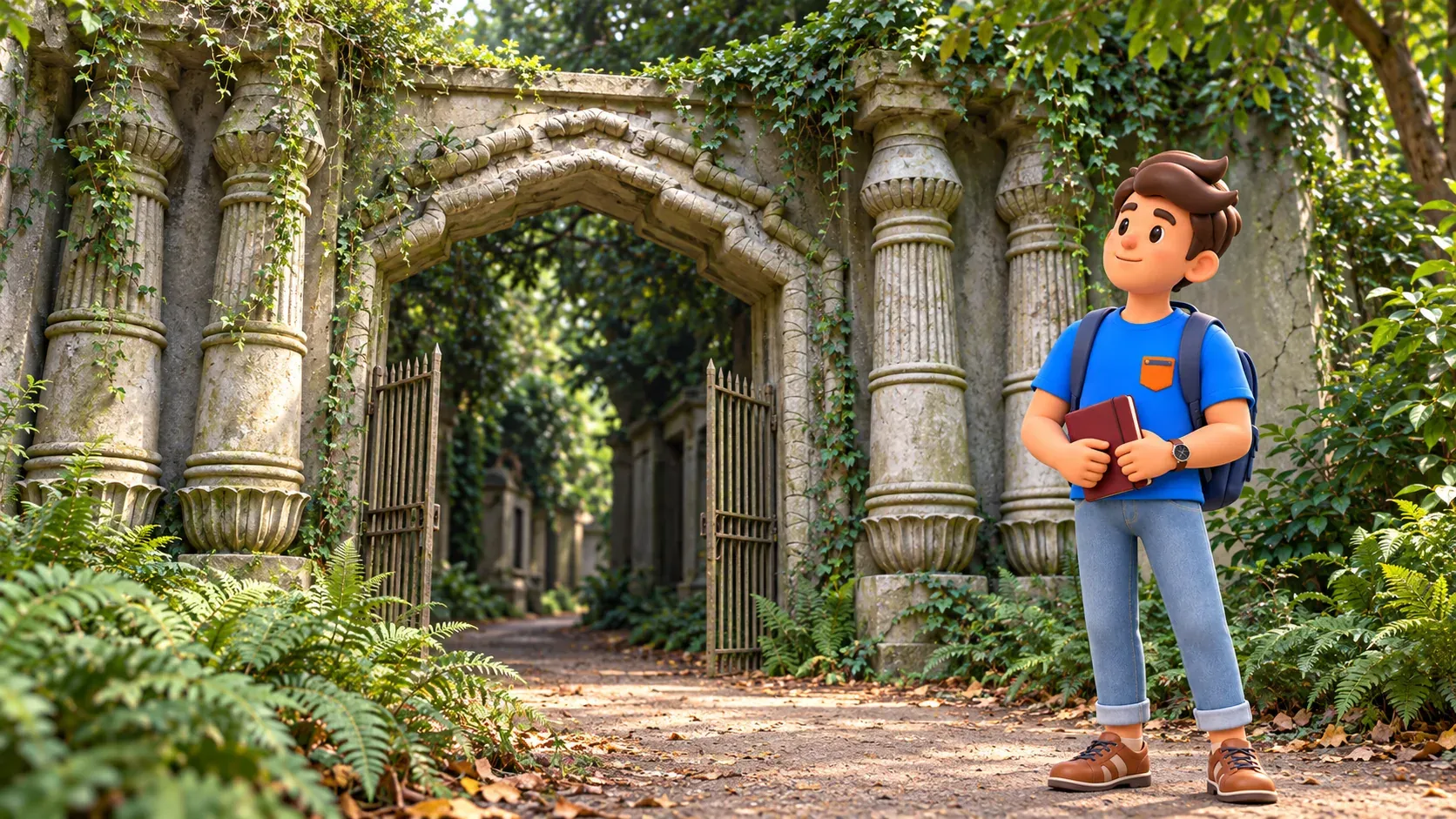
For the architecture-focused version, concentrate on a few open paths around the Egyptian Avenue and Circle of Lebanon, following current visitor instructions. Notice how the entrance’s lotus-inspired columns create a different mood from the classical fronts of the vaults beyond. A small change in architectural language can say as much about Victorian imagination as a long list of famous names. There is no need to inspect every monument for the visit to have substance.
On the East side, begin instead with the people whose work interests you. Marx and George Eliot belong to different intellectual worlds; either can be a reason to look more carefully at how a public life is remembered in a burial place. Keep the same ninety-minute allowance for this alternative. You are choosing a different emphasis, not adding the East to a completed West visit without changing the schedule.
Highgate remains a working burial ground. Speak quietly, give mourners space and leave any restricted area undisturbed. The operator requires visitors to stay on paths and not climb on or beneath monuments, which may be unstable. A dramatic photograph is not a reason to step between graves. Wear shoes with grip and expect mud after rain. The respectful, attentive pace is part of what makes this morning worthwhile.
Walk uphill into Highgate Village
Leave the cemetery on Swain’s Lane and follow the public pavement uphill towards Highgate Village and Pond Square. The climb belongs inside the village block, not in an uncounted gap between attractions. Take it gently. This is where the day changes from a place of remembrance to ordinary neighbourhood life, with houses, shopfronts and places to stop. The contrast works best if you let the cemetery visit end before starting another checklist.
Spend the remaining village time around Pond Square and Highgate High Street. Look at the scale of the streets, the variation in façades and the way small businesses sit among residential buildings. Stay in public spaces rather than entering an attractive private courtyard. You do not need a catalogue of former residents to enjoy the district. The village gives the day a human scale between two much greener environments.
Allow forty-five minutes for lunch here. Choose according to the menu, queue and how much of a rest everyone needs; an unhurried simple meal suits the outing better than a reservation that forces the morning to run precisely. Check facilities while you are in the village. The woodland section should not depend on finding a particular café open or on an exhibition building being available once you arrive.

After lunch, use public streets towards Southwood Lane and the Highgate station area. Continue along Archway Road towards Muswell Hill Road, then follow the pavement to an open Wood entrance on that side. Use designated crossings and current signs. This street connection has its own allowance. Avoid residential cut-throughs or a speculative shortcut through another green space simply because the destinations look close together on a city map.
Spend an hour in Highgate Wood
Highgate Wood is an ancient woodland managed by the City of London Corporation. Ancient woodland describes continuity of the wooded site; it does not mean every tree has stood there for centuries. That longer history changes the way you look at an apparently ordinary path. Notice the canopy, the understorey and the small shifts in light as the street noise becomes less prominent. Let the walk be about the wood itself.
Choose a modest loop from your entry using the operator’s map and the waymarking on site, then return towards a convenient exit for Highgate station. The hour includes finding your way, looking around and leaving the woodland. The official self-guided historic walk is described as taking about two hours; this short section does not reproduce that entire trail. If the complete history walk is your priority, give it more time and reduce the earlier programme.
Some paths are made and others rougher. Stay on established routes, leave plants and fungi in place and keep your attention on the surface as well as the trees. Cycling is not permitted in the Wood. For a group with different walking speeds, choose a straightforward out-and-back instead of a loop with uncertain connections. Turning around at a comfortable point can be a more satisfying decision than searching for one last feature.
Do not make an indoor information display essential to the outing. The operator has reported a roof-related closure of the Information Hut, and an anticipated reopening is not confirmation that it is available for your visit. The woodland paths remain the reason for this plan. Bring water and suitable layers, and check the current closing time: it changes with the season, so a summer evening opening should never be assumed in winter.
Let the conditions shape the ending
The Wood can close at short notice when strong winds are forecast. Check the operator’s notices before leaving for Highgate and reconsider the whole outdoor plan in poor conditions. The cemetery and village also involve slopes; this itinerary is not certified as step-free. Visitors with particular access requirements should discuss the cemetery visit and suitable woodland gates and paths with the respective operators before committing to the combination.
With RoadMe, planning a complete personal trip around your balance of history, neighbourhoods and nature is more convenient. Let the app organise the wider stay by your interests and available time, so Highgate has room for a thoughtful visit and a real break rather than another hurried afternoon.
Return to Highgate Underground station with the final ten-minute allowance, adjusting for the gate you actually use. If the forest is unavailable, finish after the village instead of entering a closed area. For a separate literary outing, our Hampstead half-day walk combines Keats House with a selected part of the Heath. Keep it for another day: the cemetery, village and Wood already form a complete Highgate outing.


