
Rainy day in Paris: Carnavalet and a short arcade walk
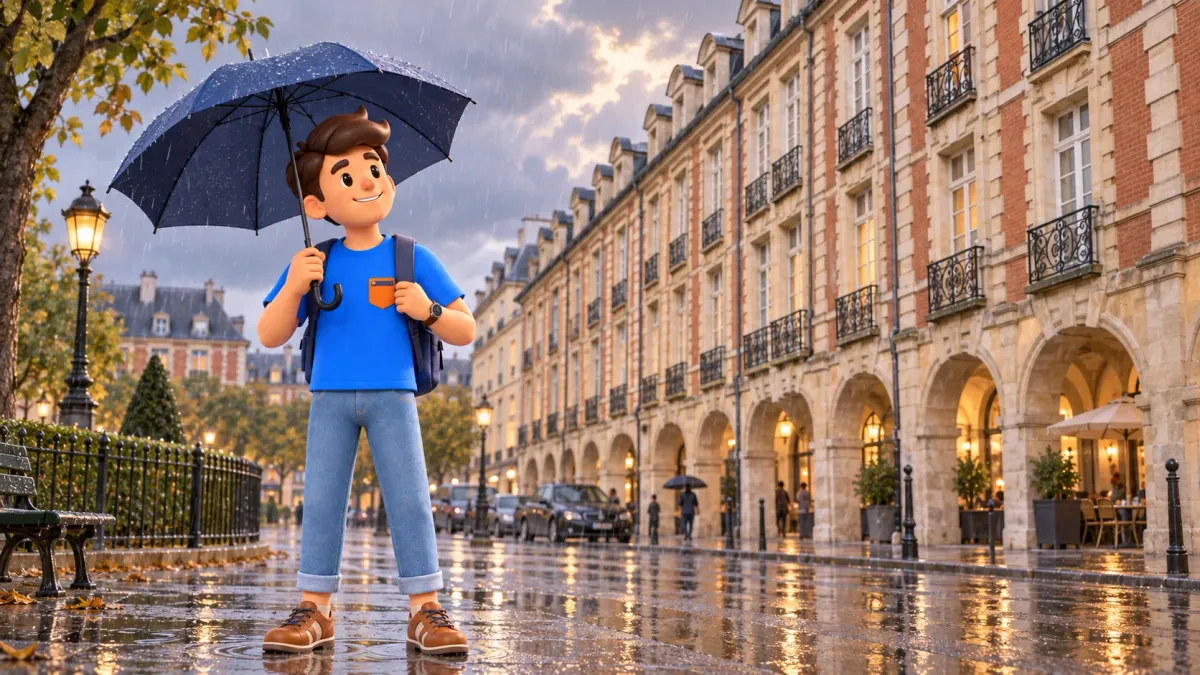
A rainy day in Paris can combine a proper museum visit with a small amount of outdoor sightseeing. This plan gives the Musée Carnavalet two hours, followed by an indoor lunch and about 25 minutes around selected Place des Vosges arcades. Start and finish at Saint-Paul on Métro line 1, allowing roughly four and a half hours for the complete outing.
The museum and meal provide substantial time indoors. Getting between them still involves public streets, and the arcades offer shelter along particular sections rather than a continuous dry route. Choose this outing when ordinary rain feels manageable for short walks. In heavy rain or uncomfortable wind, shorten the outdoor finish instead of treating the full itinerary as an obligation.
A workable rainy-day schedule
The anchor is Carnavalet’s permanent collection, which is free for individual visitors without an advance reservation. Allow 120 minutes inside, a 20-minute arrival buffer, 60 minutes for an indoor lunch, 25 minutes around selected arcades and 45 minutes for all connecting walks and crossings. The complete budget is 270 minutes, including the return to Saint-Paul.
These are planning estimates, not measured walking times or a promise about queues. Movement between museum rooms, brief sitting and practical pauses belong within the museum block. Travel from your accommodation is additional. If you would prefer 150 minutes with the collection, extend the overall outing to approximately 300 minutes, or five hours, while keeping the other blocks.
Try RoadMe to work out a complete personal day plan around your dates, interests, pace and budget. Using a planned sequence of visits and breaks makes the day much more convenient and efficient than repeatedly joining separate recommendations yourself.
A morning start leaves lunch in the middle of the outing and keeps the outdoor finish flexible. Starting at roughly 9:45, for example, gives an estimated finish around 14:15. This is an illustrative schedule, not a reserved museum appointment: the permanent collection opens at 10:00, and your actual entry time will depend on conditions when you arrive.
Find the visitor entrance before browsing the neighbourhood
From Saint-Paul, walk north along rue Pavée, east along rue des Francs-Bourgeois, then north on rue Madame de Sévigné. The visitor entrance is at 23 rue Madame de Sévigné. Follow public pavements and crossings throughout. The approach does not rely on access through a mansion courtyard, an unmarked side gate or a private residential passage.
Keep this approach within the connecting-walk allowance. Several stops to inspect shop windows or take photographs will stretch it, especially when umbrellas need folding and reopening. If your group walks slowly, increase the total allowance rather than assuming you can recover every extra minute inside the museum.
Carnavalet opens Tuesday to Sunday, 10:00–18:00. It closes on Mondays and on 1 January, 1 May and 25 December. The visiting conditions used here were checked in October 2026. Schedule this outing on an open museum day; a Monday version would need a different main activity, with its own verified calendar, rather than an automatic substitution.
Last admission to the permanent collection is at 17:15, with the galleries beginning to clear at 17:45. Last admission to a temporary exhibition is at 16:45; on 24 and 31 December the galleries close earlier, at 17:00. A late arrival therefore cannot deliver the same two-hour visit as this morning plan. If you only have an afternoon available, work backwards from the end of gallery access before deciding how much to include.
Use Carnavalet to understand the city through objects
Carnavalet, the museum of Paris history, opened to the public in 1880 and occupies two historic mansions. The buildings are part of its appeal, alongside the collection. Rather than focusing only on paintings, you can consider how signs, models, photographs, furnishings and reconstructed historic interiors describe a city through the things its inhabitants made and used.
Give your visit one guiding question: how did an everyday Paris street change, what did the city look like during an interesting period, or what can an interior tell you about life behind a façade? A question is more useful than a long compulsory checklist. Two hours means selected sections; it does not mean every room or the entire history of Paris.
Historic shop signs offer a particularly tangible introduction to street life. Models and city images help connect earlier forms of Paris with buildings you may recognise outside. Wood panelling and furnishings shift the focus towards rooms and their occupants. You do not have to follow every possible theme: choose an approach that makes you want to stop and look closely.
Ask reception for the French–English visitor plan and advice on your chosen sections. A work belonging to the collection is not a guarantee that it will be displayed during your visit. The current plan and staff advice help you make a practical selection. This itinerary intentionally leaves room for that choice rather than prescribing a room-by-room museum circuit.
The permanent collection and temporary exhibitions have different admission arrangements. Temporary exhibitions are paid, and the museum strongly recommends reserving a timed admission; buying on arrival depends on available capacity. Do not silently add an exhibition to the two-hour collection block. If a particular exhibition becomes your main interest, revisit its ticket conditions and the rest of the schedule.
Free individual admission without reservation also differs from a group visit: groups need to book. Free entry does not remove security procedures or guarantee immediate access. The arrival buffer is your own planning allowance, rather than a museum assurance that entry will take exactly 20 minutes.
Keep luggage light and allow a museum pause
Leave travel luggage elsewhere before starting. Suitcases and large bags are not allowed in the museum, and permitted small personal bags must be carried in front or held in the hand. Lockers do not make any size of luggage acceptable. Travelling lightly avoids turning a rainy museum morning into a search for somewhere to store a bag you cannot bring inside.
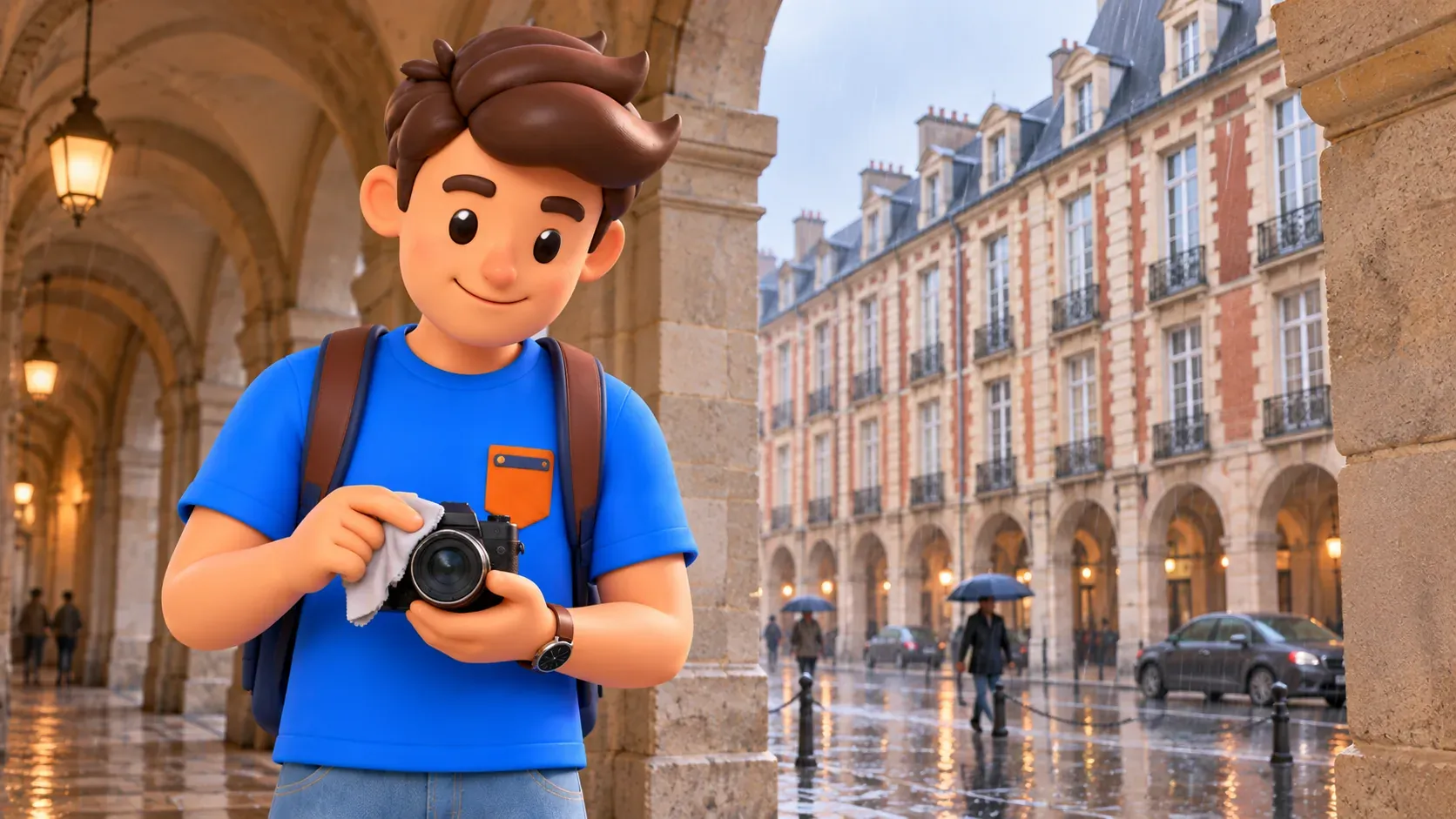
Photography for personal use is allowed without flash, a tripod or bulky equipment. Follow staff instructions for wet belongings and keep circulation space clear. A brief seated pause belongs naturally within the museum visit, before tiredness makes every remaining room feel urgent.
Visitors who have difficulty walking can ask staff about loan folding seats and wheelchairs. Lifts and ramps serve the museum, although three small rooms remain inaccessible to wheelchair users because of their configuration. That does not establish an accessible route from the Métro or around the square: station exits, individual crossings and street surfaces need their own assessment.
With children, choose a visual theme they can actually follow, such as unusual signs or an image of a street. A shorter, interested visit is more rewarding than checking whether they have absorbed an entire chronology. Take the planned pause or finish the selected sections early if attention fades. Adjust the day to the people taking it rather than protecting every original minute.
Make indoor lunch part of the itinerary
After the museum, keep an hour for a seated lunch indoors. Look for an actual indoor table and suitable kitchen hours, rather than assuming that a pictured terrace will solve a wet-weather problem. Consider your group, menu preferences and budget beforehand.
One optional choice is Joli, the museum restaurant, which has two indoor dining spaces. Its street address is 16 rue des Francs-Bourgeois, west of the visitor entrance. For a public-street approach, head south on rue Madame de Sévigné and then west on rue des Francs-Bourgeois. This plan does not assume an internal shortcut through museum courtyards to the restaurant.
Joli lists lunch service Tuesday to Friday, 12:00–14:30, and Saturday and Sunday, 12:00–16:00. Check an indoor table and any booking separately; a museum visit does not reserve your meal. Another nearby indoor restaurant is equally valid if it suits you better. If you choose somewhere further away, change the connecting-walk budget to match that decision.
Use lunch to decide how much outdoor time still sounds enjoyable. In manageable rain, retain the short arcade visit. If conditions have become unpleasant, finish after eating and return to transport. The museum has already provided a substantial activity. You do not need additional streets to justify the day when staying outside no longer feels comfortable.
A short Place des Vosges finish
Continue east on rue des Francs-Bourgeois, crossing rue de Turenne at a public crossing. Select sections of the northern and western arcades for this plan. Shopping, a complete neighbourhood circuit and another museum would turn a short finish into a different outing, so keep those choices separate when working with the four-and-a-half-hour schedule.
The square was begun under Henri IV in 1605 and completed in 1612 under Louis XIII. Its repeated red-brick façades, pale stone details and arcades form a recognisable architectural ensemble. After looking at city models or old images in the museum, it is satisfying to observe a real public square and see how repeated features bring separate buildings together.
Pick a few details rather than chasing every possible view. Compare the rhythm of arches and windows, notice the changes between brick and stone, and look across the square through one opening. The 25-minute allowance includes movement within your selected section.
The arcades are open on the square side, so wind can carry rain underneath. Corners, crossings and connections between sections remain exposed. Bring rain protection appropriate to the weather rather than expecting a completely dry circuit. The fenced central garden, Square Louis-XIII, has seasonal hours; entering it is unnecessary for this itinerary and should not determine your route.
Follow the public perimeter towards the square’s southern side and rue de Birague. Walk south on Birague to rue Saint-Antoine, then west to Saint-Paul. This return uses ordinary streets, with no dependence on Hôtel de Sully courtyards or private gates being open. It belongs within the 45-minute allowance for all connecting walks and crossings throughout the outing.
Fit this day into the whole trip
If Paris history interests you most, choose the 150-minute museum version and a five-hour overall budget. If you mainly want a short change of scene outdoors, retain the two-hour visit and use a comfortable interval for the arcade finish. A long weather delay needs extra time: the listed allowances cannot accommodate every possible wait or a restaurant detour of any length.
For your whole trip, RoadMe can help work out a complete personal itinerary around your interests, dates, budget and preferred pace. It is a more convenient and efficient way to organise museum days, outdoor walks and rest across the journey.
On a clearer day, consider the separate two-hour Marais walk through squares, mansions and gardens. It serves a different purpose and is not an extra two hours automatically attached to this schedule. Today’s emphasis is time inside a museum, a proper indoor meal and a limited architectural finish; splitting those outings across different days preserves their distinct rhythms.
Before leaving, check the museum day and current notices, take only suitable belongings and identify an indoor lunch option. The actual outing can then stay simple: one museum theme, a seated break and selected arcades if conditions suit you.


