
Rain in Rome: Rebuild the Day Around One Museum
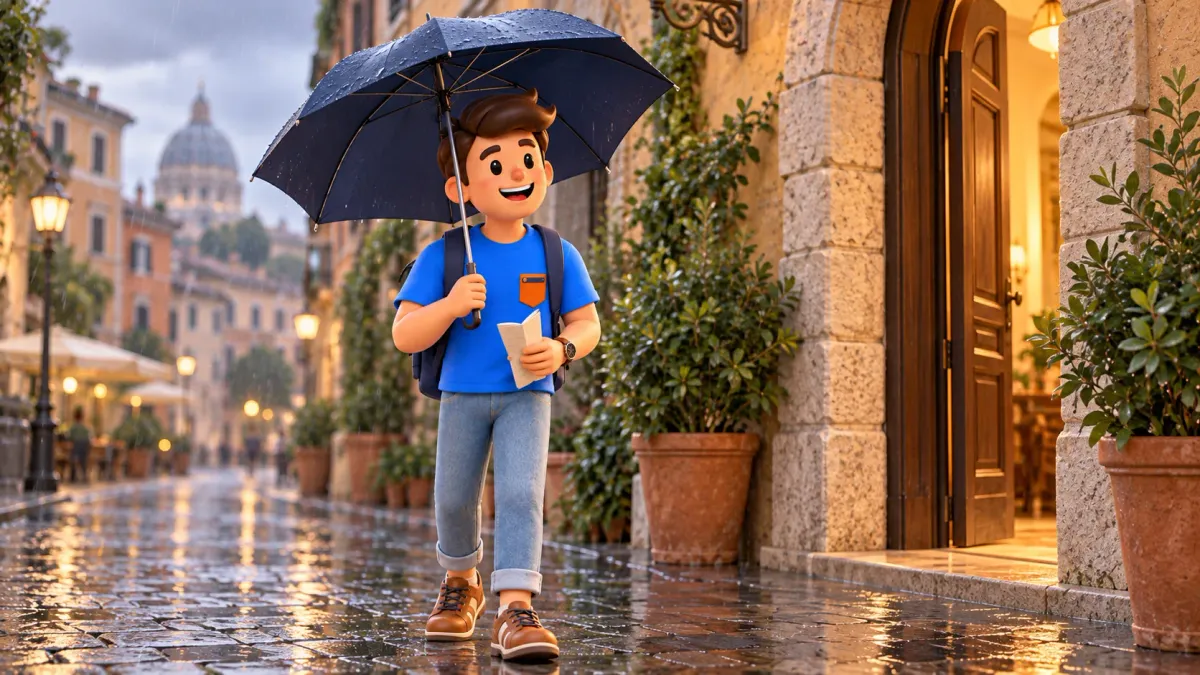
When a Rome walking day meets rain, you do not need an emergency list of ten indoor sights. Choose one museum near the part of the city you already occupy and rebuild the day around it. Sightseeing then becomes an experience rather than a dash between doors, and the rain actually reduces the walking instead of simply adding an umbrella.
Here are three independent options: Palazzo Massimo near Termini, Palazzo Altemps beside the Navona area, and the Capitoline Museums on the Capitoline Hill. Allow three hours from entry to exit for either of the first two, or three and a half for a selected Capitoline programme. Visiting all three consecutively is unnecessary.
Choose one museum before setting out
Begin with neighbourhood and calendar. Near Termini, check Massimo; around Navona, check Altemps. Consider the Capitoline option when the Piazza Venezia area already belongs in your day or you are willing to travel separately to its entrance. Do not exchange a short approach for crossing the entire centre merely to collect a name.
Rebuilding the whole day is more convenient in RoadMe: the app creates a personal trip plan around your interests, dates, pace and budget. It makes distributing museums, walks and rest across suitable days much easier, with a considered programme to use in the city; check the museum’s current access and notices separately before leaving.
Check the schedule for your date and the availability of the rooms you want. Rain does not create an available admission or extend opening hours. If you already have a ticket or reserved session, look at its conditions first. Changing the wider plan need not mean abandoning a visit that was indoors already.
These options address an ordinary rainy day. In severe weather, consider local notices and the ability to reach the museum before deciding to go. Interior galleries do not make every city approach suitable, and a museum list is not a promise that each building operates under every possible circumstance.
Divide three hours within one museum
| Minutes from entry | Palazzo Massimo or Altemps: one selected option |
|---|---|
| 0–20 | Admission, orientation and storing belongings according to museum rules |
| 20–80 | First selected sightseeing block |
| 80–95 | Fifteen-minute pause in a permitted place |
| 95–160 | Second block without attempting the entire collection |
| 160–180 | Unhurried conclusion, collecting belongings and leaving |
That totals one hundred and eighty minutes. Starting at 10:00, the first block ends around 11:20, the pause at 11:35 and the second block at 12:40, with departure about 13:00. These estimates do not predict a twenty-minute entrance queue. A longer wait lengthens the visit or reduces sightseeing while retaining rest.
The clock begins at your chosen museum. Travel from accommodation, the station approach and lunch are additional. An indoor pause does not guarantee a café table or permit eating among exhibits. Ask staff where you can rest; if you need a substantial break outside, establish re-entry conditions before leaving.
Palazzo Massimo: keep the day near Termini
The required building is at Largo di Villa Peretti, 2. Its full name is Palazzo Massimo alle Terme. Rome has other Massimo palaces, including in the historic centre, so one word on a map is insufficient. We mean the museum near Termini, rather than another family palace beside a different square.
Although inspired by Renaissance palaces, the building dates to the late nineteenth century. Camillo Pistrucci designed it as a Jesuit school, built in 1883–1887. The museum opened here in 1998. Distinguish the age of the building from the considerably older works displayed within it.
Choose portraits and sculpture for the first block. Compare a few faces and ways of suggesting age, status or character. You do not need to learn every name immediately. One carefully observed portrait can help subsequent rooms become more than a succession of unfamiliar heads.
For the second block, change scale and explore painting and mosaics. The painted garden from Livia’s villa is particularly evocative: birds, fruit and trees suggest space beyond a wall. This is ancient decoration relocated into the museum from elsewhere, rather than a real garden or an original villa preserved underneath the palace.
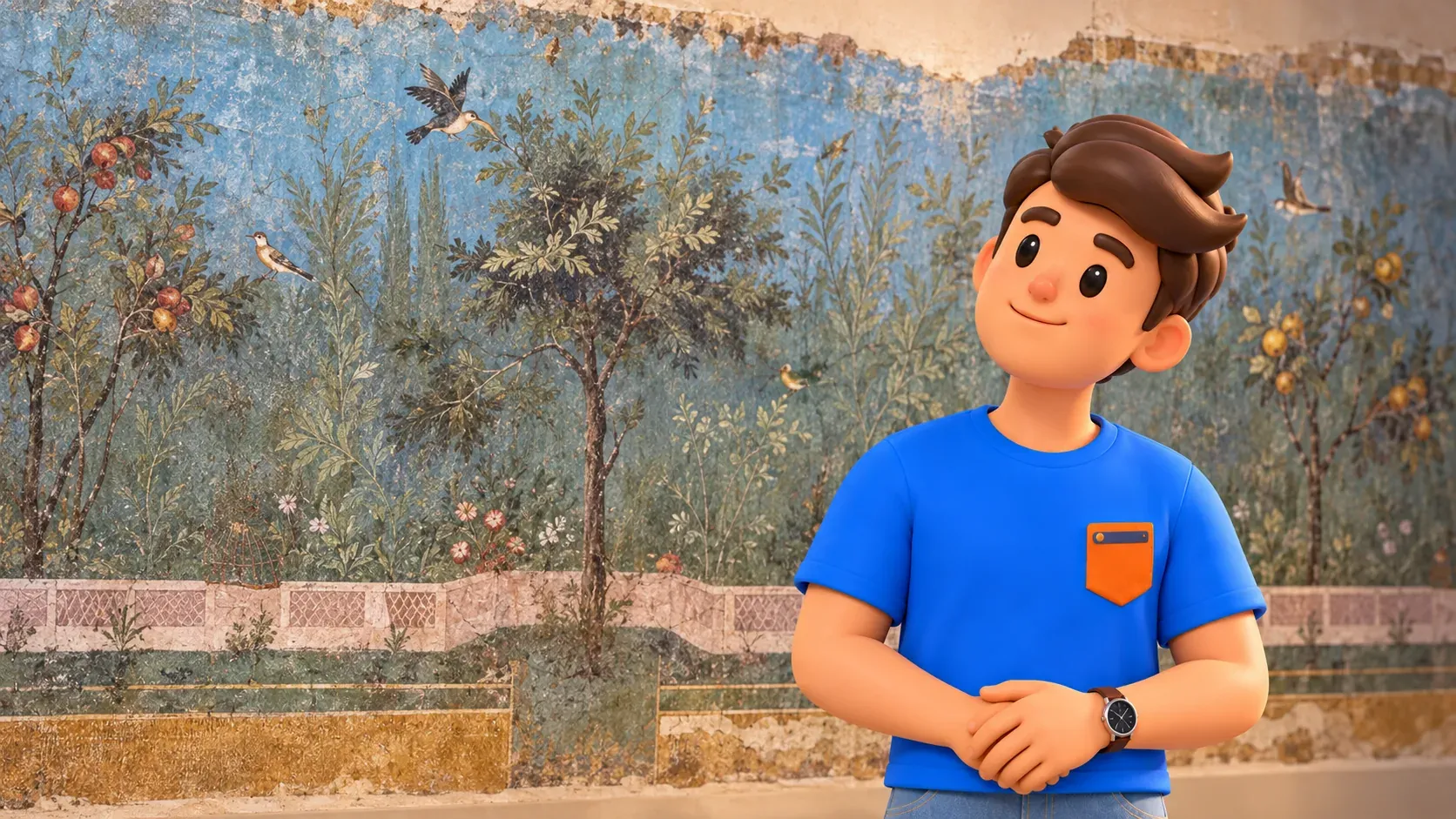
Compare a face from the first block with the way depth is constructed in the garden painting. Both involve making motionless material convincing. That small question connects two themes more effectively than trying every floor simply because rain continues outside. You can leave with a clear impression without surveying the complete collection.
If a particular painting is unavailable, choose another open section of painting or mosaics within the museum, checking directions on arrival. That changes the content without requiring an immediate trip across Rome. Avoid promising companions one specific exhibit as the only possible justification for the entire visit.
Altemps: remain around Navona
The visitor entrance for this option is Piazza di Sant’Apollinare, 46, north of Navona. Palazzo Altemps also belongs to the National Roman Museum, but occupies another building and neighbourhood. A combined ticket does not create a covered connection to Massimo or turn two independent visits into one short viewing.
The palace’s core began in the fifteenth century; Cardinal Marco Sittico Altemps acquired it in 1568. Today, the museum explores collecting through ancient sculpture in later aristocratic interiors. That combination of periods makes the palace a worthwhile experience of its own, rather than merely a convenient place to escape the weather.
Devote the first hour to several marble works in available rooms. Begin with the entire statue, then choose an arm’s movement or a fold of drapery. In the second block, switch to surroundings: painted decoration, architectural framing and the placement of works. A palace setting does not make every ancient figure a Renaissance sculpture.
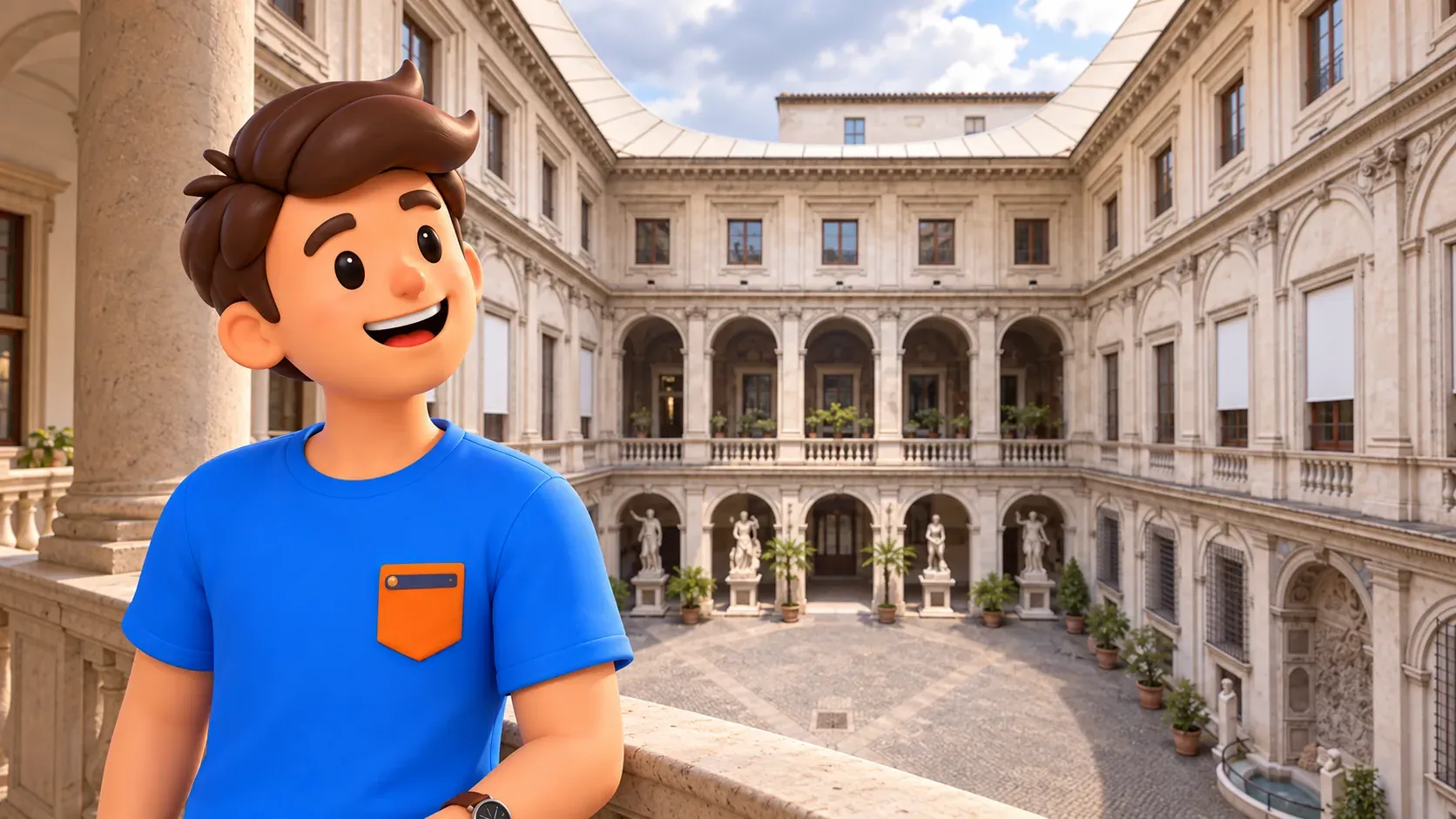
The courtyard and loggias matter to understanding the building, but do not replace the selected gallery programme. The courtyard’s removable canopy does not mean that the entire space is sealed against rain. Follow the sections that are open and comfortable on your date, without making a stop beneath an open part compulsory.
Two viewing blocks with a pause allow you to notice relationships between sculpture and interior. Where rooms are closed, follow the available route. Even a relatively small palace need not be exhausted in one visit, and rest does not have to move into a wet square to preserve an attractive timetable.
The Capitoline Museums: a separate three-and-a-half-hour option
This version begins at the museum entrance on Piazza del Campidoglio, 1. The square outside and the galleries are different parts of a visit. Seeing the equestrian statue outdoors does not mean you have encountered the original inside. Account separately for the hill approach and any wet ascent before starting museum time.
Allow thirty minutes for entry and orientation, seventy-five for selected Palazzo dei Conservatori galleries, twenty for rest, sixty-five for the Marcus Aurelius Exedra and available neighbouring context, then twenty to finish. That totals two hundred and ten minutes, for example 10:00–13:30. It is a selected portion, without a promise of every building and gallery.
The Exedra contains the ancient bronze equestrian statue of Marcus Aurelius. The square displays its copy, installed in 1997. Consider how the work’s scale feels within a modern museum space and why protecting an original changes a familiar city scene. That relationship between original and copy is enough for a first encounter.
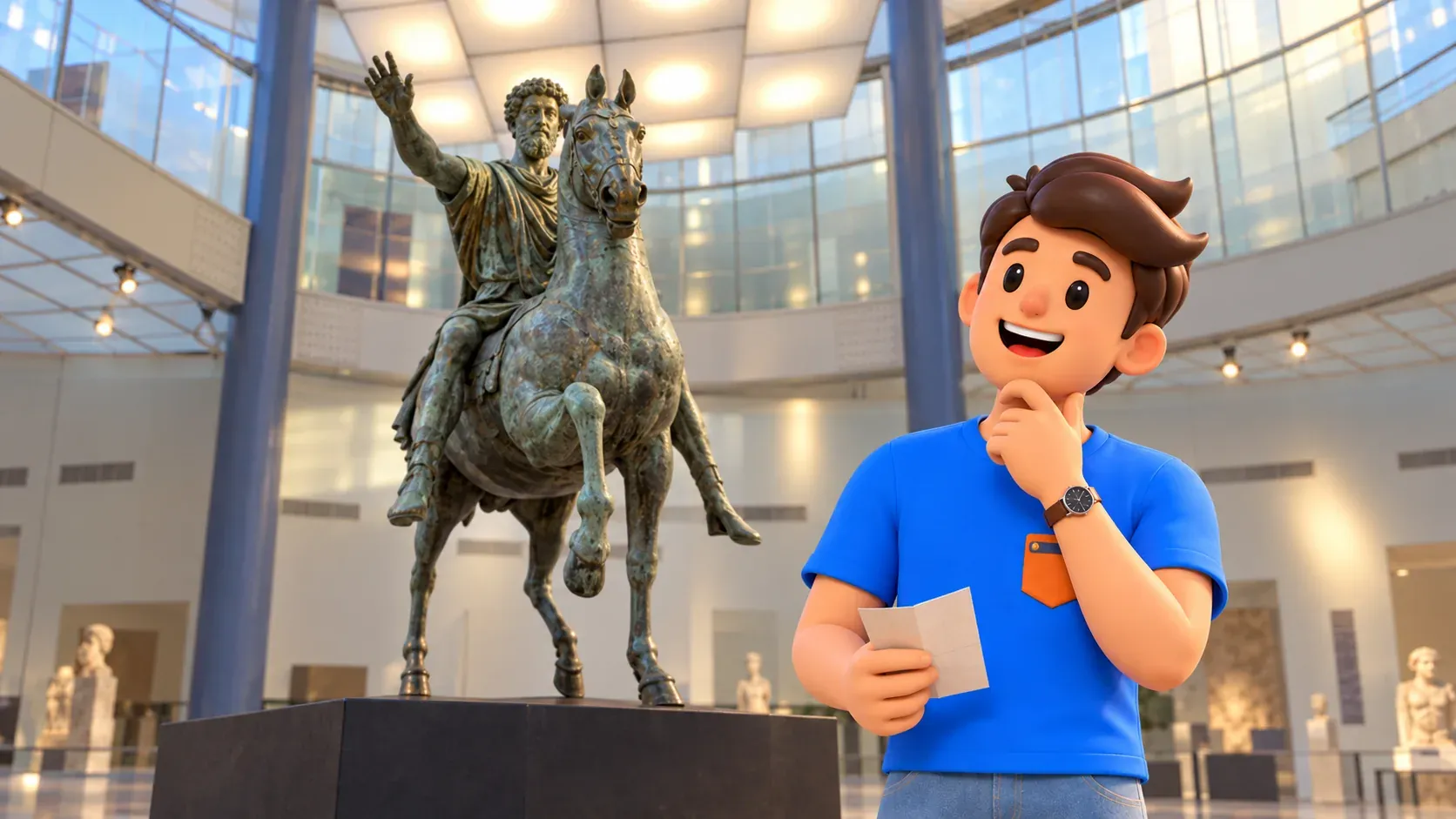
Check closure notices before visiting. At the time of checking, the museum listed notices for the Horti of Maecenas galleries and Pietro da Cortona room. Our programme does not require them. The historic complex and ongoing works also require a specific check of an appropriate route for visitors with mobility requirements.
Calendar and tickets: distinguish the museums
The National Roman Museum’s central schedule lists Massimo and Altemps Tuesday–Sunday, 9:00–19:00, last admission 18:00, with Monday as the usual closing day. Our 10:00 example starts comfortably after opening. A special notice for another site, such as the Baths of Diocletian, should not automatically be applied to these two palaces.
The Capitoline Museums ordinarily open daily 9:30–19:30, with last admission an hour before closing; the calendar contains holiday exceptions and specific closed dates. They can therefore be a Monday option after checking the particular day. You cannot simply swap museums while keeping the first one’s unverified opening assumptions.
The National Roman Museum offers a combined ticket allowing one admission to each operating site within a week of the first visit. It is an opportunity to distribute visits, rather than an obligation to complete them during one rainy day. The Capitoline Museums are a different complex: the same ticket should not be treated as their admission.
Umbrellas, bags and the plan afterwards
Umbrellas, bulky backpacks and suitcases are not allowed in National Roman Museum galleries. Altemps has lockers; Massimo has an unattended cloakroom without lockers. This is not a universal storage service for every kind of travel luggage. If travelling with a suitcase, resolve storage before arriving at the entrance and retain the essentials you need.
At the Capitoline Museums, cloakroom facilities are self-service and staff may ask you to deposit bulky bags, backpacks or umbrellas. Retrieve belongings before closing. Eat somewhere appropriate after sightseeing or use a separately checked café break. Leaving for a restaurant does not automatically authorise returning to the galleries afterwards.
In RoadMe, develop your personal trip as a whole more conveniently, so museum days, walks and rest complement your interests and pace. The app helps you use an overall plan while travelling, with outdoor experiences moved to a suitable day.
When weather permits, our day of squares, walks and views offers another direction. Today, one museum and an unhurried conclusion can be enough. A useful change preserves interest and energy instead of penalising you with another long journey for each hour of rain.


