
Free Rome: Choose a Day of Squares, Walks and Views
You can enjoy a substantial Rome day without attraction tickets: recognise an ancient outline beneath a Baroque square, walk towards a historic city entrance and see familiar streets from above. Choosing a connected direction matters more than collecting the longest possible list of free sights.
The main option here takes about four hours from Piazza Navona through Piazza del Popolo to the Pincio terrace, including a thirty-minute break. The Aventine, Janiculum and Aqueduct Park appear separately as alternatives for a different mood or starting area. You do not need to visit all six places consecutively in one day.
Decide what free means for this day
We mean independent outdoor sightseeing in public squares, a park and viewing spaces. The main programme needs neither museum tickets nor a paid guided tour. Travel to the start, food, drinks, bicycle rental and any additional services remain separate expenses. Admission-free sightseeing does not make the whole holiday cost-free.
To combine admission-free walks comfortably with the rest of your trip, try RoadMe: the app creates a personal plan around your interests, dates, pace and budget. It makes distributing walks, paid visits and rest across your days much more convenient, with a considered programme to use when you are in Rome.
Choose one principal scenario. Navona, Popolo and the Pincio suit an introduction to the centre. Already near the Aventine, you need not cross the city simply to collect another free view. For open landscape and ancient engineering, set aside a separate outing to the aqueducts instead.
Public spaces still have conditions. Events, barriers and weather may alter access; the Orange Garden has seasonal gate-closing times. Check your chosen places before leaving and keep the option to shorten the plan. A lack of admission charge says nothing about how easy a climb or path surface will be.
Four hours from Navona to the Pincio
| Minutes from the start | Included programme |
|---|---|
| 0–40 | Piazza Navona: the square’s shape, fountains and façades outside |
| 40–100 | Northward public-street connection to Piazza del Popolo |
| 100–130 | Thirty-minute break somewhere suitable nearby |
| 130–170 | Piazza del Popolo: overall arrangement, obelisk and street directions |
| 170–200 | Unhurried ascent towards the Pincio terrace |
| 200–240 | Panorama and a short look around the available upper space |
That totals two hundred and forty minutes. A 9:30 start gives Navona until 10:10, walking until 11:10, rest until 11:40 and Popolo until 12:20. Reach the terrace around 12:50 and finish about 13:30. These are planning estimates, not measured walking speeds or guarantees of unrestricted circulation.
The finish is above the square, on the Pincio. Descending to the metro, returning to accommodation and having lunch need additional time. After four hours of sightseeing, you can eat and rest without filling the afternoon with distant attractions. The thirty-minute pause allows a short break, rather than a full restaurant lunch.
Navona: find an old shape in a later city
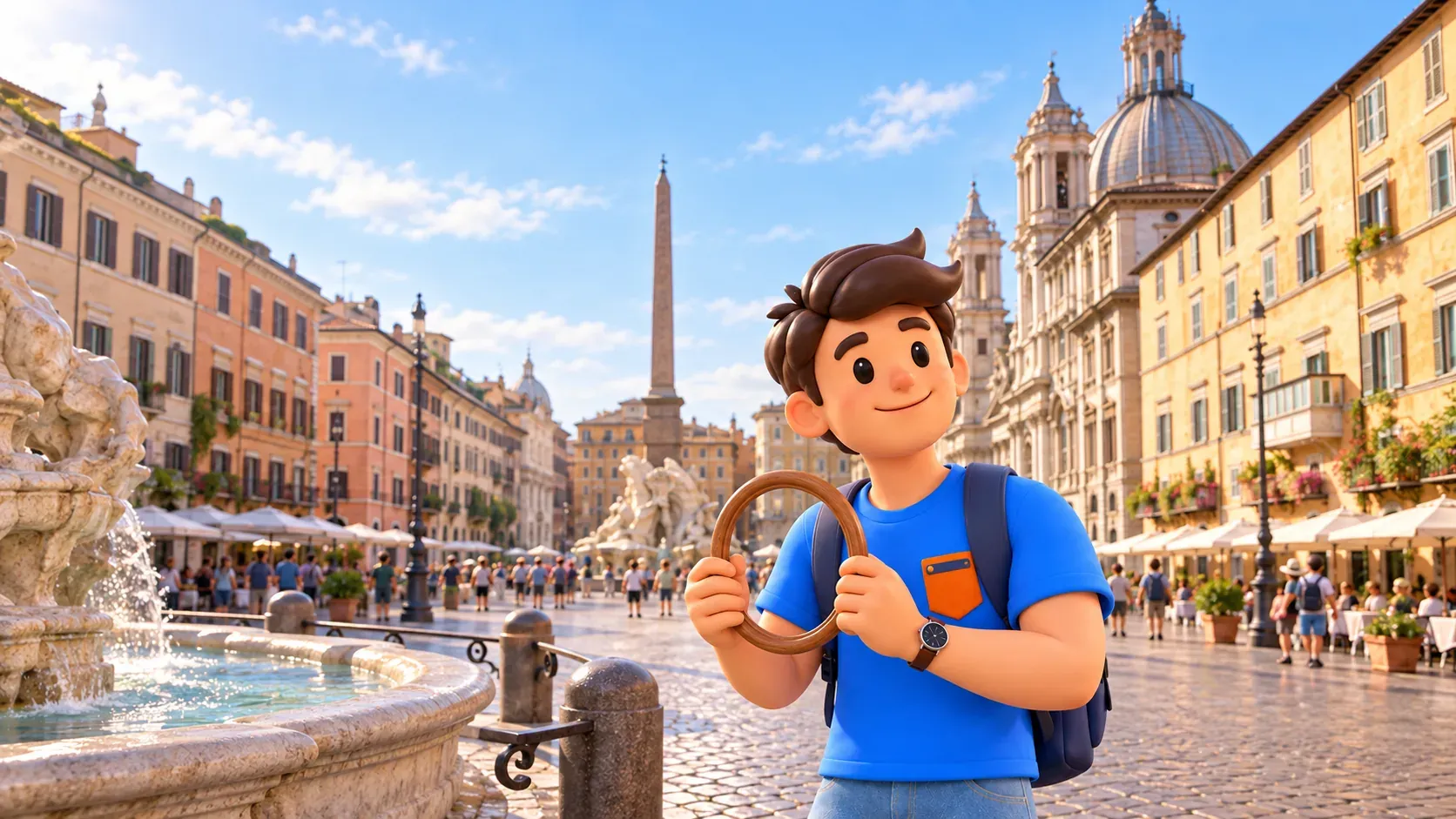
Begin with an overall view along the elongated piazza. Its outline preserves the form of Domitian’s stadium, while surrounding façades and fountains create a Baroque urban ensemble. That change of periods is enough for a first encounter: an ancient space still influences how people move here today.
Choose a position showing the long sides, then move a little further. Notice the changing relationships between fountain, obelisk and the façade of Sant’Agnese in Agone. You need not identify every figure or search for every camera angle. Forty minutes give an impression without turning the beginning into an exhaustive tour.
Walking across the square does not include admission to the underground stadium or neighbouring museums. Their conditions require separate checks; an open piazza does not prove access beneath it. In October 2026, the municipal underground-site page reported restoration closure, so it should certainly not be assumed available as an automatic rainy-day replacement.
If an event occupies part of the square, observe from permitted space. Do not pass barriers for a photograph. When an overall visit is impossible, start the northern programme at Popolo: it retains a square and a panorama instead of promising an imagined Navona visit through a closed passage.
Walking to Popolo also uses your day’s time
Head towards Navona’s northern side, then through the Via Zanardelli and Via della Scrofa area towards Via di Ripetta and Piazza del Popolo. This is a general public-street corridor; check individual turns and available crossings on your map. The connection does not require crossing the Tiber.
The hour allows orientation and small pauses, without shopping, a museum or an independent photographic exploration of every neighbouring lane. If you linger at a display or stop for breakfast, move the later schedule rather than accelerating the ascent. Admission-free sightseeing does not oblige you to keep walking continuously.
Keep thirty minutes of rest before exploring Popolo. Find an appropriate permitted place or choose a café, understanding that an order is an additional cost. A bench or empty table at one particular location is not guaranteed. If companions need a longer pause, extend the programme without treating that as a failure.
Popolo: understand the width before gaining height
On the square, notice where Via di Ripetta, Via del Corso and Via del Babuino meet. The space gathers movement from several directions. Its obelisk is much older than the surrounding composition: it was moved here from the Circus Maximus in 1589, while the present urban arrangement reflects early nineteenth-century transformations.
Giuseppe Valadier played an important role in that arrangement. Instead of a list of names, try a simple observation: isolate the obelisk’s vertical line, then examine the broad frame of façades and slope. Soon you will see the composition from above. Moving between those scales joins square and terrace into one experience.
Compare the similar churches on the street side from outside; they are not identical in every detail. Entry to Santa Maria del Popolo and visits to individual chapels are outside the basic allocation. If interiors matter, give them additional time and check their specific access rather than inferring it from the square.
The Pincio: climb for a view you now recognise
From Popolo’s eastern side, use available approaches around Via Gabriele D’Annunzio. The slope combines a winding ascent with stair sections. Thirty minutes allow gentle movement and brief pauses, rather than setting a target. For particular mobility requirements, establish suitable access beforehand instead of depending on an unverified lift.
On the terrace, find the square you have just explored. Recognise its obelisk and buildings before moving your attention to roofs and distant domes. In clear enough conditions, Saint Peter’s can be distinguished on the horizon. Identifying every monument is unnecessary; the useful experience is a change in the city’s scale.
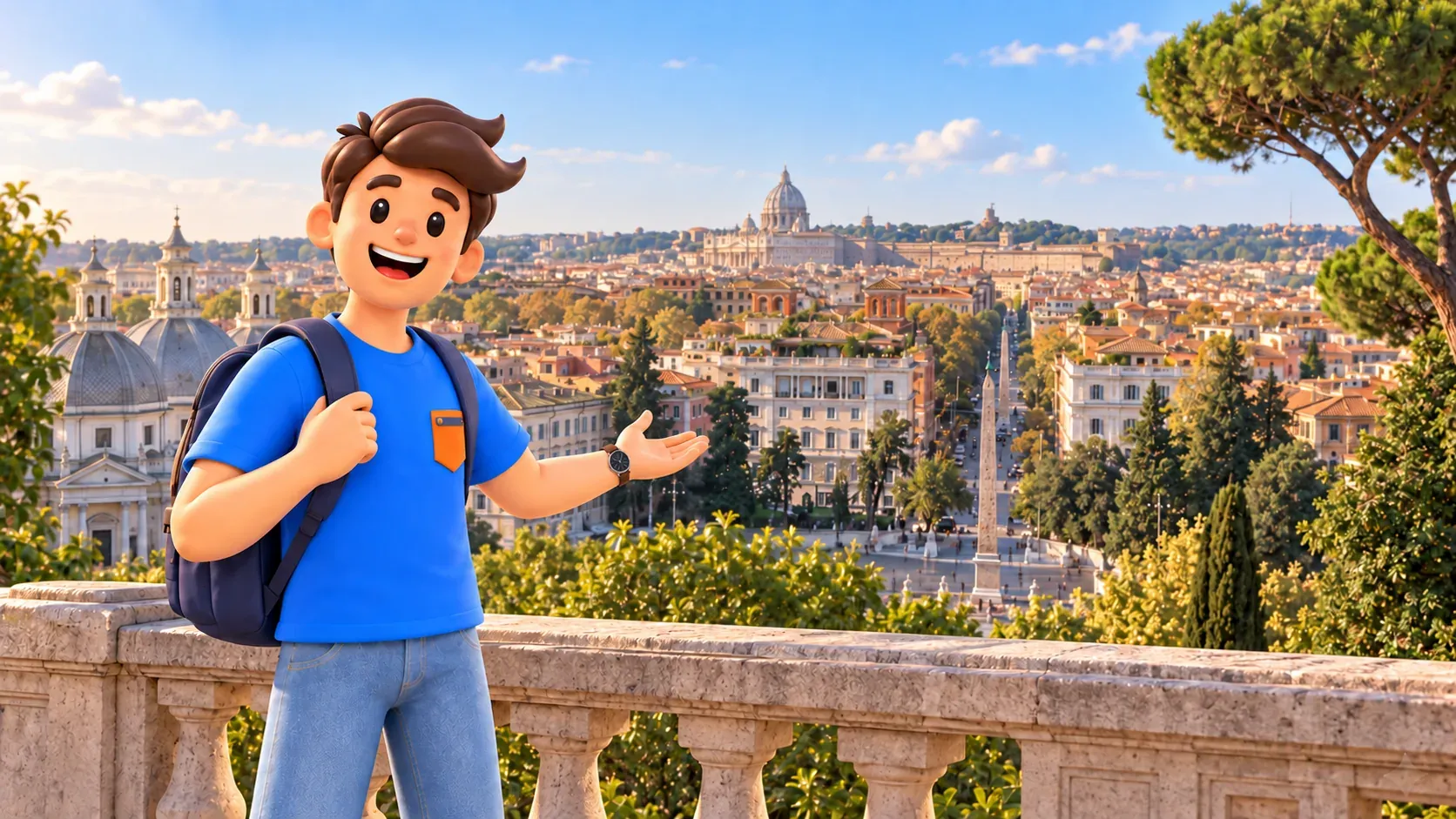
The Pincio developed as a public promenade in the nineteenth century, rather than merely as a platform for visitor photographs. That encourages looking at the upper avenues as well as the distant skyline. Ordinary access is free, but actual restrictions and weather remain more useful than a directory’s general always-open description.
Do not confuse a free walk with admission to the Borghese Gallery. The museum has its own ticket and compulsory reservation; even special admission-free days do not remove every condition or fee for every visitor. Our programme ends outside. A museum session does not become part of the forty-minute panorama allowance.
Three independent alternatives
The Aventine’s Orange Garden. Choose this for greenery and another angle on the Tiber. Raffaele De Vico created the modern garden in 1932 within old fortifications; a central avenue directs your attention towards the terrace. Its small, clear composition does not require turning it into a many-hour park visit.
A ninety-minute example begins near Circo Massimo station: twenty minutes uphill through Via di Valle Murcia, Clivo dei Publicii and Via di Santa Sabina, thirty in the garden, twenty resting there and twenty returning in the same direction. All intervals are estimates. A church interior and the famous keyhole are outside this version.
The owner lists 7:00–18:00 from October to February, 7:00–20:00 in March and September, and 7:00–21:00 from April to August. Allow for gate closing, especially in the evening. Starting at 10:30 and finishing around noon, for example, keeps the garden section inside its ordinary window. Check current notices before leaving.
The Janiculum. Choose this if already in Trastevere and willing to climb. From Piazza di Santa Maria in Trastevere, allow thirty minutes along public streets through Via Garibaldi to Piazzale Garibaldi, thirty for the view and rest, then thirty back. These are separate ninety minutes without adding every monument on the hill.
The panorama reveals successive roofs and domes, while the promenade commemorates nineteenth-century events. The approach is not an entirely level, traffic-free path. You need not travel here after the Pincio simply because both are free. Choose the view and neighbourhood that suit your particular day instead.
The Aqueduct Park. For two hours inside the grounds, select one Via Lemonia entrance near San Policarpo and return there. Allow fifteen minutes to orient yourself, twenty-five to approach, twenty-five for the arches, twenty to rest, twenty-five retracing and ten to leave. Metro travel and walking from the station are additional.
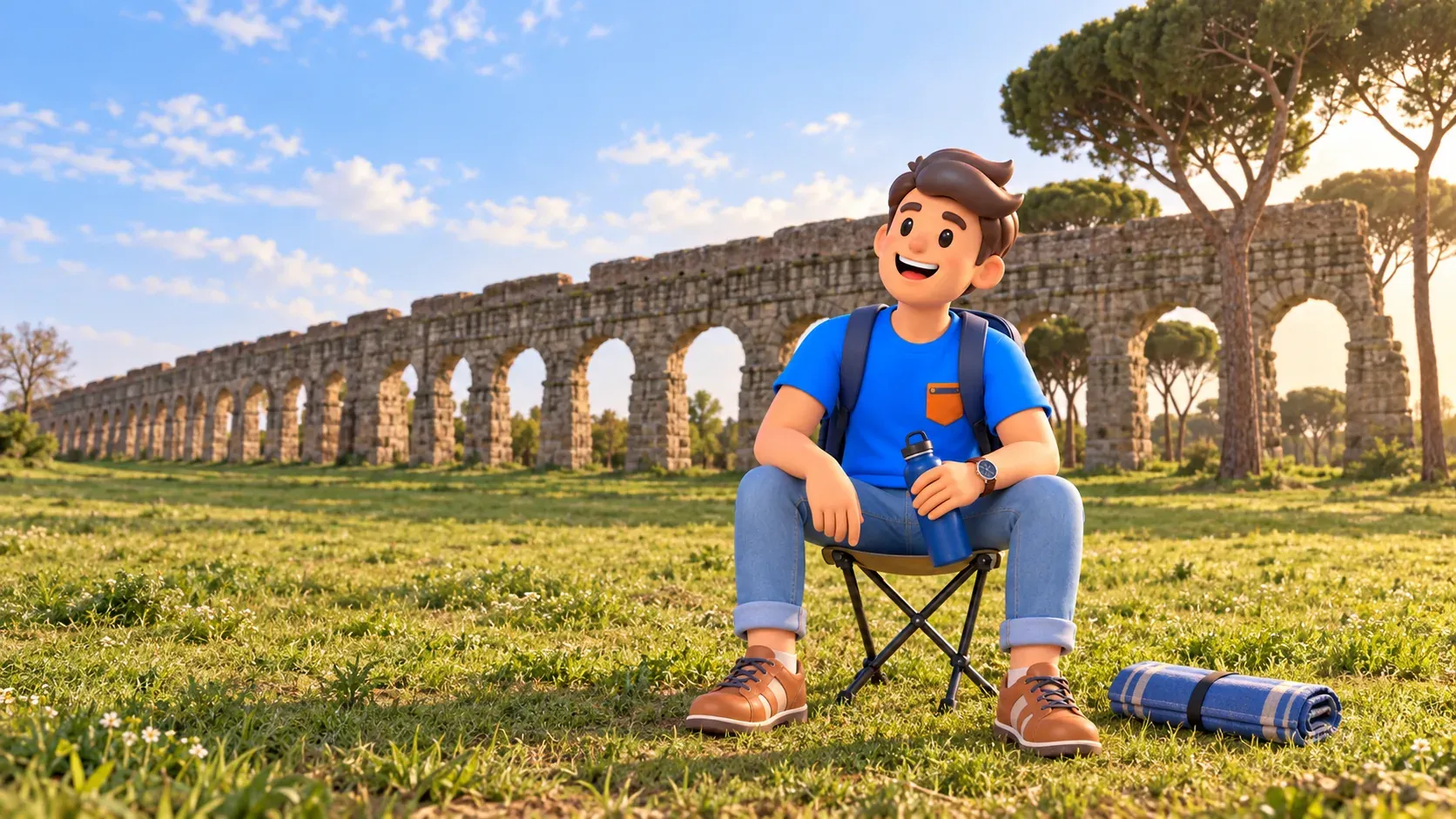
The tall stone Aqua Claudia arches reveal the scale of ancient water infrastructure. Later structures share the landscape, so not every fragment should be called ancient. Our separate two-hour Aqueduct Park walk explains the outing more fully. Use it to decide whether this landscape deserves its own part of your trip.
Save money while keeping energy and interest
Bring water for outdoor walks and choose suitable weather. Continuous shade is not guaranteed across a square or field, while Aqueduct Park earth paths can become awkward after rain. Free admission cannot compensate for exhaustion or a difficult ascent. When appropriate, choose a shorter section near where you are staying.
Develop a personal plan for the whole trip more conveniently in RoadMe, combining free experiences with the visits you actively want to pay for. The app helps distribute interests and rest across suitable days, making the itinerary easier and more effective to use in the city.
Success is not six free stops at any cost. A connected walk, one memorable view and an unhurried finish can be enough. Keep time for food and the return journey after whichever programme you choose: those ordinary parts of a day turn a budget itinerary into an enjoyable trip rather than an endurance contest.


