
Porte Dorée in half a day: architecture, museum or aquarium
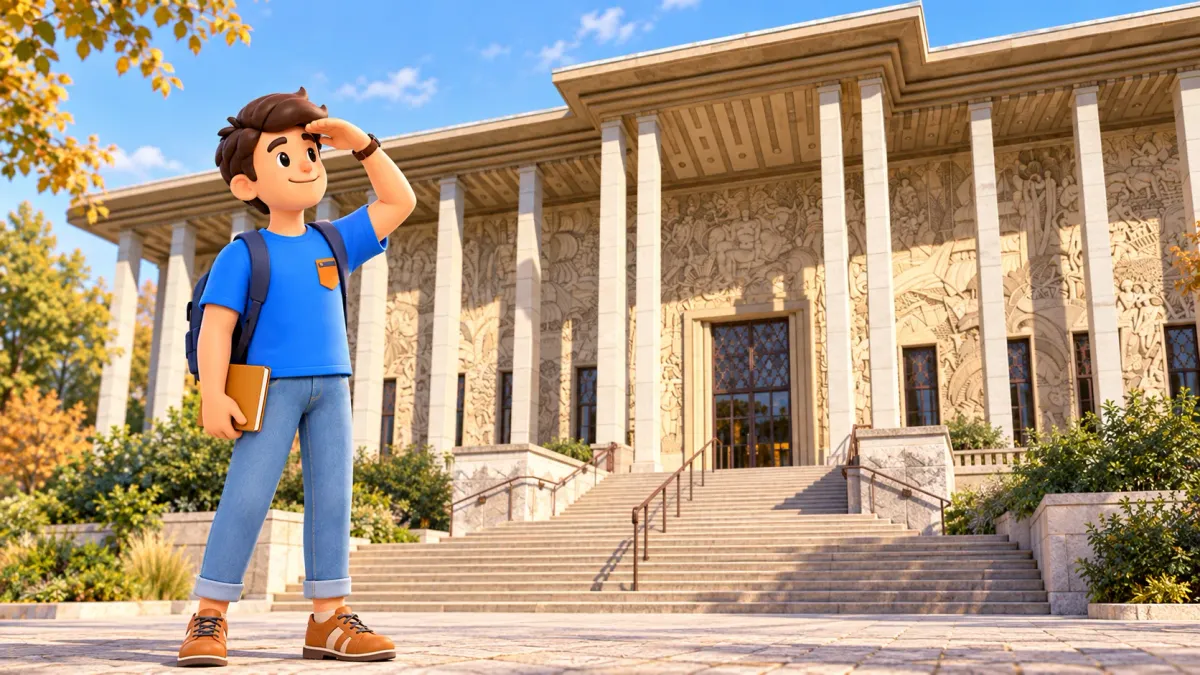
Porte Dorée offers a Paris half day with a clear centre of gravity. At the Palais de la Porte Dorée, an Art Deco building, the National Museum of the History of Immigration and the Tropical Aquarium share one address. You can begin with architecture, choose one substantial visit and finish with a short outdoor walk towards the edge of the Bois de Vincennes.
The choices lead to different experiences. The museum suits an interest in history, archives and individual lives; the aquarium invites observation of aquatic environments. Architecture alone also makes a worthwhile outing, especially when you want a shorter programme. Decide which subject deserves your time before treating everything inside the building as one compulsory visit.
Plan a half day around one main visit
Try RoadMe for a personal trip plan shaped around your interests, dates, pace and budget. Organising the whole itinerary in the app is much more convenient, giving your chosen Porte Dorée visit a considered place alongside meals, rest and other Paris discoveries.
Start at Porte Dorée station on Métro line 8 and approach the visitors’ entrance at 293 avenue Daumesnil. The palace, museum and aquarium are different offers within the same building, so moving between their entrances does not require a journey across Paris. The important decision concerns how much attention to give each experience.
For the museum or aquarium version, allow roughly four hours, including arrival checks, a look at the building, a pause and a modest outdoor continuation. A morning programme around 10:00–14:00 is a useful starting point on an ordinary opening day. Arrange the sequence around the admission time you actually book; the table is a planning allowance, not a guaranteed timetable.
| Part of the outing | Museum day | Aquarium day |
|---|---|---|
| Arrival and entrance checks | 15 minutes | 15 minutes |
| Architecture and free historic areas | 35 minutes | 45 minutes |
| Your chosen main visit | 120 minutes | 90 minutes |
| Rest or refreshment pause | 30 minutes | 30 minutes |
| Short nearby outdoor walk | 30 minutes | 45 minutes |
| Return towards Porte Dorée | 10 minutes | 15 minutes |
Both columns total four hours. Travel from your accommodation and a substantial restaurant meal are additional. If the main visit absorbs you, shorten the outdoor part rather than rushing through the reason you came.
For architecture without either ticketed attraction, allow about 45–60 minutes for the accessible historic areas, then add a pause and a short walk. That can make a satisfying two- to three-hour outing. There is no need to stretch it to four hours simply because the palace has several activities.
Read the palace through its architecture and original purpose
The Palais was built between 1929 and 1931 to Albert Laprade’s designs for the International Colonial Exhibition of 1931. Its Art Deco architecture brings the structure and decorative work together. Start with the relationship between the long façade, repeated vertical supports and carved surface, then move closer to a selected detail.
Alfred Janniot created the monumental façade relief. Inside, the Forum contains a large fresco by Ducos de la Haille. These decorations were commissioned for the building’s original colonial programme. Look at them as representations made for that particular purpose, rather than as an unqualified record of life in the places depicted.
This context helps make the building intelligible without requiring a long historical lecture. How do carved figures fill the surface? How does the rhythm of the architecture organise your view? Inside, compare the scale of the Forum with a smaller decorative detail. The original commission and the present museum’s work are different stages of the palace’s history.
Several public areas are free during opening hours: the esplanade, Hall of Honour, Forum and permitted views of the historic Africa and Asia salons. The salons can be observed from their thresholds; their fragile floors are protected, so you cannot simply walk through them. Follow the barriers and instructions on site.
The Salon des laques is a separate exception. This room on the third floor requires a museum admission ticket. It is not included automatically in a free architectural walk or an aquarium-only visit. Choose it deliberately if it matters to your interest in decorative arts, and keep the distinction clear when selecting admission.
A scheduled architecture tour can provide a more focused visit, but it has its own booking and calendar. For a self-guided introduction, a few carefully chosen observations are enough. The aim is to understand how the palace was conceived, then give your main subject room to develop.
Choose the museum for history and individual stories
The Musée national de l’histoire de l’immigration explores French history through migration. Its permanent exhibition was completely rethought in 2023 and follows a chronology from 1685 to the present, organised around eleven key dates. Archives, photographs, works of art and personal objects connect larger historical developments with individual lives.
This suits visitors who enjoy reading an object alongside its context. Begin by following the broad chronology, then choose a few stories or documents that hold your attention. An identity paper, a photograph or a personal possession can become the centre of a short investigation: who used it, what circumstances surrounded it, and what does the display explain?
Allowing about two hours inside gives you room to explore selectively. You do not need to study every label in equal detail. Spend longer with a section that interests you, then look at the overall sequence again before leaving. The value lies in making connections between evidence, a life story and a historical setting.
The permanent exhibition provides a clear basis for this programme. Temporary exhibitions may change the emphasis, so check their actual dates and ticket conditions. At the check on 13 October 2026, Une histoire du cinéma français is announced from 30 October 2026 to 21 March 2027; it is a future option, not an exhibition already open on the checking date.
For a family visit, decide whether the group wants time with documents and explanations. The aquarium may suit a different shared interest, but age alone does not settle the choice. Agree on one theme before entering. If the museum becomes the highlight of the day, let it take more time and keep the walk afterwards brief.
Choose the Tropical Aquarium for close observation
The Aquarium tropical was created inside the palace in 1931. Its history belongs to the original exhibition, while its current role emphasises aquatic environments, learning and their protection. This is the Tropical Aquarium at Porte Dorée; it is a different venue from the Aquarium de Paris near Trocadéro.
Today’s visit moves through tropical freshwater and marine environments, with terrariums also part of the collection. Make the experience about a small number of comparisons rather than trying to record every species. You might begin with the shapes and movement of fish, then examine how planting, rocks and shelter relate to the environment presented.
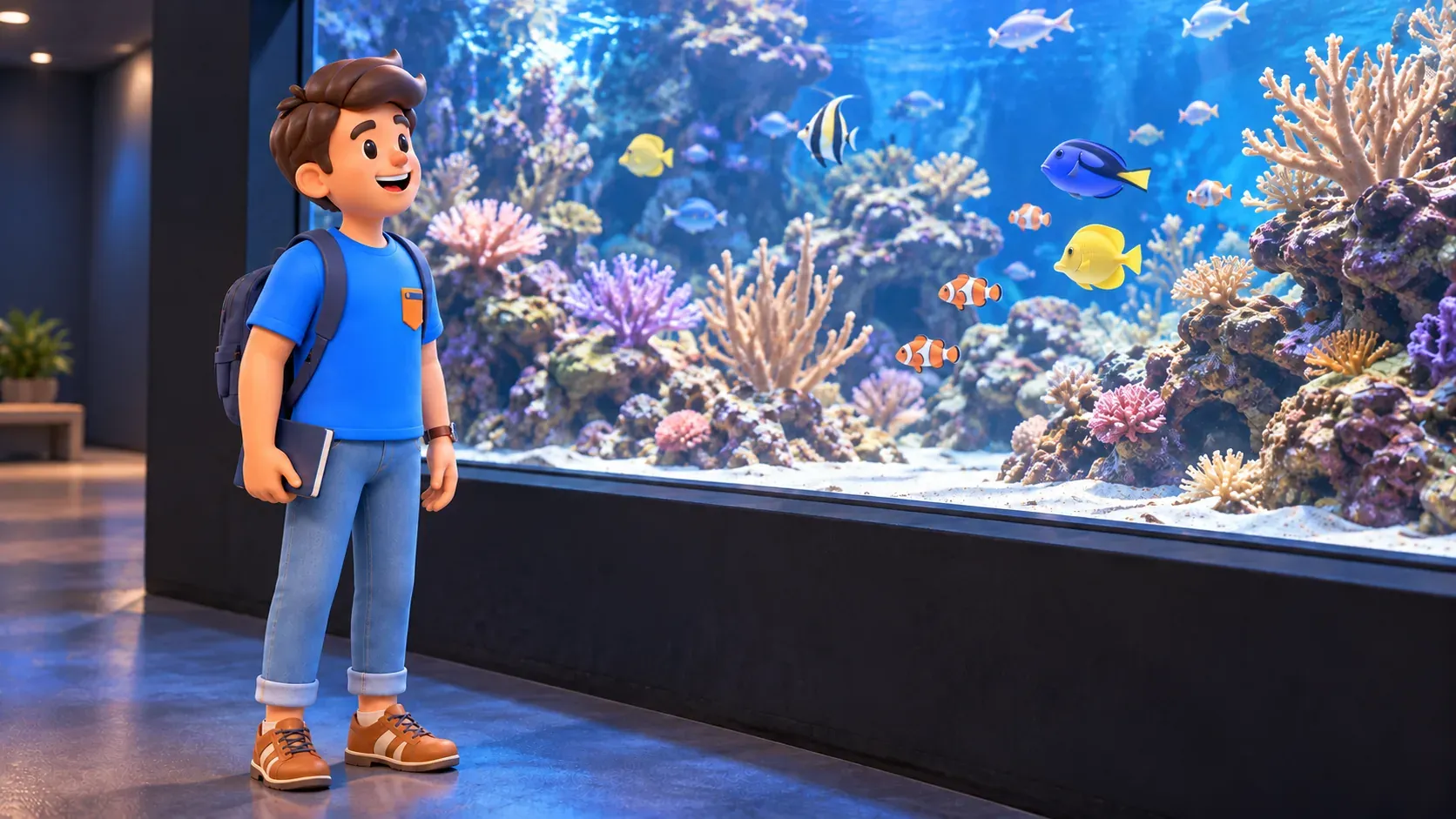
Choose one freshwater setting and one reef display if they are accessible during your visit. Observe first, then read the explanations. Which animal stays close to shelter? Which moves through open water? The labels help connect a striking colour or body shape with a habitat. Let the exhibit information answer the question, rather than guessing from appearance alone.
The palace recommends at least an hour for the aquarium; the suggested plan allows 90 minutes. That leaves time to pause at displays without assuming that every animal will be visible. If you visit with children, agree on a simple observation to share afterwards, such as one movement or behaviour each person noticed.
Photographs can help you remember a detail, but looking deserves its own time. Respect instructions around the tanks and avoid tapping the glass or using flash. Choose workshops or guided activities separately if their subject appeals: their schedule and reservation requirements are additional to an ordinary visit.
Finish with a small outdoor continuation
After the palace and your chosen visit, a short walk towards Lac Daumesnil provides a change of setting. Follow the public approach along avenue Daumesnil towards this nearby part of the Bois de Vincennes, paying attention at crossings. The lake is an outdoor continuation, rather than another ticketed museum stop.
The full circuit is about two kilometres. You do not need to complete it within this half day. Walk along a short section of the shore, pause where appropriate and return towards Porte Dorée. The suggested 30 or 45 minutes is an allowance for a modest continuation, with the return listed separately in the table.
Depending on your chosen stretch, roughly one to two kilometres of outdoor walking overall is a useful estimate. It is not a measured route. Avoid adding the zoo, Parc Floral or several distant woodland destinations to the same programme. They deserve a separate plan based on their locations and the visit you actually want.
In rain, reduce the outdoor part and preserve the main indoor visit. In winter, keep the lake walk within comfortable daylight and make it shorter if needed. The point is a change of pace after concentrated looking, so an extended circuit is optional.
Check opening hours, tickets and comfort
As checked on 13 October 2026, the Palais, museum and aquarium open Tuesday–Friday from 10:00 to 17:30 and Saturday–Sunday from 10:00 to 19:00. They close on Mondays and on 1 January, 1 May and 25 December. The palace’s public interiors therefore do not offer a Monday alternative to the museum or aquarium.
For ordinary individual visits, last access is one hour before closing: 16:30 on weekdays and 18:00 at weekends. That is an admission deadline, not enough time for the museum programme suggested here. Choose an earlier start that leaves the intended viewing time before the building closes.
The museum and aquarium have separate tickets, and a combined ticket is available. This itinerary selects one main visit. If you choose both independently, check the exact combined product’s time slots and conditions rather than applying the individual-visit deadline automatically, and extend the time you set aside.
Online booking is strongly recommended; on-site admission depends on availability. A dated, timed ticket controls when you may enter, but does not permit jumping the queue. Eligible free visitors also need an admission ticket and the required proof. The current owner’s information lists free museum and aquarium admission for visitors under 26. The first Sunday of each month gives free admission to the museum and its exhibitions, not a general free-entry rule for the aquarium.
Use RoadMe to build a complete personal itinerary for your Paris stay around the subjects you enjoy and the pace that suits you. Keeping the day-by-day plan in the app makes it easier to coordinate this half day with the rest of your trip, including practical pauses and your budget.
For mobility access, the palace identifies a ramp at the corner of place Édouard-Renard and rue Armand-Rousseau, leading along a stabilised path to a platform lift behind the administrative entrance. Confirm the assistance you need; those building arrangements do not establish a step-free Métro or lakeside route. Cloakroom capacity is limited, so avoid relying on the palace to store large luggage.
For another day with nature and museum collections, consider the Jardin des Plantes walk with one museum. Keep Porte Dorée for its own combination: one architectural setting, one chosen subject and time to absorb both.


