
Picasso, Calder and Chagall: A Two-Hour Chicago Public Art Walk
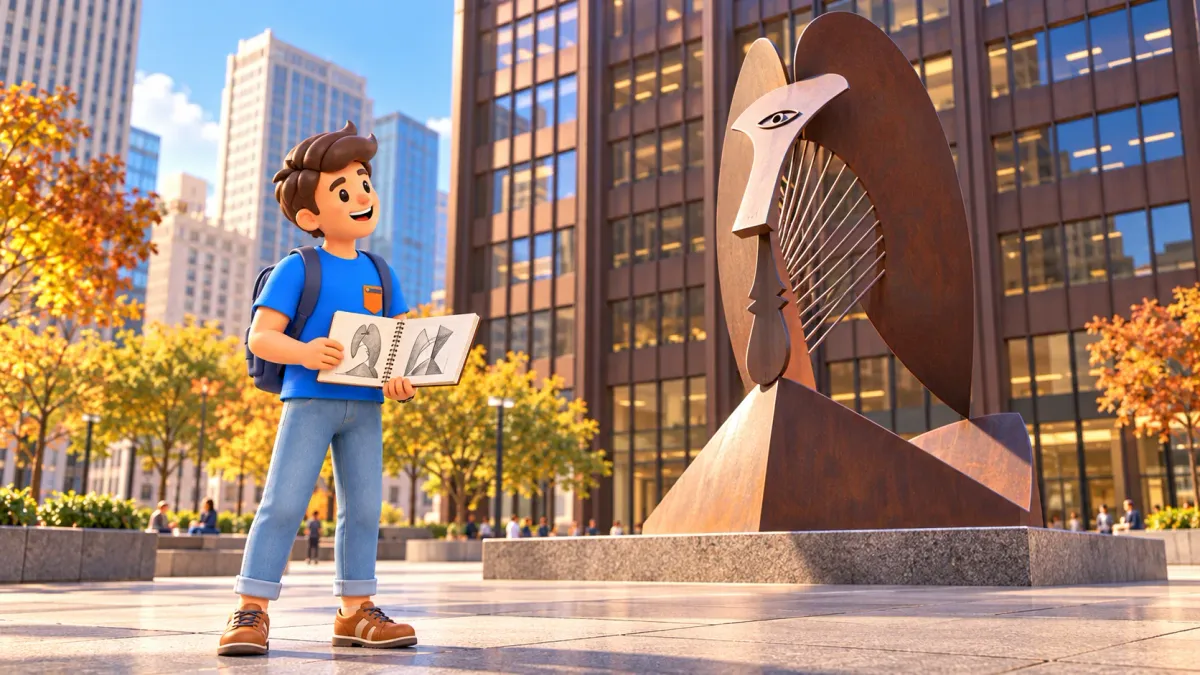
Three very different works make a small part of Chicago's Loop feel like an outdoor art collection: Alexander Calder's bright red Flamingo, Marc Chagall's colourful The Four Seasons mosaic and the mysterious steel form known as the Chicago Picasso. You can connect them without a museum ticket or a long journey across the city. The reward comes from changing how you look, rather than collecting three names.
This two-hour walk goes north from Federal Plaza to Chase Tower Plaza and finishes at Daley Plaza. It leaves time to see each work from more than one position, make a short pause and navigate the intervening streets. It is an outdoor itinerary; office lobbies and building tours are unnecessary. Conditions at Chase Tower deserve particular attention because the owner's renovation plans include the plaza around Chagall's mosaic.
Set up a northbound walk with room to stop
Start beside Calder's Flamingo at Federal Plaza, near Dearborn and Adams streets. Continue north on Dearborn to Chagall's The Four Seasons, at Chase Tower Plaza around Dearborn and Monroe; its listed address is 10 South Dearborn Street. Then continue north towards Washington Street and Daley Plaza, at 50 West Washington Street, for the Picasso. These are three nearby downtown stops, with ordinary street crossings between them.
To fit this art walk into your whole Chicago visit, try RoadMe: the app builds a personal itinerary around your interests, dates and preferred pace. That helps place a compact outdoor outing alongside longer visits across your available days.
- Calder at Federal Plaza: around twenty-five minutes.
- Chagall at Chase Tower Plaza: around thirty minutes, when the permitted approach allows a useful view.
- Picasso at Daley Plaza: around twenty-five minutes.
- Allow around twenty minutes for connecting movement and crossings, with twenty more for a pause and small delays.
The allocation totals two hours and is a planning estimate, rather than a measured walking time. Travel to the start and onward from the finish comes separately. A meal, museum visit or additional walking tour needs its own allowance. If you prefer a slower pace, shorten a viewing stop instead of rushing the crossings.
Choose daylight for an easier first encounter with surface details. Check the weather before committing: outdoor art offers little protection from strong wind or persistent rain. No admission purchase is needed for the outdoor views described here, but that does not promise unrestricted access to every part of a plaza. Follow current signs and barriers, especially around active building work.
Calder's Flamingo: begin with the space around the red curves
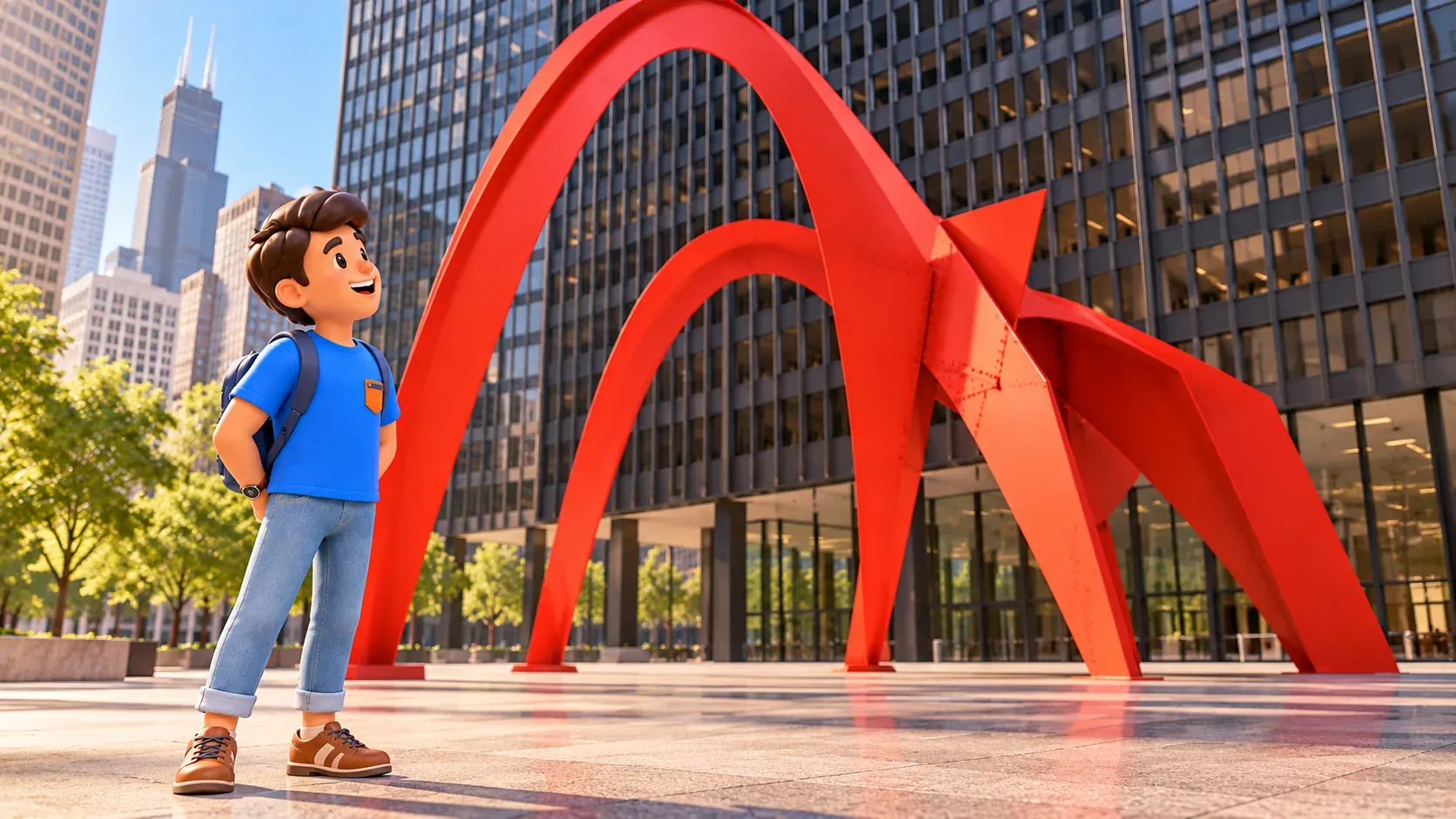
At Federal Plaza, first take in the whole sculpture from a permitted position with enough distance around it. Calder's steel Flamingo rises about 53 feet and was installed here in 1974. The red curves stand against the dark grids of the surrounding Mies van der Rohe-designed Federal Center. That contrast is the most useful starting point: follow a curve with your eyes, then compare it with a straight building edge behind it.
The work is a stabile, a stationary sculpture, rather than one of Calder's moving mobiles. You supply the changing view by moving around it where access permits. A shape that seems broad from one position can become thinner from another; an opening can frame a different piece of the city. You do not need to identify an exact bird outline to appreciate how the title and the form work together.
Give yourself two kinds of view. From farther away, notice how the colour holds its place within the plaza. From closer public space, look at the relationship between the curved steel and the openings beneath and between its parts. Avoid treating a photograph of the whole work as the end of the visit. The change between those distances is part of what makes an outdoor sculpture different from an image on a screen.
If you are walking with someone, each choose a viewpoint before comparing impressions. One person might notice the upright supports; another might see a sweeping arch. With children, ask which opening changes most as you move. Keep the activity about observation and leave the sculpture untouched. The federal buildings remain working premises, and this walk does not require entering them.
Follow Dearborn to Chagall, keeping the plaza works in mind
Leave Federal Plaza for Dearborn Street and head north towards Monroe. Adams is the first useful street reference from the starting area. Use the marked pedestrian crossings and the current permitted pavement route. There is no advantage in finding a shortcut through an office building: the next artwork is outdoors, and staying on the street keeps the connection easy to understand.
Chagall's stop belongs to the plaza at Chase Tower, also identified in older sources as First National Bank Plaza. The different names refer to the same setting for The Four Seasons; they are not separate destinations. Look for the mosaic structure and its canopy rather than a museum entrance or an indoor gallery. Its setting has a different scale from Calder's open federal plaza.
JPMorgan Chase has announced a substantial renovation of the tower that includes the outdoor plaza and access to the mosaic. Do not assume that an older photograph proves that a particular path, staircase or viewing side is available on your day. Use the approach actually permitted on site. If you need a route without steps, establish that permitted approach before descending to a lower level; this itinerary cannot guarantee a continuous step-free circuit around the work.
If barriers or work make the mosaic impossible to see usefully, continue north to the Picasso. Give the saved time to the other two sculptures or to a break. Do not spend the whole outing circling a worksite in search of an unofficial entrance. The three-stop plan is a helpful structure, with a straightforward two-stop version when conditions require it.
The Four Seasons: move from an overall impression to one small scene
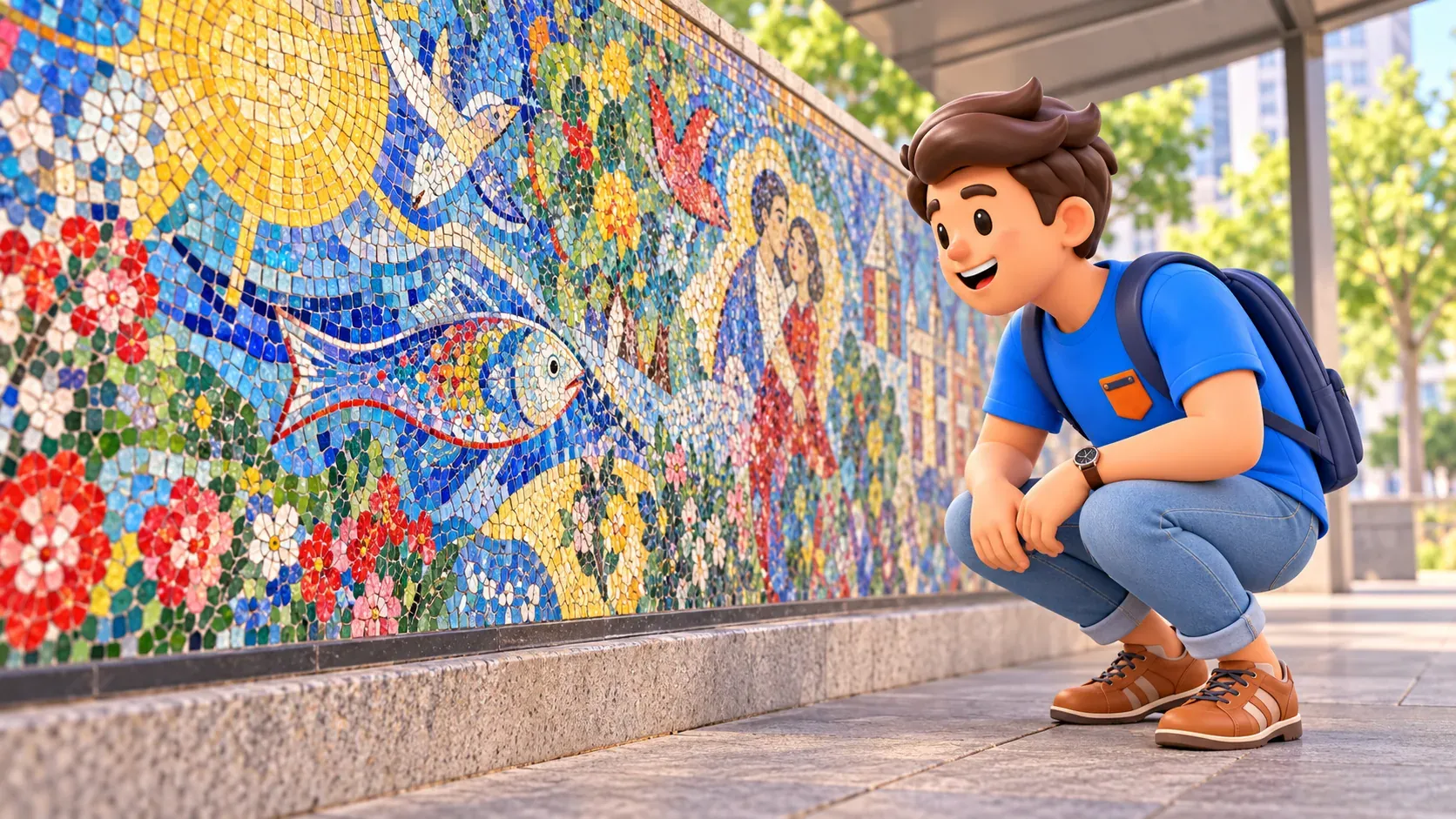
Where access allows, begin far enough from the mosaic to read a stretch of its composition, then move closer to one detail. The Four Seasons was dedicated in 1974. Chagall's design combines seasonal imagery with Chicago's cityscape, using pieces of glass and stone to create a much more detailed surface than the two steel sculptures on this route.
Look for a bird, fish, flower, pair of lovers or a sun. These are recurring elements in the work, rather than a checklist you must complete. Choose one that attracts your attention and notice how its outline emerges from the small pieces around it. Then step back again. A detail that looked separate at close range may settle into a broader field of colour when you see more of the composition.
Use the title as a question: what makes a particular passage feel connected to a season? It may be a colour, a tree, an activity or the relationship between figures. You do not need to assign every section correctly to have a worthwhile encounter. Spend a few minutes following one visual connection instead of scanning the whole surface for an authoritative answer.
The contrast with Calder now becomes useful. At Federal Plaza you read the city through openings and around a curved steel form. Here your eye travels across a surface full of small elements. If several sides are accessible, let that change the rhythm of the visit; if only one is visible, give that side proper attention. The canopy does not turn the plaza into a dependable indoor refuge in poor weather.
Picasso at Daley Plaza: finish without settling the mystery
Continue north on Dearborn, passing Madison on the way towards Washington Street. At Washington, use the permitted crossing to reach Daley Plaza. The Picasso stands in front of the Daley Center. You have now moved through three different relationships between art and an everyday working part of the city, without needing to leave the Loop.
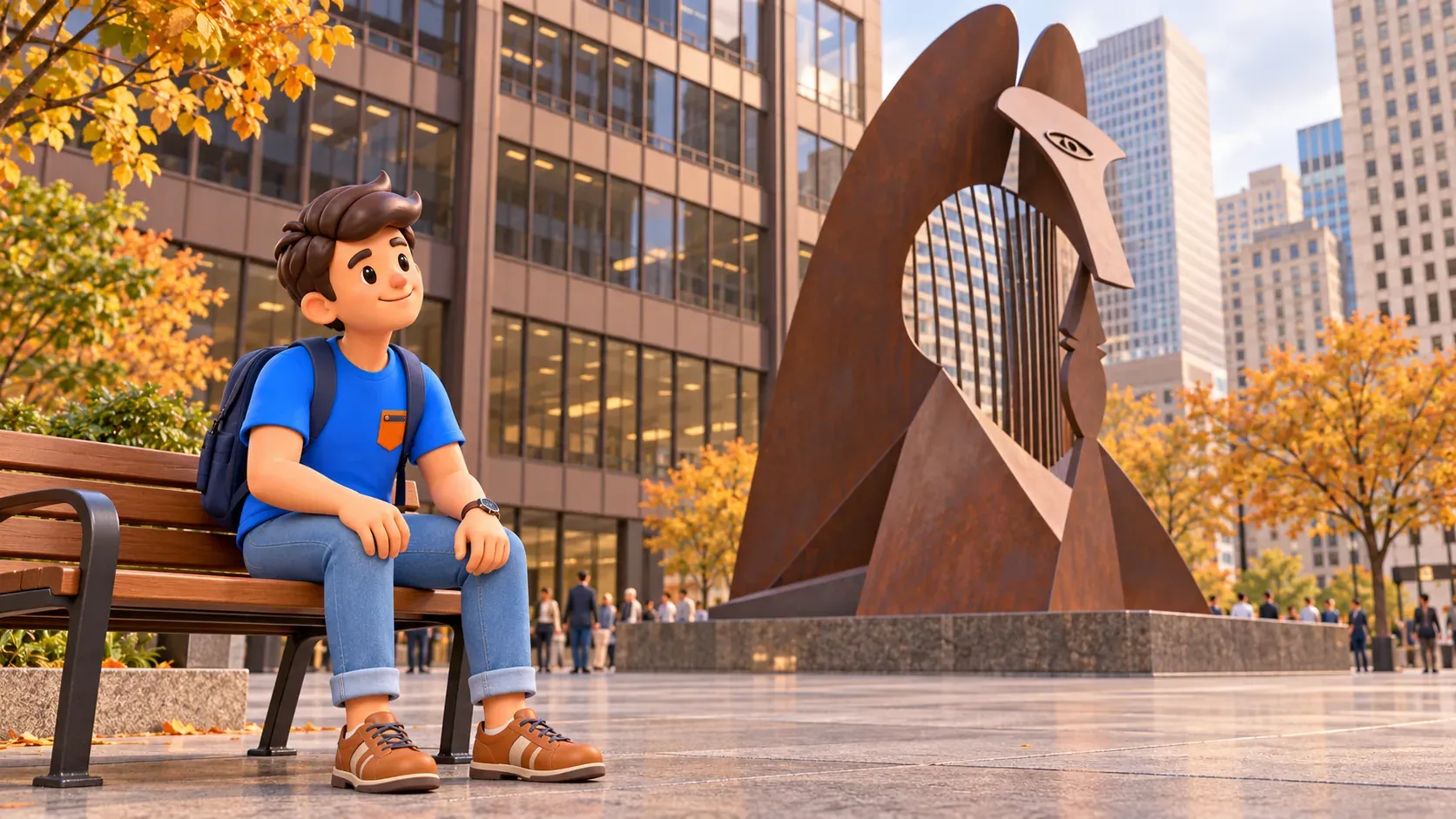
The untitled sculpture was unveiled in 1967 and is generally called the Chicago Picasso or simply the Picasso. It stands about 50 feet tall and uses Cor-Ten steel, the same material that gives the Daley Center its distinctive weathered exterior. Notice the difference between its brown surface and Calder's painted red steel, then consider how each sits against its architectural background.
Start with an overall view from the plaza, then change your angle where space and current arrangements allow. Does it resemble a face, an animal or an abstract construction? Picasso left no definitive explanation of what it represents. You can hold more than one reading at once. A different position may strengthen one resemblance and dissolve another, which makes moving around it more useful than searching for a single correct answer.
Keep twenty-five minutes for this final stop if possible. Take one wide photograph, put the phone away and spend another minute looking at the outline. Compare the solid areas with the empty ones, remembering Calder's openings and Chagall's continuous mosaic surface. The three works now offer a simple vocabulary of curve, colour, surface and silhouette.
Events and temporary arrangements can affect how you cross or occupy Daley Plaza. Keep public entrances and pedestrian routes clear, and accept an angled view when the preferred position is unavailable. The artwork remains the focus; there is no need to enter the Daley Center or extend the walk into a tour of its offices.
Choose the next part of your day by what held your attention
Finish by choosing one observation from each stop: a red curve against a black grid, a small mosaic scene or a silhouette that changed when you moved. Those impressions are enough to make the walk memorable. More names would not necessarily add more understanding, especially if the weather or your energy is already telling you to take a break.
RoadMe can help shape the rest of your trip around the interests you have discovered, with a personal route and day-by-day itinerary. Try it to balance art, architecture and other visits at a pace that suits you.
If the buildings around the sculptures were as absorbing as the art, save the two-hour walk among early Chicago skyscrapers for another part of your programme. Its southern Loop facades offer a different kind of close looking. Allow it its own two hours so that windows, ornament and structure receive the same attention you have just given these three artworks.


