
Pellestrina in one day: a walk on the other side of the lagoon
Give Pellestrina a day of its own. This main itinerary takes about six and a half hours on the island, combining the South Lagoon Museum in the morning, a walk to Portosecco, a short bus ride, lunch and the southern village. It starts at San Pietro Calle Tardivi bus stop and finishes at Pellestrina Cimitero. Walking and transport alternate, rather than turning the island’s entire length into a compulsory hike.
The complete journey from Venice to the start, and the complete return after Cimitero, are additional, including buses, ferry crossings and waiting. Churches are included from outside. The museum version depends on the day; alternatives below cover a closed museum and a separate three-hour southern walk.
Why give Pellestrina its own day?
Pellestrina lies between the southern lagoon and the Adriatic. Its villages offer low houses, boats beside the waterfront, small squares and daily life connected with fishing. The Murazzi sea defences add another theme: how a narrow strip of land survives between two expanses of water.
Try RoadMe for a fully worked-out personal trip plan based on your dates, interests and pace. Planning in the app makes it easier to give Pellestrina the right day and coordinate it with museums, art and downtime throughout your Venice stay.
This is a good choice for a longer stay or a return visit. Come for a different scale of experience, rather than another essential collection of masterpieces. Do not expect an empty island, permanent silence or a performance by local fishermen: people live and work here.
If fields and rural landscapes appeal more, compare our Sant’Erasmo day trip. Pellestrina offers a different combination of maritime memory, small settlements and public transport between them.
Getting there: line 11 has several different parts
From Venice, first take a waterbus to Lido S.M.E. Then use line 11: a bus along Lido to Alberoni, a ferry crossing to Santa Maria del Mare and the continuation along Pellestrina. This combines road and water transport. The number 11 does not mean a direct waterbus from St Mark’s to every island stop.
For the main route, get off at San Pietro Calle Tardivi. The museum describes the approach along Calle Tardivi, then left beside the lagoon. Choose an arrival allowing an unhurried morning visit. For an hour inside, aim to enter by 11:30 and finish around 12:30; that is our closing-time margin, not an official last-admission rule.
Plan the return in advance. From Pellestrina Cimitero, you need bus 11 north towards Lido, with the associated ferry crossing, then a waterbus to Venice. Some services terminate at Santa Maria del Mare, so check the complete journey. The boat from Cimitero towards Chioggia travels in the other direction and does not replace this return route.
Follow crew instructions when boarding the ferry. Do not assume passengers can remain seated on the bus under every operating arrangement. There is no need to arrange bicycle hire or carriage for this day on foot.
Begin planning with three decisions: whether the museum is open, where to eat and how to return. Then choose the morning connection via Lido. If arriving from Chioggia, your transport sequence changes: you must first reach the northern starting point. Recalculate that journey rather than borrowing the timing of an arrival via Lido.
Six and a half hours on the island
These are planning estimates, not personally measured times. All walking, including approaches to stops, the museum and churches, is counted together. The ride and waiting time for the single internal bus journey are separate.
- 15 minutes for arrival and orientation at San Pietro Calle Tardivi.
- 105 minutes for all walking along the selected sections.
- 60 minutes in the South Lagoon Museum.
- 15 minutes outside Santo Stefano in Portosecco.
- 60 minutes for lunch.
- 20 minutes outside the Madonna dell’Apparizione sanctuary.
- 20 minutes outside Ognissanti church.
- 15 minutes for a short look at the Murazzi.
- 20 minutes allowed for one internal bus ride.
- 30 minutes for its waiting time.
- 15 minutes of additional rest.
- 15 flexible minutes.
The total is 390 minutes from the northern start to the finish at Cimitero. The twenty-minute riding allowance is a planning margin, not a claim about the exact duration of the short service. If your selected departure requires a longer wait, extend the day. Travel from Venice and the entire return transport chain after the finish are outside this calculation.

Morning at the South Lagoon Museum
The Piccolo Museo della Laguna Sud occupies the former Carlo Goldoni school in San Pietro in Volta. Founded in 2007, it preserves local memory. Four rooms now cover sea defences, the flood of 4 November 1966, fishing and boatbuilding. Starting here gives the boats and stone coastal protection you encounter later a more meaningful context.
For 2026, the museum lists regular opening on Saturdays and Sundays from 10:00 to 13:00, between 11 April and 1 November. Check your date and exceptional notices before travelling. That calendar should not automatically be carried into another year. On a weekday without a confirmed arranged visit, use the version without the museum.
Admission is free; voluntary donations support its work. A guided visit needs advance arrangements and depends on volunteers. Confirm group conditions directly. Year-round booking possibilities do not mean that an individual visitor can turn up on any normally closed day.
Two rooms are downstairs and two upstairs. Stairs lead to the upper floor, and there is no lift. Access to part of the displays therefore does not establish access to the whole museum. If this affects your visit, agree the accessible scope beforehand.
Choose one theme to explore attentively rather than trying to remember every label. The flood story can lead naturally to the displays about protecting the island. Visitors interested in craft may prefer the fishing and boatbuilding material. Comparing the museum with what you see later from the street makes it part of the walk.
Walk south towards Portosecco
After the museum, continue south along public waterfront passages towards Portosecco. The lagoon lies west of the island and the sea east. However, the route between settlements does not have to stay directly beside the water. Use open public sections rather than crossing private yards to maintain an uninterrupted scenic line.
There are plenty of details for an unhurried walk: moorings, low doors, side passages and ordinary working equipment. You do not need to wait for a craft demonstration or interrupt somebody’s task. A landing with fishing nets does not become an exhibition because visitors pass it.
Stop outside Santo Stefano in Portosecco. Its modest pale façade helps convey the scale of the local parish. This is a community church, and an exterior stop is enough for the basic programme. Confirm access before planning an interior visit; another Venetian church’s sightseeing hours do not apply here.
A bus to the sanctuary, then lunch
Return to the roadside stop Portosecco and choose bus 11 towards Pellestrina Cimitero. Get off at Madonna dell’Apparizione for the next section. Both names appear in the operator’s current table. Check the direction rather than boarding the first bus with the right number.
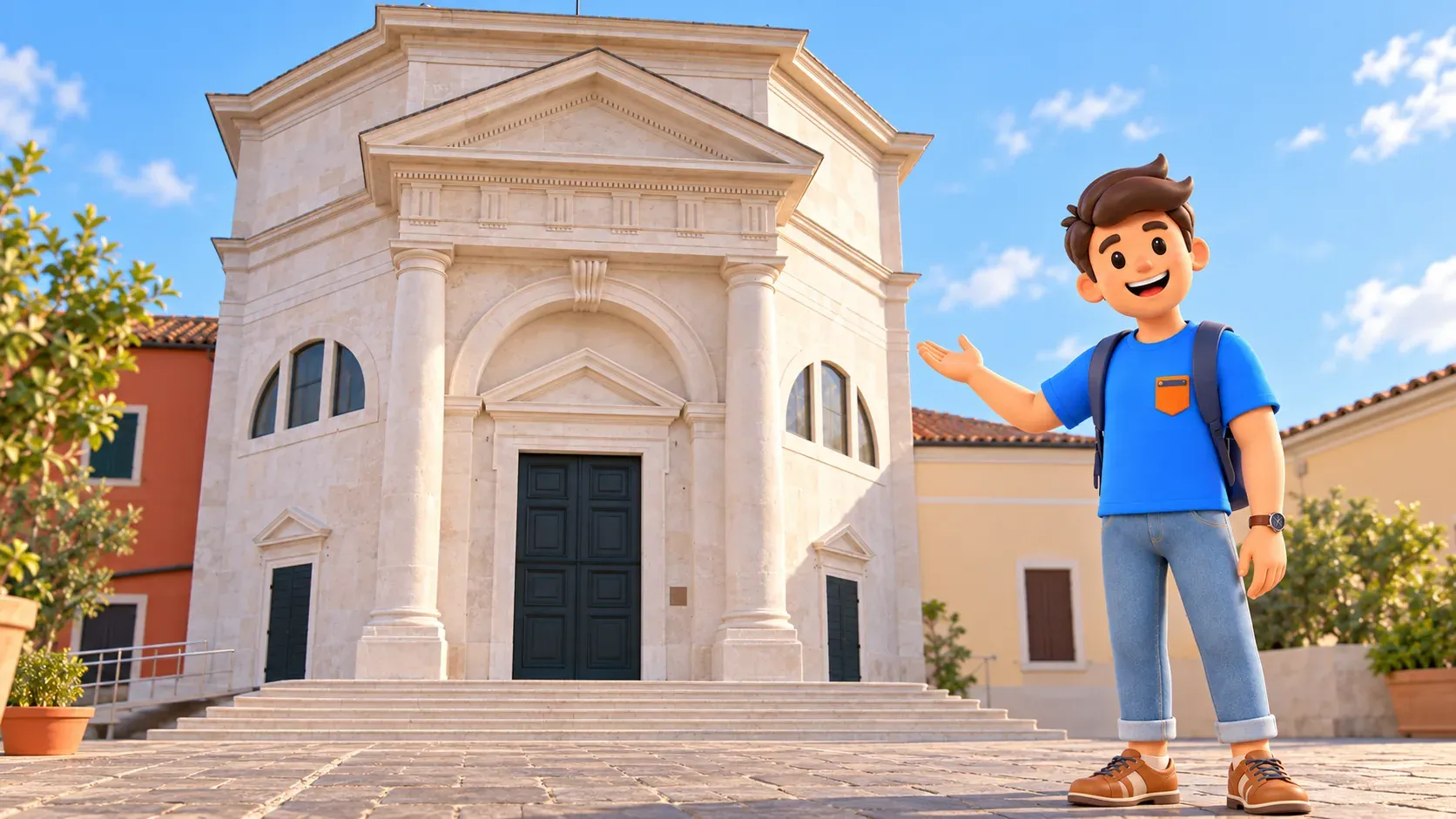
The Madonna dell’Apparizione sanctuary is connected with a local religious tradition about an apparition in 1716. Construction of the new church began in 1718. Understand this as a history of devotion, without expecting a miracle to witness or a festival taking place every day.
From the public square, notice the pale stone facing and the building’s form, based on an octagonal plan. The main programme remains outside. If access to one chosen church interior is confirmed, add twenty to thirty minutes. That allowance cannot automatically accommodate the interiors of all three churches.
Have lunch in Pellestrina village after the stop. Choose a venue beforehand and confirm opening, a table and suitable food. The island’s fishing traditions do not guarantee a particular catch or a meal without waiting. The hour is for proper food and rest, rather than another dash between places.
If your trip combines history, food and lagoon views, use RoadMe to prepare a personal day-by-day itinerary around your interests. The app makes it easier to balance these experiences throughout the holiday, with room for travel, meals and rest at your preferred pace.
Ognissanti and a short look at the Murazzi
Continue south to Ognissanti, without making every neighbouring church compulsory. Its history predates the present building, whose current scale relates to seventeenth-century enlargement. The white lagoon-facing façade has two tiers of pilasters and a triangular pediment. This is Pellestrina’s Ognissanti, rather than the church of the same name in Dorsoduro.
Next, allow a short stop at an accessible public section of the Murazzi near Cimitero. The eighteenth-century defences, built using Istrian stone, help explain the coastline. For this pause, viewing the structure from an ordinary available public approach is sufficient. Walking along the top or descending to the water is unnecessary.
Fifteen minutes does not mean walking all the way to Ca’ Roman. The approach to the nature reserve, a return and time exploring it require a different allowance. If nature is your main interest, replace part of the programme and check conditions with the reserve’s managers rather than adding it as a final incidental stop.

Choose photographic stopping places that keep the way clear. Working access to boats matters even when nobody seems to be using it at that moment. Enjoy coloured façades from the street without looking into living rooms or treating an open door as permission to enter.
Shorter versions and the return to Venice
Without the museum, the main route takes about five and a half hours. Keep the walk from San Pietro in Volta, Portosecco, the internal bus and the southern village. There is no need to visit a closed school building simply to photograph its exterior. You can arrange a later start around lunch and return services.
For a three-hour introduction, choose only the southern section, starting and finishing at Pellestrina Cimitero. Walk to Ognissanti, continue north to the sanctuary and return. Allow 10 minutes for arrival, 60 for all walking, 20 outside each church, 45 for food, 15 for rest and 10 flexible minutes. The museum, Portosecco and a separate Murazzi stop are excluded.
Back at Cimitero, check the northbound departure towards Lido. The whole return, including the bus along Pellestrina itself, the ferry, Lido and the boat to Venice, follows the walk. Avoid booking an evening meal in the centre immediately after its estimated finishing time.
Bring water, suitable shoes and sun protection, and shorten exposed sections in strong wind. Flat terrain does not guarantee a step-free route to every place. If the journey feels too long, compare our Lido route from San Nicolò to Malamocco and save Pellestrina for a day without firm evening commitments.


