
Passy in Two Hours: Balzac, Gardens and the Seine
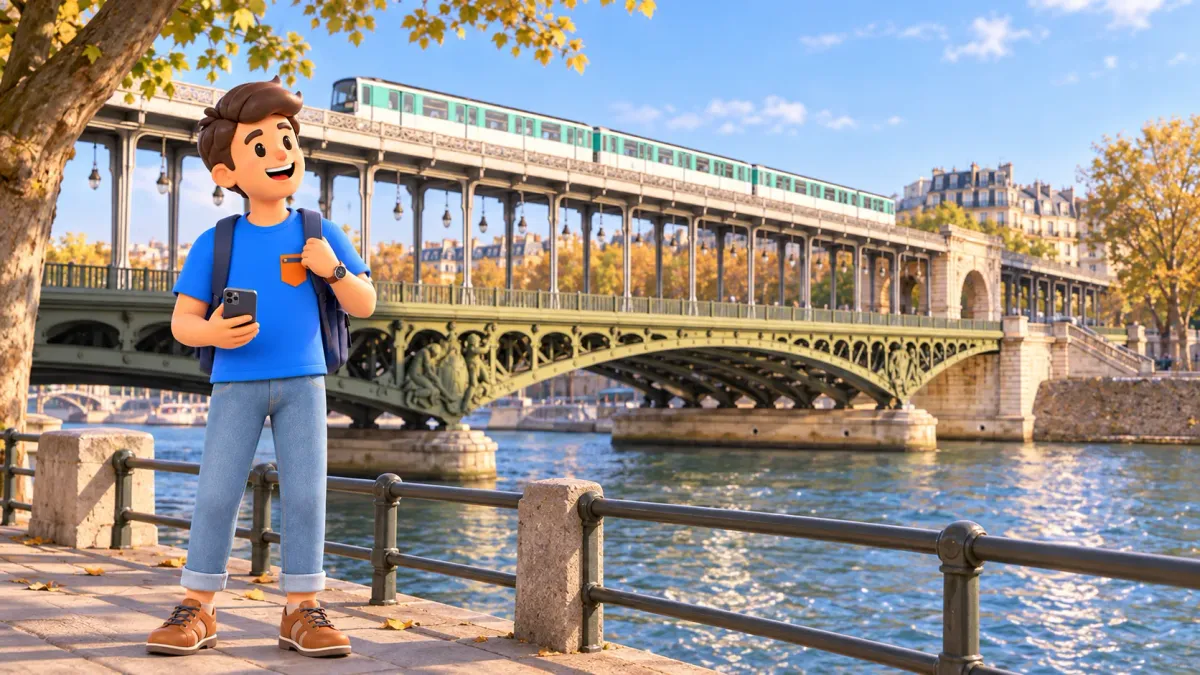
Passy shows Paris from the Right Bank of the Seine, opposite the neighbourhood around the Eiffel Tower. A small church, a writer’s house and a river perspective with a metal bridge make a compact walk. The famous landmark remains nearby, while the neighbourhood offers its own story: a former settlement absorbed into the city, with traces of earlier life still visible.
For two hours, choose Notre-Dame-de-Grâce de Passy, the Maison de Balzac with a short garden pause and the Right Bank approach to Pont de Bir-Hakeim. Museum rooms, a café stop and the wine museum can extend the day. The core route includes a staircase down Rue Beethoven. Façade work at Balzac’s house may cause noise until November 2026, while the museum continues to welcome visitors.
A route from the parish church to the Seine
Start at Notre-Dame-de-Grâce de Passy, using the parish address of 10 Rue de l’Annonciation. The old bell tower can be examined from Rue Jean Bologne. Follow Rue de l’Annonciation to Rue Raynouard and turn right, southwest, towards Balzac’s house. Its traditional address is number 47, but the visitor entrance is at number 49. This distinction makes finding the garden straightforward.
When the museum site is open, allow a short pause in its garden. Afterwards, return northeast along Rue Raynouard to Boulevard Delessert. Follow the boulevard towards Rue Beethoven, then descend its staircase to Avenue du Président Kennedy. Turn right and continue on the pavement towards Pont de Bir-Hakeim. You can finish at its Right Bank approach, looking at the bridge and the river.
Budget approximately 120 minutes: about 40 for walking and 80 for short stops, historical context, the garden and photographs. This is an estimate to increase for your pace. Admission checks, a complete collection visit or a long café order can extend the outing. Travel to the start and away from the finish also requires its own allowance rather than being included automatically.
To fit this walk into your Paris stay, try preparing your trip in RoadMe. The app develops a personal itinerary around your dates, interests, pace and budget, making it much easier to distribute literary places, views and rest across suitable days.
For Balzac’s garden, choose Tuesday to Sunday apart from the museum’s holiday closures. Arrive with time before the usual last admission at 5:30 pm. If garden access is unavailable, pause at the exterior address and continue the street walk. For the version with a literary break among greenery, however, arrange the day around the museum’s actual opening schedule.
The optional wine museum branch has a different character. It descends the stepped Rue des Eaux towards 5 Square Charles Dickens, then requires returning uphill to Rue Raynouard. Add it as a separate section with extra time. The main river approach described here runs through Boulevard Delessert and Rue Beethoven and does not depend on this detour or a museum visit.
What remains of the earlier village
Until its incorporation into Paris in 1860, Passy was a separate settlement outside the city boundary. Balzac’s house helps you picture the hillside where modest accommodation stood alongside larger properties. The contemporary district is far from an untouched village, but individual buildings and changes in level allow its past to remain visible within the present urban setting.
Compare three scales along this short route: the parish church, the writer’s low pavilion and the large transport bridge. Each serves a different purpose, from community gathering to one person’s daily work to movement across a river. These familiar functions make the architecture easier to read. A detail becomes more interesting when you understand why the place mattered.
Streets link the upper neighbourhood with the Seine. Their changing levels reveal something about the area’s shape: a view develops as your height and direction change. Choose footwear comfortable for walking and descending steps. If you need to avoid stairs, plan a separate route towards the river; the two-hour version described here should not be treated as step-free.
Notre-Dame-de-Grâce: two periods in one parish
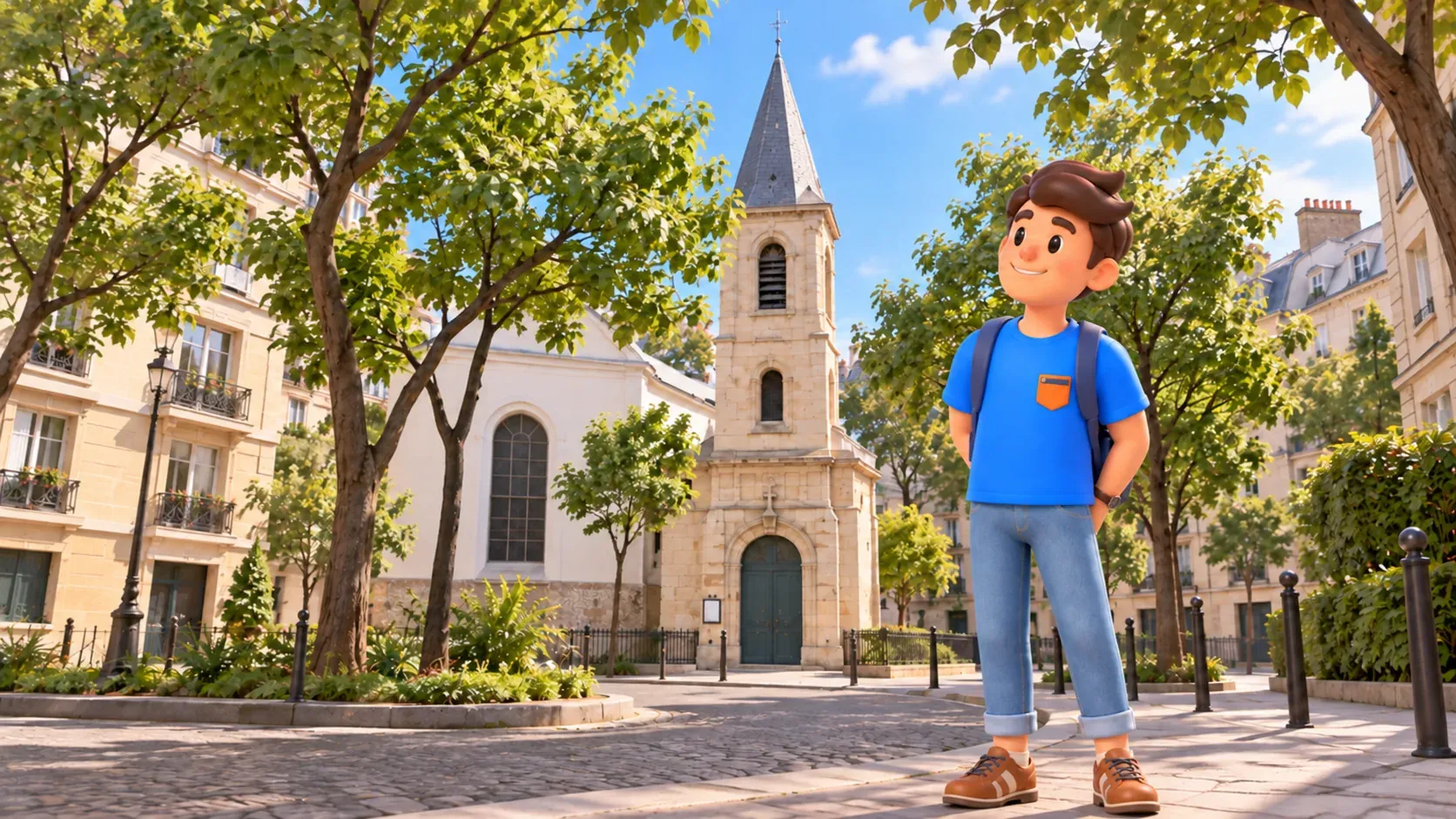
The old church belongs to the settlement that existed long before Passy joined Paris. Claude Chahu began building a chapel in 1667, with its completion associated with his widow, Christine de Heurles. The parish was established in 1672. These few dates explain why a relatively small building deserves attention among the surrounding residential blocks.
The older church grew during the nineteenth century, and a bell tower became a landmark at the entrance from Rue Jean Bologne. A growing congregation later needed more space. The adjoining new church, designed by Paul Hulot and François Alépée, was consecrated in 1959. Different architectural periods thus sit close together while belonging to the same parish community.
Notice how the low church fits into the neighbourhood and compare it with the residential façades. The entrance’s scale, the bell tower’s outline and the proximity of houses are more useful here than expecting a monumental square. This setting makes a clear beginning for a walk through a former settlement. Places of everyday gathering help you understand its urban history.
The old church normally opens from 8 am to 7 pm on weekdays and until 6 pm on Saturday and Sunday. For sightseeing, choose time outside worship and follow notices on site. If a service is taking place or entry is unavailable, the exterior is enough for this route. A fuller encounter with church art can become a separate visit if it interests you.
Balzac’s house: working rooms within a small pavilion
At the Maison de Balzac, the scale changes again: a low pavilion and garden sit among larger city buildings. The writer lived here from 1840 to 1847, occupying part of the house. He rented an apartment rather than owning the entire property. This detail explains the place’s significance: the museum connects with everyday life and work instead of presenting a grand literary palace.
In Passy, Balzac worked on The Human Comedy and its texts. In correspondence, he asked for letters to be addressed to Monsieur de Breugnol. For a first encounter, those details provide enough context: a large literary project developed within a small domestic setting, and the address carried a personal story. His complete biography belongs to separate reading or a museum tour.
Inside, the working process offers a useful subject: choosing words, revisiting writing and connecting different works. If you enter, begin with one exhibit and its explanation. This provides a concrete impression without requiring prior knowledge of every novel. A complete collection visit needs its own time beyond the brief garden pause included in the outdoor route.
Visitors enter through number 49 on Rue Raynouard, although the museum address is traditionally given as 47. Usual opening is Tuesday to Sunday, 10 am to 6 pm, with last admission at 5:30 pm. The museum closes on Mondays, 1 January, 1 May and 25 December. Its permanent collection and garden are free for individual visitors; temporary exhibitions may have separate paid arrangements.
The garden and permanent collection are accessible to visitors with reduced mobility, with staff available to help find an appropriate route. This concerns the museum site and does not establish the same conditions along the whole street walk. Check the approach if you have specific requirements. Façade work may cause noise until November 2026, so keep the duration of your rest flexible.
A garden view the writer never saw
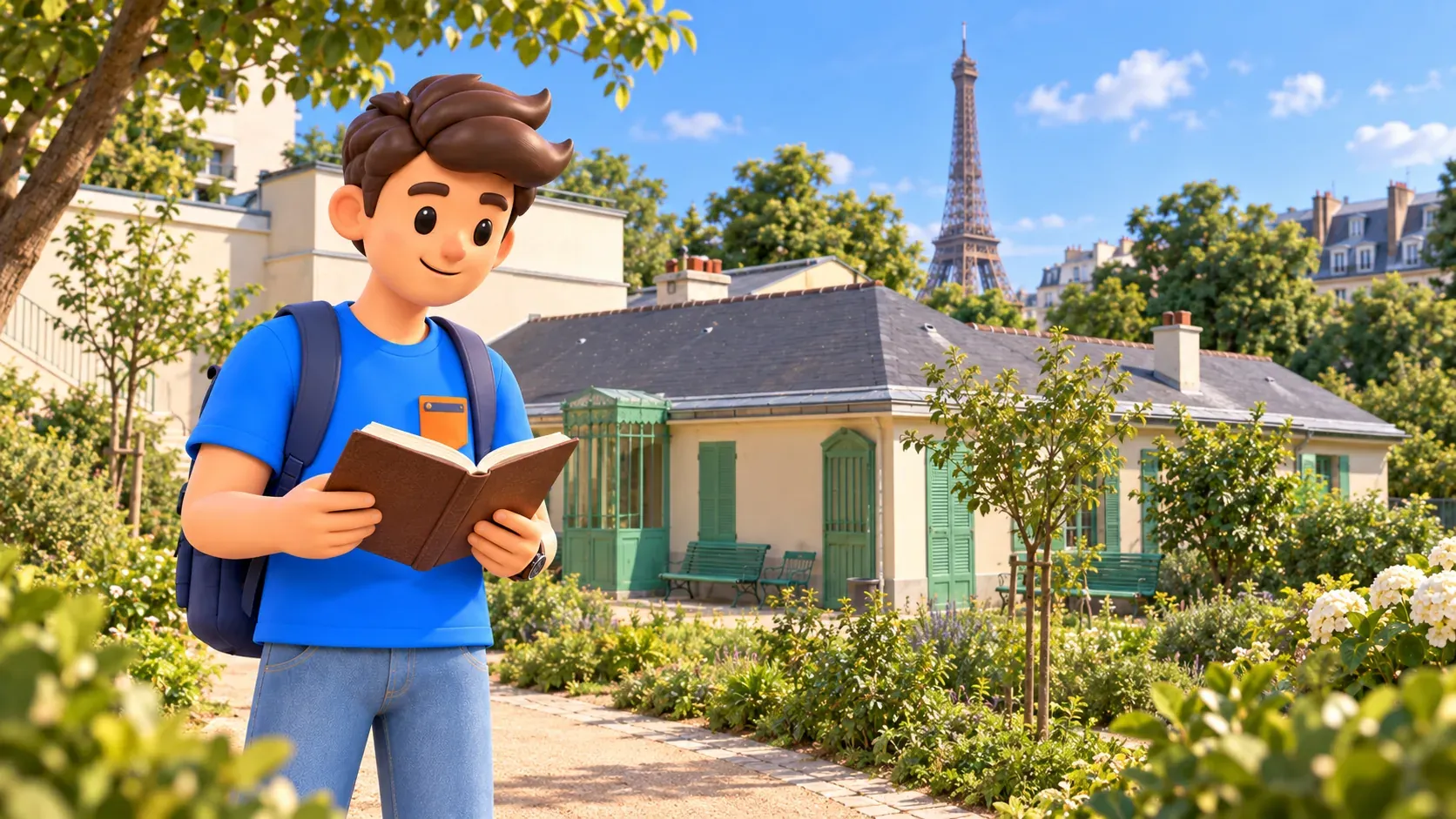
The Eiffel Tower is visible from the garden. Balzac lived here in the 1840s, while the tower was built for the Universal Exhibition of 1889. Today’s perspective therefore connects different periods rather than reproducing the writer’s view. This small fact makes the familiar silhouette interesting in another way: the city continued changing around a house preserved through literary memory.
The garden itself also differs from a precise reconstruction of Balzac’s planting. The museum states that its appearance in his time is unknown; contemporary greenery was created afresh. Look at it as a present-day space for a pause beside a historic pavilion. The house carries the literary association, while the garden gives visitors somewhere to stop and take in their surroundings.
You might read a few pages of a book brought along, or simply look at the low building and distant tower. Choose one quiet activity instead of many photographs in succession. A café at the museum site serves during its opening hours if you would like coffee or something to eat. Orders are paid separately, and an available table is not guaranteed.
The wine museum offers another direction
Le M., the Musée du Vin, adds a history of craft and wine storage to the literary theme. It is associated with old vaulted cellars and the former stores of Passy’s Minimes convent. Wine-related objects are interesting as evidence of work and everyday practices. Understanding that subject is enough to decide whether to visit, without needing a complete catalogue of tools during the walk.
The address is 5 Square Charles Dickens, in a branch off Rue des Eaux. From Rue Raynouard, the approach descends steps; return by the same way uphill after the extra stop, then resume the core route. Allow for both directions. Choose this option because wine history interests you and you have time, rather than assuming that every nearby museum must be included.
An ordinary museum visit is paid. Normal opening is Tuesday to Saturday, 10 am to 6 pm, with closure on Sunday and Monday. Admission is possible with or without advance booking. Tasting classes require a separate reservation and differ from ordinary collection viewing. The restaurant and other events have their own arrangements and add further time to the day.
If literature, food history and photography interest you in different proportions, try RoadMe. Its personal trip plan makes it much easier to give favourite subjects more time and distribute these visits across your days, taking your pace and budget into account.
Bir-Hakeim: Paris moves above the river
From Boulevard Delessert, descend the Rue Beethoven staircase to Avenue du Président Kennedy. Continue right towards Bir-Hakeim, keeping to the pedestrian pavement. The street route finishes at the bridge’s Right Bank approach. If you choose a viewpoint nearer the water, use marked crossings; the walk does not require crossing the Seine or reaching the opposite bank.
Bir-Hakeim works on two levels: the Métro runs above, with city traffic routes and pedestrian space below. Metal spans and repeated supports reveal an engineering side of Paris. After Balzac’s small pavilion, the change of scale becomes especially clear. Watch a passing train and notice the rhythm of vertical elements without making the stop depend on one supposedly perfect photographic angle.
The present bridge took shape in the early twentieth century, replacing an earlier Passy crossing. It received its current name in 1949, commemorating the battle of Bir Hakeim in 1942. Its recognisable architecture has appeared in films, including Inception in 2010. These short historical connections and your own impression of the structure are enough for a first encounter.
The river perspective finishes the walk by connecting Passy’s slope, the bridge and the tower across the Seine. Photographs need no rush: choose an appropriate spot in a permitted pedestrian area and leave room for others. To continue closer to the tower, use our Trocadéro, Seine and Champ-de-Mars walk. Add its duration separately to today’s plan rather than treating it as part of these two hours.


