
Paris World’s Fairs: Buildings That Stayed and a Short Historical Walk
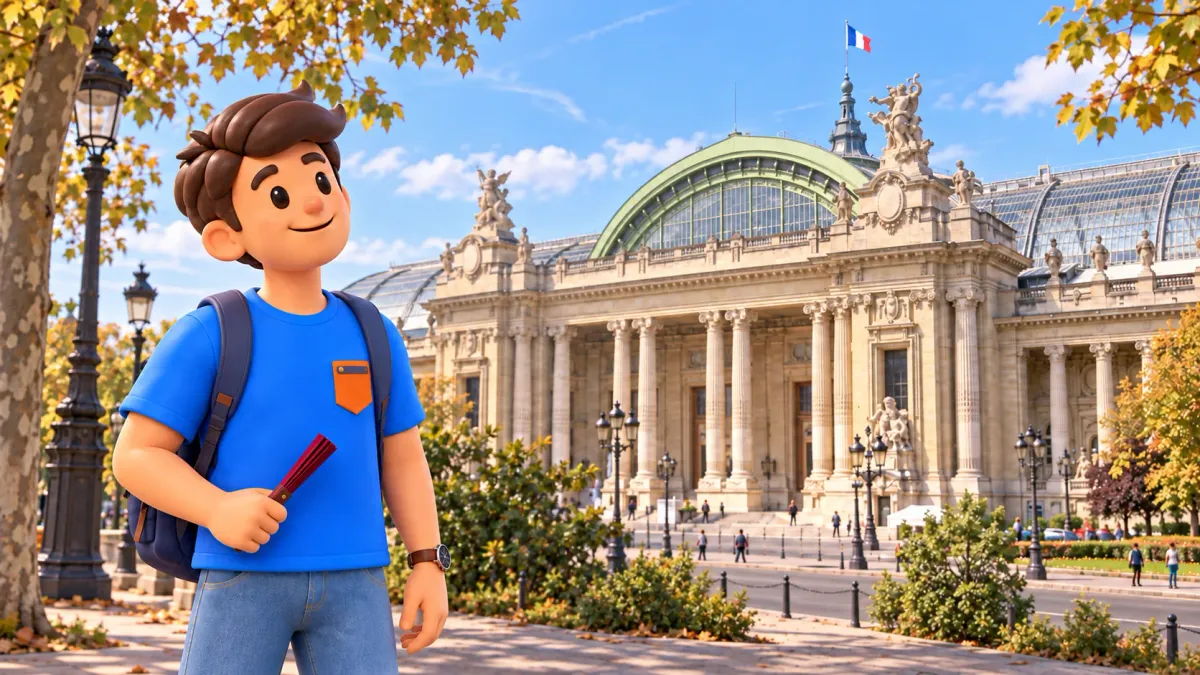
Paris’s world fairs survive in more than its most recognisable tower. An iron structure found a scientific use, exhibition palaces continued as cultural buildings, and a rebuilt palace opened a broad view across the city. Looking at those different outcomes makes familiar landmarks more interesting: their present shape tells you something about what happened after the crowds left.
For a manageable outing, choose the ensemble created for 1900: Pont Alexandre III, the Petit Palais and the Grand Palais. The outdoor walk below takes about two hours, including a station approach, observation and a break. The Eiffel Tower of 1889 and the Palais de Chaillot of 1937 are separate historical examples here; travelling to them or entering museums needs additional time.
Three dates, and different kinds of survival
A fair could leave a useful structure, a permanent cultural venue or a changed piece of city planning. The Eiffel Tower acquired scientific and wireless-telegraphy functions. The Petit Palais became a municipal museum, while the Grand Palais retained an exhibition role. At Chaillot, architects kept parts of an earlier palace, enlarged its wings and replaced the central rotunda with an open forecourt.
Not every exhibition building was a temporary pavilion, and survival does not mean everything stayed unchanged. Ask what remained useful after the event: the building itself, a new activity inside it, or a connection between different parts of Paris. On our main walk, the line between the river and the palaces makes that last idea easy to understand.
Try RoadMe for a personal plan covering your whole trip, shaped around your dates, interests, pace and budget. The app works out your days, making it more convenient and effective to combine historical walks, favourite activities and proper breaks.
Explore through a few observations: notice the visible construction, the façade and the building’s use today. Remembering an arch, a roof or a gap between wings can be more useful than memorising every date and decorative figure.
A two-hour walk through the 1900 ensemble
Start above ground at Invalides Métro station, served by lines 8 and 13. Head north on Rue Robert-Esnault-Pelterie to Quai d’Orsay, turn a short distance west, then use the marked crossing towards the bridge’s southern approach. Take Pont Alexandre III’s eastern upper pavement. Métro and RER entrances are distinct references; do not assume every station sign brings you out at the same place.
Cross to the Right Bank while looking at the bridge. At the northern end, use the marked crossings over Cours la Reine and continue north along the public pavement of Avenue Winston-Churchill. The Petit Palais façade is on the east side, with the Grand Palais across the avenue to the west. Change sides at a pedestrian crossing, then finish farther north at Champs-Élysées–Clemenceau, on Métro lines 1 and 13.
Approach and bridge: 35 minutes. Allow 15 for the entire surface approach from Invalides to the southern bridge entrance. The next 20 include the complete bridge crossing and selected stops to look at decoration. Crossing movement is already counted, so do not add a second walking allowance for the same bridge.
The palaces: 55 minutes. Allow 10 for reaching the Petit Palais from the northern bridge end, 20 for its exterior, five for the crossing and approach to the Grand Palais, and 20 for its frontage and visible roof. This is a street-level architectural visit, without a museum collection or exhibition hidden inside the timetable.
Rest and finish: 30 minutes. Spend about 15 sitting if a public seat is available. Another 15 cover all connections to your chosen resting position and the station finish. A café can be an alternative when seats are unavailable, but refreshments cost extra and ordering may extend the outing.
A 1pm start therefore suggests a 3pm finish. These are editorial planning estimates, not a measured walk or a promise about traffic, weather or your pace. Travel from your accommodation, a proper serviced lunch and onward transport are additional. The route stays on upper pavements and public streets; it does not need lower riverbanks, museum passageways or shortcuts through closed gardens.
Pont Alexandre III: an exhibition creates a city connection
Opened for the 1900 World’s Fair, the bridge joins the direction of the Champs-Élysées and exhibition palaces with the Invalides esplanade. Look along it first, then back towards the palaces. The ornament belongs to one crossing, while the perspective belongs to a larger composition spanning both banks. Our short outing follows only part of that wider arrangement.
Engineers Jean Résal and Amédée Alby created a metal bridge with a single low arch. You do not need its measurements to appreciate the combination of an open profile and rich decoration. Black lamps repeat beside the parapet; tall stone pylons lift gilded sculpture above the river. The structure solves a crossing problem while also giving the city a ceremonial image.
Choose one lamp or sculptural detail, then look along the whole direction again. For photographs, remain on the permitted pavement and keep pedestrian movement clear. The central roadway is not a viewpoint; descending towards the water is unnecessary.
The bridge historically symbolised a rapprochement between France and Russia. That explains its name and part of its ceremonial purpose without requiring a full diplomatic account. For a separate walk continuing towards the dome on the other bank, use our Pont Alexandre III and Les Invalides itinerary. Its sequence and time budget differ from this small historical outing.
The Petit and Grand Palais: two scales beside one avenue
Charles Girault designed the Petit Palais for the 1900 fair. In 1902 it became the City of Paris fine arts museum. Its continuing life explains how a major exhibition commission can outlast the event: the impressive building remains, while a municipal collection gives it an enduring purpose. You can understand that change before deciding whether its art deserves a separate visit.
Notice the central arch, entrance steps and rhythm of columns, then stand back in permitted public space to include the neighbouring parts of the frontage. “Petit” describes its relationship with the Grand Palais, rather than suggesting a modest building. Start with the overall composition before trying to read every sculpture. A close view of one element works best after you have seen the larger arrangement.
The Grand Palais was also created for 1900, with construction running from 1897 to 1900. Henri Deglane, Albert Louvet, Albert Thomas and Charles Girault worked on the project. Stone, steel and glass meet here: a monumental façade gives the street a formal image, while the glazed roof suggests the scale of the exhibition space beyond. The Eiffel Tower uses iron; treating all these structures as the same material misses a useful distinction.
Compare how each building announces its entrance. The Petit Palais draws attention to its arch and steps; the Grand Palais also sends your eye towards the glass structure. Then take the planned pause so the details have time to settle.
1889: the Eiffel Tower finds a purpose beyond the fair
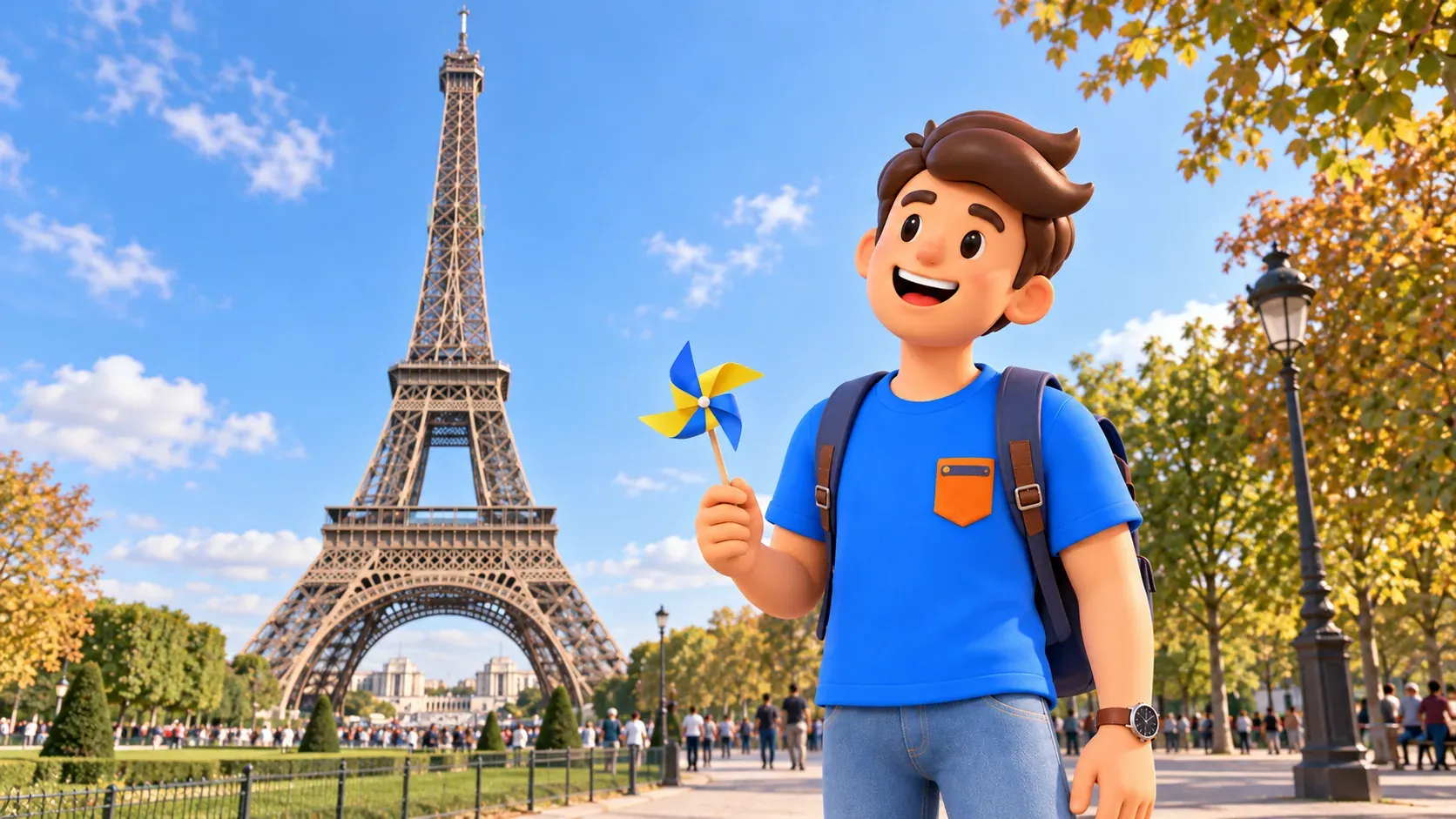
The Eiffel Tower was built for the 1889 World’s Fair, marking the centenary of the French Revolution. Engineers Maurice Koechlin and Émile Nouguier developed the idea of a tall iron structure; architect Stephen Sauvestre refined its appearance, while Gustave Eiffel led the enterprise. Those different roles give a more accurate picture than attributing every part of the design to one person.
The exposed lattice and narrowing outline make the construction visible. Follow how smaller iron pieces form large supports and a familiar silhouette. The tower continued to develop after its first exhibition; old photographs need not match every piece of present-day equipment.
Eiffel’s original concession lasted twenty years. Scientific experiments and wireless telegraphy helped establish a use that supported the tower’s continuing existence. Its survival therefore involved a practical function added to a spectacular exhibition idea. That provides an interesting question for a later visit: what turns an event’s technical achievement into something the city still needs?
The tower is not an extra nearby stop inside our two hours. For changing exterior views, choose the separate Trocadéro to Champ de Mars walk. Going up requires its own ticket, checks and time; decide on an ascent because you want that experience, rather than because a historical list seems incomplete without it.
1937: Chaillot keeps parts of the past and opens the view
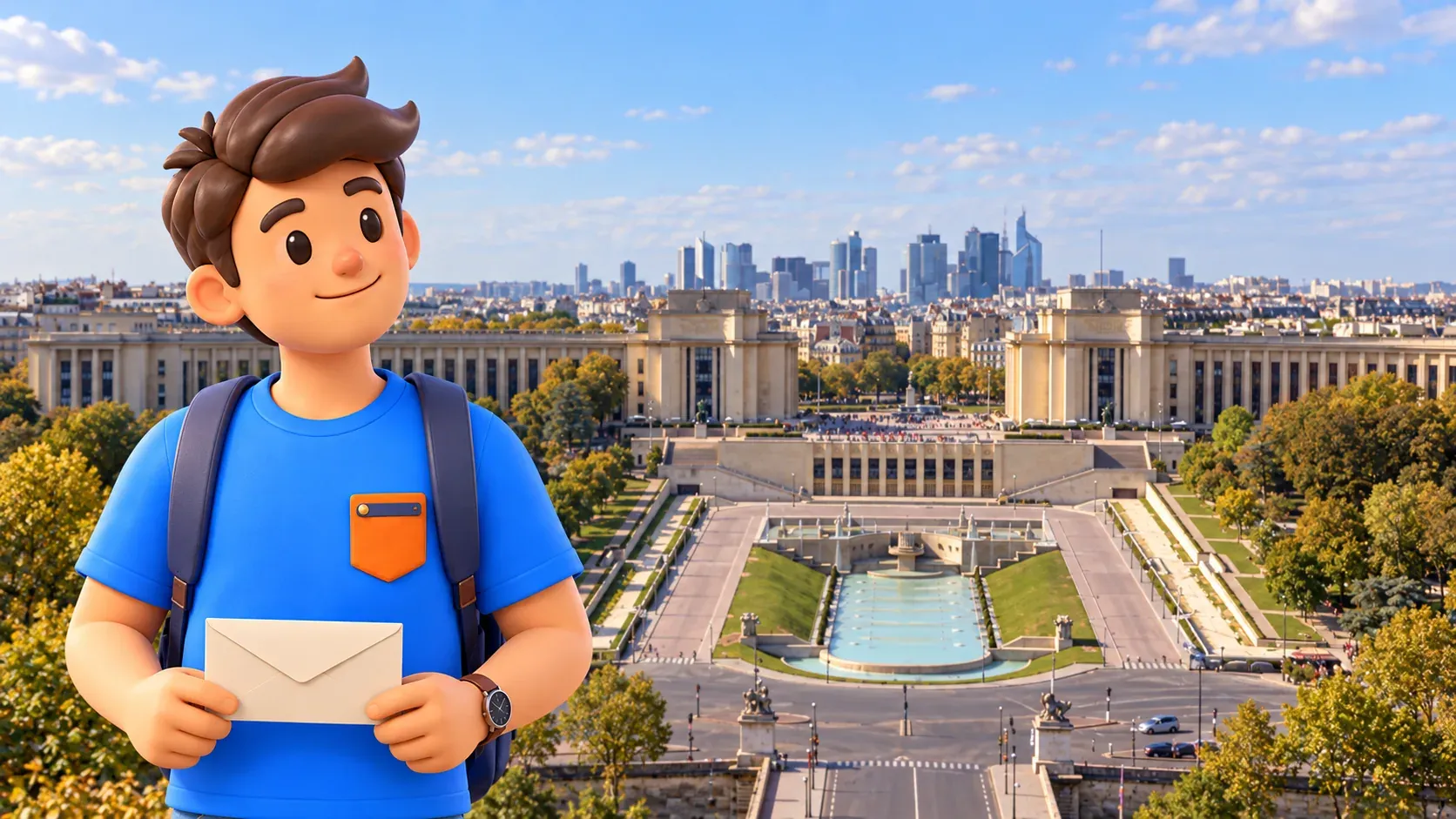
The earlier Palais du Trocadéro was built for the 1878 exhibition by the architects Davioud and Bourdais. For the 1937 International Exhibition of Arts and Techniques in Modern Life, Léon Azéma, Jacques Carlu and Louis-Hippolyte Boileau transformed the ensemble. They retained part of the old palace, enlarged the wings on the Seine side and replaced the central rotunda with an open forecourt.
This was neither the disappearance of every part of the earlier building nor its preservation without change. The broad opening between the wings frames the axis towards the Eiffel Tower and École Militaire. From the public parvis, the view becomes part of an architectural decision: space left empty matters as much as the surrounding stone. The missing central mass helps explain the new composition.
Today the wings contain different institutions, including the Musée de l’Homme, Musée national de la Marine and Cité de l’architecture et du patrimoine, while a theatre lies below the central forecourt. Seeing the ensemble outside does not give free admission to all those rooms. A chosen museum needs its own access conditions and time. Check fountains, open garden sections and permitted paths on arrival.
Choose an interior separately if it interests you
The Petit Palais permanent collections are free without an advance reservation, and its garden is free during museum opening hours. As checked on 14 October 2026, the normal schedule is Tuesday to Sunday, 10am–6pm, with last permanent-collection admission at 5.15pm. Mondays are closed; holiday exceptions include 11 November. Check the calendar for the date you intend to visit.
For a selected portion of the collection, add a separate 90-minute block: 15 for entry, checks and possible waiting, 60 for looking with internal movements, and 15 for leaving. The overall example then becomes about three and a half hours. Temporary exhibitions have their own conditions; Friday and Saturday evening opening until 8pm does not include the permanent collection. Garden access follows the current museum timetable too.
At the Grand Palais, choose a specific programme first. The current main entrance is Square Jean Perrin, at 17 Avenue du Général Eisenhower; particular events may use another entrance. Some spaces are freely accessible, but this is not a promise of free access to the whole building or the entire Nef in October. The owner strongly recommends online exhibition reservations, including concession categories; unreserved admission depends on availability.
Use RoadMe to arrange architecture, your chosen museums and breaks across the whole trip. Its personal programme works around your dates, interests, pace and budget, making the journey more convenient to follow and your time easier to use effectively.
In rain, shorten outdoor stops or plan one open museum separately, retaining realistic time for entry. If a section is restricted, follow signs and permitted public passages, or finish sooner at an appropriate station. This has not been verified as a completely step-free route. Its main pleasure is understanding how an exhibition idea became part of everyday Paris through a manageable walk.


