
Paris Money and Trade: Choose the Mint, Bourse or Citéco
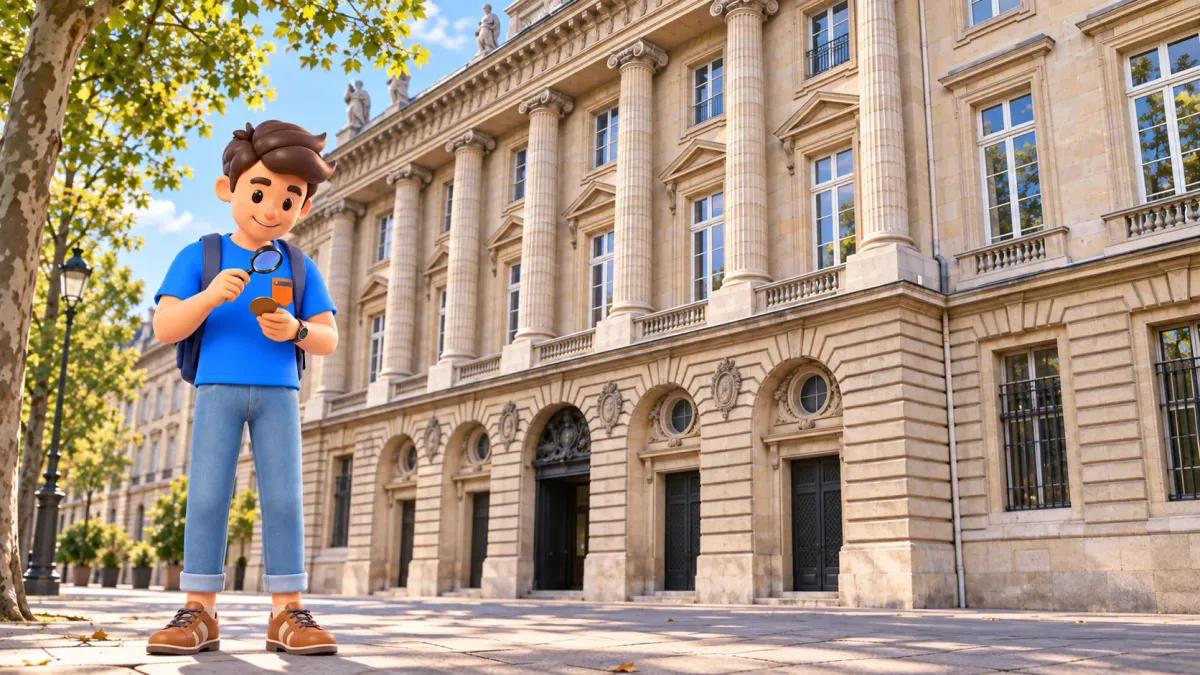
Paris tells the story of money through buildings as much as through coins. A palace beside the Seine still houses metalworking skills; a columned former stock exchange gives financial history a monumental setting; a banker's elaborate mansion now explains how economies work. Each offers a different starting point for a manageable outing.
Choose Monnaie de Paris for craft and physical objects, Palais Brongniart for an outdoor architectural walk, or Citéco for an interactive museum followed by greenery. These are three separate local programmes. Picking one gives you time to notice a detail, think about it and enjoy the neighbourhood around it.
Choose the part of the story that interests you
Try RoadMe to build a complete personal Paris trip plan around your interests, dates, pace and budget. Keeping that whole plan in the app makes connecting a themed visit, nearby walking and proper breaks much more convenient and efficient.
The Mint suits visitors curious about how objects are made: metal, tools, engraving and the relationship between skilled work and official authority. The Bourse option is useful when you have a shorter gap and would rather look at buildings than enter a museum. Citéco works well when you want economic ideas explained through varied displays within a remarkable historical building.
The timings below run from arrival at your chosen starting point to a local finish. Travel from your accommodation and onward journeys are additional. Museum time is a planning allowance, not an official minimum or a promise to cover every collection.
| Choose one programme | Suggested sequence | Total |
|---|---|---|
| Monnaie de Paris and the Seine | 15 min façade + 15 entry buffer + 120 selected museum visit + 30 upper-quay walk + 20 pause + 10 local finish | 210 min: 3 hours 30 minutes |
| Palais Brongniart and Galerie Vivienne | 20 min exterior + 15 street connection + 20 gallery if open + 25 pause + 10 local finish | 90 min: 1 hour 30 minutes |
| Citéco and Parc Monceau | 10 min façade + 15 entry buffer + 120 permanent exhibition + 10 park connection + 40 available paths and pause + 15 public-street finish | 210 min: 3 hours 30 minutes |
The two museums close on Mondays. That day can still suit the public-square and passage programme, subject to the gallery's actual access. On a museum day, select the ticket and date before arranging the rest of the outing.
Monnaie de Paris: look at the palace, then the work
Begin at 11 Quai de Conti, facing the Mint's setting beside the river. Spend fifteen minutes looking at the stone façade from public space: compare its substantial lower level with the columns, repeated windows and sculptural roofline above. The building presents manufacture with the dignity of a palace, suggesting that making money was a matter of state as well as technique.
The institution traces its origins to the royal mint established in 864. The present palace belongs to a much later chapter: architect Jacques-Denis Antoine began its foundations in late 1769, and coin production was officially installed here on 20 December 1775. Behind the ceremonial architecture, courtyards and workshops were organised around a rational production process.
That distinction helps you read the visit. You are encountering a long-lived institution in an eighteenth-century building, rather than a palace that has stood unchanged since the ninth century. Paris retains artistic production; the manufacture of circulating coins moved to Pessac, near Bordeaux, in 1973.
The current access notice reports scaffolding at both museum entrances, 11 Quai de Conti and 2 Rue Guénégaud, while confirming that they remain open during normal hours. Follow the actual visitor signs. The shop entrance at 2 bis Rue Guénégaud is separate; walking into the shop is not the same as beginning the museum route.
Give the museum one clear thread
Allow two hours for a selected visit. Follow the transformation of metal into a finished object, or concentrate on engraving and the tools that make repeated images possible. A small coin can carry a portrait, symbol or claim to authority; noticing how the surface was produced adds another layer to what you see.
The museum combines objects, explanations and views into selected manufacturing workshops. It does not mean unrestricted entry into an active factory. Demonstrations and foundry casting have their own programmes: if seeing one matters, confirm its actual session and fit it into your visit. Otherwise, the objects and processes provide a worthwhile focus without a live production promise.
Ordinary museum hours are Tuesday–Sunday, 11am–6pm, with Wednesday evening opening until 9pm. Last admission is 5.30pm, or 8.30pm on Wednesday. It also closes on 1 January, 1 May and 25 December; on 24 and 31 December it closes at 4pm, with last entry at 3.30pm.
Choose the correct product: ordinary museum entry, a guided visit and an activity follow different conditions. Museum tickets are for a single entry on the selected date and time. First-Sunday free museum admission has a stated exception for the Fragonard exhibition, so do not treat it as free access to every show or activity.
A short walk along the upper quays
After the museum, walk west along the upper Quai de Conti towards the southern approach to Pont des Arts. Then turn east along the upper quays towards the southern approach to Pont Neuf. This inspected map sequence is roughly 600 metres; thirty minutes leaves room to stop and observe the river.
Remain on the public street-level route. A descent to lower riverside spaces or a bridge crossing would change the plan. Use the twenty-minute pause where permitted, then leave ten minutes to finish locally and orient yourself for the next journey. A meal or extended exhibition needs additional time.
Palais Brongniart: a short walk about exchange and commerce
For the shorter programme, start on public Place de la Bourse. The rows of columns and strong horizontal roofline give Palais Brongniart a different presence from the Mint. Move around a permitted part of the square and compare a corner view with the front: the repeated columns make the building feel ordered and substantial even without an interior visit.
Napoleon laid the first stone in 1808; the building opened in 1826. It housed stock-exchange activity until the exchange's closure here in 1998. Today it is a congress and events venue. The historical financial purpose explains the architecture, but this walk does not include watching present-day trading or an ordinary tourist tour inside.
Twenty minutes outside is enough for a useful observation: how does the building separate its monumental form from the everyday movement around the square? Notice the rhythm of the columns, the scale of the openings and the boundary between public pavement and venue premises. Stay outside restricted areas and event access points.
Continue along Rue Vivienne to the passage entrance at 6 Rue Vivienne. The mapped street connection is about 250 metres; fifteen minutes allows for orientation and crossings. Galerie Vivienne also has entrances at 4 Rue des Petits-Champs and 5–7 Rue de la Banque.
Built in 1823 and inaugurated in 1826, the gallery shifts the theme from institutional finance to a carefully designed setting for commerce. Spend twenty minutes looking at its glass roof, decorative rhythm and coloured floor mosaics. Compare the light overhead with the details underfoot: the passage invites a slower kind of attention than the open square.
The owner's ordinary access is free, daily from 8.30am to 8pm. Individual shops and restaurants have their own hours and arrangements. You can enjoy the passage without buying anything; if access changes for your visit, keep the alternative to nearby public streets rather than seeking a closed entrance.
The twenty-five-minute pause and ten-minute finish make this a complete ninety-minute outing. For a different day exploring larger commercial buildings, our historic Paris department-store architecture walks offer separate district programmes. They need their own time, rather than being appended automatically here.
Citéco: economic ideas inside Hôtel Gaillard
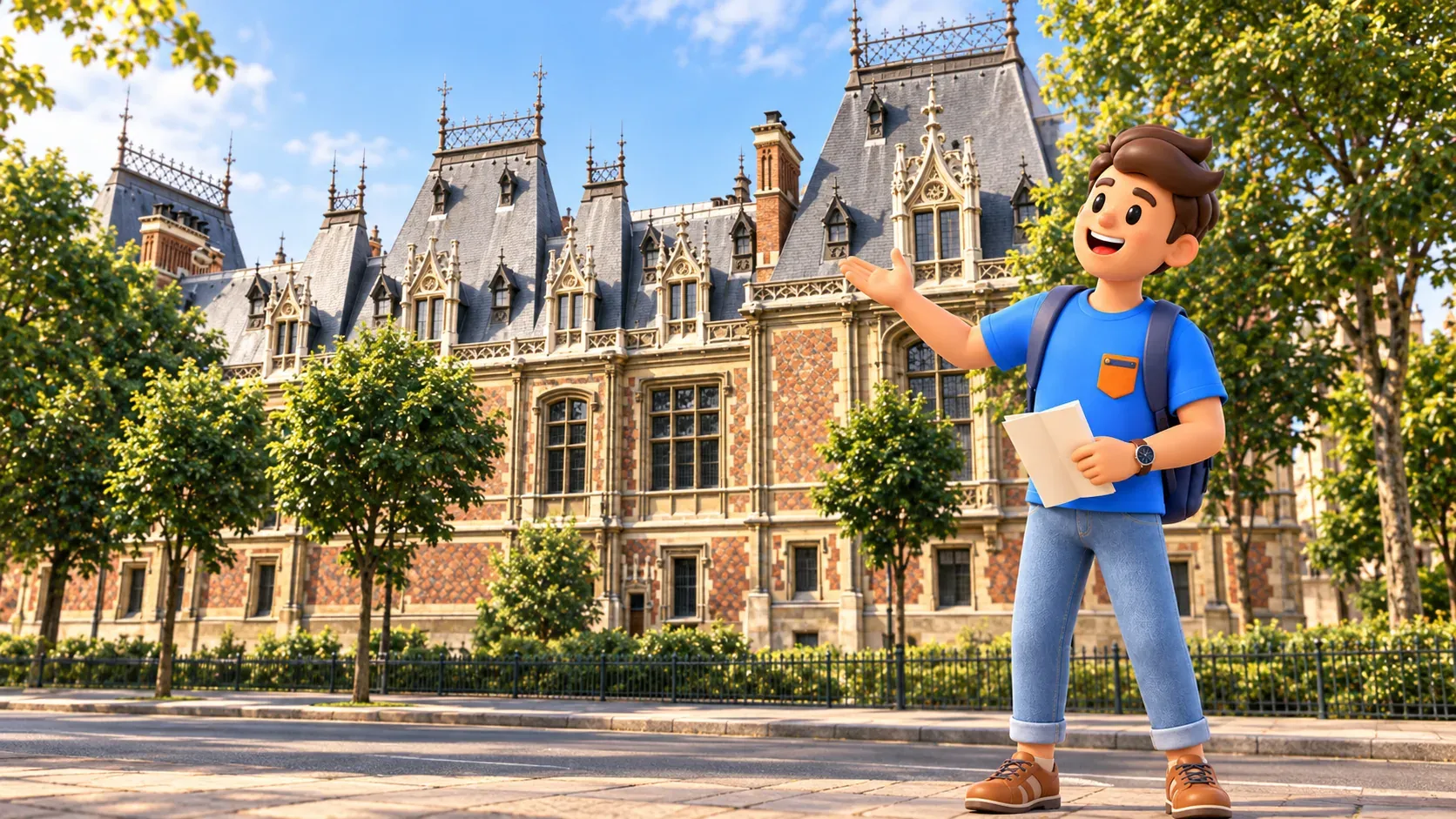
Begin at the actual visitor address, 1 Place du Général Catroux. Give the façade ten minutes before your entry buffer. Patterned brick, pale stone, steep roofs and ornate dormers announce a very different architectural ambition from the two classical buildings.
Banker Émile Gaillard's mansion was completed in 1882, with architect Victor-Jules Février drawing inspiration from Loire Valley châteaux. The Banque de France acquired it in 1919 and adapted it into a branch, opened in 1923. Citéco now brings economic explanation into that former private and banking setting.
Allow two hours for the permanent exhibition, choosing a few ideas rather than racing through every display. Its themes include exchange, markets, economic instability and regulation. Follow one question—what makes an exchange possible, or how do different economic actors affect one another—and compare several ways the museum explains it.
The setting adds a second strand: how did a collector's mansion become a bank, then a museum? Observe permitted architectural details along your actual visitor route. Historical descriptions of unusual bank security features are not a guarantee that every feature is accessible or operating in the same form today.
Ordinary hours are Tuesday–Sunday, 2pm–6pm, and Saturday until 7pm. During the shorter school holidays in zone C, opening starts at 10am; summer follows ordinary hours. Last admission is one hour before closing, and rooms are cleared fifteen minutes before it. A late arrival therefore leaves substantially less exhibition time than the headline closing hour suggests.
Citéco closes on 1 January, 1 May and 25 December, and closes at 4pm on 24 and 31 December. Select the permanent-exhibition ticket for this programme. Temporary exhibitions, guided visits, mixed-reality visits and events are distinct products; read what your chosen ticket actually includes.
A green continuation, or a separately planned evening
Walk via Rue Georges Berger towards Boulevard de Courcelles and the northern park gate. The mapped connection is around 270 metres; the ten-minute allocation includes orientation and crossing. Keep forty minutes for available paths and a pause, then fifteen minutes to leave through a public gate and finish on the street.
At the 14 October 2026 check, Parc Monceau's current calendar gives daily opening from 7am to 8pm. Use daylight for the garden portion. The secured naumachie area and sandbox are inaccessible, so choose other open paths and do not make a close approach to that colonnade essential to the outing.
If you prefer an evening visit, plan it separately around the dated programme. The announced 5 November 2026 nocturne runs 6pm–10pm, with last admission at 9pm and free permanent-exhibition access within capacity; reservation is recommended. The conference and show require separate reservations. That offer does not make every activity free or establish an 11pm closing time.
Make the outing fit the rest of your trip
RoadMe can develop a complete personal day-by-day trip plan around the craft, history and other interests you enjoy, taking your dates, pace and budget into account. Use the app to make that overall plan easier to organise and more convenient to follow.
Travel light for either museum. Citéco's published baggage instructions conflict, so confirm directly before travelling with luggage; this plan does not depend on being able to leave a suitcase there. Likewise, a dated ticket does not remove entry checks or guarantee an empty room.
Before leaving, check your museum slot, any separate activity and the conditions of the local continuation. One well-chosen place can connect money to skilled hands, monumental architecture or everyday economic choices—and still leave room for a comfortable walk afterwards.


