
Paris Libraries as Architectural Sights: Choose One Visit
Paris libraries can be architectural sights even when you have no research to do. Their buildings offer very different experiences: the book-lined curve of Richelieu’s Oval Room, François-Mitterrand’s monumental glass towers, Sainte-Geneviève’s stone façade and iron-supported reading room, or Forney’s home in a former archbishop’s residence. The useful question is which architecture you want to see and what kind of access that requires.
Choose one library and give it a local outing. These four places occupy different neighbourhoods, and their public spaces, reading rooms and visitor arrangements do not follow a single rule. A beautiful photograph of a library interior is a reason to investigate its visiting conditions before setting out.
Choose the architectural experience first
Richelieu is the straightforward choice for a freely accessible monumental reading room. François-Mitterrand suits an interest in contemporary scale and the relationship between building, platform and landscape. Sainte-Geneviève rewards advance planning if its celebrated interior is your priority. Forney offers a distinctive street façade that you can appreciate independently of library admission.
Try RoadMe to build a complete personal plan for your trip around your interests, dates, pace and budget, giving the library you choose its place in your Paris days. Preparing the whole trip in the app makes organising visits, travel and rest more convenient and efficient.
Think in three categories: public street architecture, freely accessible visitor space, and rooms governed by reading or booking conditions. They can coexist in the same building. Getting through one entrance does not grant access to every staircase, gallery or reading desk. At working libraries, quiet observation and keeping circulation clear are part of the visit.
Richelieu: a grand room within a layered palace
Start at the public entrance at 5 rue Vivienne. Richelieu grew around Cardinal Mazarin’s former palace, where the royal library established itself in 1721–1722. Its reopening in September 2022 followed a long renovation. The result combines several architectural periods; it makes more sense as an evolving complex than as the work of a single designer.
In the Oval Room, follow the curve of the shelves towards the great skylight. Circular glazed openings, mosaics and slender paired columns organise the upper walls. The repeated forms give the room a rhythm you can appreciate from the permitted public level. Look at one detail, then let your eyes travel around the whole oval.
Jean-Louis Pascal began the room in 1897; Alfred Recoura completed it in 1932, before its inauguration in 1936. The contemporary metal spiral staircase in the Vivienne Hall is Bruno Gaudin’s creation. Distinguishing these contributions helps you read the building’s layers. The Oval Room is also a different space from the research rooms associated with Labrouste.
The Oval Room is free and open to everyone. Research access and the normally paid museum have separate conditions. For this architectural visit, follow the public signs and remain in the authorised areas; the upper shelves do not make every gallery a visitor route. A pause with an arts or heritage book can still give the room its intended purpose.
Ordinary Oval Room hours are Tuesday 10:00–20:00 and Wednesday–Sunday 10:00–18:00, with Monday closure. Check dated notices: it closes at 17:30 on 16 October 2026, while the entire Richelieu site closes at 17:00 on 20 October 2026. Allow the interior part of your outing to finish before the applicable closing time.
François-Mitterrand: books made into a skyline
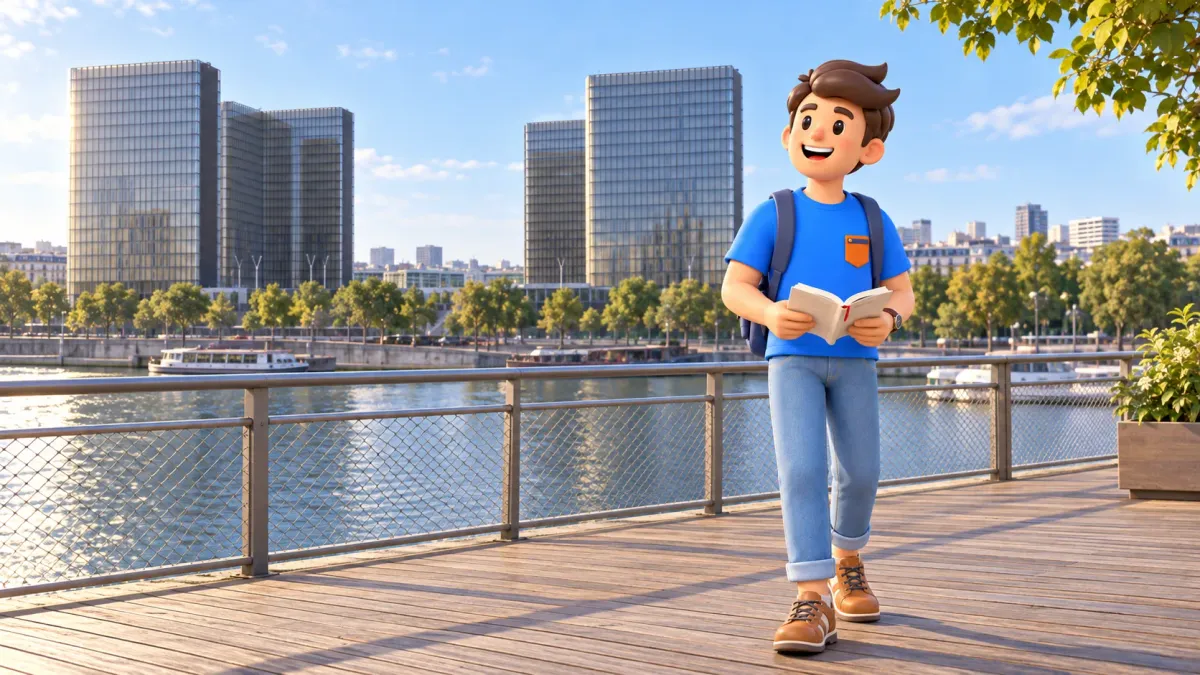
Dominique Perrault’s François-Mitterrand site opened to the public in 1996. Four angular glass towers symbolise open books at the corners of a broad platform. From the river side, the book-like outlines provide a strong first impression. Up on the wooden esplanade, the experience shifts towards the relationship between the towers and the large horizontal space.
Look for the contrast between glass, steel and wood. The towers rise from the perimeter, while reading rooms occupy the building’s base around the central garden-forest. This arrangement changes the usual expectation of a library: much of the work of reading takes place below the skyline that identifies the institution from outside.
The towers contain offices and book storage. They are not ordinary tourist viewing decks, and the forest is not a garden you can casually enter. Special guided access has its own arrangements; forest visits are offered only from early June to early September. For an ordinary October outing, plan to observe the landscape from permitted public spaces.
Use signs for the main entrance in the East Hall. The avenue de France approach avoids the broad river-facing flights of steps, but the streets connecting up from the Seine are sloping. BnF publishes lift and assistance arrangements; confirm the approach you need rather than assuming that every connection is level or that a particular lift will be working.
If the public connection is available, follow current signs towards the West Hall to see Coronelli’s terrestrial and celestial globes, displayed free of charge. These enormous representations of earth and sky provide a change of scale within the modern building. They do not require admission to a reading room.
The site ordinarily opens Monday 14:00–20:00, Tuesday–Saturday 09:00–20:00 and Sunday 13:00–19:00, with public-holiday closures. Reading rooms have their own hours and access requirements. The public esplanade also has rules: access is prohibited from 01:00 to 06:00 unless an exception applies, and temporary restrictions can affect particular areas.
Sainte-Geneviève: a façade to read, an interior to book
At 10 place du Panthéon, Sainte-Geneviève’s long stone façade turns scholarship into part of the street scene. Rows of names across its surface identify the building with learning. Stand back in an appropriate public position and compare the repeated windows with that inscribed band. The restrained exterior offers a different effect from Forney’s turrets or Mitterrand’s glass.
Henri Labrouste’s library opened in 1851. Inside, fine cast-iron columns and a visible iron structure support two adjoining vaulted spaces. The structural elements contribute to the decoration and allow light to penetrate the reading room. This interior is the main reason to arrange a proper visit if construction interests you.
The library offers free quick discovery visits, with booking compulsory. Ordinary visitor windows are Wednesday 16:00–17:00 and Saturday 15:00–17:00; the Saturday 15:30 slot is in English. These are scheduling windows, not the length of an individual visit. Check the available booking and its confirmed duration for your date. Summer arrangements differ.
Reader registration is a separate process for working in the library, not the architecture visitor’s entry procedure. Its long reading hours do not mean that sightseeing is possible throughout the day. The library lists closure on 11 November 2026. During a booked visit, respect readers and follow the photography restrictions explained by staff.
Without a booking, make the exterior your destination. Continue on public pavements around place du Panthéon towards rue Clovis and the façade of Saint-Étienne-du-Mont, keeping this a street-level comparison. You can enjoy the different fronts without assuming access to either interior.
Forney: a library inside the Hôtel de Sens
Find Forney at 1 rue du Figuier. The Hôtel de Sens was built in the late fifteenth and early sixteenth centuries for the archbishop of Sens. Its projecting round turrets, conical slate roofs and pointed entrance make it immediately different from a purpose-built modern library.
From the public street, follow the outline of a turret up to its roof, then compare the pointed portal with the decorated upper windows. The pale stone, steep roof and intricate dormer details create several scales of observation. Move only where the pavement permits and keep the entrance clear.
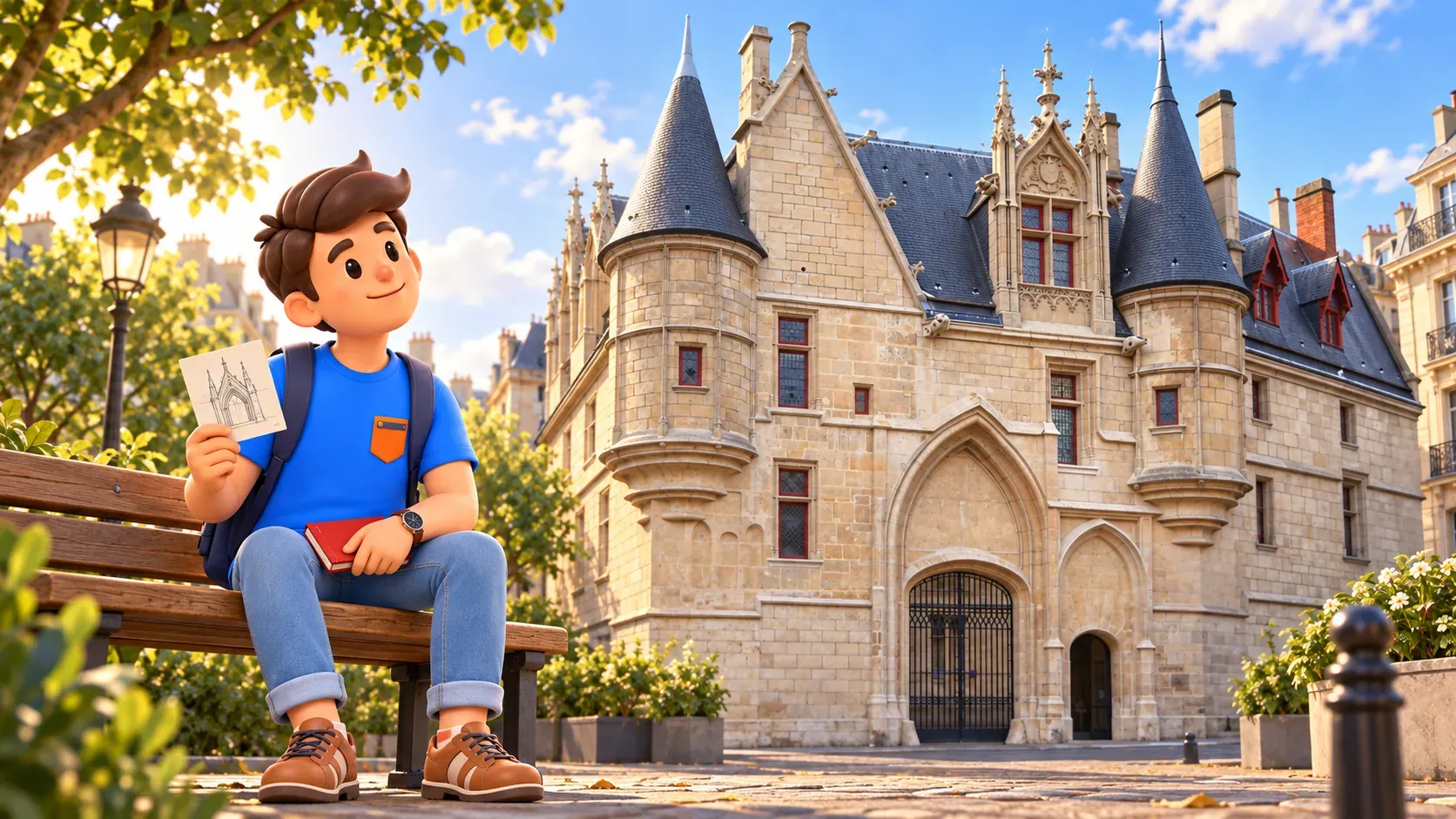
The building’s appearance also records restoration. Major twentieth-century work preceded Forney’s arrival here in 1961, and medieval-style ornaments were created during that restoration. The library itself had opened elsewhere in 1886 to serve artisans. Its collections developed around decorative and applied arts, making the relationship between craftsmanship and its later home particularly apt.
Plan the street exterior as your dependable experience. Forney closes at 18:30 on 17 October 2026, then is entirely closed to the public from 18 October through 4 November, with reopening announced for 5 November. Do not build a courtyard or exhibition-gallery visit into that closure period. At other times, library registration and public exhibition access remain different arrangements.
Give one library a complete local outing
These are observation budgets, not measured walking times. Arrival means orientation at the chosen site; travel from your accommodation and a full meal are extra. Keep the rest and finish within the same neighbourhood, with no journey to another library hidden in the totals.
| Choice | Suggested allowance | How to use it |
|---|---|---|
| Richelieu | 90 minutes | 10 arrival, 35 Oval Room, 15 public circulation, 15 nearby street, 15 rest and finish |
| François-Mitterrand | 120 minutes | 10 arrival, 30 selected esplanade views, 25 public West Hall and globes, 20 building connections, 20 pause, 15 exterior finish |
| Sainte-Geneviève exterior | 60 minutes | 15 façade, 15 movement around the square, 15 Saint-Étienne exterior, 15 pause and finish |
| Forney exterior | 60 minutes | 15 street façade, 20 nearby public streets, 15 pause, 10 finish |
At Richelieu, use rue Vivienne for a short street continuation before resting nearby. Our Richelieu reading break and nearby passages walk provides a separate, longer outing if books and covered galleries become your main interest. It is an alternative plan, rather than an automatic extension of these ninety minutes.
At François-Mitterrand, the twenty-minute connection allowance includes moving between the permitted building areas and the esplanade. If the West Hall cannot be reached or visited that day, use its twenty-five minutes for further permitted exterior observation and rest. Keep the forest and tower interiors out of that replacement.
Build your complete personal trip plan in RoadMe around your dates, interests, pace and budget, fitting this local library visit among the other things you want to do in Paris. Keeping the whole plan in the app makes organising the stay more convenient and efficient.
A booked Sainte-Geneviève visit adds its actual confirmed duration plus a fifteen-minute arrival margin to the exterior hour. Forney’s street outing can stay simple: look at the façade, explore the nearby public section of rue du Figuier and return for a final look. Neither plan needs a private courtyard shortcut. Confirm opening notices before travelling and ask staff about any interior access or photography you need.


