
Paris Covered Passages: A Walk beneath Glass Roofs
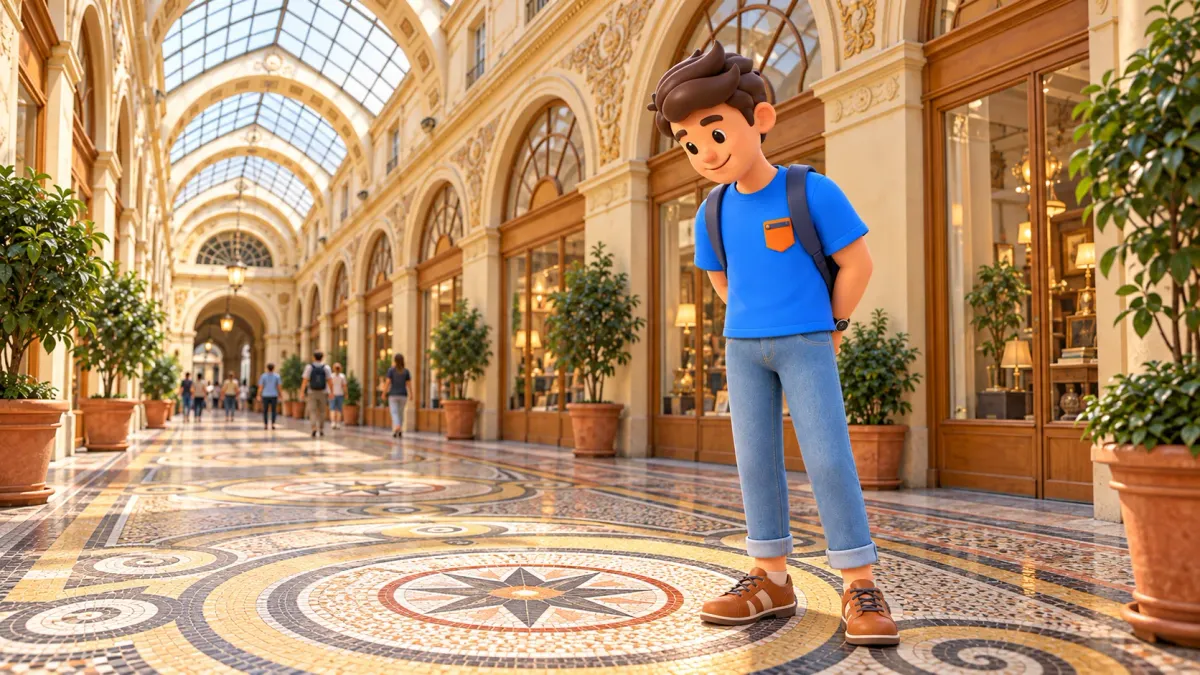
Paris’s covered passages reveal the city at a smaller scale. Instead of distant panoramas, the interest lies in mosaics underfoot, glass roof patterns, wooden shopfronts and daylight entering from above. Behind an ordinary street entrance, a shopping arcade brings architecture closer to the individual walker. These spaces reward attention without requiring you to see the entire city in a single outing.
For a first encounter, connect Galerie Vivienne, Passage des Panoramas, Passage Jouffroy and Passage Verdeau. Allow approximately two and a half hours with stops. The route moves north from the Palais-Royal area to Rue du Faubourg-Montmartre, finishing among small windows displaying books and collectable objects. Extensive shopping, a museum and a full lunch need their own allocation of time.
Connect four passages in a manageable walk
Start at the Galerie Vivienne entrance at 4 Rue des Petits-Champs. Follow the open gallery towards its exit at 6 Rue Vivienne, then walk north along Rue Vivienne, past the Bourse area, to Boulevard Montmartre. Follow the boulevard east to the Passage des Panoramas entrance at 11 Boulevard Montmartre. Here, make a short exploration into the passage before returning to the same boulevard exit.
Opposite, on the boulevard’s north side, Passage Jouffroy begins at 10–12 Boulevard Montmartre. Cross at a marked crossing. Follow the passage, including its turn and steps, to the exit at 9 Rue de la Grange-Batelière. Cross that street to Passage Verdeau at number 6, then finish at its exit at 31 bis Rue du Faubourg-Montmartre.
Allow around 150 minutes: approximately 35 minutes of walking and 115 for architecture, shop windows and pauses. These are estimates to adjust to your own pace. A short stop at an appealing window belongs comfortably in the outing; an extended book search, lunch or museum visit adds time. Travel to Vivienne and onward from the final exit should also be allowed for separately.
To connect this walk with museums, other neighbourhoods and the activities you enjoy, try RoadMe. The app develops a personal trip plan around your dates, interests, pace and budget, making it much more convenient to distribute experiences across days and retain time to rest.
For architecture and open shops, choose a daytime weekday or Saturday and check any businesses you particularly want to visit. These are private passages open to the public on their own schedules. An open gate and open shop windows do not necessarily have the same hours. If a passage is closed, leave it for another day and use public streets to reach the next, checking the alternative on a map.
Why Paris developed streets beneath glass
Historic passages combined shopping and strolling with a sheltered link between city streets. Glass roofs admitted daylight, and shops gave people reasons to pause. That straightforward idea remains easy to recognise: visitors move along one corridor while their attention shifts between light overhead, the design of the passage and objects behind glass. Architecture and everyday activity contribute to the same experience rather than occupying separate settings.
The transition between street and interior is part of the attraction. A passage remains within the city even when a roof appears above you. Businesses operate here, so free access to the corridor does not turn every adjoining room into a museum. For a first visit, the rhythm of shopfronts and a few details are enough to compare four different characters without trying to examine every shop.
The walk can suit a day of changeable weather, but the connections between galleries are outdoors. Vivienne is not joined to Panoramas by an uninterrupted glass roof, and the boulevard separates Panoramas from Jouffroy. Dress for the weather and bring a small umbrella if needed. Close it when entering so wet fabric and an open canopy do not interfere with other people moving through the arcade.
Looking and shopping take different amounts of time. You can notice book bindings, old postcards or toys quickly, while choosing a particular object needs attention and conversation. If a discovery appeals to you, give it a separate pause and reduce the later programme. This keeps the outing responsive: one small city detail can become the day’s strongest memory even when you see fewer windows overall.
Galerie Vivienne: begin with mosaics and light
In Vivienne, look down first. Mosaic circles, decorative borders and repeated shapes guide movement along the floor. Then look towards the arches and glass roof. The lower and upper surfaces form a considered composition, and a short pause can reveal the relationship between them. Keep the centre of the route clear while examining details, so looking closely still fits within the everyday movement of the gallery.
The gallery was constructed in the 1820s and inaugurated in 1826. Its decoration helps explain how shopping could become an elegant urban ritual. For this walk, the historical idea is enough: a commercial space was designed to encourage visitors to linger. A complete account of wall symbols and individual businesses can remain part of a separate, more detailed encounter with the building.
Try a small exercise in attention: select one mosaic motif, one arch detail and one wooden shopfront. Do they share a colour or repeated shape? Your answer can be simple. This way of looking works without architectural terminology and also rewards an existing interest in details. It helps you remember a particular space rather than only adding the gallery’s name to a list of places visited.
Vivienne is free to enter daily from 8:30 am to 8 pm, while shops keep their own hours. There are no public toilets inside, so plan a practical break separately. Photography follows the rules of a private gallery: organised and professional shoots require prior permission. Check current arrangements on site for an ordinary souvenir photograph and follow staff guidance; looking without a camera can be equally enjoyable.
Passage des Panoramas: commerce beside a history of entertainment
After the open streets, Panoramas restores the feeling of a small city beneath a roof. Look to the sides as well as ahead: shopfronts, signs and small businesses make a denser visual arrangement. Choose a section of the main passage and explore it slowly. For this itinerary, return afterwards to the Boulevard Montmartre entrance, where the crossing towards Jouffroy begins.
The passage dates from 1799. Its name recalls panoramic paintings displayed in purpose-built rotundas that attracted visitors. Those structures disappeared, while the shopping passage continued. This brief history explains the name: you are visiting a glass-roofed arcade linked to earlier entertainment, rather than a viewpoint offering a panorama of today’s city. The old purpose and present activity are different, yet the name connects them.
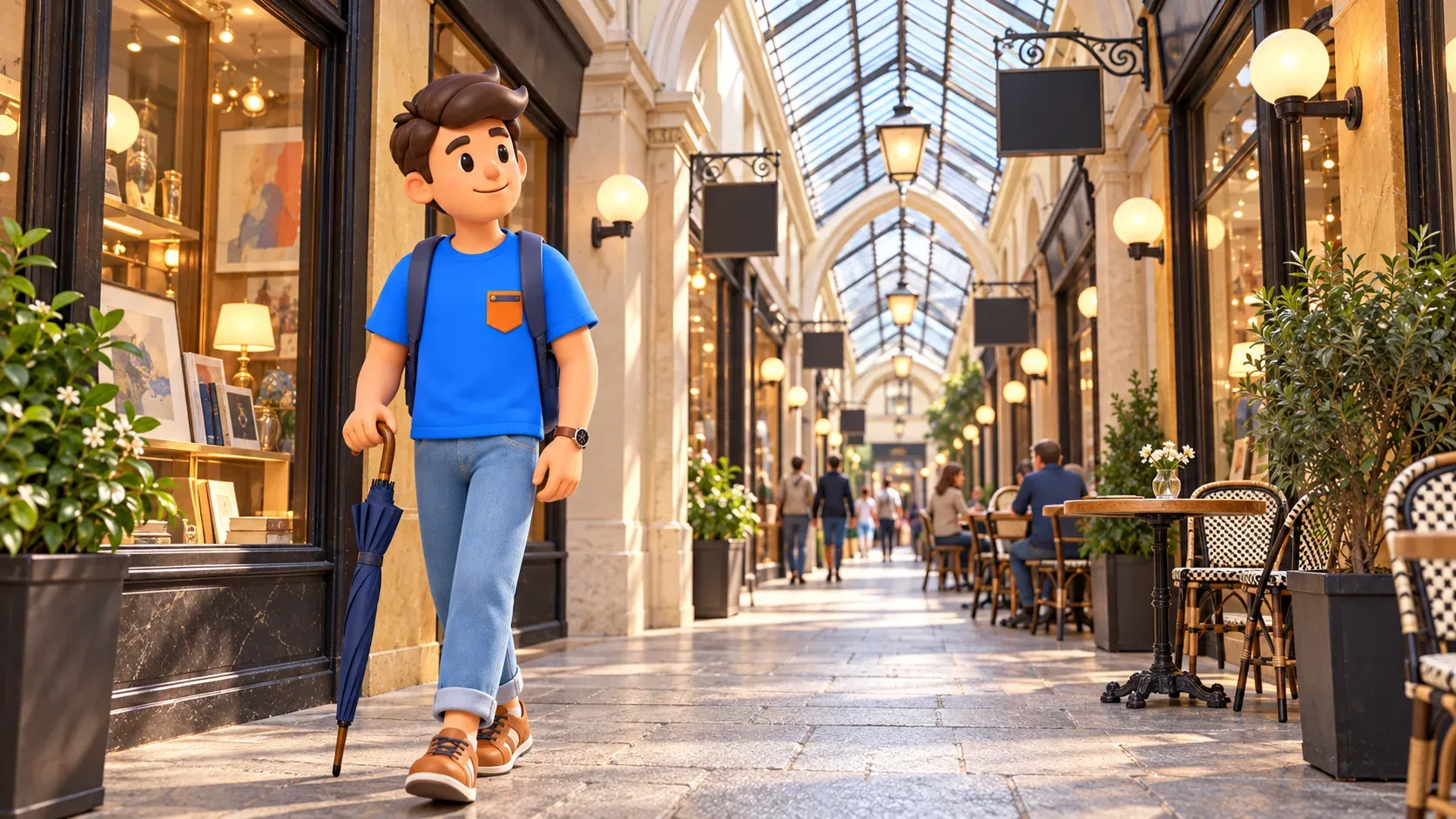
Food businesses share the space with collecting interests such as stamps, postcards and small older objects. You can see them as miniature traces of city life. At one window, select an object and consider why it might have mattered to its owner or a traveller of its time. This is an observation prompt; ask the seller about its actual history if you develop a serious interest.
Entering the open passage is free; food and purchases are separate expenses. Arcade opening does not guarantee that a particular business is already serving visitors. Panoramas has branches, so retain Boulevard Montmartre as your exit reference and do not treat a closed door as a continuation. A first encounter does not require every side corridor: a short exploration can already communicate the main character of the place.
Jouffroy: a glass roof and a change of direction
After crossing the boulevard, enter Jouffroy and compare its roof with the previous arcade. Repeated metal elements, pale glass and a long perspective make the upper structure especially noticeable. Watch how light falls on the floor and shop windows. Instead of searching for one perfect photograph, follow a few repeated lines with your eyes and notice how they organise movement through the passage.
Jouffroy belongs to the development of commercial passages in the mid-nineteenth century. Its metal and glass show the importance of construction techniques in creating these spaces. The useful idea is a long covered route that retains light. For a short walk, that context is more accessible than a list of engineering firsts: you can judge the architecture through the way it supports walking, looking and pausing.
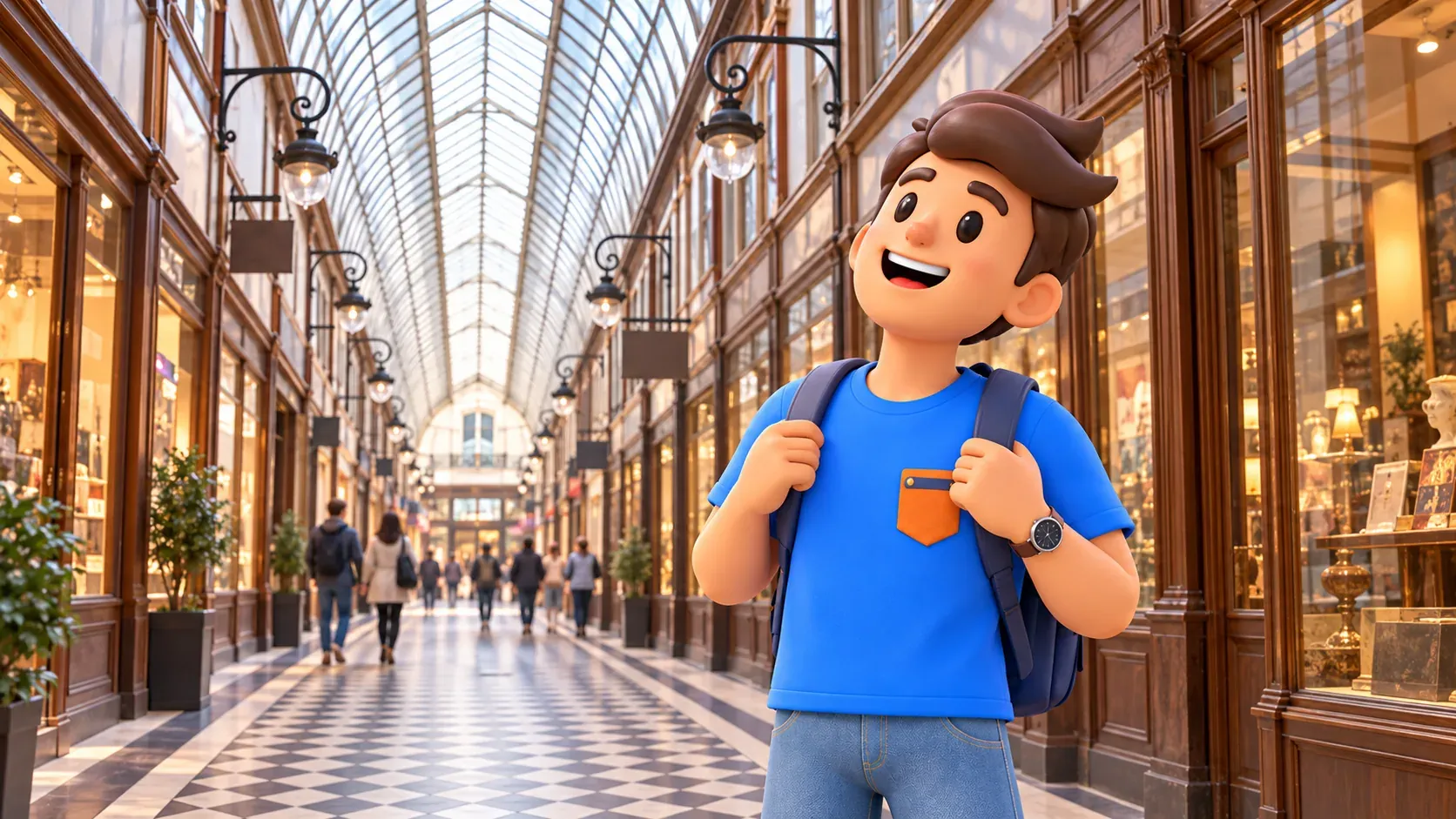
The route changes direction, and steps accommodate a small difference in level. Account for this if using a pushchair or needing a route without stairs; the complete itinerary has not been verified as barrier-free. Follow the open passage towards Rue de la Grange-Batelière and respect current signs and arrangements. A brief pause before the turn also helps you negotiate the changing floor while no longer looking overhead.
The Grévin museum is beside the arcade, but visiting it is a separate activity with a ticket and its own duration. Walking freely through Jouffroy does not include museum admission. If it particularly interests you, choose a museum day in advance and use the passages as a shorter addition. For this outing, architecture and windows provide enough to see before continuing across the street to Verdeau.
Verdeau: finish among books and small discoveries
From the Jouffroy exit, cross Rue de la Grange-Batelière to the Verdeau entrance. A high glass roof and more restrained decorative arrangement give this passage another character. Compare its light with Vivienne and Panoramas: where do you want to slow down, and where does your eye move forward naturally? The answer depends on your interests and conditions that day; an empty arcade cannot be guaranteed beforehand.
Verdeau also belongs to the nineteenth-century commercial galleries. Its history is associated with collectors, old books, pictures and objects from the past. It makes an appealing finish after elegant Vivienne and the denser activity of Panoramas: attention gradually shifts from a large space to a small object. One intriguing binding or image behind glass can be enough to give the stop a personal meaning.
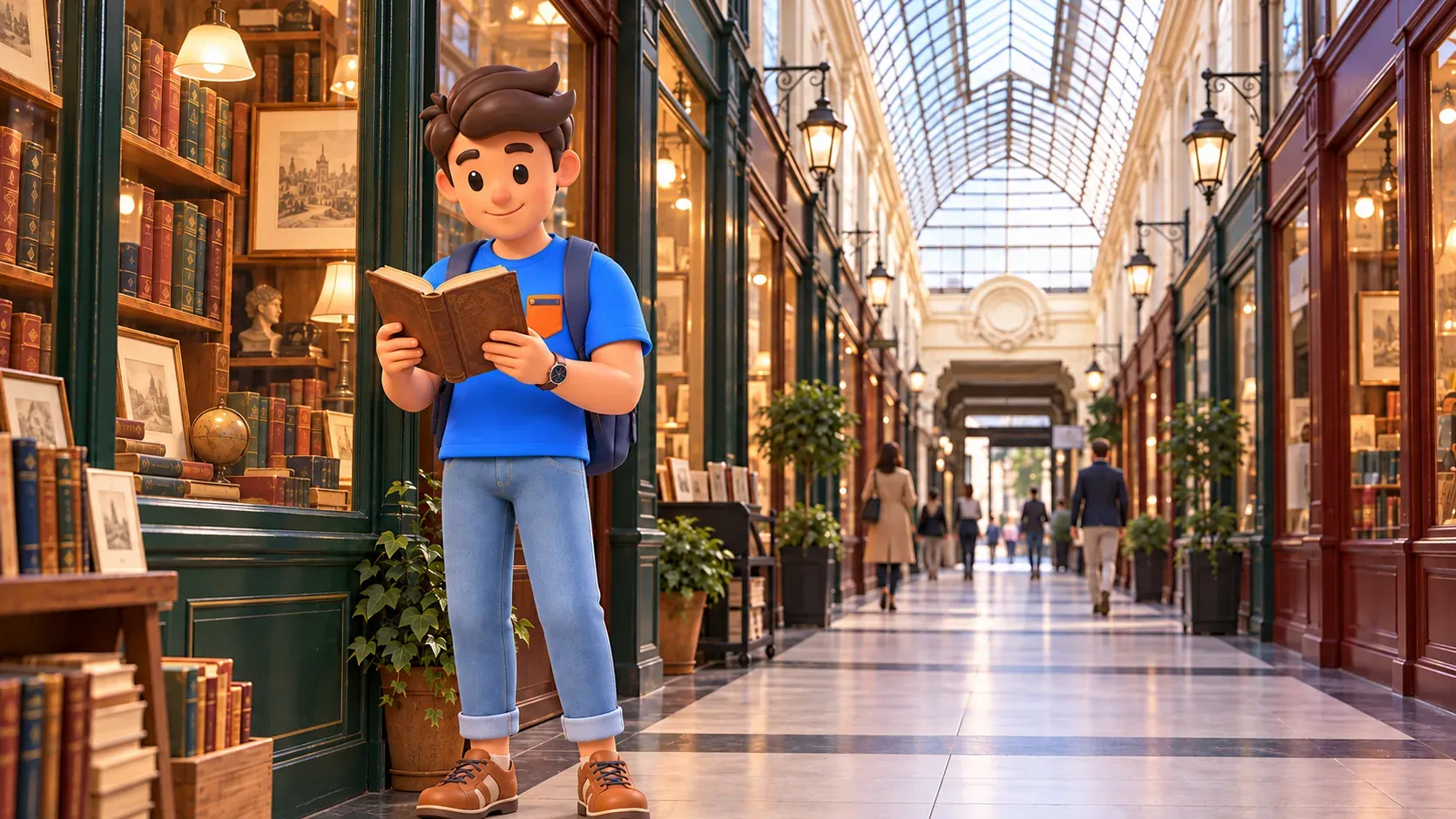
If you would like to enter a shop, follow your curiosity and its current opening hours. Asking about a book or print can be more engaging than a fast circuit of every window. You do not need to buy a souvenir to appreciate the place. Looking around the passage and discussing a particular object are different activities; give the second enough time if a genuine interest develops.
If books, architecture and city history interest you in different proportions, prepare your trip in RoadMe. Its personal plan takes those preferences and your rhythm into account, making it easier to give favourite subjects more time and distribute them across different days.
Finish without overloading the rest of the day
Leave Verdeau onto Rue du Faubourg-Montmartre. You can end the route here, choose a resting place or retain time for a shop that caught your attention. Jouffroy and Verdeau close overnight, so a late outing requires checking their access hours separately. Return only through open entrances; a daytime visit is easier to organise without relying on the final minutes before gates close.
For another outing, consider our walk around Palais Garnier and the department stores. Getting to its start and completing its two-hour route need their own time. After four passages, pause before deciding whether you want more architecture. The day can also end with one remembered detail: a mosaic circle, a glass roofline or an old book you examined in a shop window.


