
Paris Artists’ Communities: Choose One Local Walk
Paris has places where the history of art survives through working space. Bateau-Lavoir, La Ruche and Cité Fleurie are artists’ communities, with addresses connected to famous painters and buildings shaped by the practical need for studios. Their appeal lies partly in that continuity: these places still belong to people making art.
Choose one for a small neighbourhood outing. Bateau-Lavoir suits a walk on Montmartre’s sloping streets; La Ruche pairs an exterior stop with Parc Georges Brassens; Cité Fleurie leads to the separate public Square Henri Cadiou. Ordinary access is the deciding factor. A historic name does not turn a private studio into a museum, and an attractive gate does not promise a view through it.
Choose a neighbourhood, then decide what kind of visit you need
Begin with a simple distinction. If you want to understand a place through its history and public surroundings, the exterior programmes below work. If your main aim is to enter studios or meet artists, first obtain a confirmed hosted visit or a dated invitation. Its actual duration and conditions then become the basis for a revised day.
RoadMe prepares a complete personal plan for your whole trip around your interests, dates, pace and budget. Using the plan in the app makes combining art, neighbourhood walks and time to rest more convenient and efficient.
| Choose one | Local time | Ordinary programme |
|---|---|---|
| Bateau-Lavoir | 90 minutes | Street display, public Montmartre streets and return to Abbesses |
| La Ruche | 120 minutes | Public side of the gate, a Brassens park visit and return to Convention |
| Cité Fleurie | 90 minutes | Private boundary from outside, separate public square and return to Glacière |
These are estimated complete local outings, including connections and pauses. They exclude hotel travel, metro access below street level, meals and arranged interior visits. The three places belong to different parts of Paris. Give one a comfortable place in your day instead of linking them into a compulsory cross-city tour.
Bateau-Lavoir: a famous address on a small Montmartre square
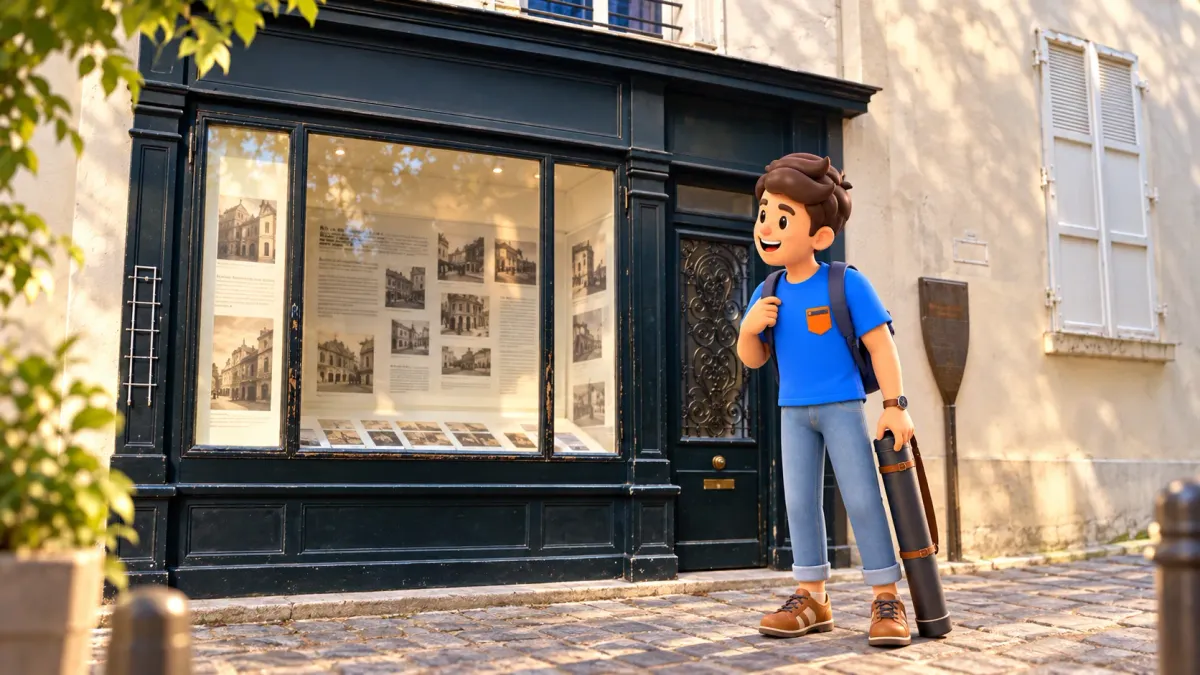
At Place Émile-Goudeau, the first useful distinction is between the street-side display marked 11bis and the working studios at number 13. The dark painted frontage and glass display form an encounter with the site’s history from the public square. They are not the entrance to an open Picasso museum. Look at the frontage, its position on the slope and whatever information is visible without entering.
Picasso settled at Bateau-Lavoir in 1904 and painted Les Demoiselles d’Avignon here in 1907. Those two dates give the address a place in the development of modern art, but they do not describe an untouched room waiting behind the door. A fire badly damaged the building in 1970, and it was rebuilt in 1978. Separate the artistic event from the age of the structure you see.
This makes the exterior more interesting to read. The modest street display carries a large historical reputation, while the surrounding square remains part of a lived-in neighbourhood. Compare the scale of the frontage with your expectations of a celebrated artistic address. You can understand that contrast without seeing a studio or reproducing a particular photograph.
Interior access requires an appointment. The Rozsda studio has its own contact arrangements, distinct from looking at the display. Do not assume that an exhibition poster or a past heritage opening authorises entry today. The display itself may change, and its interactive features should not be treated as guaranteed working attractions.
A ninety-minute Montmartre outing
Start at street level on Place des Abbesses. Take Rue des Abbesses to Rue Ravignan and follow the public approach towards Place Émile-Goudeau. After the Bateau-Lavoir stop, make a short out-and-back along public Rue d’Orchampt, then retrace the approach through Ravignan and Rue des Abbesses to your starting area. Slopes and paving are part of this walk.
Allow ten minutes for arrival and orientation, twenty-five for all walking, twenty at the exterior and display, fifteen for observing the public streets, fifteen for a pause and five to finish at Abbesses. Together these make ninety minutes and roughly 0.9–1.1 kilometres with the short street detour. Walking is counted once; the observation blocks are time to stop and look.
Keep the pause flexible and use an available public place or a chosen café, adding time for a substantial order. This route does not require a private passage, a courtyard shortcut or entry to a studio. Check the metro approach separately if stairs matter to you; the local outline begins above ground.
La Ruche: the idea of an artists’ community behind a private gate
La Ruche stands at 2 Passage Dantzig in the 15th arrondissement. Its foundation describes a working community of about fifty artists and explicitly rules out independent visits. For an ordinary outing, remain on the public side of the gate. The rotunda, studios and gardens are private, and the rotunda may not be visible from your position outside.
Sculptor Alfred Boucher founded La Ruche in 1902 to provide artists with workspace. Elements recovered from the 1900 Universal Exhibition helped form the ensemble. Its history brings together architectural reuse and the support of artistic creation: a temporary exhibition left material that could serve a more lasting purpose. The name, “the hive”, evokes a community of separate working spaces.
Soutine appears among the foundation’s early occupants, and Chagall arrived in 1911. A small number of names is enough to make the historical connection. The more useful question at the gate is how a place with that reputation continues as a workplace. Do not expect a conversation with a resident or an impromptu look inside.
Organised group visits and invitation events are separate possibilities to confirm with the foundation. Notices for September heritage days or the exhibition held from 2 to 11 October 2026 describe past openings. They do not establish access later in October. If entering the community matters most, arrange the hosted visit before deciding how much neighbourhood walking to add.
Two hours with a public park pause
Begin outside Convention at street level on Place Geneviève-de-Gaulle-Anthonioz, above the metro access stairs. Follow the public pavements along Rue de la Convention and Rue de Dantzig towards Passage Dantzig. After the gate stop, continue by Rue de Dantzig and Rue des Morillons to the Jacques-Marette public entrance of Parc Georges Brassens. Park entry is separate from La Ruche’s private gate.
The allowance is twenty minutes from Convention to the gate, fifteen for the exterior and its history, ten to the park, twenty-five for selected public park paths, thirty for a pause and twenty back to Convention. Return on public streets via the Morillons, Dantzig and Convention area, finishing above the metro stairs. This makes 120 minutes, with roughly 2.5–3 kilometres including the chosen park paths.
Keep the park part selective: take a short walk, notice the planting and find an available place to rest. In October 2026, Parc Georges Brassens opens at 8am on weekdays and 9am at weekends. It closes at 7.30pm through 24 October, then at 5.45pm from 25 October to 28 February 2027. Check the applicable period and any exceptional closure notices before relying on the park.
The church and weekend book market belong to a longer outing. Our Parc Georges Brassens and nearby streets walk gives them their own fuller programme. Keep it as an alternative, since adding those stops here would use time reserved for walking and rest.
Cité Fleurie: a private artists’ site beside a public square
On Boulevard Arago, Cité Fleurie offers a different history of reuse. The studios were built between 1878 and 1888 with materials from the food pavilion designed by Hunebelle for the 1878 Universal Exhibition. The ensemble remains an artists’ workplace in private ownership. Its historical interest does not create ordinary access to the studio paths or gardens.
At number 65, read the boundary from the public pavement and notice whatever can be seen without approaching private interiors. An open gate is not an invitation to follow a resident. General references to open days, often in June, are not a confirmed date for your stay. Choose a specifically announced opening if the studios themselves are your priority.
The nearby public space is a separate place: Square Henri Cadiou at number 69 Boulevard Arago. Continue along the pavement to its own gate rather than trying to reach it through Cité Fleurie. The distinction is small on the map and decisive on the ground. The square honours painter Henri Cadiou, who lived and worked in the neighbouring community and helped defend it from demolition.
Give the public garden its own pause
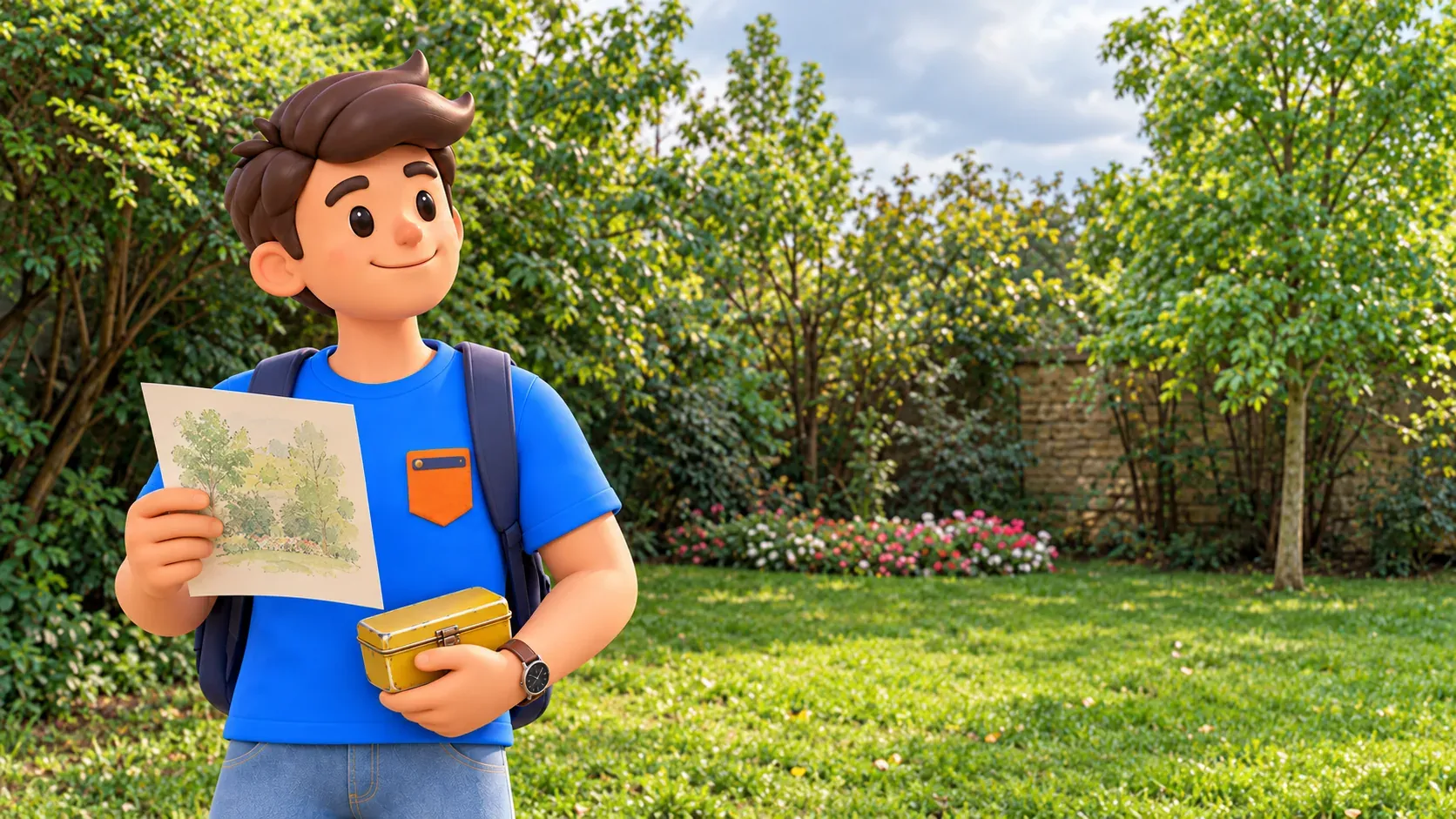
If the square is open, make it the green part of the outing. Look at the relationship between trees, shrubs, planted beds and the surrounding walls from permitted paths. Seasonal flowers and an available seat are welcome additions, rather than requirements for the stop. A patch of lawn in a photograph does not establish permission to walk or sit on it.
Start at Glacière at street level, take Rue de la Glacière north, then Boulevard Arago west towards the private exterior at 65 and the separate public gate at 69. Leave the square through that same gate and return along Boulevard Arago and Rue de la Glacière. There is no through-route across private courtyards towards Rue Léon-Maurice-Nordmann.
Reserve five minutes for arrival, thirty-five for all walking and connections, fifteen for the private boundary and its history, fifteen for observing the public square, fifteen for a pause and five to finish at Glacière. This totals ninety minutes, with about 1.3–1.5 kilometres including short public garden paths. The return and garden movement are already covered.
Square Henri Cadiou opens at 8am on weekdays and 9am at weekends. For 1–24 October 2026, closing is 6.30pm; from 25 October to 28 February 2027 it is 5pm. These hours differ from Parc Georges Brassens. If the square is closed, shorten the outing or relocate the pause to an available public place; the private community is not a substitute garden.
Let access shape the experience
For a stay combining artistic history, museums and quieter neighbourhoods, RoadMe builds a complete personal trip plan around your interests, dates, pace and budget. Keeping the whole plan in the app makes the journey more convenient and efficient to organise.
A public exterior walk can reveal how studios fit into Paris without promising entry. Choose the community whose story interests you, leave entrances clear and give the surrounding streets or public garden time of their own. For an interior encounter, start with the host’s confirmed arrangements and rebuild the day around that visit.


