
Before a Palau concert: a 90-minute Sant Pere walk and arrival plan
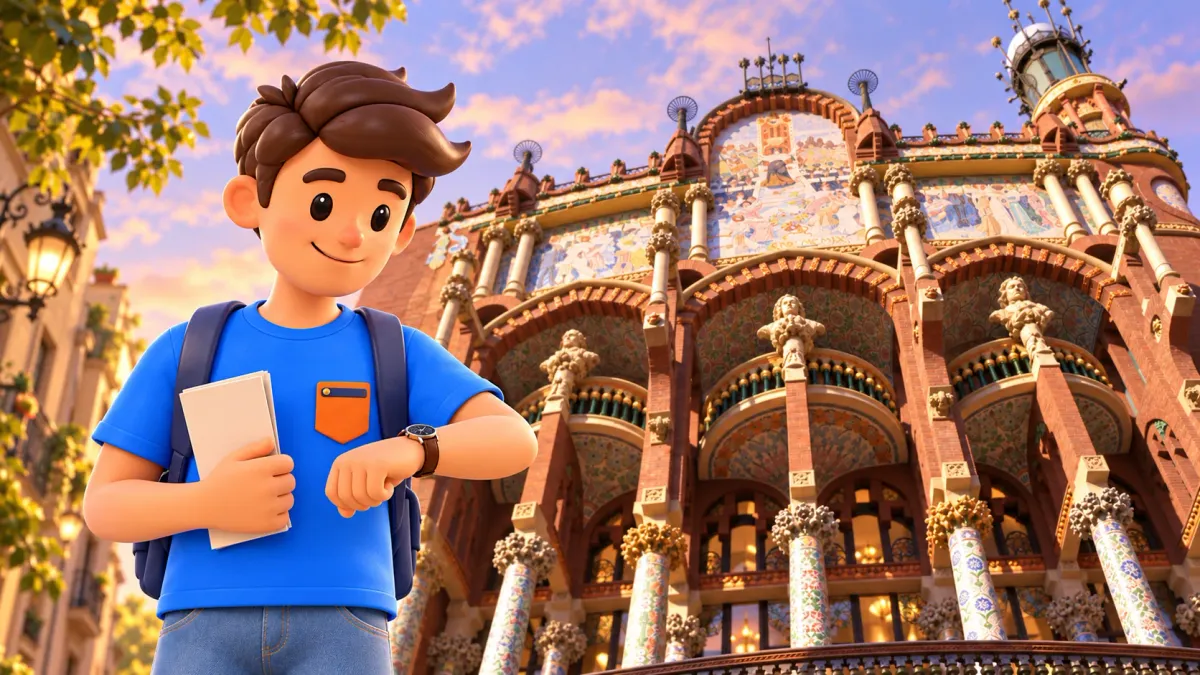
A concert at the Palau de la Música Catalana can begin with a small neighbourhood walk rather than another major attraction. In Sant Pere, a stone church, a short connection and the Palau’s richly decorated exterior offer a satisfying transition from the city outside to the music ahead. Two places are enough to give the evening a sense of arrival.
Allow ninety minutes before your booked performance. The first sixty cover the walk and a pause; the final thirty are reserved for admission and finding your seat. The two anchors are Sant Pere de les Puel·les and the Palau de la Música Catalana. The church is an exterior stop. A separate architectural tour, restaurant meal and the concert itself are outside these ninety minutes.
Count backwards from the concert on your ticket
Use a hypothetical 20:30 performance to build the plan. Begin at Plaça de Sant Pere at 19:00 and spend fifteen minutes looking at the church and square. Walk towards the Palau from 19:15 to 19:25. Allow twenty minutes for its historic façade, then fifteen for a nearby pause and locating your actual entrance. By 20:00, be at the concert entrance: the remaining half-hour belongs to admission.
To fit a musical evening into a comfortable trip, try RoadMe: the app develops a personal day-by-day plan around your interests, dates, pace and budget. A complete Barcelona programme is easier and more efficient to use than assembling separate ideas again each day.
The calculation is 15 + 10 + 20 + 15 + 30 = 90 minutes. These are planning estimates, not walking times measured on location. Add travel to the start, the performance, dinner and your return separately. A 20:30 start is simply an example, not a promise of a daily concert at that hour. Substitute the time on your own ticket and move every block accordingly.
The Palau’s general concert conditions say that access to the hall opens half an hour before the event. If your organiser requests an earlier arrival, you need assistance or you prefer more time, start earlier or shorten the outdoor section. Do not spend the admission margin on a final sight. It protects the part of the evening you have actually booked.
Check the performance and the room first
Before leaving, read the date, time, event, hall and seat on your ticket. The name Palau de la Música Catalana refers to the wider venue; it does not mean that every ticket leads into the historic Concert Hall with its famous stained-glass skylight. Petit Palau is a different, modern auditorium. It is also distinct from the Orfeó Català Rehearsal Hall.
If hearing music in the large historic room matters most, check the hall before buying. If your priority is a particular musician or work, choose the programme while understanding where it takes place. This brings architectural expectations into line with the musical experience. A higher ticket price does not itself guarantee an unrestricted view of every decorative feature.
A daytime architectural visit and an evening concert are different products. A concert ticket does not automatically provide a tour of every room, while a sightseeing ticket does not admit you to a performance. Use the Palau’s official sales channels and read your event’s conditions. For this walk, assume that your performance has already been chosen and your ticket arranged.
Sant Pere: fifteen minutes with a stone façade
Start at Plaça de Sant Pere beside Sant Pere de les Puel·les. Notice the scale before looking for individual ornaments: a square opens beyond the lanes, with the church’s long stone wall forming a substantial backdrop. Look at the relationship between wall, windows and doorway. The door can remain closed without changing the plan, because this stop includes no interior visit.
The neighbourhood’s history is tied to the monastery founded here in the tenth century, around which settlement developed. The present church is not an untouched survival from that period. It underwent many alterations, fires and restorations; its Gothic portal belongs to the fifteenth century. Recognising those layers gives the building more meaning than imagining it was built once and never changed.
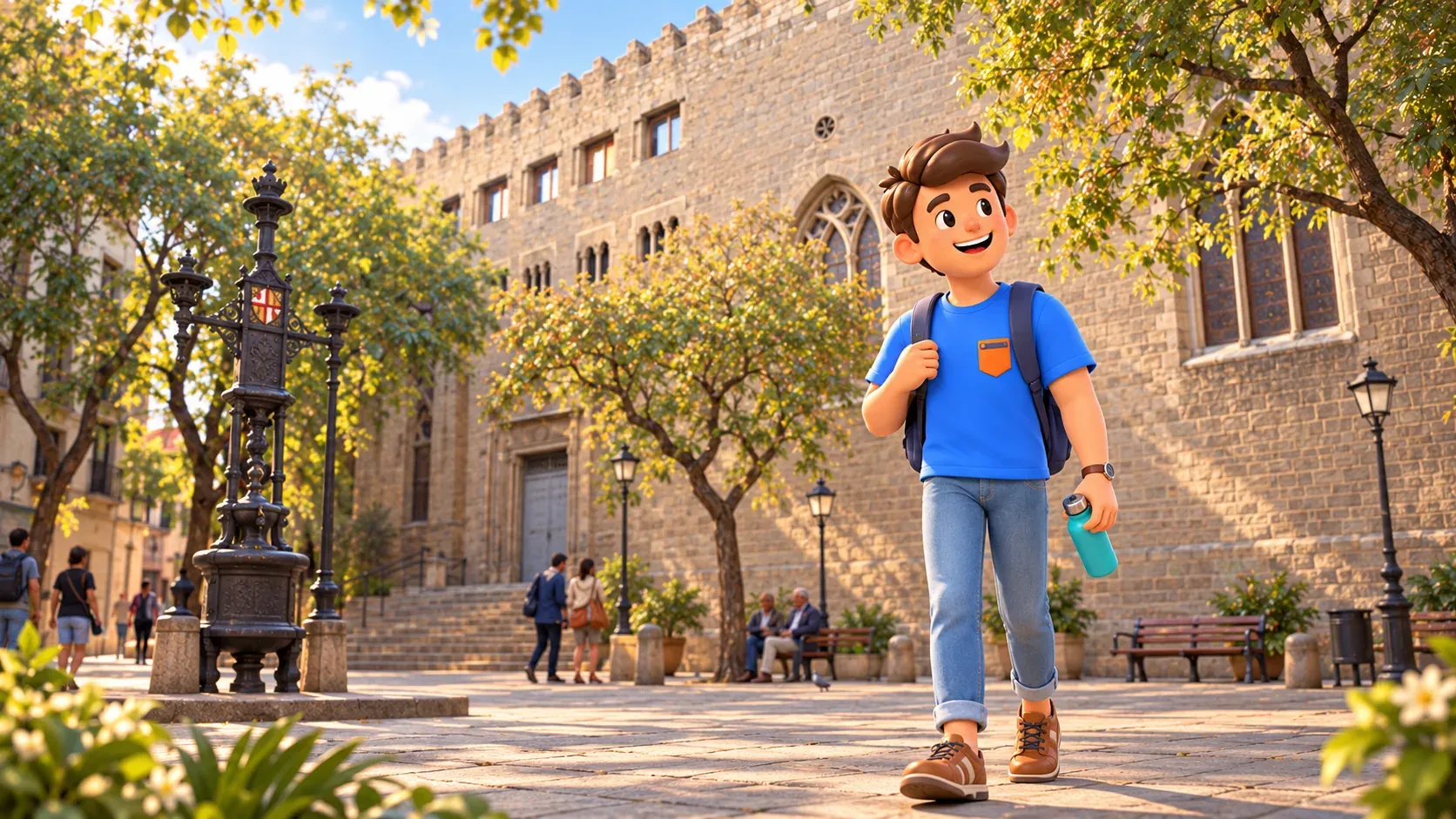
Choose one detail: the shape of the stone arch, a window or the contrast between a large wall surface and a small ornament. You do not need the parish’s complete history in fifteen minutes. One clear observation gives the evening a beginning beyond waiting outside a concert door. It also makes the colour and decorative density of the Palau more striking afterwards.
The church retains its religious purpose. Do not add an unplanned entrance during worship or treat parish office hours as museum visiting times. If an event occupies the square, use the area available or continue towards the Palau earlier. The success of the musical evening does not depend on completing every aspect of this first stop.
A short connection without extra tasks
Continue along available public streets towards the Palau, using Carrer de Sant Pere Més Alt as your orientation. The ten-minute allowance includes a little time to check direction. It is not a measured door-to-door promise or a reason to cut through an unfamiliar courtyard. The connection can remain a pleasant part of the walk, with space for conversation.
A market, museum and cathedral do not need to join the plan merely because they are in the old town. This short route works through the proximity of two anchors and a deliberately protected margin. If another interior appeals, save it for a day when a separate ticket and visiting time will not compete with the start of a performance.
The Palau: look at materials and purpose
Lluís Domènech i Montaner built the Palau in 1905–1908 as the home of the Orfeó Català choral society, funded through public subscription. This background explains the building through collective singing and listening. It is a remarkable work of Catalan Modernisme that continues to function as a musical venue, giving the decorative richness a living purpose.
Twenty minutes outside allows two ways of looking. First, take in the larger arrangement: red brick, arched openings, mosaic-covered columns and projecting sculptural elements. Then choose a closer relationship, such as coloured ceramic meeting stone or one pattern differing from its neighbour. The surface becomes more than an attractive façade when you can identify a particular material or recurring motif.
Musician busts by Eusebi Arnau appear on the façade, while a mosaic by Lluís Bru occupies the upper section. The architectural concept brought different craftspeople together. There is no need to turn the stop into a roll call of every artist. It is enough to notice that music is present before you reach the auditorium, expressed in the building’s decoration.
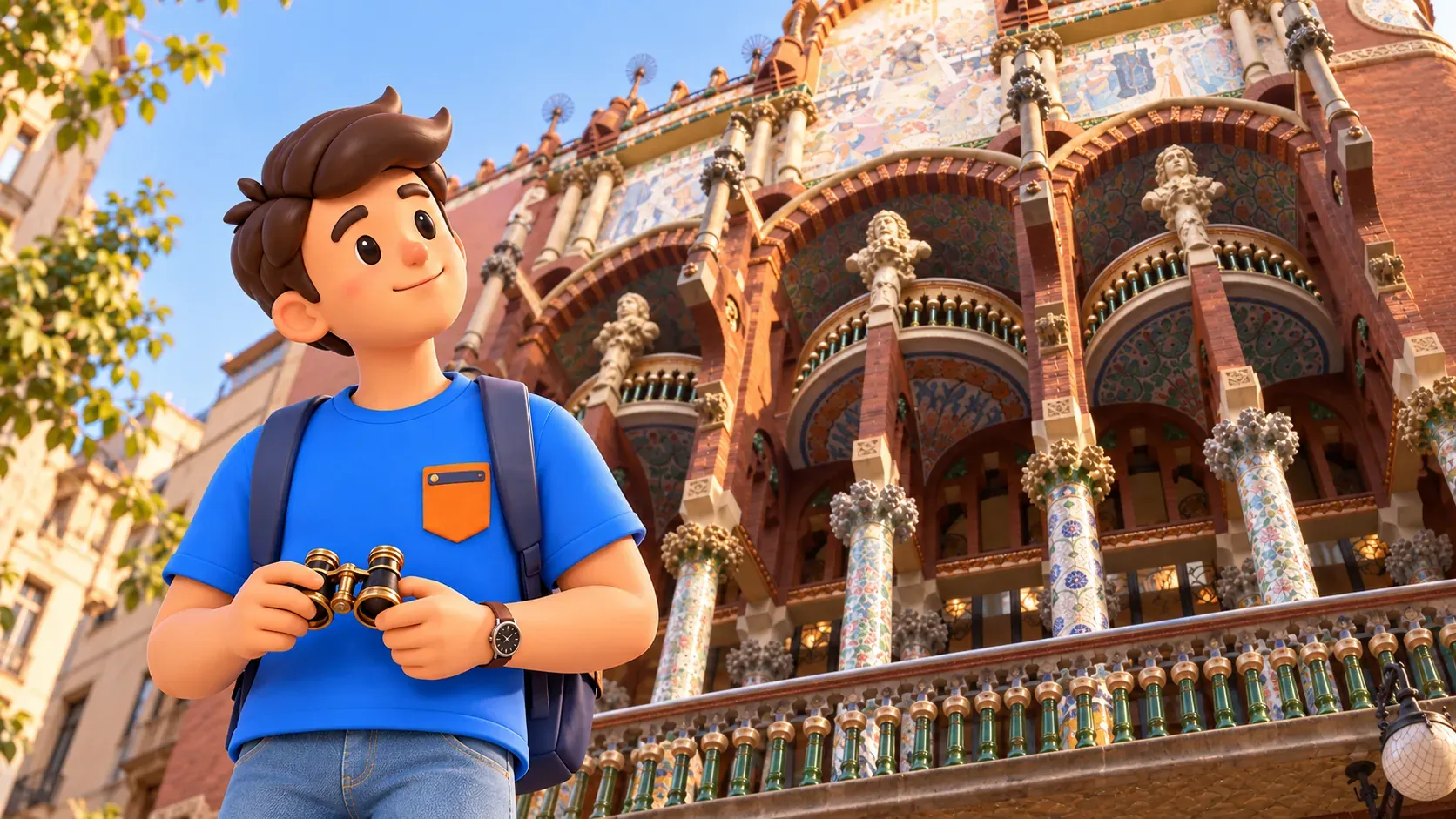
The historic Sant Pere Més Alt frontage is worth seeing, but do not assume its old doors are the entrance for every present-day concert. Follow your ticket, signs and venue staff. The best position for looking at mosaic and the place for checking tickets may differ. Establish the right entrance before the final thirty minutes so admission can proceed without an unnecessary detour.
A pause before the evening changes pace
In the example schedule, 19:45–20:00 remains for a pause close to the Palau and orientation towards the concert entrance. This is not a restaurant break or a guaranteed bench or table. You can stop clear of circulation, put away your camera, discuss the façade and check that your ticket is easy to retrieve.
If you are hungry, eat before these ninety minutes or plan dinner after the performance, having checked its expected finish. Ordering food on the assumption of instant service in the final fifteen minutes is awkward even at a nearby café. Food and drink are not permitted in the concert hall; foyer and terrace arrangements differ from the rules inside the auditorium.
If music is a central interest on your trip, give it a place in a personal RoadMe programme. The app works out a plan around your interests and pace, making it simpler to follow in the city and reducing the daily work of organising your time.
Wear something comfortable for both a short walk and a seated performance. The Palau does not impose a formal dress code for ordinary concert attendance: casual or more elegant clothing is your choice. Read any separate event instructions nonetheless. You do not need to return to your hotel for a formal outfit because a general travel guide implies that one is compulsory.
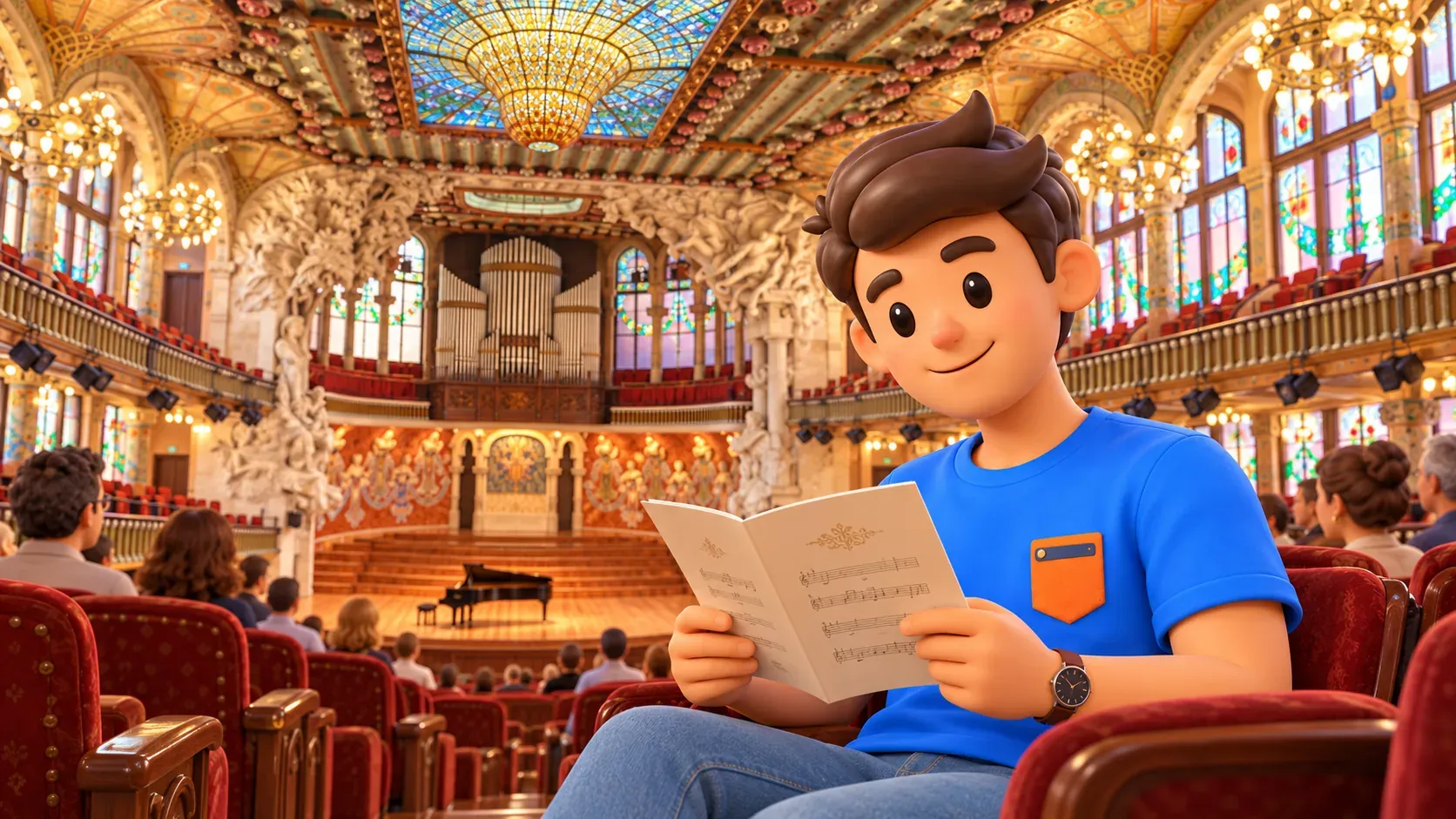
The final half-hour is already part of the concert evening
Arrive at the correct entrance with your ticket ready and follow the seating instructions. Arrange an alternative for large luggage and check your event’s conditions rather than assuming storage is available. If you need a lift or assistance, contact the venue beforehand and allow more time. Our margin is a planning guide, not a guarantee that there will be no queue.
Once seated, read the programme: which works will be played and how they are divided into movements. For classical concerts, the Palau recommends applause at the end of a work rather than between its movements; if unsure, follow the other listeners. Understanding the structure can make a first encounter with unfamiliar music feel more comfortable.
Silence your phone and alarms before the music begins. Photography, filming and audio recording inside the hall during concerts are not permitted, and aisles must remain clear. If you arrive late, do not expect admission at any brief pause: staff instructions and a suitable moment in the programme determine entry. Shortening the walk is preferable to missing the opening of a long work.
For a separate day focused on architecture, save the Domènech i Montaner itinerary linking the Palau and Sant Pau. Tonight, two exterior stops are enough. After Sant Pere’s stone and the Palau’s coloured façade, put the guide away and let the music become the main part of the evening.


