
One Day in Verona: Old Town, River and Hilltop Views
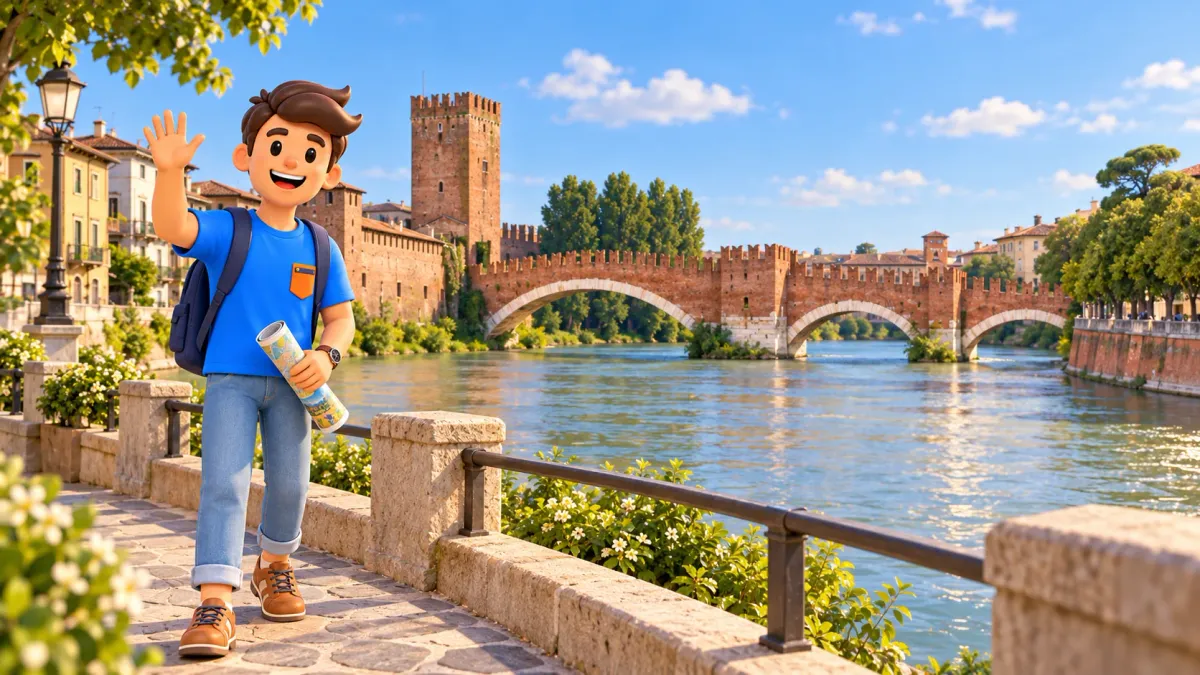
A day in Verona works well when it has two contrasting parts: time in the old town and a view back across it from the hill beyond the Adige. Begin at the Arena, walk west to Castelvecchio and its fortified bridge, then return towards the central squares through Corso Cavour. After lunch, continue to Ponte Pietra and the viewpoint at Castel San Pietro.
This is primarily an outdoor itinerary, with a full walking day allowed for pauses, lunch and the climb. It shows how the buildings, streets and river belong together. If an interior visit matters most, choose one and reduce the outdoor programme.
Understand the route before you set off
The morning has a short western loop, followed by a gradual move towards the northeast. From Piazza Bra you reach Castelvecchio, walk onto the Scaliger Bridge and return to the old-town side. After Piazza delle Erbe and Piazza dei Signori, continue towards Ponte Pietra. Cross the river here for the final climb, rather than repeatedly switching banks throughout the afternoon.
To organise the day around what interests you, try RoadMe: the app creates a personal trip plan based on your dates, interests and pace. It is a convenient way to arrange walks and main visits into a programme you can use while exploring.
| Example timing | Part of the day |
|---|---|
| 09:00–09:30 | Piazza Bra and the Arena exterior |
| 09:30–10:00 | Via Roma towards Castelvecchio |
| 10:00–11:00 | Castle exterior and Scaliger Bridge |
| 11:00–12:00 | Corso Cavour, Porta Borsari and the approach to Erbe |
| 12:00–13:00 | Piazza delle Erbe and Piazza dei Signori |
| 13:00–14:00 | Lunch and a rest |
| 14:00–15:00 | Sant'Anastasia exterior and Ponte Pietra |
| 15:00–16:00 | Climb to Castel San Pietro and enjoy the panorama |
These example times include walking and stops. Travel to the start, the descent from the hill and your journey back to the hotel or station need separate allowances. The finish is the viewpoint across the river, not Piazza Bra. In winter, shorten earlier stops to reach the hill in daylight; a later summer start also needs thought about heat.
Start at the Arena without spending the whole morning there
Begin with a general view across Piazza Bra, then approach the Arena using the available paths. The Roman amphitheatre gives the square its scale. Different periods of the city meet around a space that remains a place for everyday encounters, strolling and performances.
The Arena dates from the first century AD. For this first stop, notice the repeated arches and the relationship between the building and the square. That is more useful than trying to absorb a complete chronology. Seeing the exterior offers a meaningful introduction, although it gives a different impression from standing inside the amphitheatre.
Allow about half an hour and avoid joining an admission queue by habit. Temporary barriers may affect your approach, so stay in the permitted areas. If entering the Arena is the main purpose of your visit, plan it properly and reduce what follows.
Next, take Via Roma towards Castelvecchio. Unlike a short introduction through Via Mazzini, this longer day first reaches the river on the western side of the centre.
Castelvecchio and the Scaliger Bridge
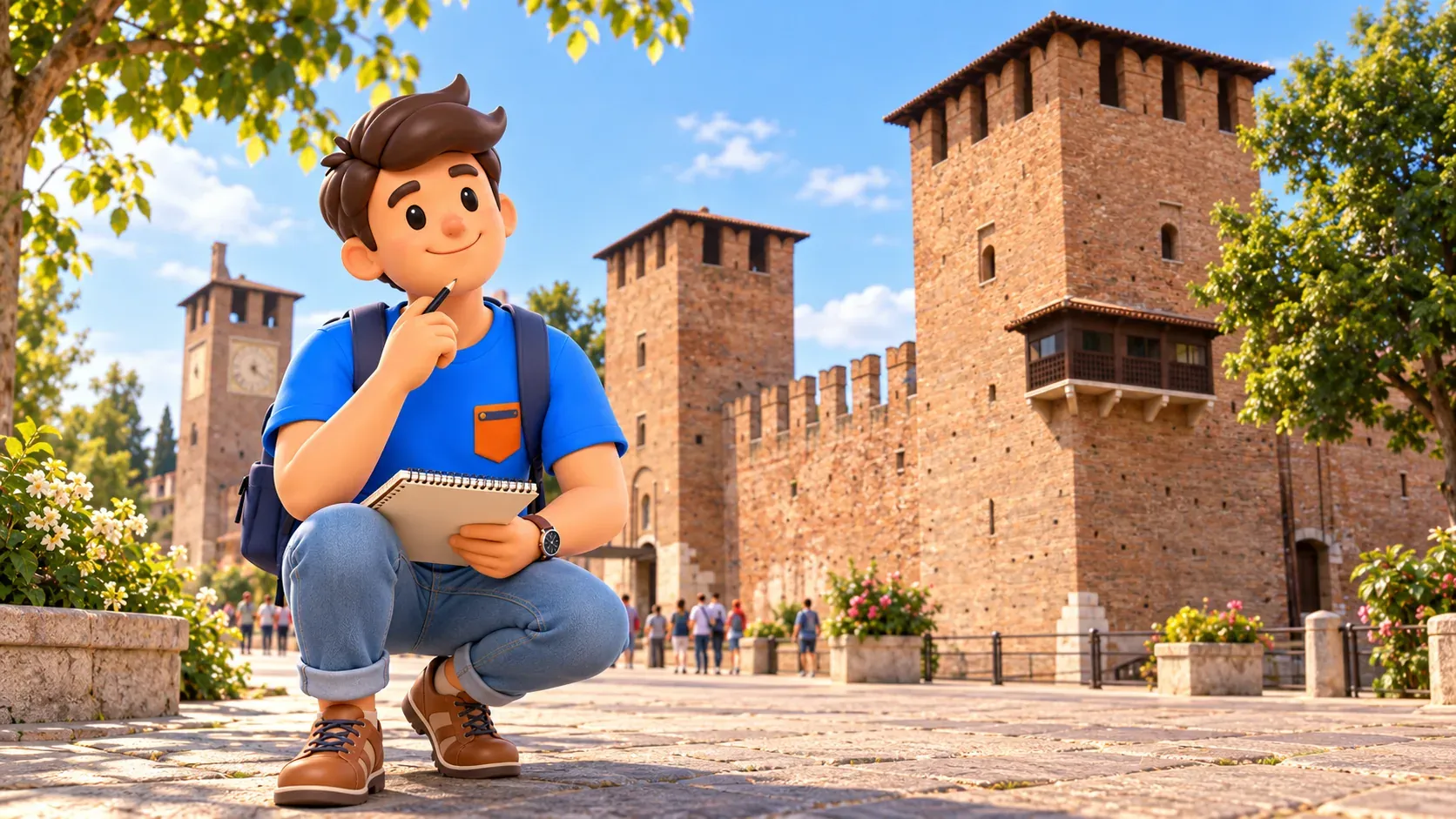
Castelvecchio was built for Cangrande II della Scala between 1354 and 1356. Its walls, towers and connected bridge introduce fortified Verona, where the river formed part of the city's defence and control. From outside, the relationship between the castle and the crossing is especially clear.
Look at the fortress as a whole before walking onto Ponte Scaligero, also called the Castelvecchio Bridge. Notice the battlements and the openings that frame the Adige. Choose a few views rather than stopping at every gap: the brickwork at close range, then a wider composition of water and castle.
The bridge has medieval origins, but its present appearance also tells a story of reconstruction. It was destroyed at the end of the Second World War and subsequently rebuilt. Remembering this prevents a familiar misunderstanding: a historic form does not necessarily mean every part has survived undisturbed for centuries.
For the main itinerary, return across the bridge to the castle. Crossing here is a short excursion for views; Corso Cavour, the next stage, is back on the old-town side. Continuing along the opposite bank would require a different plan and introduce extra river crossings.
If you want one museum visit
The Castelvecchio Museum is a good candidate for an art-focused day. Give it a separate allowance: ninety minutes to two hours is suggested planning time, not an official visit duration. Check the museum's opening arrangements and admission conditions for your date, particularly if you already have another timed booking.
To keep the hill later, shorten your time observing Corso Cavour and the central squares, retaining the connecting walk and a few selected stops. If you want a leisurely museum visit, a long lunch and detailed exploration of the old town, finish at Ponte Pietra instead. The panorama is more enjoyable with energy and daylight available.
Corso Cavour and Porta Borsari
From the castle, follow Corso Cavour towards Porta Borsari. Verona changes character here: the fortified outline gives way to the façades of town palaces. Choose a couple of details that catch your eye, perhaps window patterns or the treatment of entrances. The street then becomes part of the experience rather than simply the way to the next square.
Porta Borsari recalls the Roman city. Pause far enough away to see the surviving monument within its present street setting. For this route, the change in space matters as much as an individual architectural detail. Beyond the gate, continue along Corso Porta Borsari towards Piazza delle Erbe.
You do not need to enter every church or identify every palace mentioned in a city guide. This hour allows for a walk with short pauses between the castle and the centre. If the morning has taken longer, follow the connection more directly.
Two squares at the heart of the day
Piazza delle Erbe occupies the site of Verona's Roman forum. Find a viewpoint near an edge and take in the surrounding houses, towers and central monuments. The painted Mazzanti houses recall Renaissance Verona, when paintings helped shape the outward appearance of city buildings.
A handful of anchors is enough: the Mazzanti frescoes, Madonna Verona fountain, baroque Palazzo Maffei and Lamberti Tower. Stay at square level for this programme. The Maffei museum and tower ascent are separate choices, while today's main panorama is the hill overlooking the river and old town.
Pass beneath Arco della Costa into Piazza dei Signori. Compared with Erbe's elongated space, this square feels more enclosed, framed by historic palaces around a statue of Dante. You do not need an interior visit for the contrast to register.
If your available time has shrunk to a few hours, use the separate two-hour walk from the Arena to Piazza delle Erbe. It offers a shorter introduction. Compressing this entire day usually removes precisely the pauses that make a city walk enjoyable.
Give lunch a proper place in the plan
Keep roughly an hour for eating and recovering. Choose somewhere near the central squares or move a little towards Sant'Anastasia first. Look at the menu, service arrangements and likely waiting time before ordering.
If you prefer a snack, find a suitable public place and keep some of the break for simply resting. A proper pause is useful even when you are not very hungry: more walking and a climb remain ahead. Leaving all your recovery time until the hill can turn the last part into an effort.
After lunch, decide whether the group still wants the stairs. Finishing beside Ponte Pietra is a good alternative when energy is low. If the panorama remains a priority, protect its time allowance rather than beginning another large visit immediately after the meal.
Walk towards Sant'Anastasia and Ponte Pietra
From the central squares, follow Corso Sant'Anastasia towards the basilica of the same name. The main programme looks at its exterior and uses the square in front as an orientation point before reaching the Adige. This section changes the pace from closely enclosed streets to more open river views.
Continue towards Ponte Pietra by way of Via Ponte Pietra. Before crossing, look at the opposite hillside to understand where the final viewpoint sits. The Roman Theatre, the buildings above it and the hilltop belong to different historical layers. An outdoor panorama walk does not include admission to all of them.
Ponte Pietra has Roman origins and has changed repeatedly. After its destruction in 1945, it was reconstructed in 1957–1959 using recovered elements from the river. Notice its pale stone and brick. Their combination makes a very different impression from the fortified Scaliger Bridge you saw in the morning.
Cross to the hill side, then pause somewhere that leaves room for others. The old town is now across the water. If the climb no longer suits you, the riverbank provides a clear and satisfying finish. Otherwise, the last part changes your viewing height as well as your direction.
Castel San Pietro: put the city into perspective
The walking approach follows the staircase on the Ponte Pietra side. Take your own pace, stop when needed and keep energy for getting down later. The example hour includes the ascent, a rest and time at the viewpoint.
The funicular is a paid alternative to walking uphill. Its lower station is near Ponte Pietra, between the Roman Theatre and Santo Stefano. Check the operator's service and ticket arrangements for your date. If you want to descend by funicular as well, establish the last departure beforehand rather than assuming it will still be running.
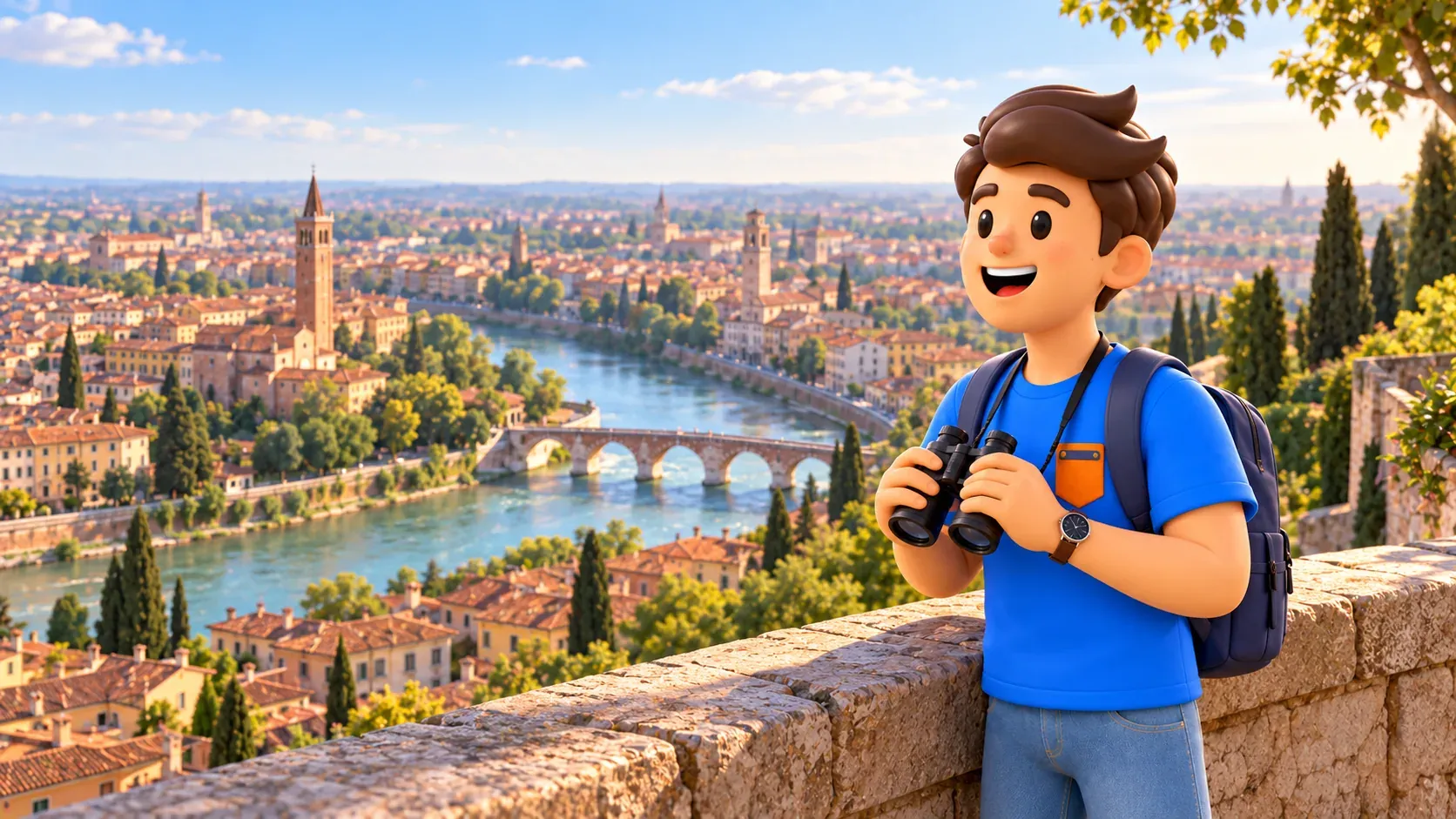
Your destination is the panoramic area in front of Castel San Pietro, rather than the building's interior. The substantial complex you see is linked to nineteenth-century Austrian military history. Knowing that distinction helps avoid expecting a medieval castle museum at the top.
Begin with the bend of the Adige and Ponte Pietra, then look for the towers and dense streets you passed earlier. The reward is an overview rather than another isolated landmark. Try reconstructing your day's direction, from the western bridge through the squares to the crossing below the hill.
If this first day leaves you wanting more, RoadMe can prepare a personal programme for the rest of your trip around your interests and pace. Planning in the app makes it easier to use a coherent itinerary instead of combining separate recommendations yourself.
Finish with enough time to get back comfortably
The panorama does not have to coincide with sunset. Sunset varies by season, and cloud changes the view. Prioritise daylight, weather and a comfortable return. Evening light is a welcome extra when it fits your plan, rather than a promise built into the timetable.
Juliet's House needs a separate decision too. Do not rely on quickly visiting its courtyard for free; the current admission arrangements do not match that familiar advice. If literary Verona matters more to you than the castle or hill, make time for it by replacing one substantial part of the day.
Before descending, check your next destination and the margin before a train, dinner or performance. You finish across the Adige and need to plan the return separately. By now the squares, two contrasting bridges and hill should fit together into a clearer understanding of Verona, giving the day a shape beyond a collection of photographs.


