
Verona in Two Hours: Walk from the Arena to Piazza delle Erbe
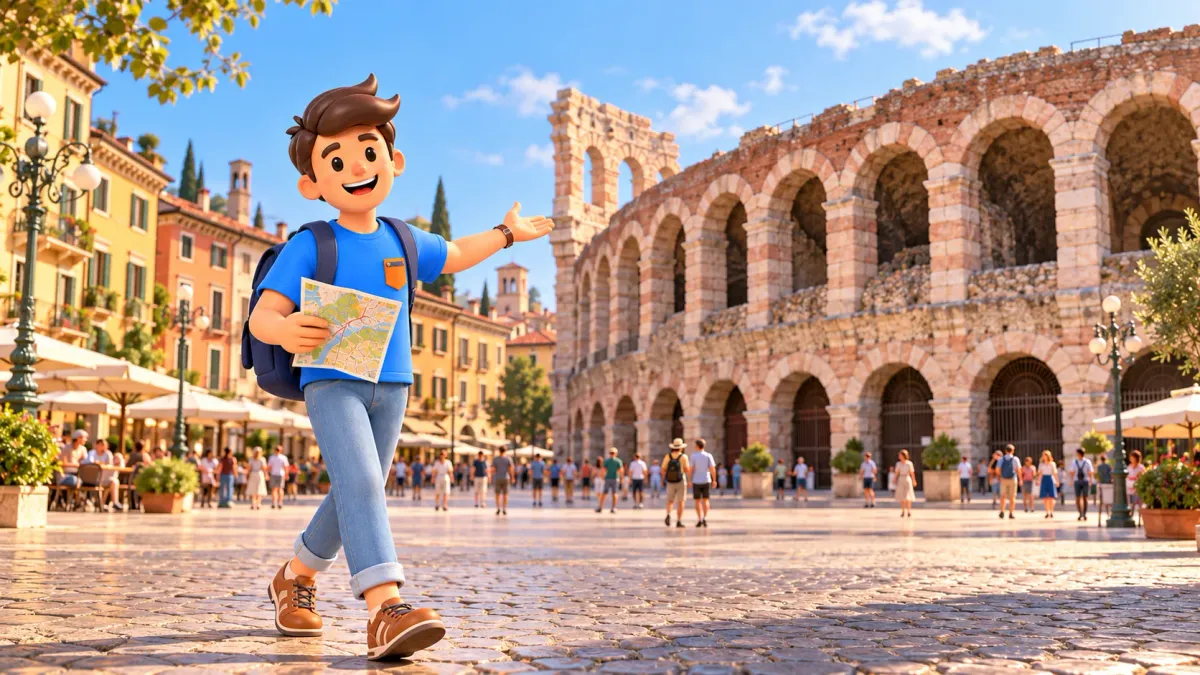
With two hours in Verona, start in Piazza Bra, look at the Arena from outside, and follow Via Mazzini to Piazza delle Erbe. This short walk brings together a Roman amphitheatre, a lively shopping street, painted houses and the square that occupies the site of the ancient forum. There is room for photographs and a drink without turning the afternoon into a race.
The itinerary works as a first introduction, an arrival-day walk or a break between other plans. Its two hours run from Piazza Bra to Piazza delle Erbe. Getting there from your hotel, the station or a parking place, and travelling back afterwards, needs a separate allowance. Arena admission, Juliet's House and climbing the Lamberti Tower are separate visits.
A two-hour plan you can actually enjoy
Keep three places in mind: Piazza Bra and the Arena, Via Mazzini, and Piazza delle Erbe. The pleasure lies in their changing scale. You begin with an open square, move into a narrow street and finish among painted façades and monuments. Concentrating on this small area leaves time to look properly instead of collecting a long list of landmarks.
For a short walk that fits a wider trip, try RoadMe: the app creates a personal itinerary around your dates, interests and pace. It makes arranging your days and using the resulting plan while travelling much more convenient.
| Time from the start | What to do |
|---|---|
| 0–35 minutes | Piazza Bra and the Arena exterior |
| 35–55 minutes | Walk along Via Mazzini |
| 55–70 minutes | A short drink or rest stop |
| 70–105 minutes | Piazza delle Erbe and its architectural details |
| 105–120 minutes | Spare time or an optional look at Piazza dei Signori |
This approximate plan includes time to look around and make stops. Keep the final fifteen minutes free if you prefer a slower pace, are walking with children or want a longer rest. The route already has a satisfying finish in Piazza delle Erbe; the extra square is optional.
Begin with the whole of Piazza Bra
Start in an open part of Piazza Bra where you can take in the Arena's shape. Before approaching the stone arches, look across the square. The contrast between the amphitheatre, the surrounding palaces and the café-lined promenade gives you a useful first impression of Verona: historic buildings remain part of an everyday meeting place.
Two buildings help with orientation. Palazzo Barbieri, recognisable by its columns, is the town hall; the Gran Guardia stands on another side of the square. Notice how their formal façades frame the ancient building and how the open space holds the different elements together.
Walk a little way along the Liston, the broad promenade on the western side. It offers a wider view than standing immediately beside the Arena. Compare the distant outline with the closer stonework you will see next. If you are travelling together, agree on a precise meeting point: a particular building or café is easier to locate than a vague instruction to meet beside the Arena.
Take one establishing photograph rather than spending the entire first stop looking for a perfect composition. Then put the camera away for a moment. The aim here is to understand the square and identify the next direction. Via Mazzini begins beside the Arena, ready for the second part of the walk.
The Arena exterior: look for the surviving wing
The Arena is a Roman amphitheatre dating from the first century AD. A useful way to appreciate it on a short visit is to look for the surviving section of its outer ring, known as the Ala, or wing. Its stacked arches help explain an important feature of the building: the outline you see today once had a further outer layer.
That one observation makes the Arena more than a large ancient backdrop. Compare the height and rhythm of the arches with the main surviving structure. You begin to read a building with depth and passages, rather than a single wall. Choose an available viewpoint from which the wing is visible; there is no need to count every arch or insist on a complete circuit.
The amphitheatre also has a continuing performance history. Verdi's Aida was staged here in 1913, an important beginning for its modern opera tradition. For this walk, the connection is enough: a Roman entertainment building remains a place where people gather for performances. Going inside by day and attending an evening show are different experiences, each deserving its own time.
The thirty-five-minute allowance covers the whole first stop, including Piazza Bra. If groups or temporary barriers limit movement, use the permitted paths and enjoy the exterior from the available side. Completing a full loop is not essential to this itinerary. Do not join an admission queue unless you have decided to replace the walk with an Arena visit.
Follow Via Mazzini towards Piazza delle Erbe
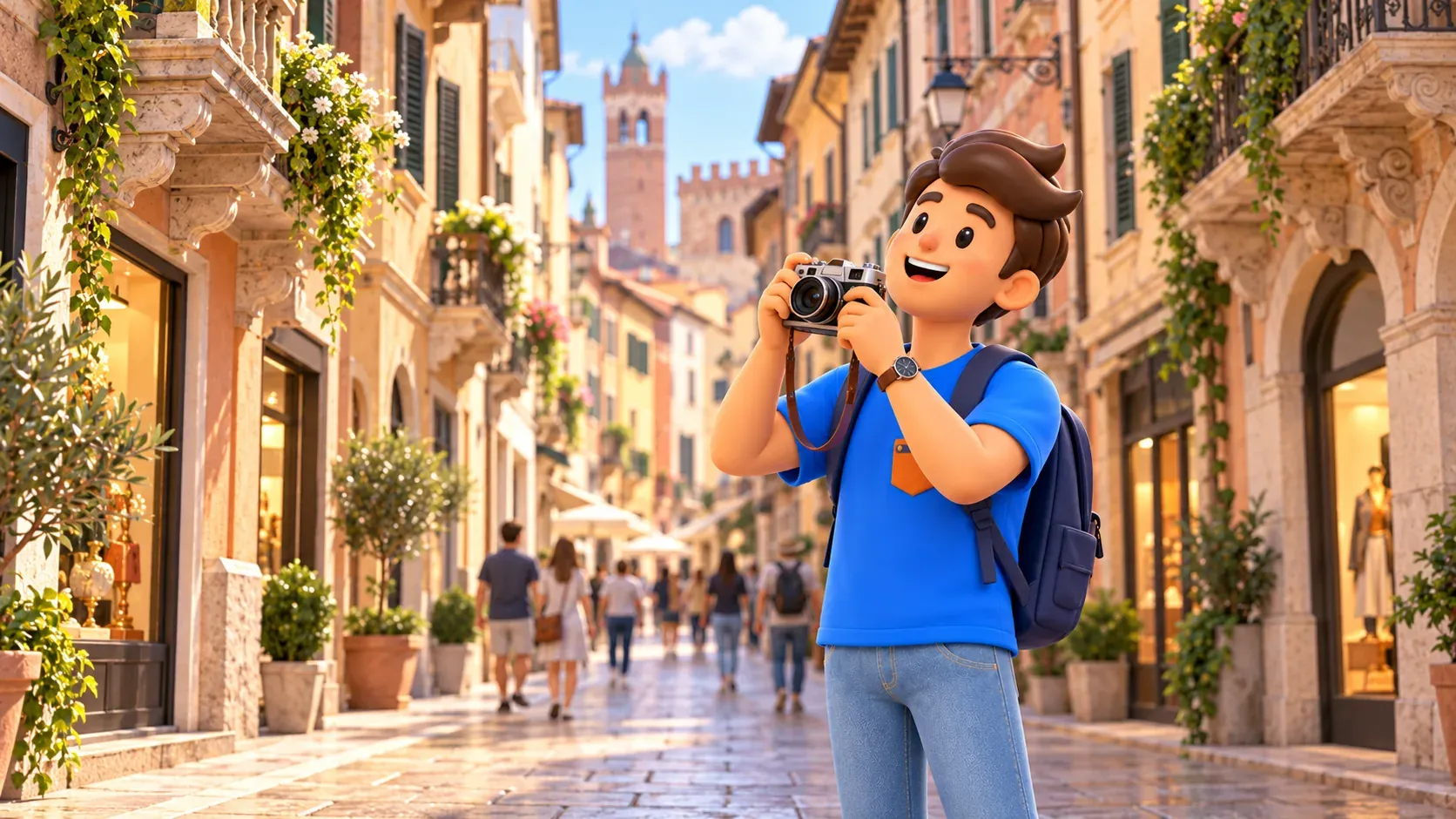
Take Via Mazzini from beside the Arena and continue towards Piazza delle Erbe. This is the route's main connecting street. At the far end, follow the direction into the square rather than adding a visit to Juliet's House.
Via Mazzini is a pedestrian shopping street, so shop windows can easily stretch the walk. Decide in advance whether you want a brief browse or a proper shopping session. The latter needs its own time allowance. With only two hours, one shop may be a pleasant pause; a sequence of stops will quietly consume the time intended for the final square.
Look above the windows as well. Upper storeys and the line of façades reveal a much closer scale than Piazza Bra. The street's interest is partly this change in perspective: an open view becomes a corridor of buildings and people. For a photograph, include the street receding into the distance, then move aside so that others can continue past.
Side streets invite exploration, but keep this introduction simple. If you turn off briefly, return to Via Mazzini before continuing. That avoids a string of improvised turns and keeps the walk legible.
Make room for a short break
Pause before looking closely at Piazza delle Erbe. Depending on available space, choose a drink near the end of Via Mazzini or along the edge of the square. A comfortable stop, a clear menu and enough time to order matter more than finding an address described as a must-visit.
Check the menu and service arrangements before ordering. A seated stop involves waiting for an order and paying afterwards, so do not assume every café visit fits into fifteen minutes. This is a drink break rather than a full lunch. If you are running short of time, skip the café stop and keep the square as the main final stop.
Use the pause to check how you feel, not how many attractions you have counted. If the group needs to slow down, finish in Piazza delle Erbe. If everyone is comfortable and you still have a reserve, the neighbouring Piazza dei Signori is an easy optional direction. Decide before adding several more places simply because they look close on a map.
Piazza delle Erbe: choose four visual anchors
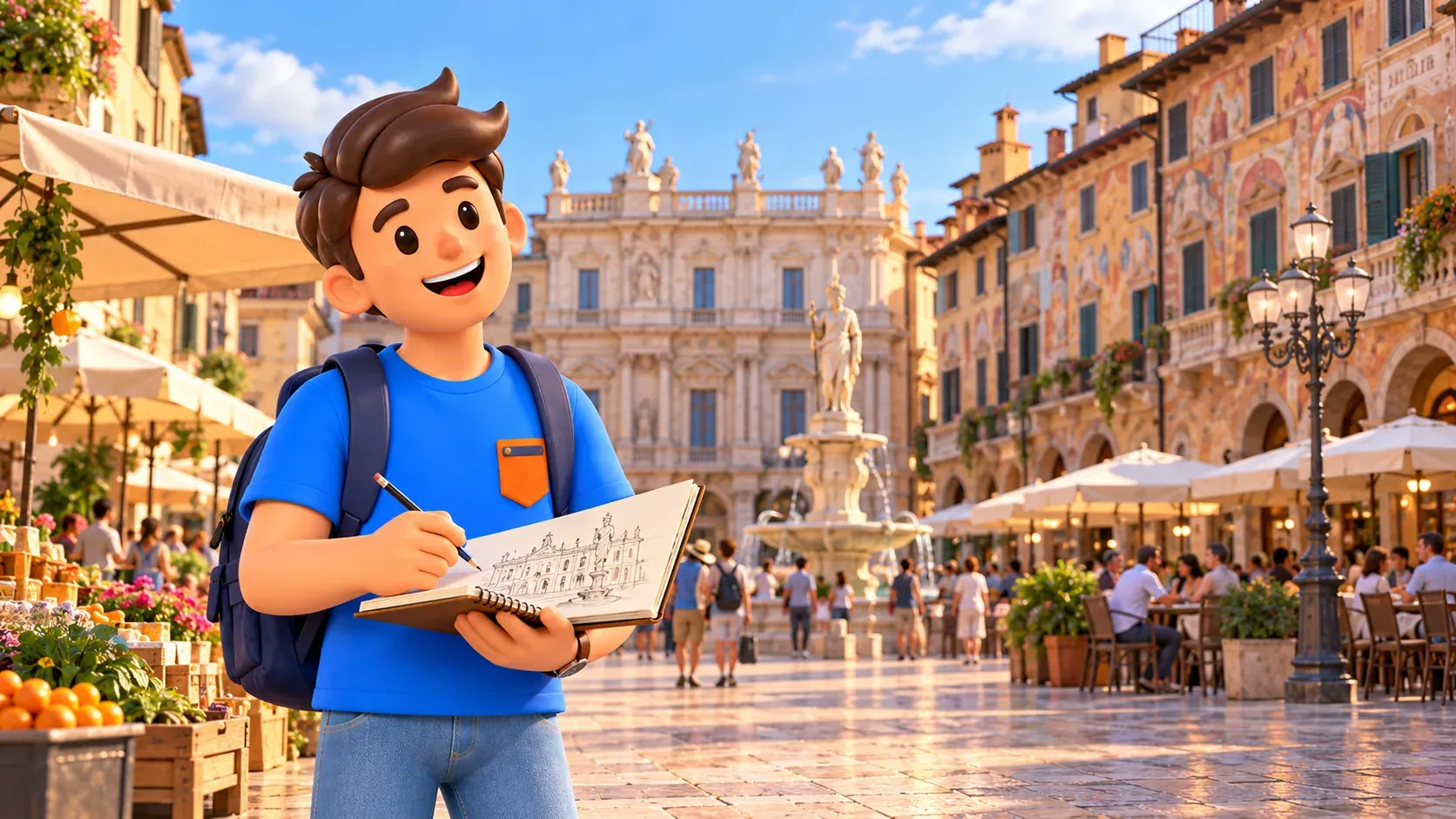
Piazza delle Erbe occupies the area of Verona's Roman forum. Its long shape, surrounding houses and central monuments make it a good place to notice how a city accumulates different periods. Start by moving a little way along an edge and finding a clear overview. You will understand more by choosing a few details than by reading about every building at once.
The Madonna Verona fountain
Find the fountain with the figure of Madonna Verona. Commissioned by Cansignorio della Scala in 1368, it incorporates an ancient Roman statue with later additions. It offers a compact example of different periods brought together in one monument.
Look at the fountain from a distance first, as part of the square, then move closer to see the figure. Those two views give you different impressions. Share your attention between the fountain, the surrounding façades and the changing views along the square.
The painted Mazzanti houses
Look up at the Case Mazzanti on the eastern side. Their surviving frescoed façades recall the Renaissance fashion for decorating houses with paintings, which helped give Verona the name Urbs Picta, the painted city. They reward a few attentive minutes during an ordinary walk; no separate interior visit is part of this stop.
Find the larger areas of colour before trying to distinguish figures and painted frames. This is a more relaxed introduction than following a list of every scene. For a wider photograph, step back only where space allows, taking account of people and the current arrangement of tables or stalls. The painted façades belong in a living square.
Palazzo Maffei and the Lamberti Tower
The baroque façade of Palazzo Maffei provides a striking end to the square, while the Lamberti Tower is a strong vertical landmark. Compare their outlines with the narrower houses around them. Once you recognise these anchors, the square becomes easier to read and you can enjoy its smaller details without continually checking a map.
Climbing the tower or entering the Palazzo Maffei house museum would change the programme. Keep either for a separate visit. If one captures your interest, that is a useful outcome of the walk: you have identified whether a panorama, an art collection or simply more time in the streets appeals most.
If time remains, step into Piazza dei Signori
With your final fifteen minutes still available, you can pass beneath Arco della Costa into neighbouring Piazza dei Signori. Treat this as an optional branch. If the break lasted longer or the group is walking slowly, finish in Piazza delle Erbe instead. Do not spend the reserve twice by adding the square and expecting it also to cover a return journey.
Historic palaces surround Piazza dei Signori, with a statue of Dante at its centre. The change of setting is the reason to come: the space feels more enclosed than the long square you have just left. A general view and a few minutes beside the monument are enough for this introduction, without entering palaces or courtyards.
If you are staying longer, choose one priority for another day. An Arena visit, a museum and a panoramic viewpoint each shape a day differently. Following your own interest is more rewarding than trying to attach every remaining landmark to the end of this walk.
To turn that first impression into the rest of your trip, use RoadMe to create a personal day-by-day programme based on your interests and pace. It is a convenient way to work with a coherent itinerary in the city instead of assembling separate lists yourself.
Before setting out
Save the starting and finishing places, charge your phone and check the weather. In hot conditions, choose a suitable part of the day; in rain, shorten outdoor stops rather than expecting every section to be equally comfortable. Wear shoes suitable for city walking.
If you have a train afterwards, allow separately for reaching the station and boarding. If you have a performance or timed visit, finish with your own margin. The reward for these two hours is a clear first impression of two squares, a connecting street and a handful of details that may become the starting point for a longer Verona visit.


