
One Day in Seoul: A Palace, the Old Centre and an Evening Walk
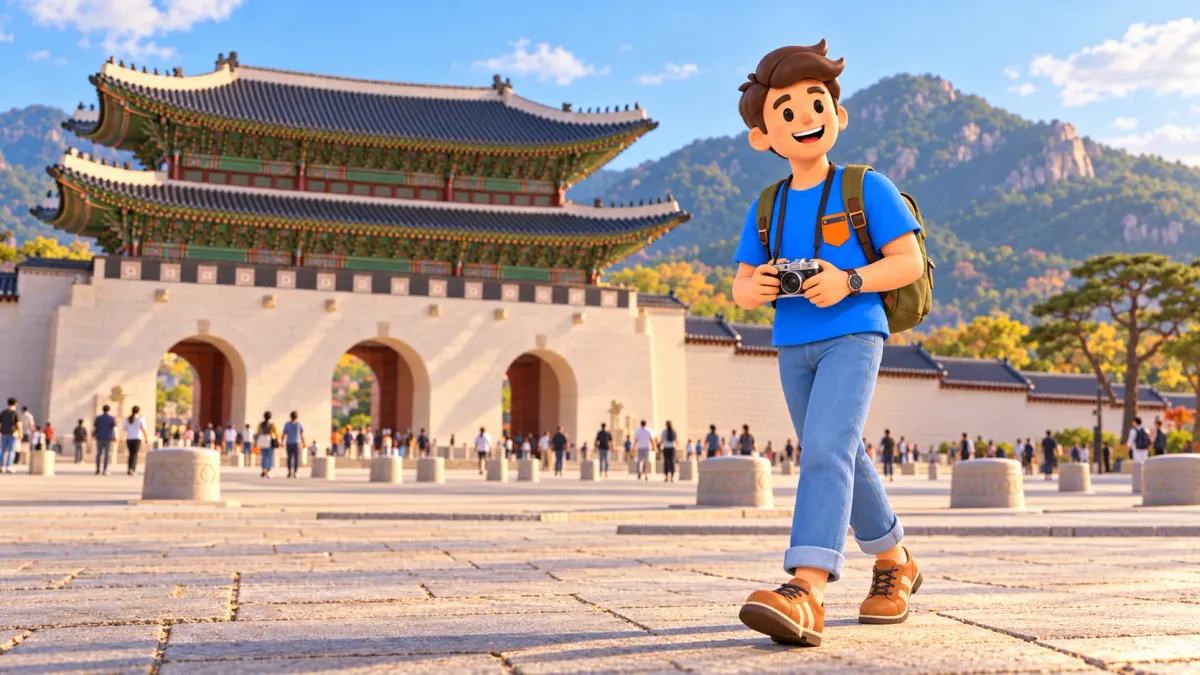
With one full day in Seoul, concentrate on the historic centre. Start at Gwanghwamun, give the morning to Gyeongbokgung, explore Insadong after lunch and pause at Jogyesa Temple. Finish with a short walk beside Cheonggyecheon. The day offers several different impressions while keeping the geography understandable.
This is an independent walking plan with one substantial interior visit. Timings are estimates and change with your pace, queues and breaks. It assumes the palace is open and is designed for a full city day, rather than an airport connection. Allow for airport journeys separately.
How the day fits together
The idea is to give the morning to the palace and the afternoon to smaller spaces in the old centre. After courtyards and pavilions, Insadong shifts your attention towards crafts, food and streets. Jogyesa adds a working temple, while a waterside walk provides a flexible ending.
Preparing this day is much more convenient with RoadMe: the app develops a personal itinerary around your interests, dates and pace. Try choosing what matters most, from history to crafts or relaxed walking, to make more effective use of your only day in Seoul.
Keep one principal visit. Here that is Gyeongbokgung; the later stops can stay shorter. Another palace, the National Museum of Korea and a tower visit would require a substantially different programme with additional journeys. It is more rewarding to notice the streets, eat properly and linger somewhere you enjoy.
| Part of the day | Plan | Estimated allowance |
|---|---|---|
| Morning | Gwanghwamun and Gyeongbokgung | About three hours including entry and pauses |
| Midday | Walk towards Insadong and lunch | About one to one and a half hours |
| Afternoon | Insadong, Ssamziegil and Jogyesa | About two to three hours |
| Finish | Bosingak exterior and a short stream section | About an hour, with room to linger |
This is still a substantial day, even though the stops remain central. Footwear matters as much as distance: palace paving, city crossings and possible stairs down to the water create different demands. Travellers with mobility requirements need a separate check of appropriate entrances and access points.
Begin at Gwanghwamun and understand the palace setting
Start around Gwanghwamun Square and look towards the palace gate. The relationship between the broad city axis, royal grounds and mountain backdrop becomes apparent here. You do not need to turn the square into a separate long excursion; it serves as an introduction before entering the palace.
Gwanghwamun is Gyeongbokgung's principal southern gate. Its scale helps explain that the palace was part of the capital's organisation as well as a ruler's residence. Before proceeding, locate current entry information and the ticket arrangements. A meeting point, ticket desk and actual entrance are not necessarily the same place.
If you want to see a guard ceremony, check the programme for your exact date. This route does not depend on it and remains worthwhile without a performance. Avoid delaying your whole palace visit for an event whose operation you have not confirmed.
Gyeongbokgung: allow time for one substantial visit
Allow approximately two and a half to three hours in the palace, with short pauses. This is an editorial estimate for an introductory visit, rather than a standard walking time. Rain, heat, crowds or a particular interest in architectural detail will change your pace.
Founded in 1395, Gyeongbokgung became the main palace of the Joseon dynasty. The most useful first impression is its sequence of spaces: gates, expansive courtyards, an elevated throne hall and more intimate areas beyond. Architecture gradually changes the distance between public ceremony and daily life.
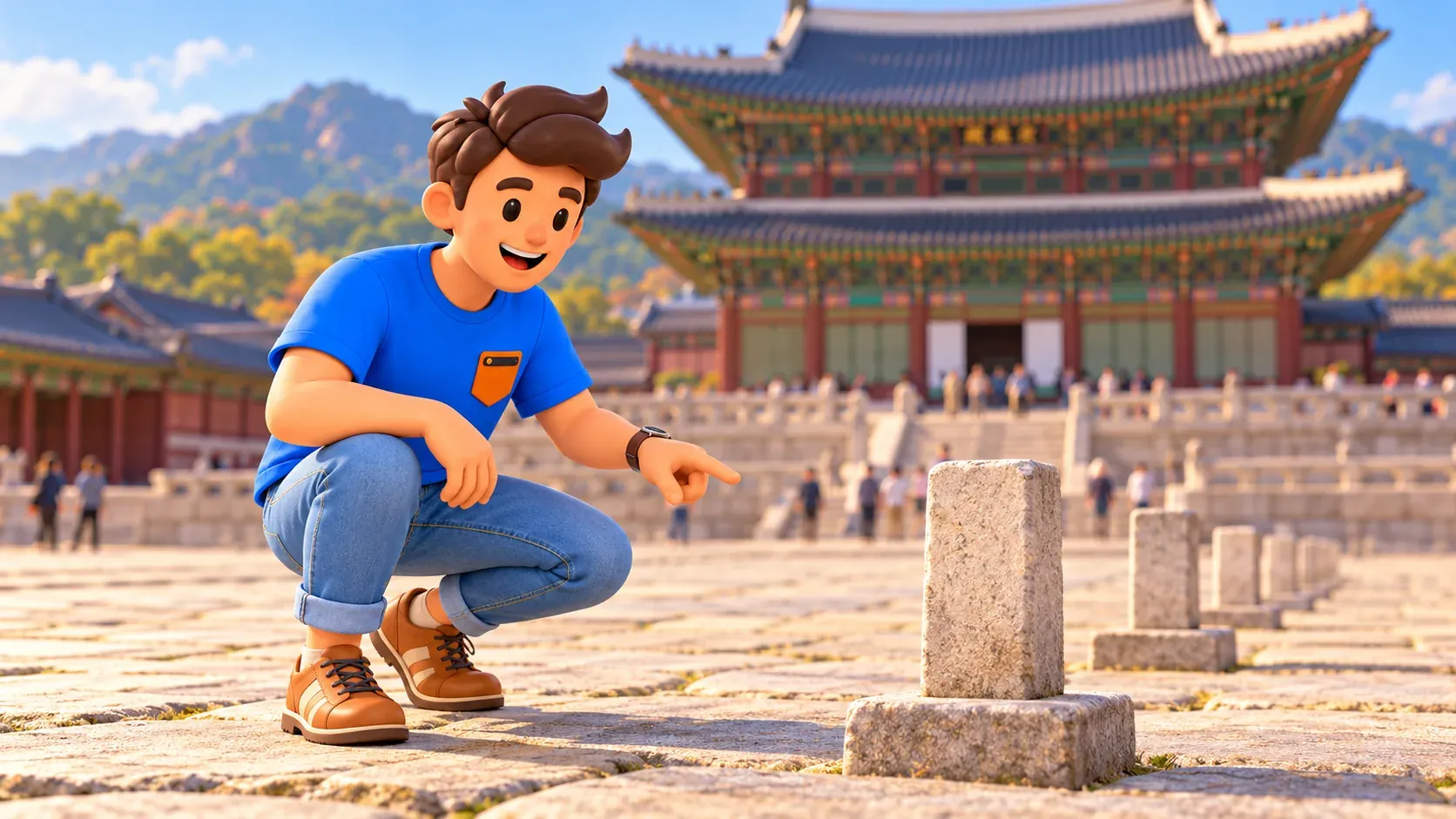
At Geunjeongjeon, notice the relationship between hall and courtyard. The stone terrace and the building's position emphasise its role, while small stone markers in the court recall formal arrangements at court. One observation like this gives meaning to what might initially look like empty space.
Then choose a direction according to your interests. Look more closely at rooflines and painted timber, or give your attention to water and pavilions. Avoid making every building compulsory: detailed exploration can easily absorb the time intended for the rest of the city.
Distinguish viewing a pavilion from entering it. A structure within the grounds does not imply unrestricted access to every room. Follow current signs and boundaries, and let closed areas remain part of the overall view rather than an unresolved task.
Make lunch a genuine break on the way to Insadong
After the palace, head towards Anguk and Insadong. The city streets provide a change of scale: large courtyards give way to junctions, shop windows and smaller passages. Leave enough time to orient yourself and choose somewhere suitable to eat.
You do not need to chase a supposedly definitive restaurant outside the route. The priority is to sit, eat and regain energy. A menu you understand and a comfortable service format may be more useful than a famous name that involves travelling elsewhere or waiting for a long time.
Allow roughly an hour to an hour and a half for lunch and the connecting walk. With children or specific dietary needs, identify several possibilities in this area beforehand. Calling a district a food destination does not guarantee that every visitor will find a suitable meal without preparation.
Insadong and Ssamziegil: give the afternoon a craft theme
Insadong suits a walk without an inflexible list of stops. Galleries, craft objects and tea culture offer another way to encounter Seoul after the palace. Choose a few displays or one small space that catches your attention rather than trying every side street.
At Ssamziegil, notice the circulation itself. Paths rise around an inner courtyard, turning a group of small shops into a continuous walk. For this day, the overall spatial experience matters more than a complete directory of workshops and products.
If you want a souvenir, decide on a criterion first: something small enough for your luggage, a particular craft, or an object you would use at home. The purchase can then continue your cultural curiosity. Manufacturing origin and handmade claims still need checking with the individual seller.
A tea break can replace another museum. After a full morning, it gives impressions time to settle and keeps the afternoon enjoyable. If shops are closed or rain makes the walk uncomfortable, shorten this section and leave more time for a suitable next stop.

Jogyesa: a respectful pause at a working temple
Continue from the craft district towards Jogyesa. The temple introduces Buddhist tradition within an everyday city setting, among streets and contemporary buildings. Even the transition from pavement to temple grounds changes the sounds, details and behaviour around you.
Jogyesa is associated with the Jogye Order and remains a place of religious life. Let prayer and ceremonies determine how you walk and photograph. An open door does not automatically invite tourist entry; first check signs and observe how the space is being used.
For an exterior visit and a quiet pause, roughly thirty to forty-five minutes is a useful allowance. A special event, access restriction or your own interests may change that. It is better to keep this flexible than to force a living temple into a minute-by-minute timetable.
Bosingak and Cheonggyecheon: finish beside the water
Next, head to Bosingak and view the bell pavilion from outside. Its history connects with the regulation of city time: bell signals helped organise the capital's daily rhythms and gates. Within today's dense streets, that story suggests an earlier pace of life in the same place.
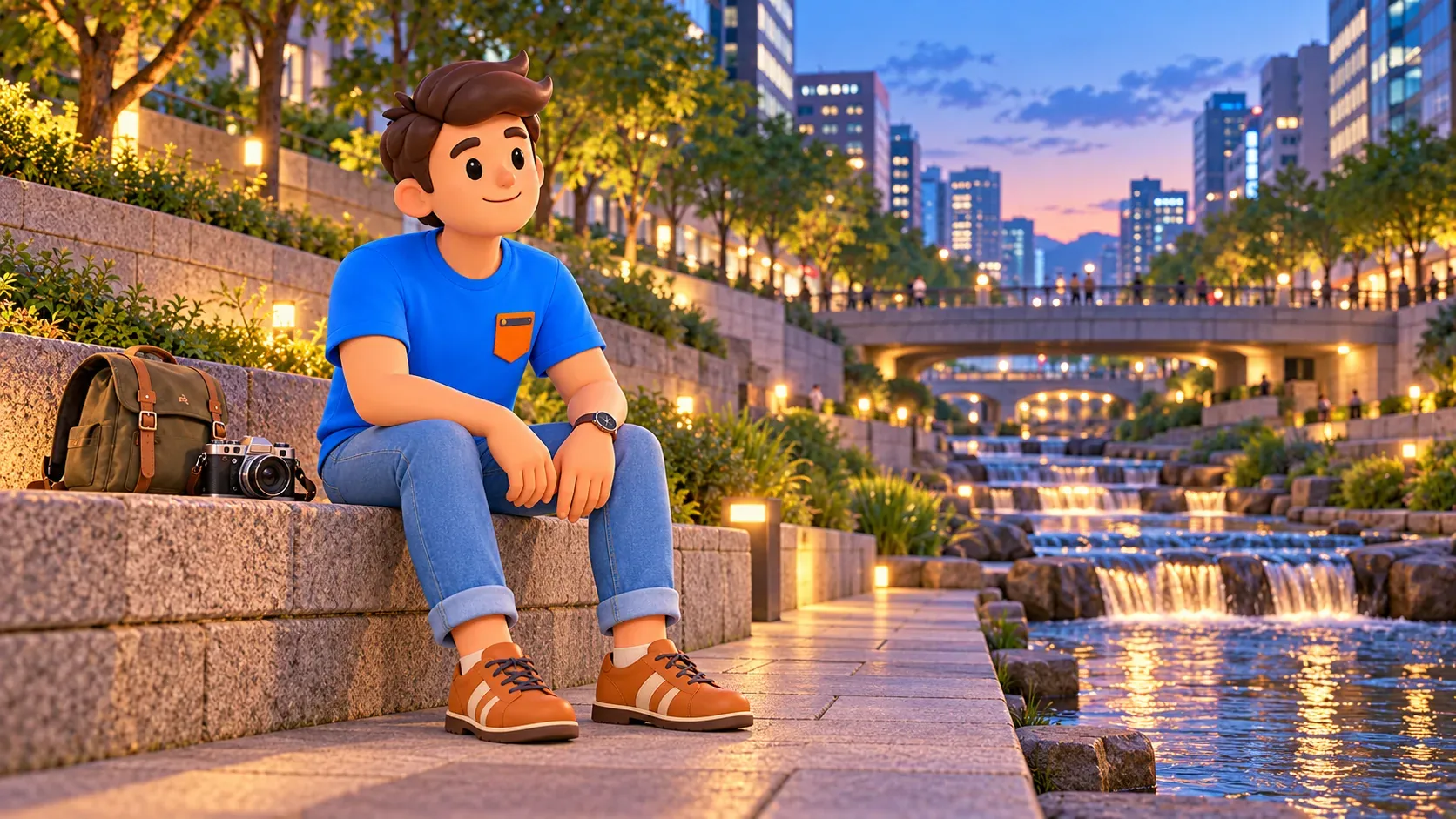
From the pavilion, reach Cheonggyecheon around Gwangtonggyo and follow a short section west towards Cheonggye Plaza. This is deliberately a small part of the stream. You do not need to walk its full length to notice the difference between the lower waterside path and the streets above.
To spend less of this day organising the details, try RoadMe: the app works through a personal walking itinerary based on your interests and pace. Using your selected places together is much more convenient when the structure of the day is already prepared.
Use an open access point and watch for stairs and current waterside restrictions. During heavy rain or a closure, finish at street level. A photograph of a path does not establish that it will be available on your particular evening.
Sunset varies with the season. If your day ends before darkness, there is no need to wait specifically for lighting: the stream is interesting by daylight too. You could have dinner nearby and return later, keeping the evening part optional.
Adapt the plan to your circumstances
If Gyeongbokgung is closed. The usual closure is Tuesday, with holiday exceptions. Moving the palace day is simplest. If that is impossible, choose another main visit deliberately: Deoksugung changes the morning start and the connection to Insadong, so rebuild that section first.
If you want less walking. After Insadong, keep Jogyesa alone or move towards the final block with a longer rest. Fewer stops still preserve the day's main impressions. Significant mobility requirements need a separate assessment of entrances, surfaces and waterside access.
If rain intensifies. A shorter street walk could make room for the Gongpyeong Historic Sites Museum, provided you have confirmed it is open. A museum takes the place of another stop rather than being added on top of an already full day.
If you have only a few hours. Choose the palace and lunch, or Insadong, the temple and a short waterside walk. A calm partial programme is more useful than accelerating every block. For your next day, see the guide to Seoul neighbourhoods and trip length.
Before leaving, check your principal visit's calendar, weather-appropriate clothing, phone charge and the journey back. Keep the framework simple: palace, lunch, craft district, temple and water. That clarity helps one day in Seoul feel like a real encounter with the city.


