First Time in Seoul: Choosing Neighbourhoods and How Many Days to Stay

For a first visit to Seoul, we suggest three to five full days. That gives a trip room for a palace, a substantial museum, neighbourhood walks and time beside the water. One or two days can still be rewarding: choose a smaller area and accept that some experiences belong to a future visit.
The useful starting point is your interests, followed by geography. Gyeongbokgung, the National Museum of Korea and Seokchon Lake offer different experiences in different parts of the city. This guide helps you decide how long to stay and which areas deserve your time before you build a detailed itinerary.
Choose two reasons for visiting first
Finish the sentence “In Seoul, I especially want to…” with two specific answers. You might want palace architecture and traditional houses, contemporary art and ambitious buildings, or parks and skyline views. These combinations make decisions easier than a long, undifferentiated list of sights.
Planning this is much more convenient with RoadMe: the app develops a personal itinerary around your interests, dates and pace. Try starting with what matters to you and let it shape a trip that makes more effective use of your days.
Give a busy day one main visit. A major museum, a palace with its garden or a theme park can be its centre of gravity. Add a nearby walk and a proper meal; any remaining time can accommodate a smaller exhibition or simply an interesting street you discover along the way.
Keep your arrival day lighter. Even ordinary tasks take attention in an unfamiliar city: finding an entrance, choosing the right train direction and deciding where to eat. A manageable first afternoon gives you a better sense of your own pace than a programme that depends on everything going perfectly.
Count full days rather than hotel nights
Separate arrival and departure from full sightseeing days. An evening after check-in might hold a short walk, but it cannot replace a morning palace visit and a museum afternoon. An early airport departure similarly reduces what your last day can realistically contain.
| Time available | A sensible framework | The main choice |
|---|---|---|
| One full day | One palace or museum with a nearby walk | Leave distant districts for another visit |
| Two days | The historic centre and one other area | Limit major interiors and evening transfers |
| Three days | History, art or a modern district, and a park | Decide how deeply to explore each visit |
| Four or five days | Core experiences plus a day for your interests | Choose additional neighbourhoods selectively |
This is a planning recommendation, not a guarantee of how many places you will see. Someone fascinated by ceramics may spend longer in a museum than another visitor spends in an entire neighbourhood. Travelling with children, lingering over meals or taking photographs changes the rhythm too.
With five days, keep at least one block flexible. Returning to a favourite district or moving an outdoor walk to better weather can be more satisfying than adding another mandatory stop across the city. A little unscheduled time also makes a trip feel like yours.
Jongno and the palace districts: start with historic Seoul
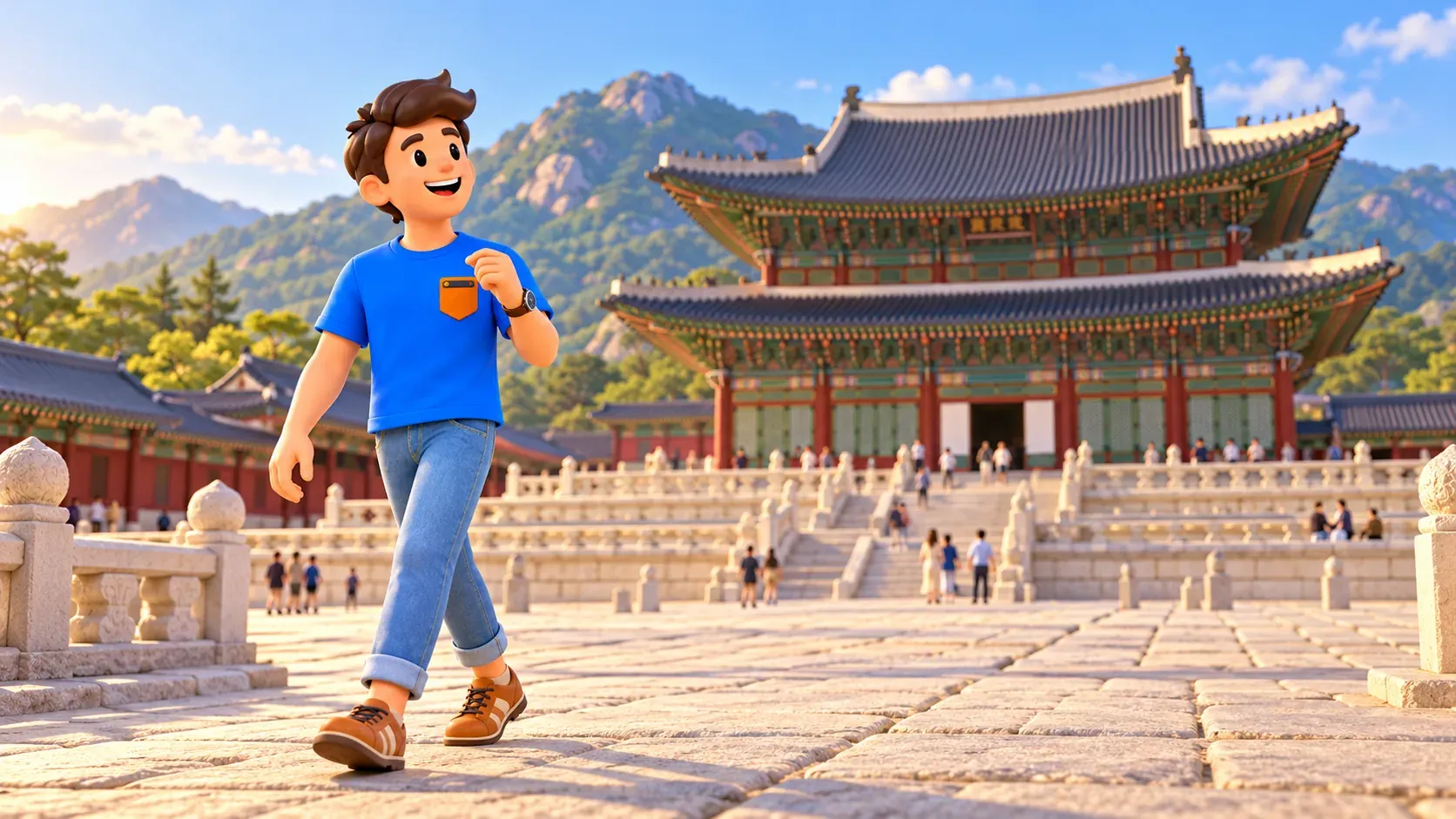
Consider the area around Gyeongbokgung, Gwanghwamun, Anguk and Insadong for your first historical day. You can choose a palace, the craft museum or contemporary art, then continue on foot through surrounding streets. Having several possibilities nearby makes it easier to adjust the day's intensity.
Gyeongbokgung was founded as the main palace of the Joseon dynasty. Its broad courtyards give a clear introduction to the way architecture organised ceremony and government. You do not need to study every hall on a first visit; noticing the overall sequence is already worthwhile.
Changdeokgung offers a different emphasis through the relationship between palace buildings, terrain and garden. If Huwon is important to you, treat access to the garden as a separate planning decision. It changes the length and structure of your visit, so avoid attaching several other major interiors afterwards.
Choose one direction for the surrounding walk. Seochon suits lanes and small artistic spaces, Insadong offers a craft-focused outing, and Bukchon provides a setting for traditional residential architecture. A first day does not need to include all three.
Bukchon or Seochon: decide what kind of walk you want
In Bukchon, the interest lies in seeing hanok houses within a living city. The House of Baek In-je gives the walk a specific architectural focus rather than an endless search for a photograph. The surrounding streets remain residential, with people entering their homes and using their own courtyards.
Tourist visiting restrictions apply in a designated part of Bukchon. Keep that visit in the daytime, follow local signs, remain quiet and avoid photographing private interiors without permission. Restrictions for the designated zone should not be casually applied to the whole district.
Seochon works well if you want literature or painting to give a walk its theme. Yi Sang's memorial house, the Park No-soo Art Museum and Tongin Market offer different reasons to pause. One small interior and a relaxed food stop can be enough to create a satisfying outing.
Myeongdong, Jeong-dong and Namsan: choose a daily emphasis
Myeongdong offers more than shopping streets. Its cathedral, historic theatre and the nearby Bank of Korea Money Museum can supply a cultural stop. Enter the buildings that match your interests; viewing a facade and continuing through the neighbourhood is also a valid choice.
For architecture spanning different periods, consider Jeong-dong beside Deoksugung. Palace surroundings meet Christian churches and buildings associated with Seoul's international history. Decide whether you want a full palace visit or an exterior walk, because that choice determines the room left for other experiences.
Choose Namsan for its park setting and city panorama. Visiting the N Seoul Tower observation deck is a separate decision from walking on the mountain. Getting there, dealing with the slope, taking a break and possible waiting all need space in the day.
Museums: one substantial interest is enough
The National Museum of Korea in Yongsan suits visitors looking for a broad historical framework. Archaeology, Buddhist art and artistic traditions help connect different periods. Choose one or two themes rather than making the entire building a completion exercise.
Leeum in Hannam-dong brings art and architecture together, while MMCA Seoul allows contemporary art to fit into a palace-area day. For art museums, the available exhibitions matter: a familiar institution name alone does not tell you whether the current programme matches your curiosity.
A smaller specialist museum can be the better short visit. Crafts, kimchi or urban archaeology provide a clear subject without asking you to absorb a country's whole history. First choose a subject you care about, then check whether the location fits your other plans.
Beyond the centre: COEX, Jamsil and green space
Around COEX, Starfield Library and Bongeunsa Temple make a natural pairing. Their proximity introduces very different kinds of urban space on one outing. Adding an aquarium or a long shopping session substantially expands the programme, so make that a deliberate choice.
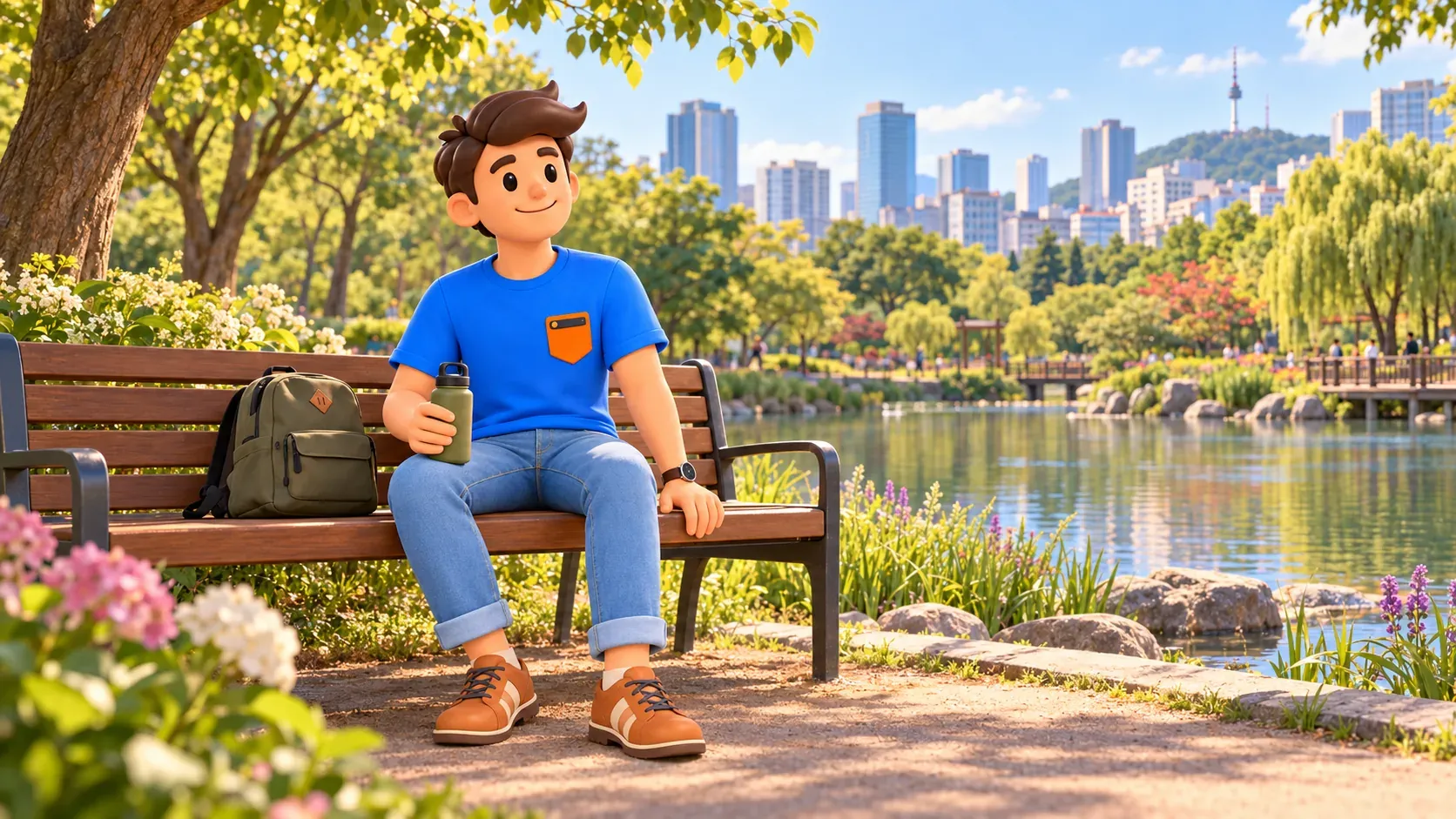
In Jamsil, Seokchon Lake can anchor a walk and Seoul Sky can be the main ticketed visit. Lotte World Adventure deserves its own time decision. Treating a theme park as a quick addition to the lake and tower would create an overambitious day.
Seoul Forest, beside Seongsu, offers a more open rhythm. The park opened in 2005 and provides paths, water and outdoor space between cultural visits. Olympic Park adds sculpture and the earthworks associated with ancient Baekje; choose a manageable part of its large grounds.
Combine nearby places and protect your energy
Build days from neighbouring experiences. Gyeongbokgung and Seochon form a clear pair; the National Museum of Korea and Yongsan Family Park keep a day centred on one major interior. COEX and Bongeunsa also work together. Joining distant headline sights mainly creates more transfers.
Once you know your interests, RoadMe makes it much more convenient to turn them into a personalised day-by-day trip. The app works through the itinerary around your preferences and pace, making your selected places easier to use while you focus on the experience.
Check travel between actual entrances. A station near a museum does not mean its galleries are a few steps from the platform. Station corridors, the correct exit, road crossings and the ticket desk all contribute to the journey, particularly on a day with several visits.
Put lunch and a break into your outline as real items. They reveal whether the programme is overloaded. If it works only when everyone remains energetic, the next train arrives immediately and no entrance involves waiting, remove a stop.
Check the calendar before fixing the days
Once you have allocated districts, check your main visits. Gyeongbokgung normally closes on Tuesdays, with holiday-related exceptions. Other palaces and museums have their own calendars; there is no single museum closing day that solves planning across Seoul.
Check the access arrangements for Huwon, temporary exhibitions and observation decks before treating them as fixed commitments. This overview does not compare every ticket. Its purpose is to show which decisions must come before assigning a district to a specific day.
Keep an alternative in the same area. Rain might shorten an outdoor walk in favour of a suitable exhibition; museum fatigue might lead you towards a park and a meal. A backup should fit both your interests and the geography rather than create another complicated journey.
Think about how you want the evening to feel as well. A river walk, a skyline view and a neighbourhood dinner are three different endings. You do not need to schedule all of them after a full sightseeing day simply because they appear on the same wish list.
Five decisions that make the trip clearer
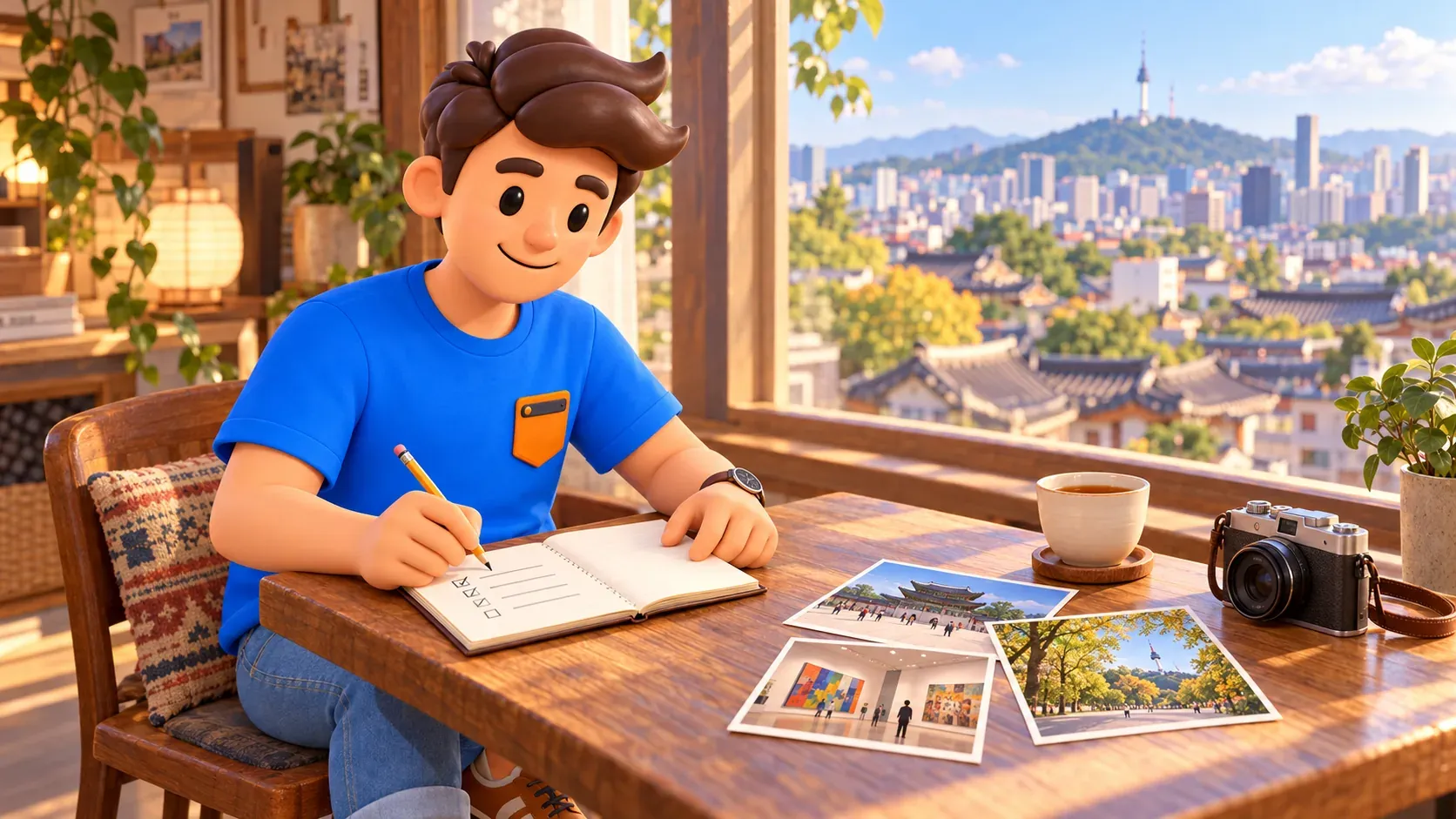
- Count full days between arrival and departure.
- Choose two main interests and the districts that fit them.
- Give each busy day one principal visit.
- Add a nearby walk, food and time without obligations.
- Check access and calendars, then keep one useful alternative.
Your list of sights will probably become shorter, while the trip itself becomes more meaningful. Each day gains a reason: understanding a palace, exploring Korean art, walking beside a lake or looking over the city from a hill. That clarity is a strong starting point for a first visit to Seoul.