
First Time in London: Which Area Should You Explore First?
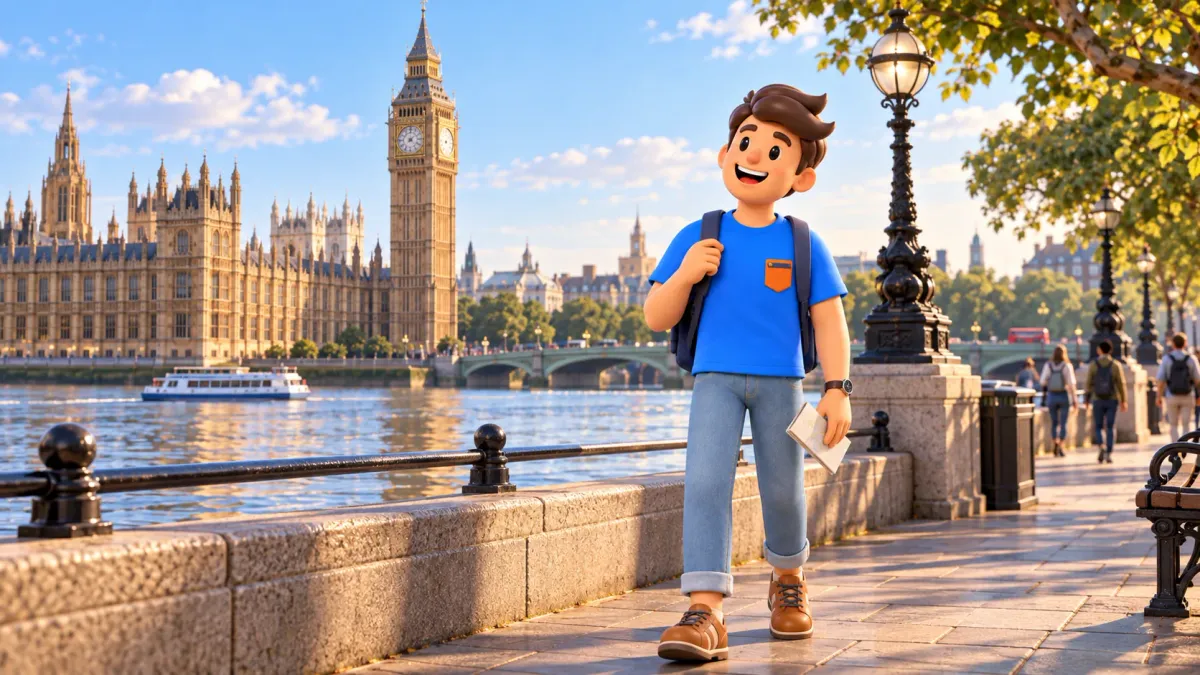
For an immediately recognisable introduction to London, start in Westminster. Choose the south bank of the Thames if you would rather walk, enjoy the views and keep major admissions optional. South Kensington suits a museum-led day; the City rewards an interest in contrasting architecture. Give Greenwich its own substantial part of the day, including the journey there and back.
The right starting area depends on the experience you want, rather than a ranking of neighbourhoods. This guide helps you make that choice, find a sensible beginning and recognise a useful stopping point. It offers six approaches to a first visit without turning each landmark into a complete attraction guide.
Choose the experience before collecting addresses
Picture one moment you would like to remember: the clock above Parliament, a river crossing towards a gallery, a fascinating museum object or a rest above the Greenwich skyline. Use that moment to choose the centre of your day. Then look for one nearby continuation, such as a park after a palace or a square before a performance.
On arrival day, convenience matters. An area that is easy to reach from your accommodation may be a better introduction than an ambitious visit across town. Allow space for the journey, food and a proper pause. The durations below are editorial planning estimates for the suggested format, rather than measured walking times or promises about queues.
Turn these ideas into a trip built around you with RoadMe: the app develops a personalised route and day-by-day plan around your interests, dates, pace and budget. It makes it easier to organise separate ideas into a programme that is practical to use while exploring.
If you are travelling together, agree on one shared priority each day. A keen museum visitor and someone who prefers being outdoors can often combine one chosen admission with a nearby walk. They do not need to spend the whole day pursuing separate lists.
Six ways to begin exploring London
- Famous landmarks: Westminster and St James's Park. About 2–3 hours outdoors.
- River views: South Bank and Bankside. About 2–3 hours for a chosen stretch.
- Architectural contrasts: The City. Roughly half a day with one admission.
- Squares and theatre streets: Trafalgar Square and Covent Garden. About 2–3 hours, excluding a show.
- Museums: South Kensington. Half a day for one museum and a walk.
- Maritime stories and greenery: Greenwich. A substantial day block, plus travel.
These are alternatives, not six stages of one itinerary. A familiar name appearing beside another in a guide does not mean that combining every visit will make a comfortable day.
Westminster for the London you already recognise
Begin around Parliament Square, look at Westminster Abbey from outside and approach Westminster Bridge. Parliament, the clock tower and the Thames give you an immediate sense of place. One small distinction adds useful context: Big Ben is the great bell, while the structure containing it is the Elizabeth Tower. You can appreciate that familiar silhouette without booking a tower visit.
From here, choose one direction. For a royal theme, walk towards St James's Park and continue to Buckingham Palace. For a riverside introduction, cross the bridge and remain on the south bank. The first option alternates ceremonial spaces with greenery; the second changes your view of Parliament by putting water between you and the building.
Keep an Abbey interior visit separate from the short outdoor version. Likewise, seeing Buckingham Palace from the public surroundings is different from entering the State Rooms. Those rooms open in summer, with selected special tours at other times. Check the calendar if the Changing of the Guard matters to you, but let the neighbourhood remain worthwhile even without a ceremony.
South Bank and Bankside for an open-ended river walk
A useful beginning is the stretch from the London Eye towards the National Theatre, continuing east if you feel like walking further. The river provides orientation and changing views. Look across the water as well as ahead: bridges, opposite-bank buildings and the spaces between cultural venues make the walk more interesting than a race between entrance doors.
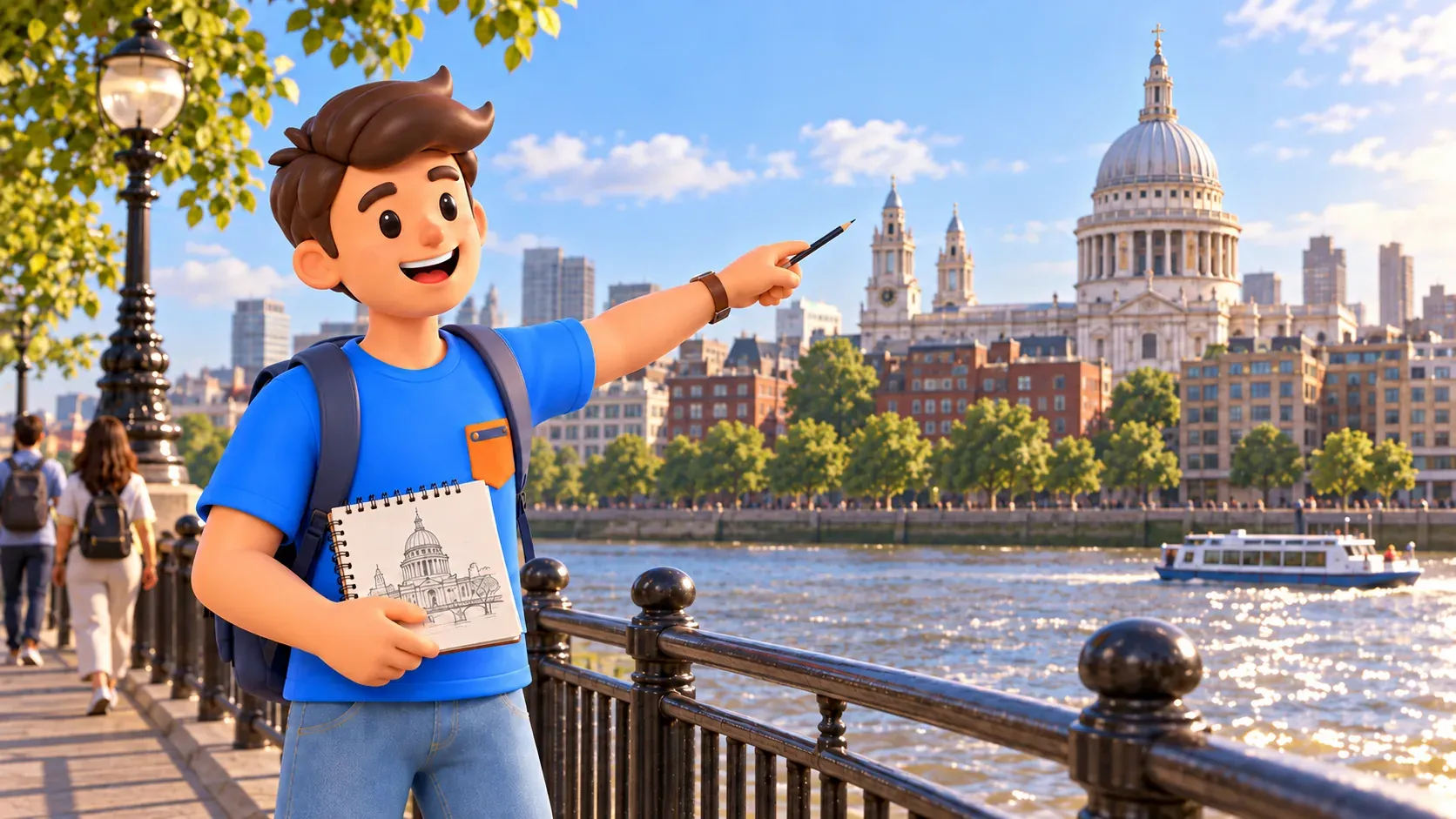
For a clear destination, continue towards Tate Modern and Millennium Bridge on Bankside, beyond South Bank itself. This is an extension to choose deliberately, rather than an automatic requirement. Near the bridge, the direction towards St Paul's Cathedral creates a striking comparison with the former power station occupied by Tate Modern. The buildings make a useful visual conversation across the Thames.
A London Eye ride, a gallery visit and a performance are separate commitments. Being on the same general riverside route does not make their admission time disappear. Decide whether today's priority is the walk or a venue. In sustained rain, finish a shorter stretch and use one planned indoor stop instead of pressing on simply to complete the original line.
The City for different London eras side by side
Choose the City if you enjoy reading a place through its buildings. A compact eastern option connects Leadenhall Market, the Lloyd's Building and the Gherkin. Compare materials, height and the space left between structures. An interesting first walk can come from finding a viewpoint where two very different buildings share the frame, rather than collecting facts about every facade.
Another option begins in the western City around St Paul's Cathedral and continues over Millennium Bridge. Treat it as a separate starting choice. If the Tower of London is your main interest, build the day around that substantial visit and use Tower Bridge as a nearby continuation. Adding the whole City afterwards can turn a coherent visit into a long series of obligations.
A viewpoint can be an enjoyable finish, provided its admission arrangements fit your date. Free entry does not necessarily mean unrestricted walk-in access. Churches and historic buildings also have distinct arrangements for sightseeing, services and events. For a first introduction, an outdoor route with one intentionally selected admission is enough; the interiors can become a reason to return.
Covent Garden and the West End for streets and squares
Start in Trafalgar Square and continue towards Covent Garden. Notice how the large open square gives way to narrower streets and theatre facades. The National Gallery and St Martin-in-the-Fields offer possible reasons to linger around the starting point, but neither needs to become an obligatory interior stop on a short walk.
In Covent Garden, give the surroundings time as well as the market itself. Seven Dials and Neal's Yard provide a possible continuation. A small area can reward a slower look: a turn into a courtyard or a change of building scale creates a memorable episode without requiring another famous attraction. This approach suits a first afternoon when you want movement and pauses rather than timed admissions.
If you have theatre tickets, work backwards from the actual venue and curtain time. The West End is an area, not a single arrival point. Leave room to reach the right building and take your seat. Before a show, a nearby meal or quiet break may be more useful than squeezing in the final hour of a museum visit elsewhere.
South Kensington for one substantial museum discovery
The Natural History Museum, Science Museum and Victoria and Albert Museum sit close to one another here. Choose by the question that interests you: the natural world, technology or how people make and design things. Trying to cover all three can produce an afternoon of entrance halls rather than a satisfying encounter with a collection.
General admission is free at all three, but the arrangements differ. Book a free general admission ticket for the Science Museum. The Natural History Museum recommends a free ticket to guarantee entry. General admission to V&A South Kensington does not require a booking. Some exhibitions, events and special activities have separate charges, so a free entrance does not mean that every experience is included.
Choose a few sections in one museum, then consider a walk towards the Royal Albert Hall and Kensington Gardens. The change from concentrated looking to outdoor space gives the afternoon a different rhythm. If the weather turns, finishing after the museum is also a complete day; there is no need to replace the gardens with a second large collection.
These general admission arrangements were checked on 16 October 2026. For your date, also check the galleries you want, special exhibitions and holiday exceptions, rather than assuming that every part of a large museum is always available.

Greenwich for a different rhythm and a separate outing
Greenwich combines maritime interests, architecture and a large park. Begin near Cutty Sark, then choose the grounds of the Old Royal Naval College or the National Maritime Museum. Each provides a different emphasis: a ship, an architectural ensemble or stories of journeys by sea. Their proximity is useful, but it does not require you to enter everything.
Later, consider the walk uphill through Greenwich Park towards the Royal Observatory. Allow for the slope rather than reading the route as a flat line on a map. If that climb does not suit your group, stay with the lower part of the area and a museum visit. Observatory admission is a separate paid choice; general entry to the National Maritime Museum is free, with separate arrangements for special exhibitions.
There is an important current exception: the Peter Harrison Planetarium is closed for refurbishment. Check the actual performance and venue before organising a day around a familiar programme description. Greenwich works best when one chosen admission leaves room for the park, a meal and the return journey. It is less rewarding as a hurried attempt to fit several museums into the time left after lunch.
Make your chosen area into a comfortable first day
Use a simple sequence: an easy arrival point, one main experience, a nearby continuation, a break and a clear finish. Parliament Square, an outdoor Westminster introduction, St James's Park and the palace exterior make one example. A South Kensington museum, lunch and a short garden walk make another. Adjust the shape to your date and energy.
For a personalised programme instead of assembling every day from separate addresses, try RoadMe: the app plans your trip around the places and experiences that interest you. Download the city while online before going out to use its offline maps and navigation afterwards.
Before leaving, settle three questions: where you want an interior visit, how much walking feels comfortable and where the outing ends. Check reservations, last admission and the journey back. If you need a particular accessible entrance or a route without steps, confirm the details with the venue; a short distance does not establish step-free access.
You do not have to choose the most famous neighbourhood against your own interests. Westminster supplies familiar landmarks, the Thames gives a wider city view, and a museum offers a focused discovery. Start with the experience that makes you want to head out, leaving enough freedom to stay longer when somewhere unexpectedly catches your attention.


