
Old Town in Two Hours: Quiet Streets Before an Evening at Second City
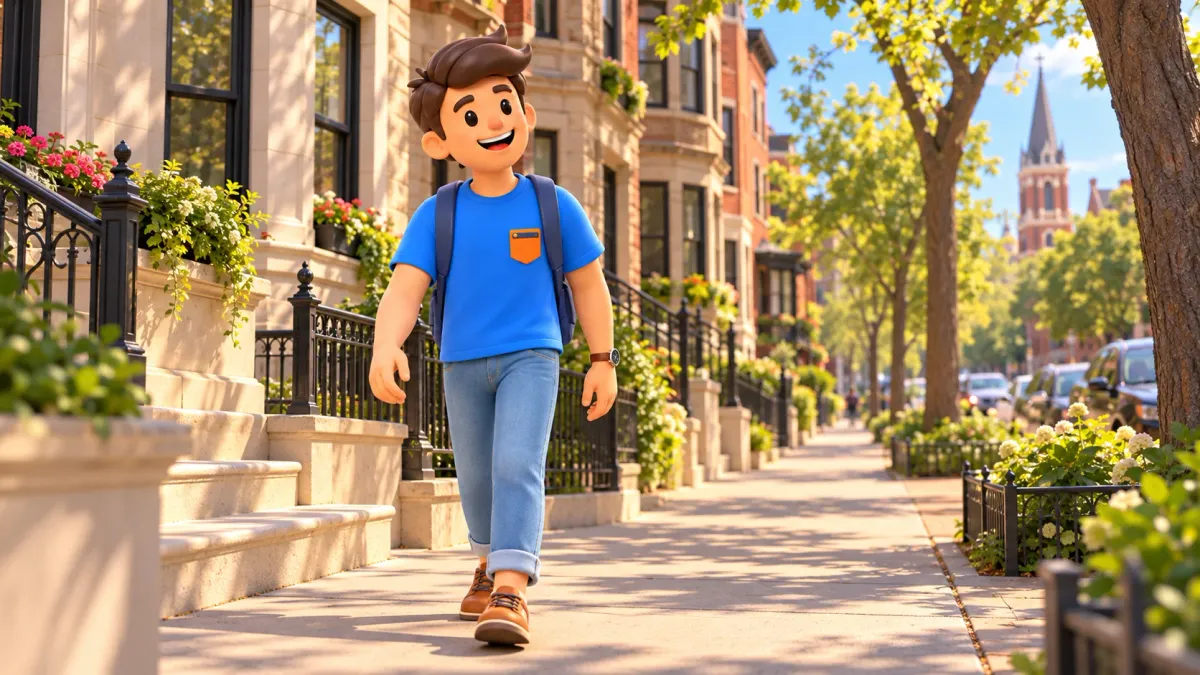
Old Town offers a different rhythm from Chicago’s downtown towers. A church steeple rises above residential streets, a private row house carries a significant social history, and a thoughtful Lincoln stands near the edge of the park. The Second City adds another layer: a working place for comedy, reached after a walk rather than treated as a quick attraction to tick off.
This two-hour route begins outside St. Michael in Old Town, continues through the Crilly Court area to the Henry Gerber House, visits the Standing Lincoln and finishes near The Second City at North Avenue and Wells Street. A performance comes afterwards, with its own ticket, arrival requirements and duration. The walk is complete outdoors, so neither a church interior nor a private house visit is necessary.
Give the neighbourhood two hours before scheduling a show
Start at St. Michael Church, 1633 North Cleveland Avenue, near Eugenie Street. Follow the public streets east towards Crilly Court and the Henry Gerber House at 1710 North Crilly Court. Continue using public connections towards Clark Street and the permitted Lincoln Park paths for Abraham Lincoln: The Man. Finish by returning west along the public North Avenue pavements towards the Second City complex near Wells.
To fit Old Town into your whole Chicago stay, try RoadMe: the app builds a personal itinerary around your dates, interests and preferred pace. That helps give neighbourhood walks, booked performances and longer visits their own place across your available days.
- St. Michael exterior: around twenty minutes.
- Residential streets and the Henry Gerber House exterior: around twenty-five minutes.
- Standing Lincoln and its setting: around twenty minutes.
- Second City exterior and entrance orientation: around ten minutes.
- Allow thirty minutes for walking and crossings, plus fifteen for a pause and small delays.
The total is two hours, an editorial planning estimate rather than a measured track. Travel to the church and the journey after your actual finish come separately. There is some local repositioning between the residential streets, the park and the theatre. It is a neighbourhood introduction with a purposeful finish, not a claim that every stop lies on one straight line.
If you have a show reservation, work backwards from the operator’s required arrival time. Add time for a meal, ticket collection or other arrangements separately. Do not end a two-hour walk at the advertised curtain time and expect that to work as a theatre arrival plan. Without a booked performance, the same route remains a complete daytime outing.
St. Michael: begin with the steeple and the street around it
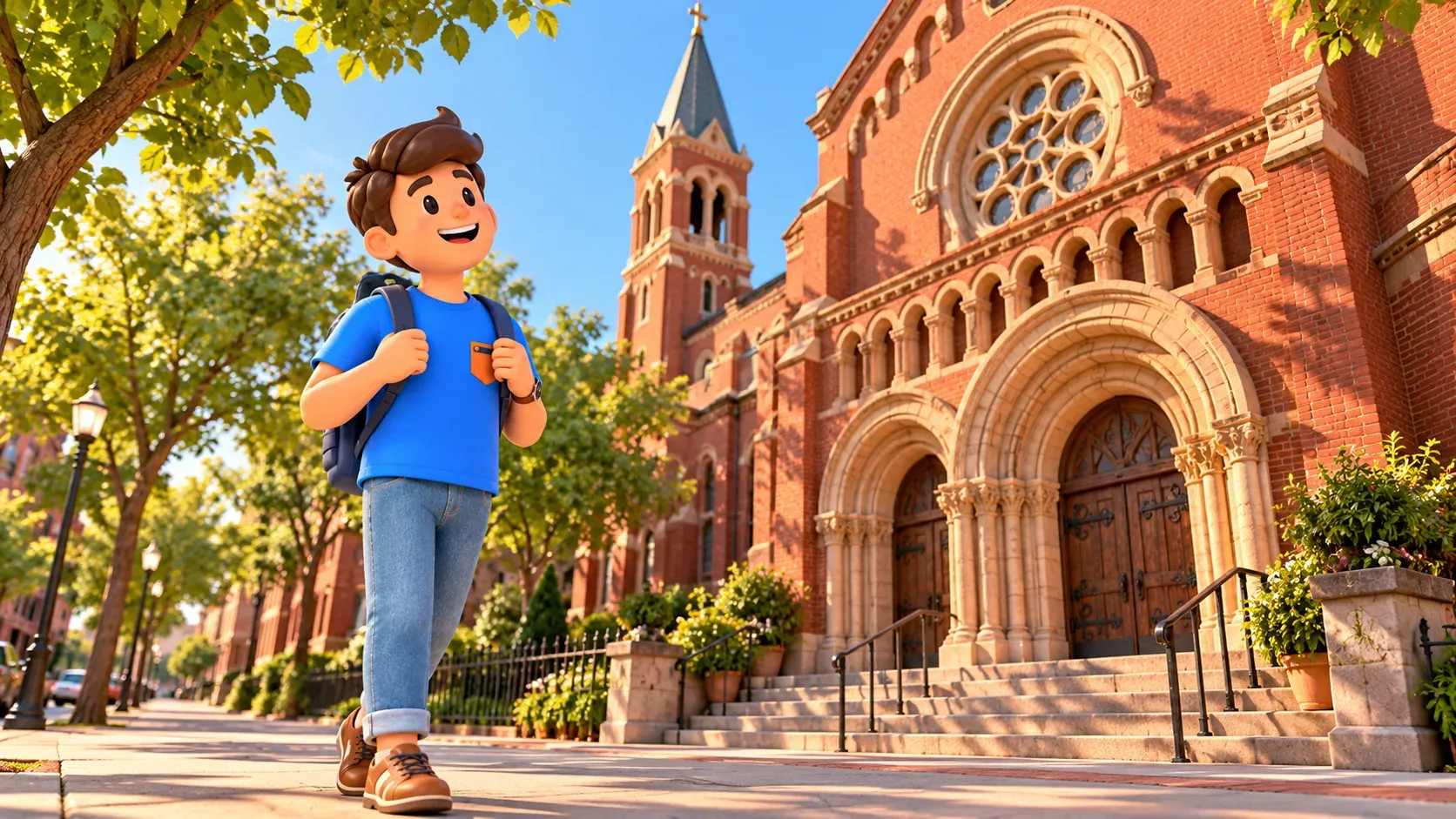
At St. Michael, first step back to see how the church relates to the lower buildings around it. The parish traces its beginnings to 1852, serving German immigrants, while the present church building was dedicated in 1869. Those dates give a short historical frame. On the pavement, the most immediate subject is the contrast between the tall religious landmark and the smaller residential scale.
Look at the relationship between the tower, the main entrance and the surrounding street. From one position the steeple may dominate; from another, the lower masonry and openings become more apparent. Change your angle within public pedestrian space instead of standing in an entrance. A broad view and one closer detail are enough to begin the architectural thread of the walk.
Do not read the church’s age as proof that everything visible survived the Great Chicago Fire unchanged. Its history includes destruction and rebuilding. For this short stop, it is more useful to recognise continuity of use and place than to attach an oversimplified survival story to every wall. Keep the history brief and let the building’s present role remain visible.
St. Michael is an active place of worship. An interior look is optional only when visitor access is actually permitted and does not interfere with services. A door being open is not a general invitation to explore every space. If worship, a ceremony or current arrangements make a visit unsuitable, remain outside and continue with the full outdoor route.
Before leaving, choose one feature to remember: the steeple, an entrance arch or the change of scale at the street corner. You can compare that feature with the domestic facades ahead. This is a useful way to keep the walk coherent without turning the church stop into a complete architectural lecture.
Crilly Court: notice the houses before looking for a landmark
Continue east on the public street network towards Crilly Court. Use the available pavements and designated crossings, following actual signs where temporary works affect a corner. The route does not depend on a passage through a courtyard, a private garden or the back of a residential building. Arriving by ordinary streets is part of understanding the neighbourhood.
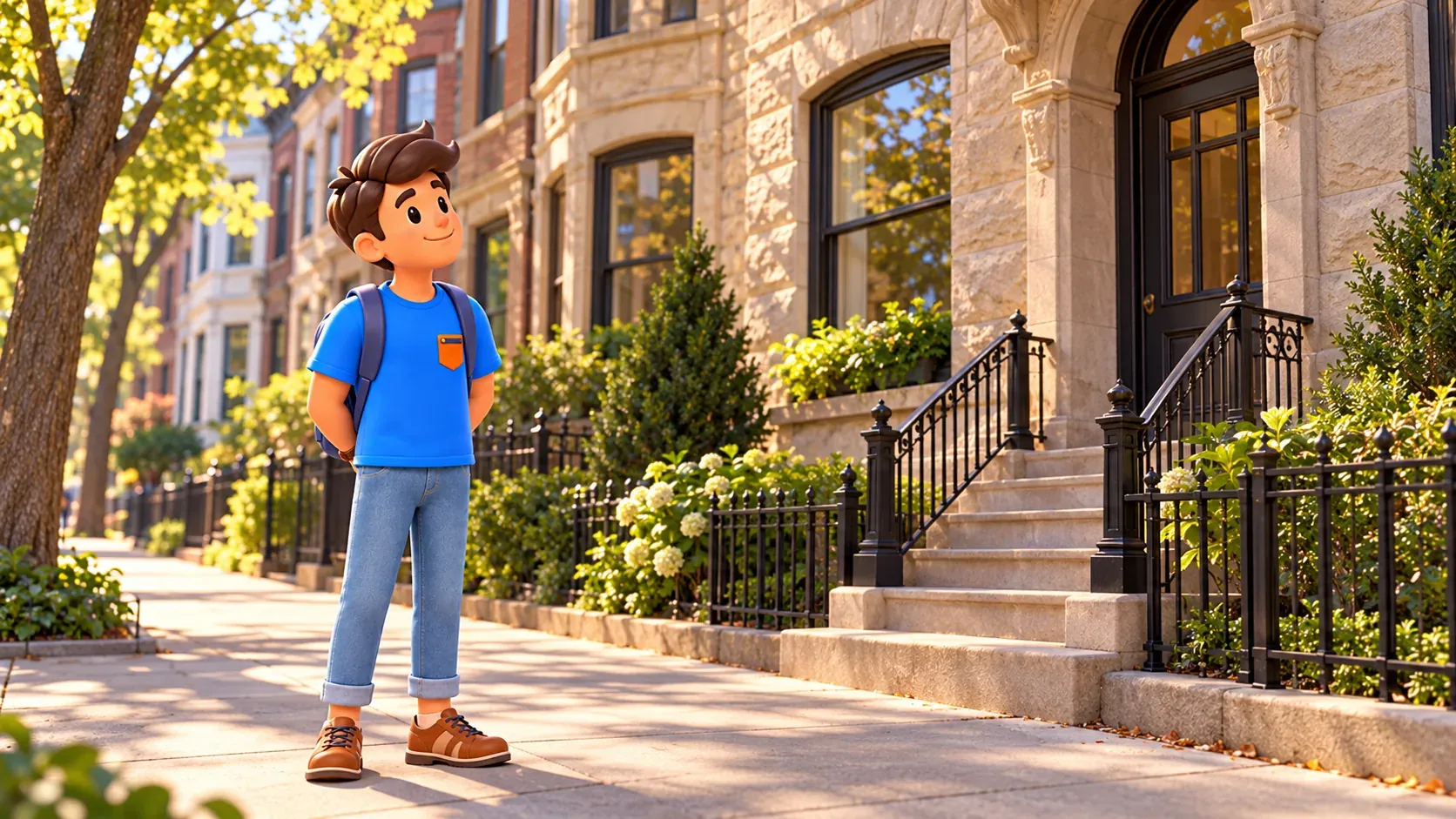
As the scale becomes more domestic, look at entrances, short front steps and the rhythm of neighbouring facades. You do not need to identify the history of every house to see how a row of individual doorways differs from a downtown office frontage. Notice where a small variation stands out against repeated windows or a shared building line.
Keep observations from the public pavement. These streets are lived in, and an interesting doorway is still somebody’s entrance. Do not climb steps, lean over fences or point a camera into windows. A photograph that shows the street’s proportions can explain more than a close image obtained from a private threshold.
In a group, pause where others can pass rather than forming a line across the pavement. Let everyone pick a detail before comparing impressions. A cornice, a stone surface or a front stair may become the most memorable part of this section. The aim is to notice a residential environment, not to produce a long list of supposedly hidden addresses.
Henry Gerber House: a short history at a private address
The Henry Gerber House is at 1710 North Crilly Court. Gerber lived here in 1924–1925 and founded the Society for Human Rights during that period, an early organisation advocating for gay civil rights in the United States. The address links a significant chapter of social history with an ordinary residential building rather than a purpose-built monument.
The house is privately managed and not open to the public. Treat this as a brief exterior stop from the public street. There is no museum entrance to find, no room to visit and no reason to knock. Its historical importance does not remove the privacy of the present residence or turn the frontage into a visitor facility.
Give the short account a moment, then look again at the surrounding houses. The contrast is the point: a place can matter greatly without announcing itself through a large monument or exhibition. Keep detailed biographical reading for another time, so that the street retains its own scale and the stop remains proportionate to a two-hour walk.
From here, use the public connections towards the Clark Street side of the area and the park. Crilly Court connects with Eugenie and St. Paul streets; choose the currently permitted path through that street network. Avoid inventing a shortcut between houses. Cross larger roads at designated crossings before joining the available park paths.
Standing Lincoln: compare a public monument with the private house
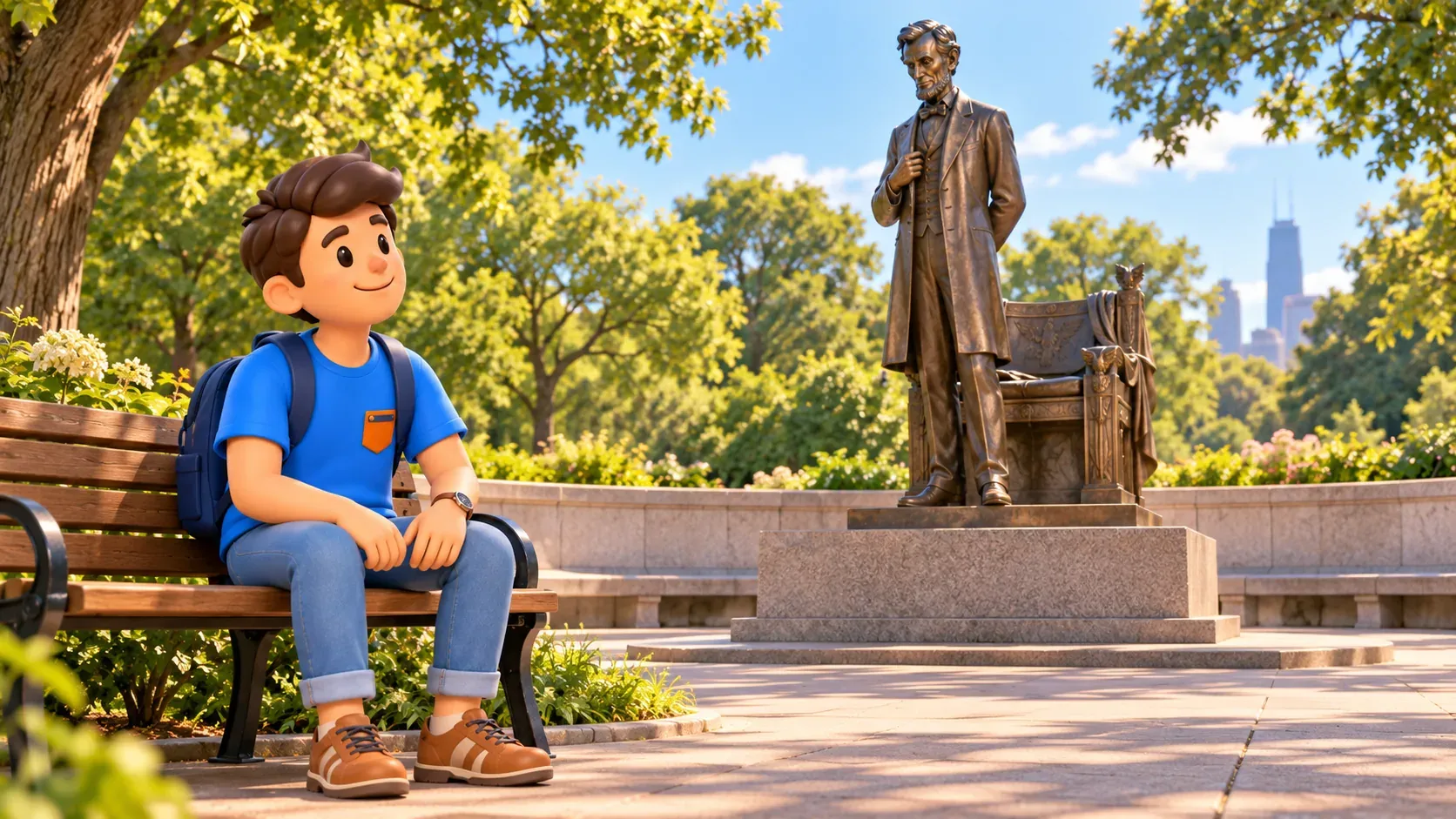
Abraham Lincoln: The Man stands in Lincoln Park north of North Avenue and east of the Chicago History Museum. The work by Augustus Saint-Gaudens was installed in 1887. Lincoln is shown standing thoughtfully before a large chair, within a monumental architectural setting. Use the permitted park approach rather than expecting the monument to be directly on the theatre’s street corner.
Begin far enough away to see the figure, chair and surrounding space together. Then, where access permits, move closer to consider the posture. The attraction of this stop is not only recognising a president. It is seeing how a public sculpture makes a quiet, reflective stance visible within a larger setting.
Compare this with the Henry Gerber House. One place marks history through a deliberately designed monument; the other carries history in a private domestic building. You do not need to rank their importance to understand how differently the city presents them. The walk’s small collection of places becomes more interesting when those differences remain intact.
Take an available public seat if you want to use part of the pause allowance here. Do not climb the monument or treat its architectural elements as play equipment. Maintenance, events or temporary arrangements may change the approach, so accept the view that is currently permitted. The route does not require every part of the setting to be accessible.
From the park, return towards North Avenue using the public paths and crossings. The next part deliberately changes tone, from a commemorative space to a working entertainment address. Keep enough time to locate the correct theatre entrance without confusing that orientation with the start of a performance visit.
The Second City: finish the walk before beginning the evening
Head west along the available North Avenue pavement towards Wells Street. The Second City occupies a complex with several stages and entrances; its visitor information lists the box office at 230 West North Avenue. The entrance you need depends on the actual stage and booking. Check the theatre name and show title on your ticket rather than treating one familiar doorway as correct for every event.
For the walking route, ten minutes here is enough to recognise the location and orient yourself. It is not enough for a show, an unscheduled backstage visit or an exploration of the training spaces. A building associated with comedy is still a venue with its own operating arrangements, not an open exhibition.
If you have booked, confirm the current arrival instructions, age conditions and any accessibility arrangements that matter to your group. Consider the language and format of the actual performance when choosing it. Do not assume every programme is entirely improvised or identical to another show carrying the same venue name.
RoadMe can help shape the rest of your personal trip around the interests that stood out here, balancing neighbourhood history, parks and booked entertainment. Try it to give a longer evening its own time instead of squeezing it into the walking allowance.
For another green outing nearby, save the half-day plan around Lincoln Park Zoo for a separate block. Old Town has already done its job when a church, residential street, private historic address and public monument begin to feel like different layers of the same neighbourhood.


