
Lincoln Park in Half a Day: Zoo, Greenery and One Indoor Stop

A half-day in Lincoln Park can feel spacious if you keep one indoor decision simple. Start with greenery around Nature Boardwalk, give Lincoln Park Zoo a selective visit and finish with either the Lincoln Park Conservatory or the Peggy Notebaert Nature Museum. The first indoor option is about plants and greenhouse environments; the second is a museum visit. Choosing one leaves room for the park between them.
This four-hour plan focuses on the area around the zoo rather than the whole length of Lincoln Park. It works for adults, families and mixed groups who want a green neighbourhood outing without rushing between entrances. It is not a complete zoo tour, a visit to both indoor venues or a full meal programme. Your booked indoor slot and the current opening arrangements determine how to place the final stop.
Start south of the zoo and work north towards one indoor destination
Begin on the public paths around Nature Boardwalk, at the southern end of the zoo area, east of Café Brauer. Use current park and zoo signs to identify the available route. Continue into Lincoln Park Zoo through a permitted visitor entrance, then work north through a selected part of the grounds. From the northern area, choose the Conservatory at 2391 North Stockton Drive or continue towards the Nature Museum at 2430 North Cannon Drive.
To fit this green half-day into your whole Chicago visit, try RoadMe: the app builds a personal itinerary around your interests, dates and preferred pace. That helps give the zoo, an indoor visit and the rest of your trip enough time across your available days.
- Lincoln Park Zoo: around ninety minutes for a selective visit.
- Park and Nature Boardwalk: around forty minutes, including a slower outdoor pause.
- One indoor venue: around sixty minutes, subject to the actual ticket and opening arrangements.
- Allow around thirty minutes for connecting movement and orientation, with twenty more for a pause and small delays.
The allocation totals four hours. It is an estimate for planning, not a measured walking time or an official minimum visit. Travel to the start and onwards from the chosen finish comes separately. A restaurant meal, a long indoor visit or an organised activity needs additional time. Do not try to preserve every minute if an animal habitat or a plant room holds your attention.
Choose the indoor destination before setting out. The Conservatory uses free timed-entry tickets, while the Nature Museum has its own admission arrangements. A booking is a real constraint in the day; a suggested order in a blog is flexible. If the available slot requires it, shorten the zoo section or move the indoor stop earlier while keeping only one of the two venues.
Nature Boardwalk: begin by slowing down around the pond
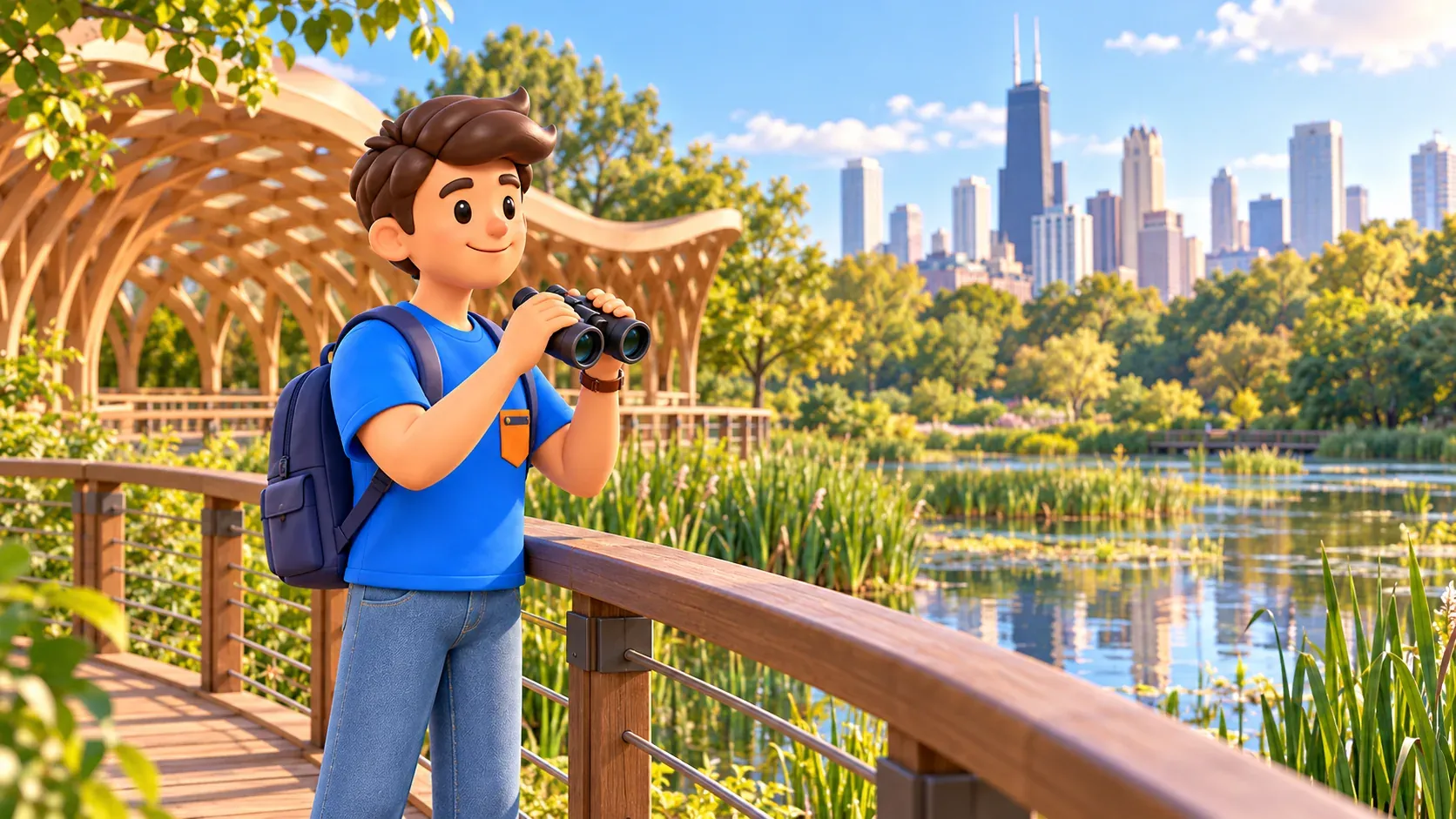
The zoo's Nature Boardwalk is a public outdoor landscape with a pond and planted habitats at the southern end of the area. Give it some of the forty-minute park allowance before entering the zoo. Start by noticing how the water, planting and paths fit between the city buildings and the larger park. The contrast with downtown streets becomes apparent without walking far.
Use the currently open path and look across the pond before moving on. Depending on the season and conditions, you may notice changes in plant colour, reflections or movement over the water. Wildlife sightings are a possibility rather than an appointment. There is no need to wait for a particular bird, turtle or insect to make the stop worthwhile.
The Peoples Gas Education Pavilion provides an architectural point of interest and can frame a view towards the skyline. Treat it as part of the landscape rather than a compulsory photograph to reproduce. If a programme or other activity occupies a space, use another permitted viewpoint. A quiet moment looking over the pond can be just as useful as reaching the most familiar angle.
Stay on the permitted paths and leave the planted edges undisturbed. Weather, ice, maintenance or temporary arrangements can affect a boardwalk section. If the route is restricted, choose another open park path or start the zoo visit sooner. The half-day does not depend on completing a particular circuit around the water.
Use ninety minutes at the zoo for a selection, not every habitat
Lincoln Park Zoo's general admission is free, with no general-admission reservation required. That is different from promising that every special event, encounter or ride is included. Look at the current zoo map and programme before choosing a small group of habitats. Its posted visitor information also distinguishes when the grounds and animal buildings open.
Pick a main interest before you begin: watching animal behaviour, comparing habitat design or simply enjoying a compact zoo visit. Let that interest shape a manageable route that trends north towards your indoor choice. Avoid moving repeatedly between opposite ends because a long list says every animal is essential. Ninety minutes works best when it has a clear focus.
At each chosen habitat, spend a little time observing before deciding that nothing is happening. An animal may be resting, inside or out of view, and visibility is not guaranteed. If a particular species is not visible, move to another open area instead of spending the whole allowance waiting. The zoo's animals and their care needs do not follow a visitor's checklist.
Where both indoor and outdoor viewing areas exist, follow their actual opening arrangements. General access to the zoo does not establish access to every room at every hour. The same care applies to demonstrations or encounters: consult the current schedule and any separate participation conditions. They are optional additions, not promises included in this plan.
For a family or mixed group, choose a meeting point visible to everyone before pausing at a habitat. Keep the pace open to the least energetic person and allow a short rest before moving on. This route is a neighbourhood half-day, not a test of how many enclosures can be ticked off. Adults visiting without children can use exactly the same selective approach.

Keep the park in the middle of the day, not just between entrances
As you move towards the northern part of the zoo, keep some outdoor time unassigned. A pause on an available public seat or a short look at planting can change the rhythm after concentrated animal watching. Use the connecting movement allowance for actual walking and orientation, and the park allowance for the moments when you stop. Treating those as different tasks helps avoid an overfull programme.
Before leaving the zoo, check the time against your indoor entry arrangements. If the zoo has taken longer than expected, reduce the remaining outdoor pause rather than assuming an operator will ignore a booked slot. If you have no fixed reservation, confirm that there is still enough open visiting time for the venue you chose.
Follow the available public paths towards Stockton Drive for the Conservatory, or farther north towards Cannon Drive for the Nature Museum. Use designated crossings where the route meets roads. The whole plan does not require a private shortcut, a lakeside detour or a visit to every garden in Lincoln Park. Keep the chosen indoor destination as the next clear step.
Choose the Conservatory for plants and contrasting greenhouse rooms
Lincoln Park Conservatory is at 2391 North Stockton Drive, near the north end of the zoo area. Its Palm House, Fern Room, Orchid House and Show House provide different plant environments. Choose it when you would rather look at leaves, growth patterns and the structure of a greenhouse visit than spend an hour moving through museum exhibits.
Entry is free with a timed-entry ticket, and booking in advance is strongly recommended. The Conservatory is normally closed on Mondays and Tuesdays; consult the current booking calendar for your actual date, available slots and final-entry conditions. A general park opening time does not describe the Conservatory's visitor access. Do not assume a walk-up place will be available simply because there is no admission charge.
Within the hour, look for differences between rooms rather than trying to identify every plant. Compare the scale of a leaf, the density of planting or the way light enters. A few selected details make the visit memorable without turning it into a botanical inventory. Seasonal displays and the accessible route depend on the arrangements you find that day.
The Conservatory is a working greenhouse with a warm climate, not a guaranteed cool refuge in hot weather. Respect its visitor rules and leave plants, pools and displays undisturbed. If the timed ticket you need is unavailable, choose a longer outdoor outing or make the Nature Museum your single indoor alternative only after confirming its own access. Do not automatically add both.
Choose the Nature Museum for an hour with a clear exhibit focus
The Peggy Notebaert Nature Museum is at 2430 North Cannon Drive, north of the zoo and Conservatory area. Choose it if you want an indoor museum component rather than another garden environment. Give the visit a focus from the current exhibit information, then allow the hour to cover that selection instead of expecting to see every part of the museum.
Check the actual admission conditions and opening calendar for your date. A particularly important distinction is the Judy Istock Butterfly Haven: basic museum admission does not include it. Non-members need a separate add-on ticket for that space under the museum's current arrangement. If butterflies are the reason for your visit, confirm that access before choosing your museum ticket.
Do not treat a Butterfly Haven ticket as a guarantee that a butterfly will land on you or that a particular species will be visible. Follow the space's instructions and let the living environment set the experience. Any separate programme, release or demonstration depends on its actual schedule. The museum hour can still have a useful focus without promising a particular animal encounter.
If the museum interests you enough to need longer, expand that visit and reduce the zoo or outdoor portion. Keeping a four-hour label while adding a full museum exploration only creates a rushed finish. The choice is between two different ways to complete the half-day, not a challenge to reach both indoor entrances.

Finish according to the weather and the energy you have left
Choose the return or onward journey from your actual indoor finish, rather than assuming it ends back at Nature Boardwalk. Wind, rain, heat, ice and temporary closures can change the outdoor portion. Use currently permitted paths, shorten the route when necessary and do not depend on an indoor venue as an unbooked shelter. A long meal or further neighbourhood exploring belongs outside the basic four-hour allowance.
RoadMe can help build a complete personal trip plan around the interests that stood out here, balancing parks, museums and other visits at your preferred pace. Try it to give longer experiences their own place in the rest of Chicago.
For a wider family programme, the two-day Chicago plan with parks and the zoo connects several outings. This route has a narrower job: one green half-day around Lincoln Park Zoo, with enough time for the park and one well-chosen indoor stop.


