
Old Madrid in two hours: a walk from Puerta del Sol to Almudena
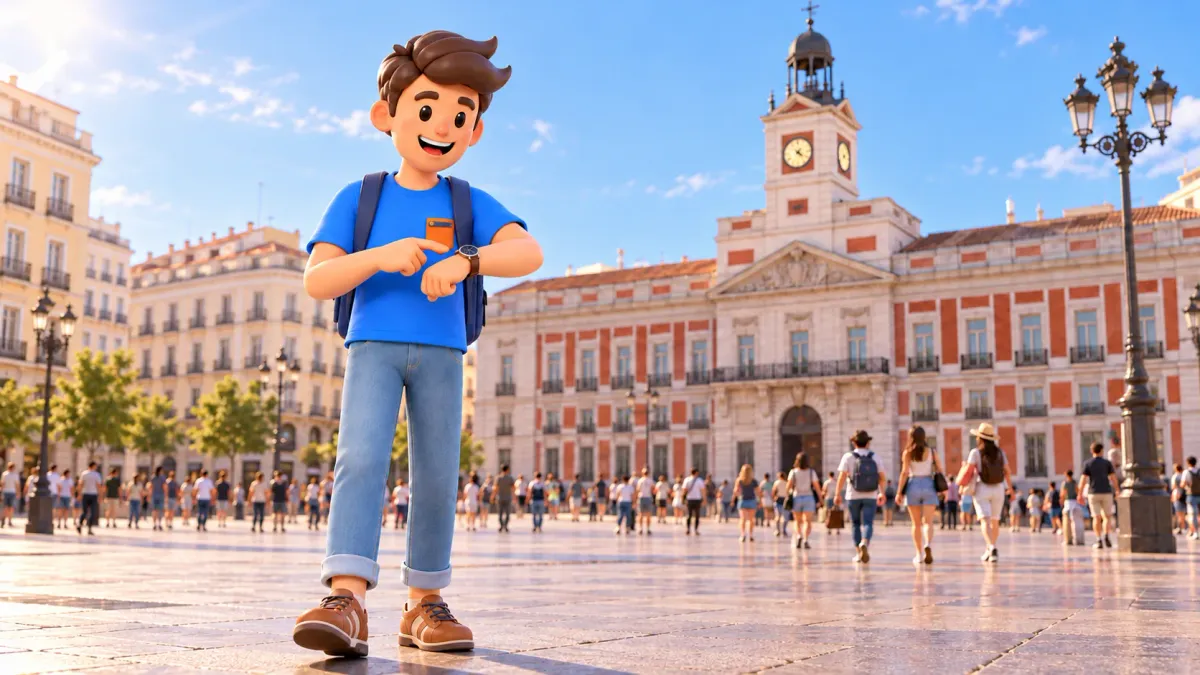
For a first look at old Madrid, choose one connected line: Puerta del Sol, Plaza Mayor, Plaza de la Villa and the outside of Almudena Cathedral. The squares, façades and scale of the streets change along the way. Two hours can introduce that progression and help you decide which places deserve a longer return visit.
This is a walk with short stops, without palace admission, museum galleries or a lengthy lunch. It begins at Sol and ends near Almudena, without returning to the start. Every duration below is an editorial estimate, not a measured walking time. Reaching Sol from your accommodation and travelling onwards afterwards require separate allowances.
Who this two-hour walk suits
Use it for a first free morning, a gap between other plans or an introduction after checking in. The important condition is having two hours for the walk itself. If that is your entire remaining time before a train, subtract the station journey, luggage collection and necessary margin first. Then choose a shorter section rather than assuming the whole route will fit.
Developing a short outing is easier and more efficient in RoadMe, which creates a personal route around your interests, available time and pace. Try starting with your own preferences so that a brief walk concentrates on what you actually want to discover.
The main theme is the shape of the old centre with a few useful historical connections. For detailed stories at every building, church interiors or extended photography, allow more time. A two-hour framework helps you choose; it does not make different ways of visiting equally quick or remove the ordinary time needed for pauses.
How the two hours divide
| Time from start | Section | Focus |
|---|---|---|
| 0–20 minutes | Puerta del Sol. | Choose two city symbols. |
| 20–35 minutes | Calle Mayor and the approach to Plaza Mayor. | Reach the next square comfortably. |
| 35–60 minutes | Plaza Mayor. | Look at the whole ensemble. |
| 60–75 minutes | Continue towards Plaza de la Villa. | Keep heading west. |
| 75–90 minutes | Plaza de la Villa. | Compare buildings from different centuries. |
| 90–105 minutes | Calle Mayor and the approach to Almudena. | Reach the royal quarter. |
| 105–120 minutes | Almudena exterior. | Finish without another admission. |
The connection blocks include orientation and small buffers. They are not a walking speed you must maintain. Starting at 10:00 and finishing around noon is one possible arrangement. An evening version is possible too, but light, crowds and activity on the squares will differ. This example does not promise identical conditions every day or at every hour.
Choose a precise meeting point before leaving. Sol is large and busy, so meeting simply “in the square” is too vague. Use a specific visible reference and start counting the route time once everyone has arrived. Looking for a companion at the opposite end should not silently consume the whole first stop.
If you are already near Almudena, reverse the line: Plaza de la Villa, Plaza Mayor and Sol. The table changes order and the finish moves to another part of the centre. There is no need to travel to Sol merely to match the title. Keep the same principle of outdoor observation and short stops, without quietly adding palace admission or a long meal.
Sol: select two symbols rather than a complete checklist
At Puerta del Sol, begin with the clock of the Casa de Correos and the Kilometre Zero plaque. The clock is associated with the New Year's tradition of twelve grapes, while the plaque marks the starting point for distances on the national radial roads. They represent different city stories: a shared celebration and the organisation of a road network.
Kilometre Zero should not be interpreted as a measured geographical centre of all Spain. Its actual role is enough for this walk. Approach when convenient without requiring an empty photographic frame. If people are queuing for pictures, recognise the reference and preserve time for the next section rather than making the photograph compulsory.
Another choice is the Bear and the Strawberry Tree statue, connected to Madrid's coat of arms. Use it instead of one of the first two references if a city emblem interests you more. Trying to examine every monument with equal care can turn twenty minutes at the beginning into half the entire outing.
Before leaving, notice the streets spreading out from the square. This sequence follows Calle Mayor towards Plaza Mayor, rather than Arenal towards the opera. Both lead to interesting parts of the centre, but mixing their directions creates an unnecessary loop. A deliberate detour makes sense only when you also adjust the larger plan and its finish.
Plaza Mayor: see the square as a whole
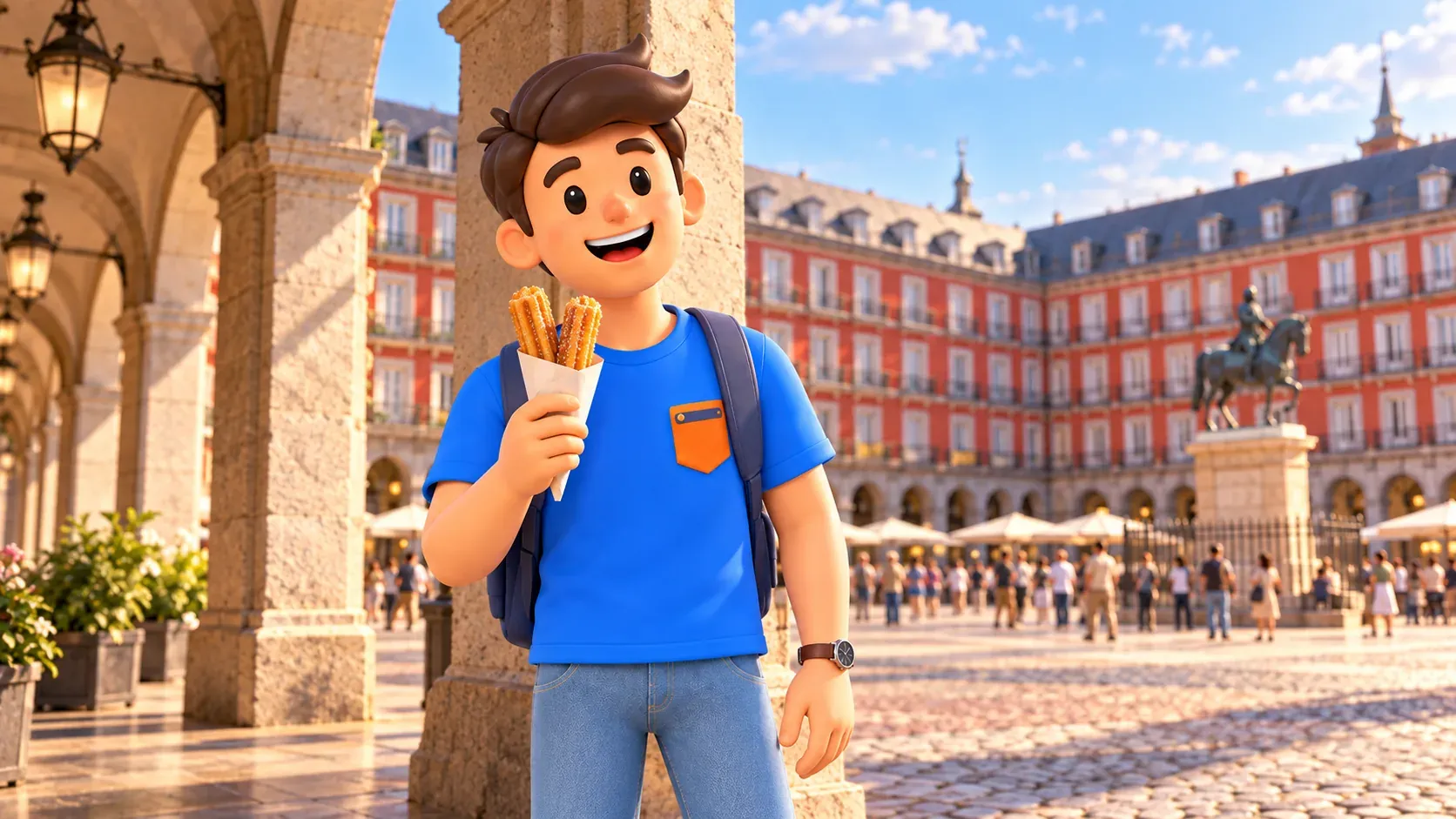
Follow Calle Mayor towards Plaza Mayor and use an available entrance. On arrival, notice the enclosed composition: repeated windows, arcades and the overall scale of the space. Let your eyes adjust before hunting for individual details. Compared with Sol, this stop is chiefly about the impression of a more unified architectural frame rather than the flow of several streets.
A brief historical reference helps explain that coherence. After the fire of 1790, Juan de Villanueva worked on the square's reconstruction. Its appearance is therefore not simply the unchanged result of one original moment. That is enough context to recognise a place shaped by alterations, without turning a short stop into a complete architectural chronology.
Choose one more reference: Philip III's equestrian statue or the façade of Casa de la Panadería. Comparing the centre of the square with its architectural edge is more useful here than collecting a full biography for every name. For photographs by the arcades, use the twenty-five-minute stop instead of automatically adding a complete circuit of all sides.
The horsemen on the first two squares are different: Charles III stands at Sol, Philip III at Plaza Mayor. Remembering which belongs where helps connect a photograph with its location. With children, compare the space around each statue: streets open into Sol, while Plaza Mayor has an enclosed architectural frame. A simple question can keep attention on the city without requiring a long lesson about monarchs.
Arco de Cuchilleros is known for its level change and staircase. The main line does not require descending and returning solely to include that feature. Continue towards Calle Mayor through a convenient available passage. An attractive staircase does not mean the entire walk must use it, especially when keeping to a limited schedule.
Likewise, do not automatically add a long stop at nearby San Miguel Market. Choosing food, finding somewhere to eat and waiting need time of their own. If lunch becomes the main priority, finish the short programme here or extend its overall duration. Two hours including a substantial seated meal is a different outing from the one described.
Plaza de la Villa: different centuries in one small space
Continue west along Calle Mayor and turn into Plaza de la Villa. The scale becomes more intimate. Instead of a long uniform enclosure, several buildings offer differences that are easy to notice from one stop. Allow about fifteen minutes for exteriors, without assuming entry to the historical institutions that occupy them or extending the stop with another appointment.
A useful memory aid is three centuries: the Lujanes house and tower belong to the fifteenth, Casa de Cisneros to the sixteenth, and Casa de la Villa to the seventeenth. You need not memorise every date. Compare outlines, materials and decoration to recognise that “old Madrid” contains several historical layers rather than one architectural age.
The square also changes how you look. Sol introduced symbols and city life; Plaza Mayor offered a coherent ensemble; here the interest lies in differences between neighbouring buildings. That progression makes a short walk meaningful without detailed attraction cards or an attempt to read the whole history of Madrid during one morning.
To connect this short outing with a comfortable wider trip, let RoadMe develop a personal day-by-day plan around your interests and pace. The app makes it easier to organise walks and substantial visits efficiently while giving more attention to the themes you enjoy.
Finish at Almudena and notice the change of scale
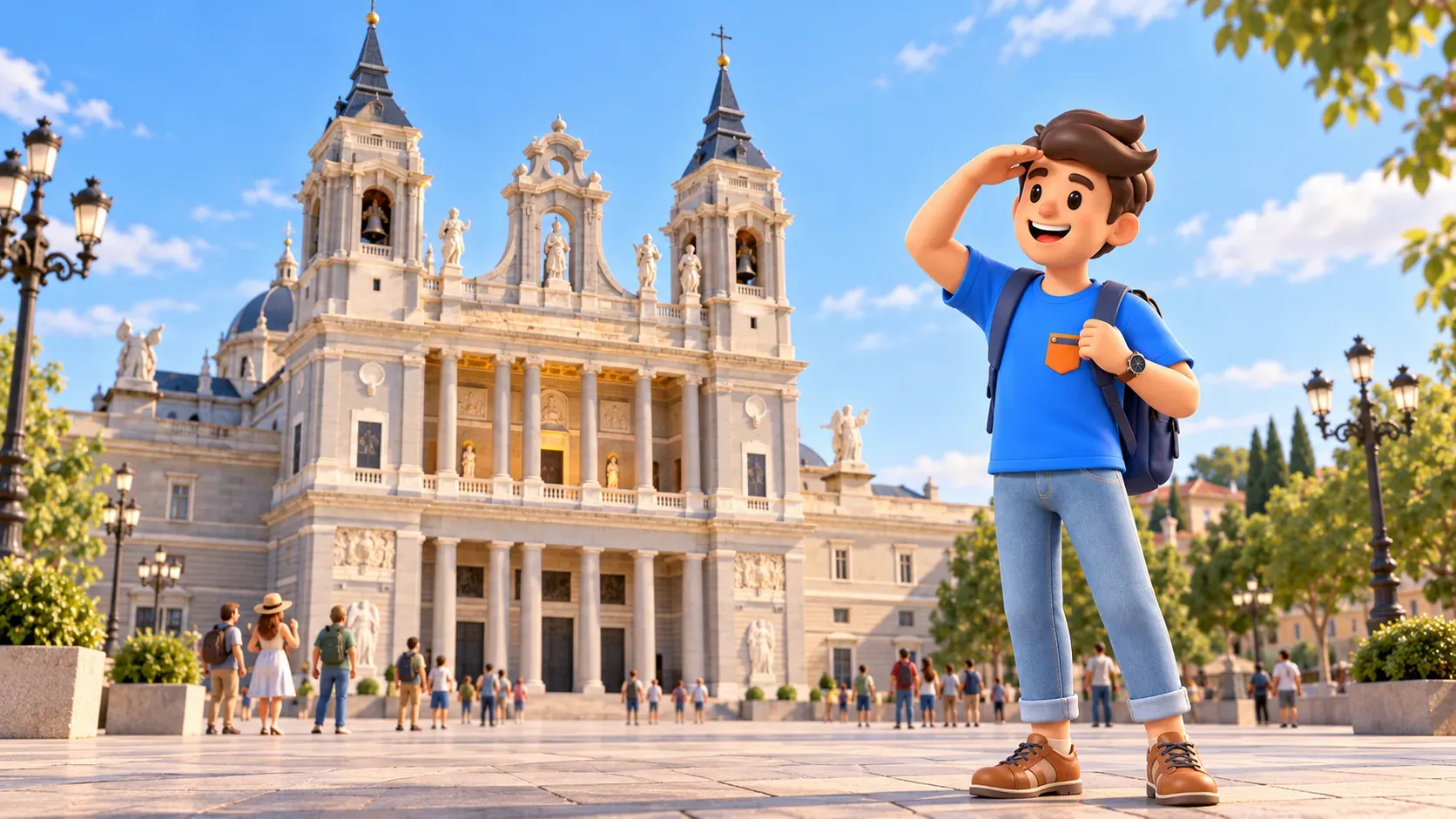
Continue along Calle Mayor towards Calle Bailén and Almudena Cathedral. The older streets now open towards the substantial royal ensemble. Avoid beginning a circuit of every adjacent garden and square: they deserve an independent outing. Here the task is to look at the cathedral exterior and conclude the selected line without silently starting another large visit.
Almudena looks monumental, yet it was consecrated in 1993. That short date makes a useful comparison with the age of the buildings at Plaza de la Villa. A historic-looking exterior does not mean that all central landmarks come from the same distant period. Madrid developed and continued building across different eras, a contrast visible within this compact sequence.
The cathedral interior, crypt, museum and elevated views are separate visiting tasks with their own arrangements. None is included in these final fifteen minutes. If you want to enter, complete the two-hour route and begin a new visit after checking access. The time estimate then remains understandable instead of expanding without explanation.
Shorten the walk or continue afterwards
If earlier stops took longer, remove extra photographs and detours. You can finish at Plaza de la Villa and return to Almudena another day. A shorter sequence is preferable to rushing through every square. With heavy rain, choose a suitable separate interior rather than promising that the same outdoor outing remains equally enjoyable in all weather.
For restricted passages or an event on a square, use an available diversion and reassess the time left. The main route does not depend on an admission ticket, but that does not guarantee that every public space is always unrestricted. When a diversion is substantial, keep fewer stops and a clear finish rather than chasing the original schedule.
After Almudena, plan the palace, lunch or a royal-quarter walk separately. For a complete day, see our one-day Madrid itinerary. This shorter version has already supplied its own story: city symbols, a major square, historical layers and a monumental finish. Choose any continuation according to your remaining time and interests, leaving the journey onwards a separate allowance.


