
One day in Madrid: the old centre, royal quarter and an evening on Gran Vía
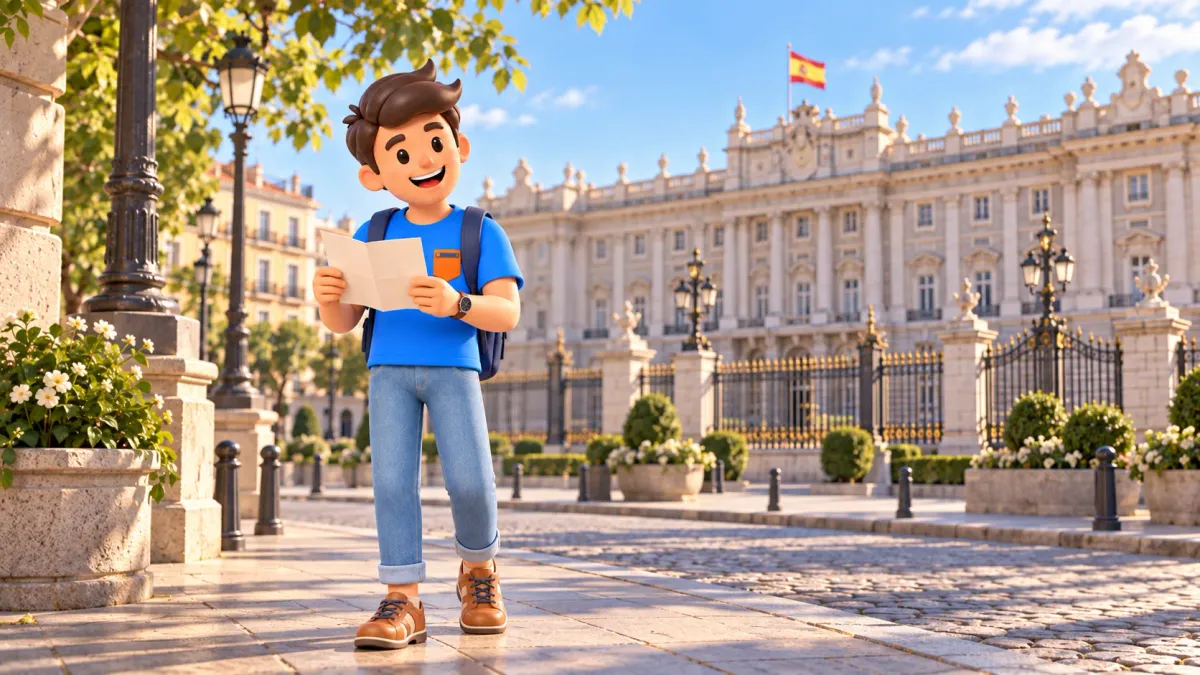
One day in Madrid works best when you give it a clear shape: the old centre in the morning, one substantial visit in the royal quarter, then an afternoon that gradually opens into the evening. Puerta del Sol, Plaza Mayor, the streets around the palace and Gran Vía offer quite different impressions without requiring you to cross the city repeatedly. The aim is to enjoy those changes of scale and atmosphere while leaving room for lunch.
This example runs roughly from 9am to 6pm, starting when you are already in central Madrid. It goes west from Sol to the Royal Palace, then north towards Plaza de España and east along Gran Vía to Callao. Airport transfers, checking into accommodation, collecting luggage and reaching a departure station need their own allowances. All timings are editorial planning estimates, including the stated connections, rather than measured journeys or guaranteed admission times.
Choose the visit that will anchor your day
The main version uses the Royal Palace as its substantial indoor visit. Giving it a proper block means you can explore something beyond the façades without squeezing out every meal and pause. If paintings matter more, use the Prado as your anchor instead and rebuild the afternoon towards Paseo del Prado and Retiro. Combining both major interiors creates a substantially more demanding day.
For a more convenient and efficient way to organise your day, try RoadMe: the app develops a personal itinerary around your interests, dates, pace and budget. Start with what you actually want to experience, and let the plan take shape around your preferences.
Check the palace's available entry times with Patrimonio Nacional before fixing the rest of the schedule, including notices about official events. The example assumes an entry around 11:30am; that is a planning choice, not a statement that tickets are available. With a different appointment, adjust the morning stops. If you cannot obtain a suitable visit, retain the exterior views and give the extra time to gardens or a longer lunch.
Your day at a glance
| Time | What the block covers |
|---|---|
| 9–9:40am | Puerta del Sol and the walk to Plaza Mayor. |
| 9:40–10:25am | Plaza Mayor and short pauses beneath its arcades. |
| 10:25–11am | Plaza de la Villa and the walk to Almudena, viewed outside. |
| 11–11:30am | Locating the palace entrance and preparing for admission. |
| 11:30am–1:30pm | Your chosen Royal Palace visit. |
| 1:30–2:30pm | Lunch in the royal quarter. |
| 2:30–4pm | Plaza de Oriente, Sabatini Gardens if accessible, and the connection to Plaza de España. |
| 4–6pm | Gran Vía towards Callao, a café stop and an unhurried finish. |
A connection is included where the row names it. Callao is the main finish, reached by walking east along Gran Vía from Plaza de España. Moving around palace rooms and browsing shops adds to the day's walking even though the central route looks compact on a map. Wear comfortable shoes and avoid spending your entry buffer on shopping before the palace.
Puerta del Sol: begin with the city's symbols
Sol makes an easy starting point because several important central streets meet here. Find the former post office building with its clock, then look for the Kilometre Zero plaque and the Bear and Strawberry Tree sculpture. A short stop gives you a few recognisable references before you begin moving through the old town. An empty foreground for every photograph is unlikely to be the most useful goal.
The plaque marks the starting point for measuring distances on Spain's radial national roads. The clock is associated with the New Year's tradition of eating twelve grapes. These details help explain why an otherwise busy pedestrian meeting place carries such significance in the city's everyday and ceremonial life.
Continue along Calle Mayor, turn into Calle de Esparteros and follow Calle de Postas towards Plaza Mayor. Have breakfast before the start or explicitly use some of the first block for coffee. If you arrive late, reduce time at the squares rather than trying to recover every minute by walking faster. The palace appointment remains the fixed point.
Plaza Mayor and Plaza de la Villa: two versions of old Madrid
Pause at the edge of Plaza Mayor to take in the repeated arches, windows and balconies. The enclosed square feels quite different from Sol. Choose a few features to notice: the Casa de la Panadería façade, the equestrian statue of Philip III and an opening into the surrounding streets. You can appreciate the composition without learning the history of every doorway.
The square developed through several building phases. Its appearance was brought towards greater uniformity in the seventeenth century, while Juan de Villanueva shaped reconstruction after the fire of 1790. Seeing it as a place repeatedly rebuilt gives the regular façades a more interesting story than treating everything as an untouched scene from one moment.
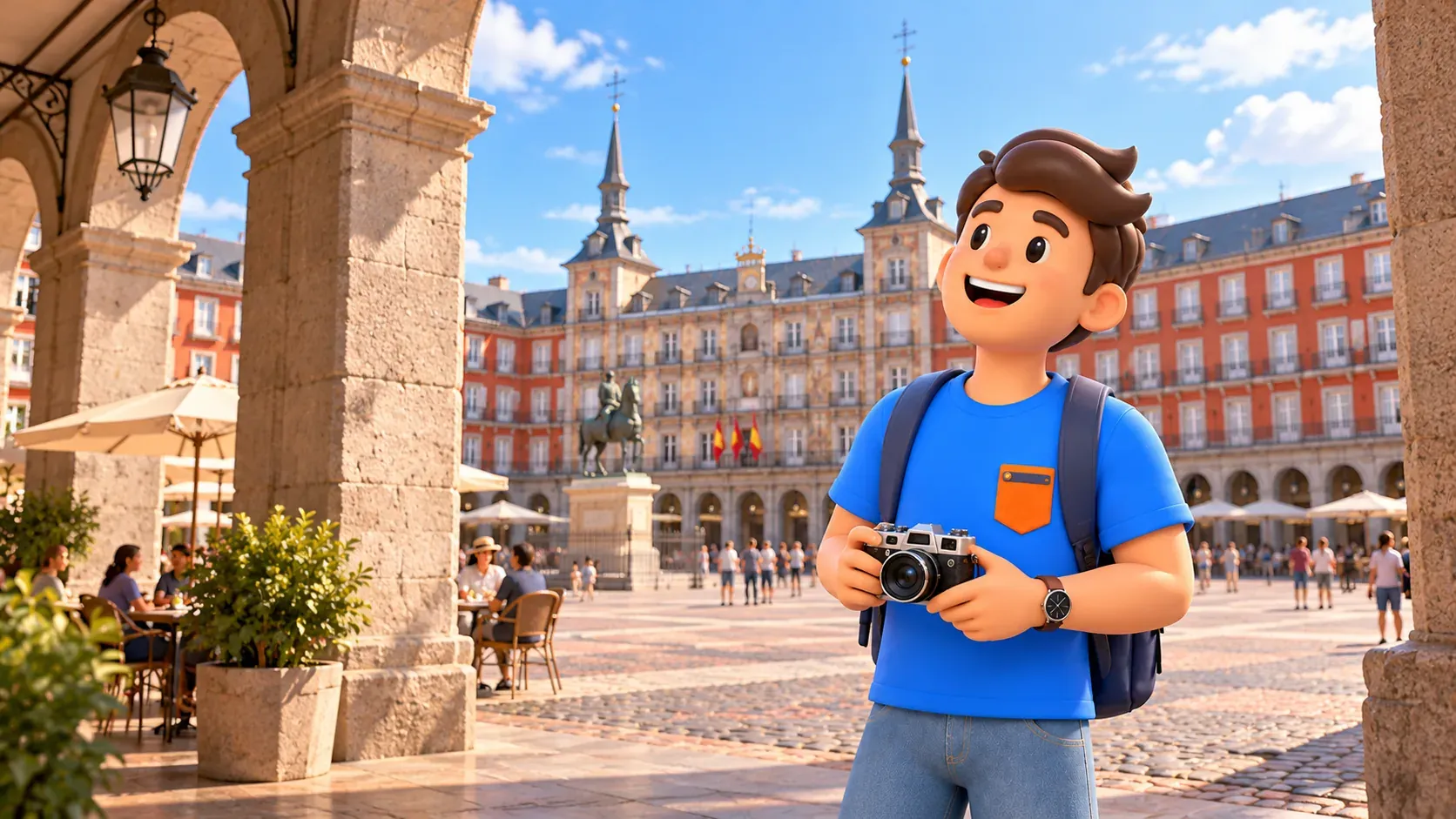
Leave through Calle de Ciudad Rodrigo, rejoin Calle Mayor and continue towards Plaza de la Villa. The neighbouring lanes and Mercado de San Miguel can easily tempt you into a longer diversion. Keep that optional browsing short when you have a palace appointment ahead, or return to it on another day.
Plaza de la Villa offers a smaller setting in which to compare buildings of different periods. The House and Tower of the Lujanes belong to the fifteenth century, Casa de Cisneros to the sixteenth and Casa de la Villa to the seventeenth. Look at materials, outlines and façade treatments. Three contrasts will stay with you more readily than a hurried list of names.
Almudena and the Royal Palace: make one visit count
Continue on Calle Mayor towards Calle de Bailén. Almudena Cathedral and the palace form a striking group of buildings and open spaces. In this timetable the cathedral is an exterior stop. Its museum, crypt and other interior visits have their own arrangements and require additional time; passing the building does not count as seeing all of them.
Although Almudena appears firmly embedded in the historic royal quarter, the present cathedral took a long time to complete and was consecrated in 1993. That contrast is worth remembering when looking across towards the palace. Buildings that form a convincing ensemble today can belong to quite different moments in the city's development.
Protect the half-hour before your booked palace entry. It allows for locating the correct entrance and following admission procedures, rather than assuming that a ticket removes every wait. Read what your chosen visit includes. The Royal Collections Gallery is a separate attraction and should not quietly become another major interior inside the same two-hour allowance.
Inside, concentrate on the scale of the ceremonial rooms, their decoration and the progression from one space to another. Two hours is an editorial allowance for a selected visit, not a promise to examine everything. If you want to stay longer, take that time from the late afternoon rather than losing lunch and arriving at the evening exhausted.
A little history helps connect the palace's scale to its site. The former Alcázar was destroyed by fire in 1734, and construction of the present palace began in 1738. That is enough context for a first visit: a new ceremonial residence replaced an earlier royal stronghold. You can explore the detailed building history later without turning this walk into a catalogue of architects.
After lunch: Oriente, Sabatini and Plaza de España
Choose lunch using the menu, available seating and the time you actually want to spend eating. The hour in the schedule includes ordering, waiting, eating and paying. Service will vary, and a leisurely restaurant meal may require longer. Treat a dedicated food exploration as another outing instead of adding a long sequence of stops to this day.
In Plaza de Oriente, find the equestrian statue of Philip IV and notice the space between the palace and Teatro Real. Stand still for a few minutes and compare the royal façade with the theatre side of the square. The theatre is an exterior landmark in this itinerary, with no interior tour assumed.
Continue towards Sabatini Gardens for another view of the palace, this time from the north. The geometric garden dates from the twentieth century and occupies the site of former royal stables. Its name does not mean that the present garden was entirely designed by Sabatini. Look for the change in perspective rather than treating this as another palace visit.
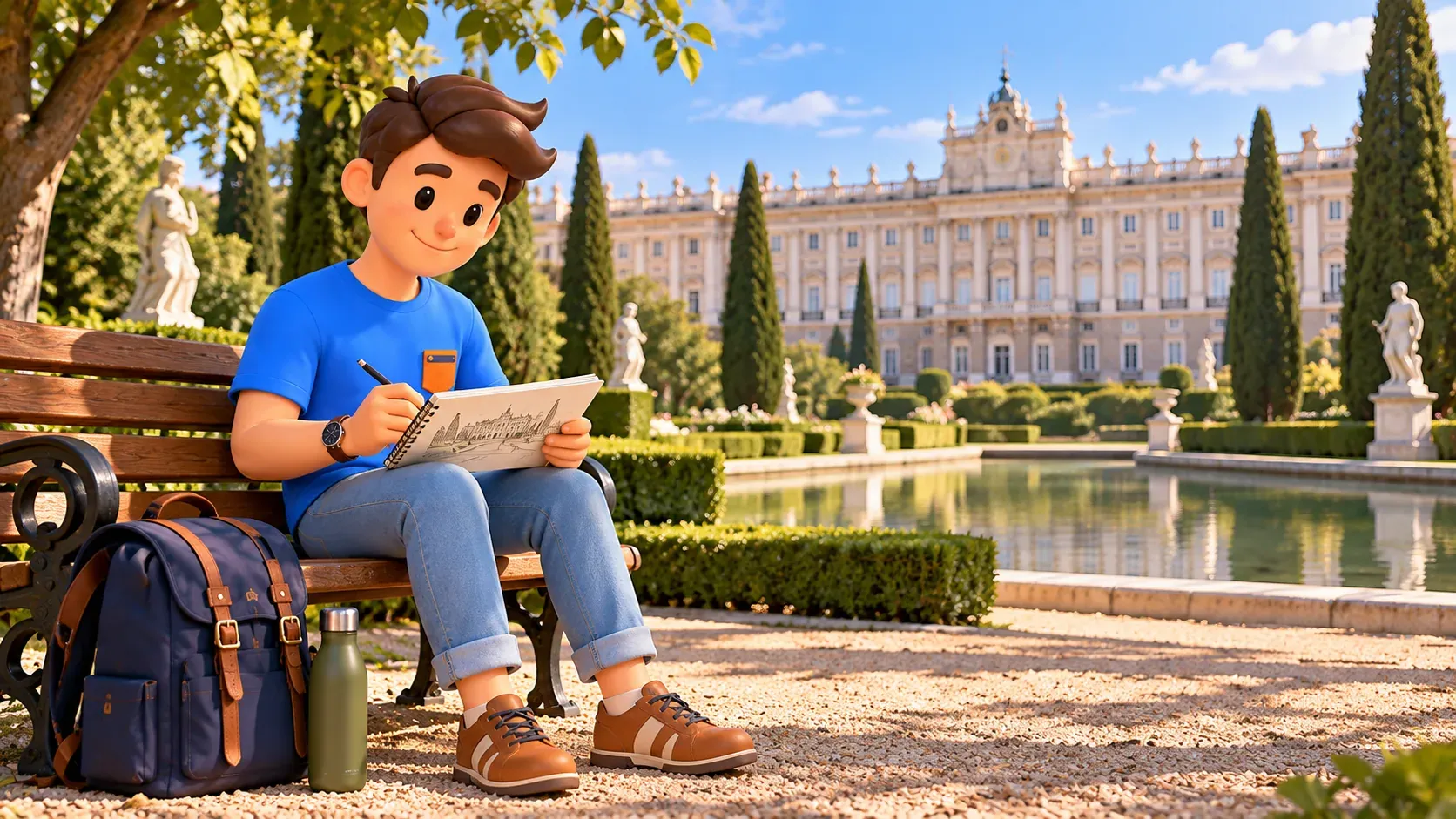
If the garden is temporarily closed, keep to public streets towards Plaza de España. There is no reason to spend the afternoon hunting for an alternative gate into a closed space. Pause by the Cervantes monument before the mood changes again: the next section belongs to a broad avenue, theatres and shop windows.
Gran Vía and Callao: leave the evening open
Walk from Plaza de España along Gran Vía towards Callao. Step out of the pedestrian flow before looking up at upper floors or taking photographs. The rounded corner of the Carrión building provides a useful landmark around Callao, which is a natural place to finish the main walk and find a café.
Gran Vía was created in the first third of the twentieth century. It offers a different stage of Madrid's development from the squares visited earlier. Compare building heights, dramatic corners and the width of the street. If you still feel energetic, continue towards Telefónica and eventually Metrópolis, counting that as an extension rather than a compulsory final stretch.
For the rest of your stay, let RoadMe work out a personal day-by-day trip plan based on your interests and preferred pace. It makes organising time in the city more convenient and helps turn the places you like into a coherent itinerary.
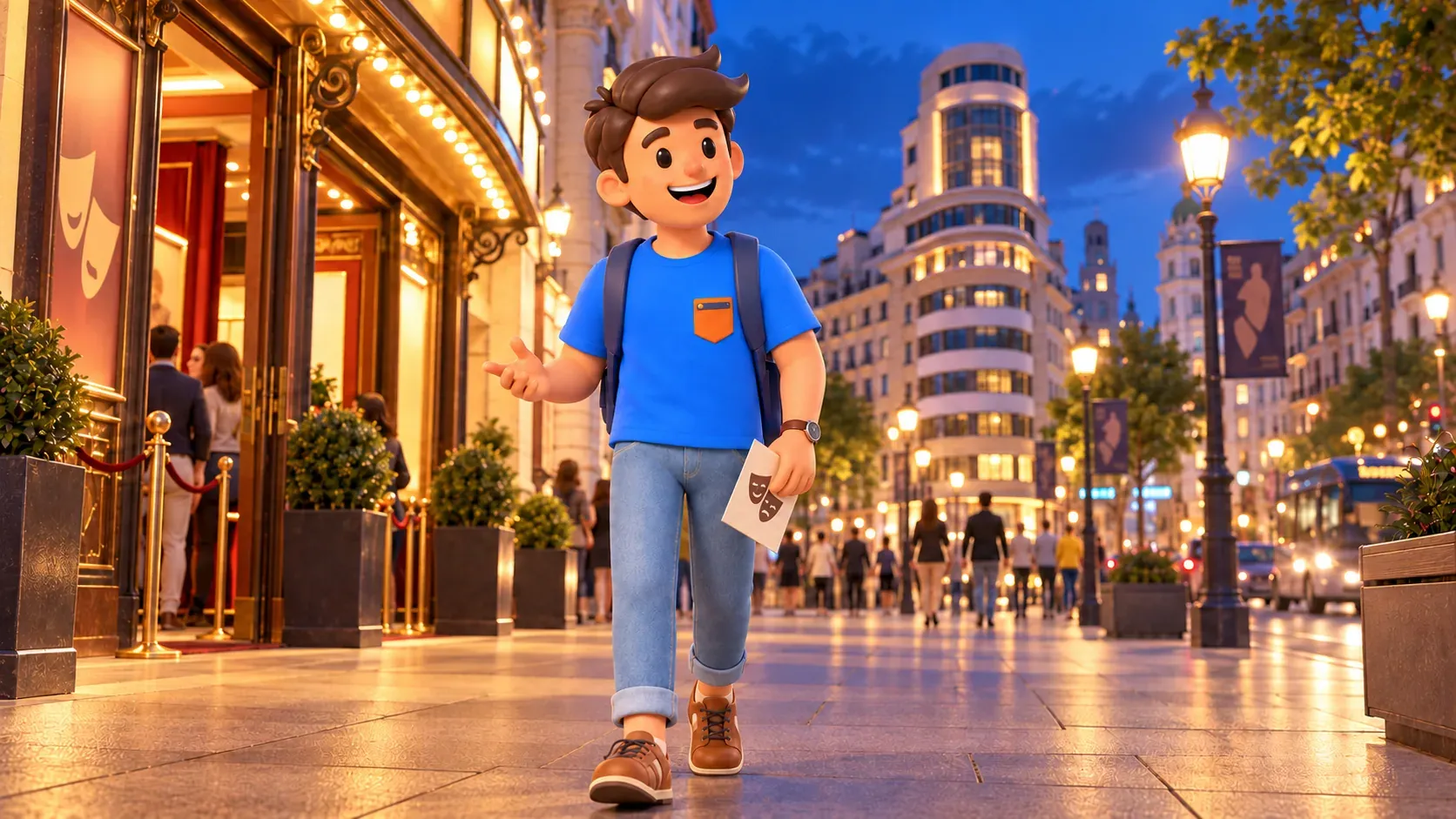
Choose a particular theatre performance in advance if you want one, allowing separately for dinner and admission. A street with many theatres does not guarantee suitable last-minute tickets for every show. An evening can also be a simple stroll with no further appointment to meet.
Adjust the day for weather and interests
For a sunset finish, head from Plaza de España towards the Temple of Debod instead of taking the longer Gran Vía section. Check sunset for your date because the useful timing changes substantially through the year. Looking at the temple outside and entering its interior are separate activities, with the latter subject to its own opening and booking arrangements.
In rain, retain the palace visit and shorten the gardens. In heat, start earlier and allow more time for water and indoor rest. For an art-focused alternative, give the Prado a substantial block and finish on the eastern side of the centre. Crossing back to Debod just for another photograph can undo the geographic logic of that version.
If you have an early departure, finish after the royal quarter and add the connection to your luggage or station. Setting a clear boundary is the most useful decision for a first day: one substantial indoor experience, several contrasting urban spaces and enough freedom to enjoy the evening you have chosen.


