
Oberkampf and Saint-Ambroise: a cultural walk in eastern Paris
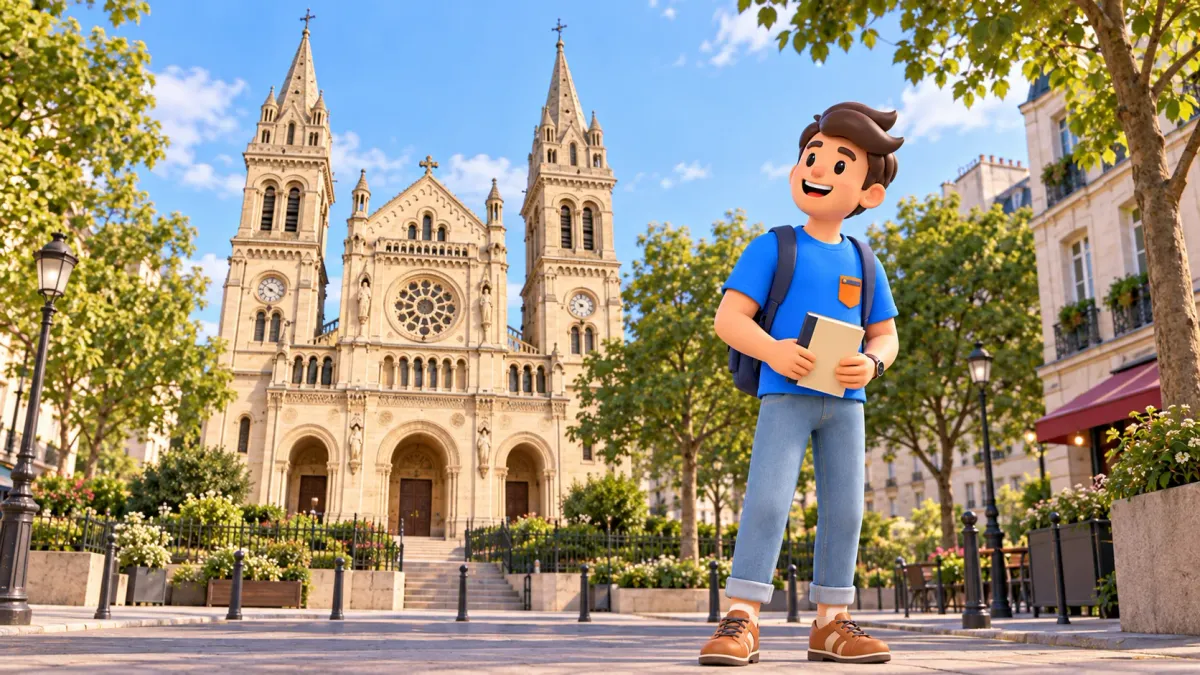
Oberkampf and Saint-Ambroise make a useful Paris walk when you choose one cultural visit before setting out. Begin with Saint-Ambroise church, pass the former foundry that houses Atelier des Lumières, and continue through the Oberkampf area towards Maison des Métallos. Church architecture, reused working buildings and ordinary neighbourhood streets give the outing a clear thread.
Choose an immersive exhibition at Atelier des Lumières or a specific performance, meeting or guided visit at Maison des Métallos. Let the other venue become an exterior stop. Allow roughly two and a half to three hours for the Atelier version; the Maison version depends on your chosen event’s duration. The connecting walk covers approximately 1.5–2 kilometres, with small detours. These are planning estimates, not measured walking times.
Choose the cultural appointment before arranging the walk
The simplest direction begins near Saint-Ambroise Métro station, follows public streets east towards Atelier des Lumières at 38 Rue Saint-Maur, then heads north through the Oberkampf area to Maison des Métallos at 94 Rue Jean-Pierre Timbaud. Finish towards Parmentier or Couronnes according to your final stop. Keep the addresses as your main reference points.
If Atelier is your chosen visit, reserve the programme and time slot first. Fit the church stop before it, then keep the northern streets flexible afterwards. For a Maison performance or guided tour, work backwards from its start time and use Atelier’s surroundings as part of the outdoor approach.
For a shorter outing, try RoadMe to create a personal two-hour route from your location, shaped around your interests and pace. Planning in the app makes it more convenient to turn your preferences into a coherent walk instead of assembling each stop separately.
A daytime walk gives you room to observe façades and pause in the neighbourhood. An evening performance may need a separate gap after the walk. Give your cultural appointment priority: a café break can move, but the start on a ticket cannot be treated as approximate.
| Stage in the Atelier version | Estimated time | Purpose |
|---|---|---|
| Saint-Ambroise | 15 minutes | Exterior observation and an optional brief interior visit |
| Walk to Atelier | 10 minutes | Reach 38 Rue Saint-Maur |
| Arrival margin | 15 minutes | Ticket and entrance arrangements |
| Selected immersive programme | About 50 minutes | Current programme example; confirm your own show |
| Oberkampf streets and Maison exterior | 35 minutes | Walk north and observe the second cultural building |
| Pause and finish | 25 minutes | Rest and approach your onward journey |
This example totals 150 minutes. Extend the pause or outdoor observations by up to half an hour for a slower three-hour outing. A full lunch, a second exhibition or a performance at the other venue needs extra time. Your actual booking may also have a different duration.
Saint-Ambroise: nineteenth-century Paris in a church façade
The present Saint-Ambroise church was built by Théodore Ballu between 1863 and 1869. Its combination of Romanesque and Gothic references belongs to the Second Empire period, when new streets were reshaping Paris. The parish history connects its construction with the growth of the neighbourhood around today’s Boulevard Voltaire.
Start by taking enough distance to see the façade as a whole. Notice the repeated arches, vertical emphasis and relationship between the church and the open space in front. The building provides an architectural introduction before the more functional industrial structures later in the walk. You do not need a detailed tour to appreciate that change.
The basic itinerary uses the exterior. If the church is open and a quiet visit is appropriate, spend a few minutes inside. It remains an active parish, so worship takes priority. Keep voices low and avoid turning a service into a photographic visit. An interior visit should remain optional.
The parish publishes regular and holiday opening hours, but its detailed holiday calendar includes older dates. This plan therefore avoids relying on a precise early opening. For an interior-focused visit, check the current parish information for your date. A daytime exterior start keeps the rest of the walk workable if entry is unavailable.
Atelier des Lumières: a foundry becomes an immersive space
Atelier des Lumières occupies the former Chemin-Vert foundry. The Plichon brothers established it in 1835 to produce cast-iron components, including work for marine and railway needs. After later industrial uses and substantial renovation, the digital art centre opened in 2018. That history gives the visit a setting beyond the images projected inside.
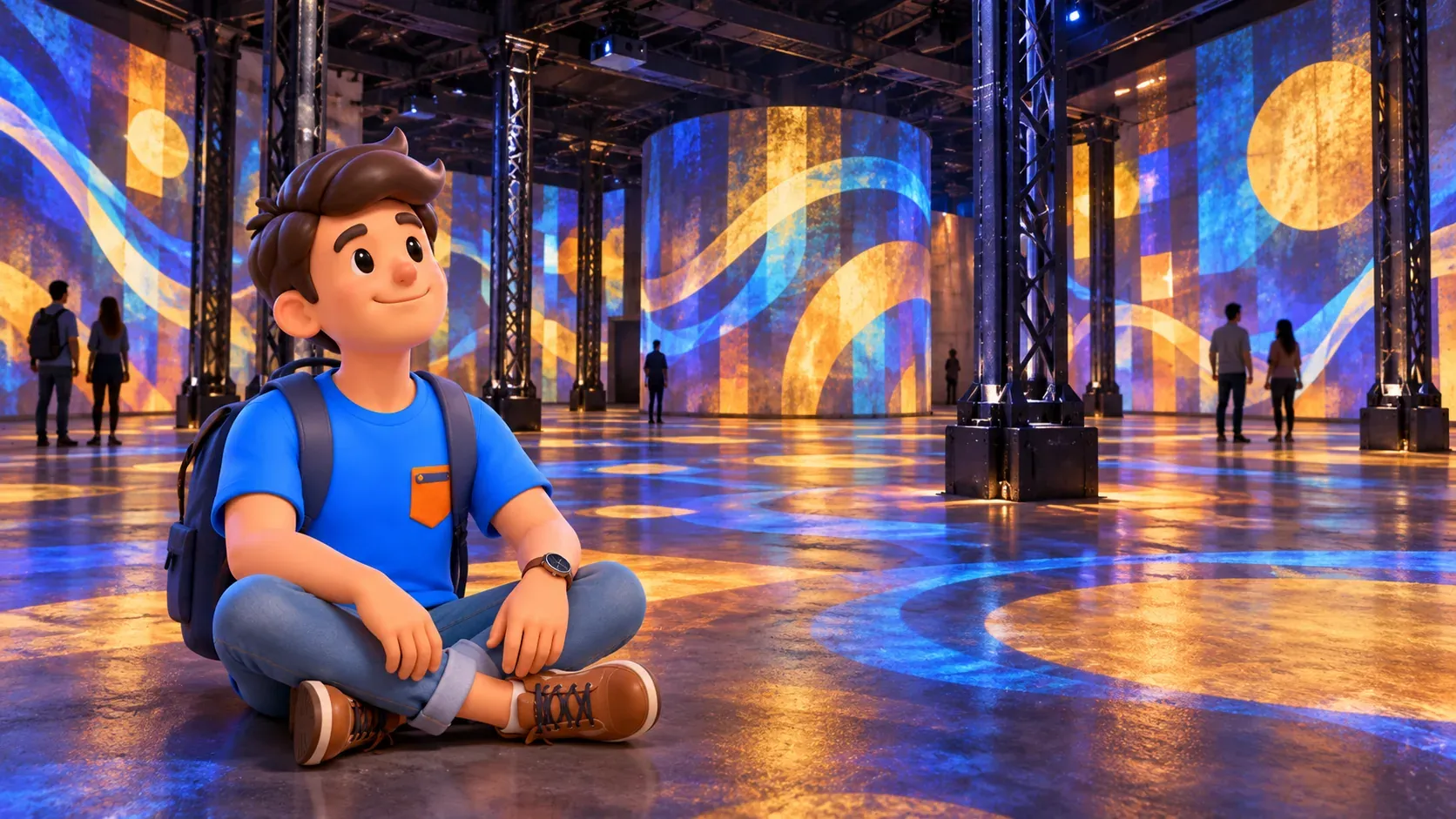
The experience combines moving projections and sound within a large former working space. It presents a constructed visual journey rather than a collection of original paintings arranged in galleries. Choose it if the relationship between images, music and the building appeals to you. The subject changes with the programme, so select an actual exhibition for your date.
At the check on 13 October 2026, the official programme announces Planète Océan from 16 October, while Renaissance continues within its published calendar until 17 December. Their dedicated pages each describe an experience of about fifty minutes. These are examples for planning; they do not establish the duration or availability of every future programme.
Opening times are also attached to date ranges and programmes. The published 16 October–1 November 2026 calendar lists Planète Océan daily from 10am to 8pm, with the last slot one hour fifteen minutes before site closing. Later calendars distribute different programmes across different hours. Use the calendar shown with your selected booking.
Allow an arrival margin and keep your confirmation accessible. The fifteen minutes in the table is an editorial allowance, not a promise that entrance will take that long. Advance booking is recommended for a specific slot; buying on arrival depends on availability. Do not choose a whole afternoon’s route around a programme you have not checked.
Match the immersive visit to practical needs
Travel with a small bag. The current venue information limits bags to 40 × 30 × 20 centimetres and does not accept suitcases. It has no luggage lockers or ordinary cloakroom. This matters if you are fitting the outing between trains: arrange baggage storage separately before treating the exhibition as a convenient stop.
Pushchairs are not allowed in the immersive spaces. The current FAQ describes limited storage for them, which can fill and delay entry. A baby carrier is suggested when a child cannot manage the visit without a pushchair. This is a specific practical condition, rather than a general promise that every family will find the same programme suitable.
The venue also notes possible dynamic lighting, stroboscopic effects, fog and smoke. If these affect your comfort, read the selected programme’s conditions and ask the team before choosing it. A live event at Maison des Métallos offers a different kind of experience, but its own staging and access arrangements still need checking.
Atelier lists mobility access and a lift to the mezzanine. Maison also provides mobility access to its spaces. Those venue arrangements do not prove that the entire street route or the Métro stations are step-free. Check the particular entrance and journey you need if avoiding steps is essential.
Walk through Oberkampf with time to observe the streets
After Atelier, continue north along Rue Saint-Maur and through the Rue Oberkampf area towards Rue Jean-Pierre Timbaud. Keep this part as a neighbourhood walk rather than a sequence of additional destinations. Street façades, shopfronts and changes in building scale provide enough to look at between the two cultural addresses.
Choose a short section of Oberkampf instead of trying to follow the entire street. Pause where you can stand without blocking the pavement, then compare what is visible from one block to the next. A small detour is useful when something catches your attention, provided you keep the cultural appointment and finish in mind.
Private courtyards are not required for this route. An interesting doorway does not guarantee a public passage, and a gate that happens to be open is not an invitation to explore residents’ spaces. Public streets provide a complete connection. The walk should work without collecting every hidden address mentioned in neighbourhood guides.
A café stop can be the main pause. Choose one when you need it, allowing for ordering and payment, rather than making the outing depend on a named business. In rain, shorten this outdoor stretch. The presence of cultural buildings nearby does not create a continuously sheltered route between them.
Maison des Métallos: musical manufacture and live culture
Maison des Métallos began in 1881 as a manufacture of brass musical instruments, later becoming the Couesnon company. The buildings subsequently became a trade-union house, inaugurated in 1937, and a municipal cultural establishment in 2007. These successive uses connect production, collective life and contemporary artistic activity in one address.
Today its programme includes performances, concerts, meetings and workshops. It is a cultural venue with working and performance spaces, rather than a permanent museum open for unrestricted wandering. If Atelier is your indoor choice, look at the Maison’s exterior and use the neighbourhood around it as the final part of the walk.
For the Maison version, choose a specific event or an available guided tour. The guided visits explore the building and its history in different formats, generally lasting one hour fifteen minutes. They follow a calendar or can be arranged on request; reservation is recommended. They are not a daily attraction that can be assumed whenever you arrive.
Regular reception and ticket-desk hours are Tuesday to Saturday, 2pm–7pm, with additional opening linked to events. Monday and Sunday are normally closed under that schedule; a programme-specific exception must be confirmed. Reception hours do not give access to every room or mean that a performance is taking place throughout the afternoon.
For a performance, the Maison recommends arriving twenty minutes before it starts and does not admit latecomers. There is no cloakroom. These practical details should shape the walk: shorten an outdoor stop if necessary and reach the actual venue before the time printed on your ticket.
Build the Maison version around its real duration
Allow approximately ninety-five minutes for the surrounding walk, a pause and the performance arrival margin: fifteen at the church, twenty for reaching and observing Atelier from outside, twenty-five through the Oberkampf area, fifteen for a break and twenty before the event. Add the actual event duration to this allowance.
A seventy-five-minute guided tour would make that example about 170 minutes in total. A longer performance takes the outing beyond three hours. If the event begins in the evening, separate the daytime walk from the wait before it instead of describing the whole gap as a compact cultural visit.
Use RoadMe to prepare a personal day-by-day trip plan around your dates, interests, pace and budget. Bringing walks, main visits and rest periods into one plan makes the trip easier to organise and more convenient to follow.
For another day with a different rhythm, our two-hour Canal Saint-Martin walk leaves more time beside the water. Keep it as a separate outing. Here, one chosen cultural appointment and the streets connecting it to Saint-Ambroise are enough to give the day its shape.


