
Half a day at NDSM: street art and a shipyard’s new life
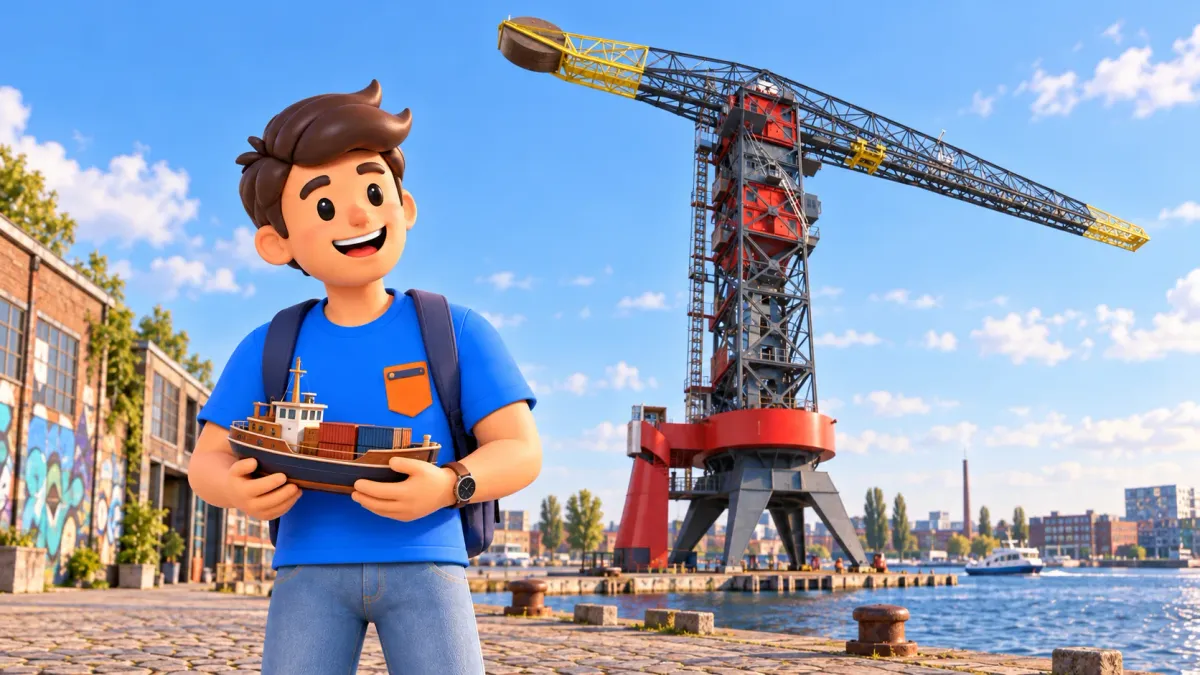
Choose NDSM for an Amsterdam that does not fit the familiar image of a narrow canal and tidy façades. At the former shipyard, the interest lies in space between buildings, steel structures, art on a large scale and traces of the work for which the place was made. A half day can connect one museum visit with a walk, without turning the whole area into a catalogue of graffiti photographs.
Make STRAAT Museum the main visit, then approach Kunststad in NDSM Loods and see the Faralda crane from outside. This programme allows roughly four hours including ferries from Amsterdam Centraal and back. It promises neither open access to every studio nor a festival or market. Its purpose is to notice how an industrial setting continues with different activities and people, rather than to find every attraction across the site before returning.
Build the half day around one visit
For the main version, start around noon at the F4 departure area on the IJ side of Centraal. That also fits an ordinary Monday, when STRAAT opens at noon. Begin with the crossing and a brief introduction to the wharf, then give the museum about ninety minutes. Afterwards, there is time for the makers’ building as a place, the crane’s exterior and the return. Add the journey from your accommodation to the departure point separately.
RoadMe makes it much more convenient to get a personal walking or whole-trip plan around your interests, dates and pace. Tell the app whether street art, industrial history, museums or relaxed time by the water matters most, then use a complete route it has worked out for your stay.
Allow noon–12:30 for waiting and F4; until 12:45 for arrival and the approach to STRAAT; 12:45–2:15 for the museum; until 2:45 for NDSM Loods and Kunststad; until 3:15 for Faralda outside and the waterfront; and until 4pm for the walk, wait and ferry back. These are estimates rather than a measured track. A long queue or altered access means extending the outing or shortening its outdoor section, rather than forcing every stop into the original minutes.
For the wider trip, our three-day Amsterdam itinerary gives the wharf a place beyond the centre. Here, we develop only this industrial northern section. Eye and A’DAM belong to a different ferry landing and work better as a separate short programme. Being across the IJ does not make northern destinations interchangeable or turn every landmark into an easy additional walking stop after NDSM, without further travel time and planning.
Start with F4 and the right destination
At Amsterdam Centraal, follow signs towards IJzijde and find F4 to NDSM. This free line connects the station to the wharf used here. F3 to Buiksloterweg serves another part of Noord, while F7 connects NDSM with Pontsteiger. The numbers and destinations matter to this particular starting point. Check direction at boarding and the current service for your date, especially if the return must fit a fixed activity in the centre later on.
After landing, use available public routes towards STRAAT, NDSM-Plein 1. The first fifteen minutes give an introduction and approach, not a detailed circuit of every wall. Notice one industrial silhouette and one artistic element. In the museum you can compare how large scale works indoors. This gives the initial outdoor stretch a connection to the main visit, instead of making it a random wait before the ticketed part of the programme begins.
A short history of a working landscape
The shipbuilding company NSM moved production to the northern IJ bank in 1923. The NDSM name belongs to a later combination of shipbuilding and dock activities after the Second World War. Keep those stages distinct: a company’s origin, the site’s development and today’s cultural area do not begin with one interchangeable date. For this walk, remember that the big buildings and distances served production before artists gave them a different kind of everyday life.
Large-scale shipbuilding declined here in the 1980s; artists began occupying and adapting the wharf in the 1990s, making studios and experimental spaces. That does not mean all Amsterdam harbour work disappeared or that every nearby area became a museum. Today’s NDSM combines industrial inheritance with new uses. Consider it a changing part of the city, still used by people with their own activities, rather than a finished set assembled entirely for visitors’ photographs and a single permanent appearance.
Find a trace of industrial scale in an ordinary view: a high span, long wall, steel connection or rail line on an accessible part of the site. You do not need to identify every original function. Notice instead how newer art exists within a setting already shaped for something else. The setting affects the size of a work, the distance from which you see it and the feeling of space. That relationship will continue through the next stops.
STRAAT: choose works that hold your attention
STRAAT is a street-art and graffiti museum in a former industrial building. Large works can be considered with information about their stories and making. That gives the museum a different role from a quick walk past outside walls: you allow time for attention and context. Admission requires a ticket. Check the relevant offer for your date rather than assuming that a free ferry makes everything you encounter afterwards free to enter as well.
Ordinary hours are Monday noon–5pm, Tuesday and Wednesday 10am–5pm, Thursday 10am–9pm, and Friday–Sunday 10am–5pm. The published calendar also lists closures on 27 October and 5 November 2026, and 1 January 2027. Other holiday changes may apply. Consult the date-specific museum calendar rather than relying solely on the general weekly pattern, even when a noon start appears to fit the usual programme. The main route needs an actual open museum that day.
For ninety minutes, choose several works that genuinely interest you. Step back enough to take in the overall image, then look at detail from a permitted distance and read the explanation. Return to the whole afterwards: a small observation can change the larger impression. You do not need to give everything equal time. Stay longer at one work and pass another, allowing the visit to follow attention rather than a count of completed stops across the hall.
Avoid trying to extract one meaning for all street art from a single picture. Different visual languages and intentions matter. Compare two works through colour, figure size, line or their relationship to surrounding space. That is enough for a conversation. People in your party need not react identically; discussing what each noticed can be more memorable than a list of names that soon merges with the other details collected during a long day in the city.
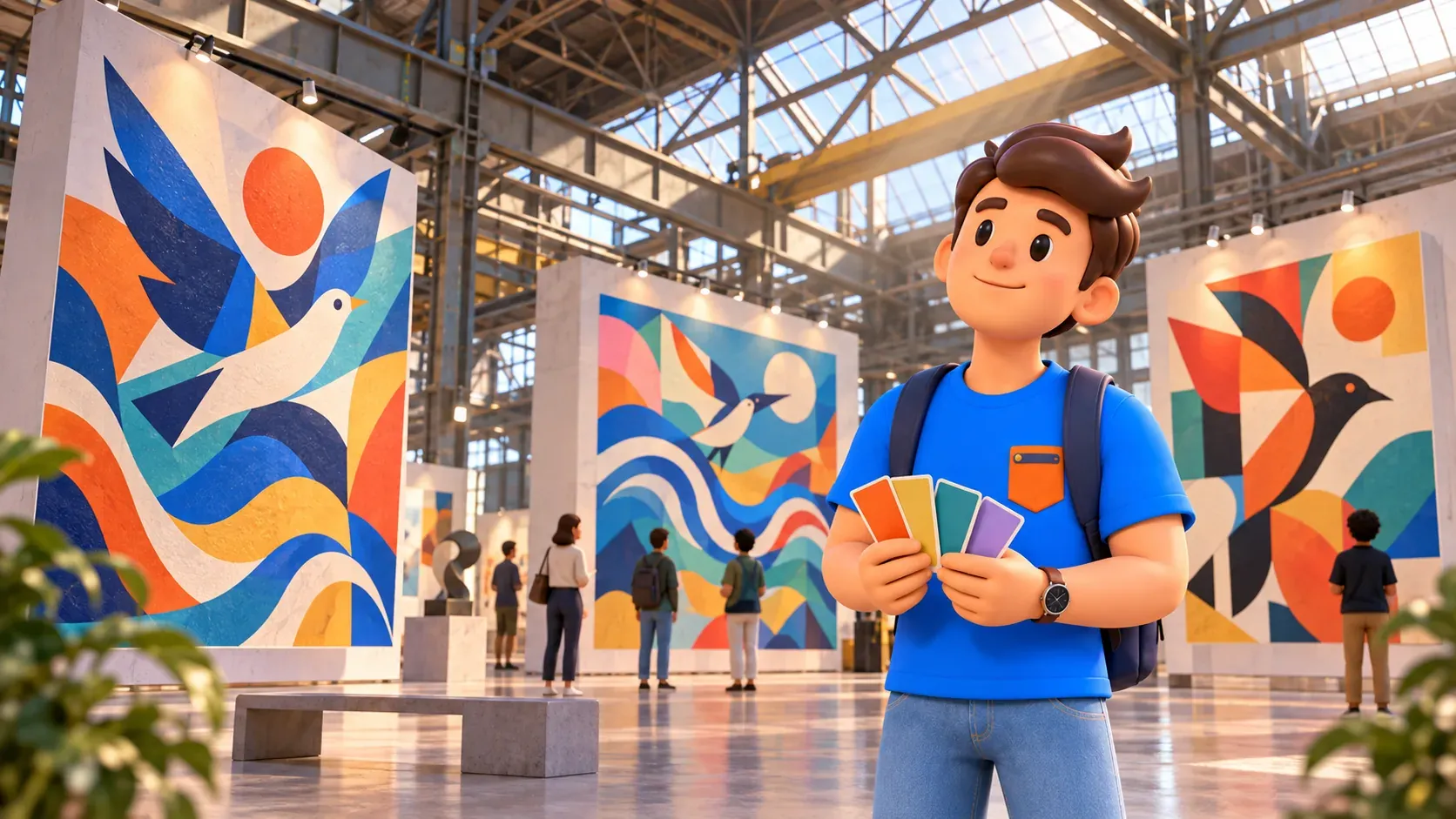
The industrial hall is not fully temperature controlled: it can feel cold in winter and warm in summer. Dress accordingly even though the principal visit is indoors. Private-use photographs are permitted without flash, tripods or selfie sticks. This does not invite touching works or blocking a route for a photograph. A little distance can also improve the art experience, since large forms often become clearer as a whole than through continuous close-up recording of individual fragments.
Kunststad: notice that work continues here
After STRAAT, follow available public paths towards NDSM Loods and Kunststad. This is a community of self-made studios and working spaces for artists and makers inside a large industrial building. It offers a different model of cultural life from a museum’s ordered exhibition. The important point is continuing work. You need not find a visitor display behind every door or assume that everyone inside has come to show their process to passing travellers.
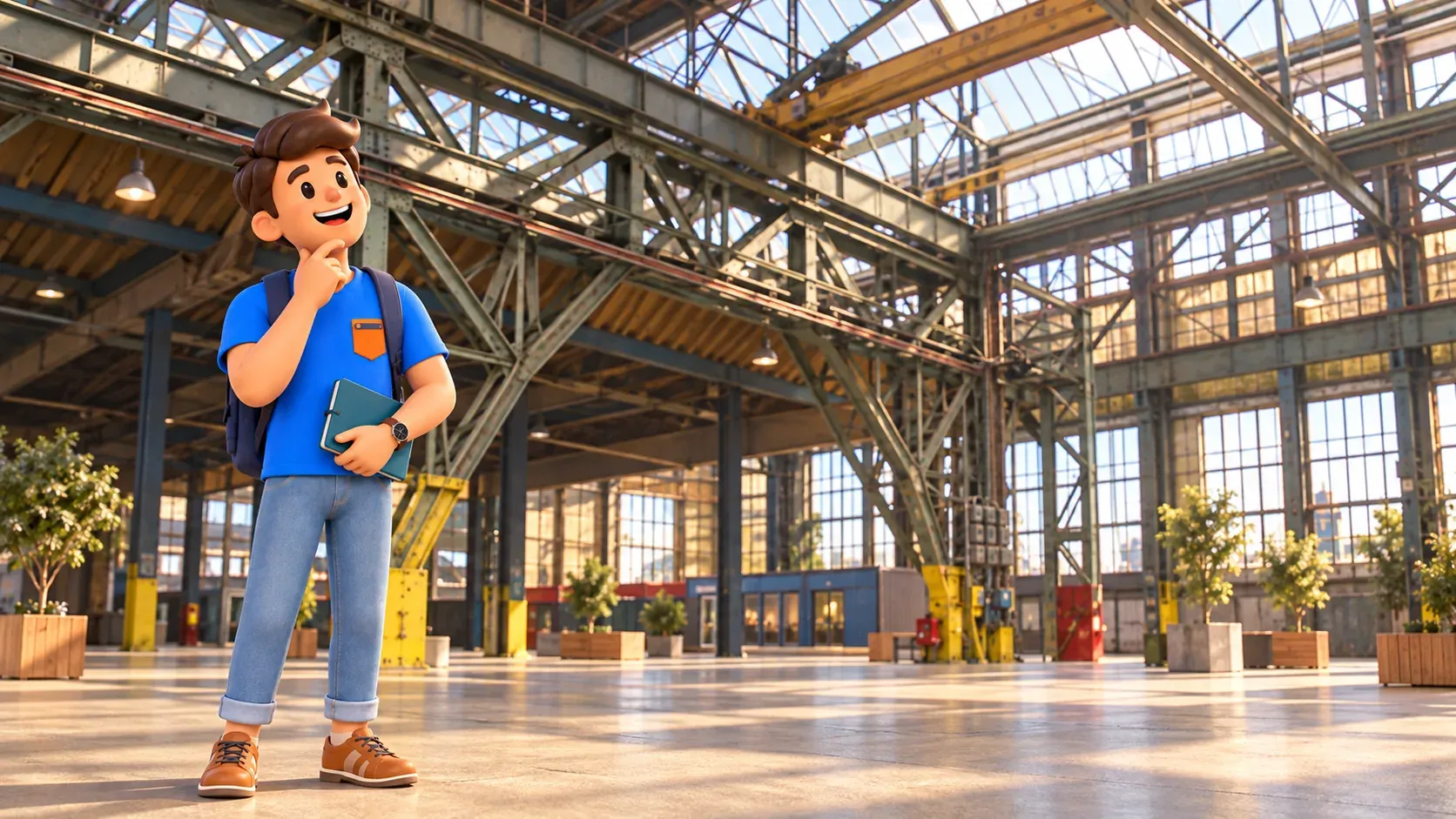
The half-hour block includes approaching and seeing the place. If common visitor areas are open, explore them under the current rules; if the hall is closed, remain in available outdoor areas and continue. Entry to individual studios without invitation is not part of this programme. Open studios are a special event, not a daily promise. That keeps the walk complete without depending on access to someone else’s workplace, which may be occupied with its own tasks.
Compare two scales here: the large old hall and the smaller organisation of life within it. Where structures or creative units are visible, consider their relationship. You do not have to enter a studio to ask how a building can be reused. In the museum, a large artwork held attention; here, the arrangement of the setting itself can do so. That shift adds something different, even without a tour or a personal meeting with a maker.
If studios, large artworks or industrial heritage are your main interests, RoadMe can prepare a personal trip plan around them. A complete route in the app, with a suitable balance of walking and visits, is much easier to use than repeatedly assembling the day from separate recommendations.
Faralda: a technical form with a different purpose
Continue to an available public-ground view of Faralda, NDSM-Plein 78, and the waterfront. The crane has become a hotel with three suites, a striking example of an old technical structure taking on a different role. For this route, seeing it outside is enough. Do not treat it as a public observation tower or expect to ascend as a passing visitor. Its accommodation and interior spaces belong to separate private arrangements with their own conditions.
Begin with the silhouette, then the relationship between the steel frame and inserted volumes. The interest is not a competition with A’DAM’s height. It is a question of keeping a recognisable form while changing its purpose. The crane remains a prominent part of the former wharf even though its current use is different. This exterior example completes the walk’s central idea: old structures need not disappear or become motionless exhibits for an area to keep developing.
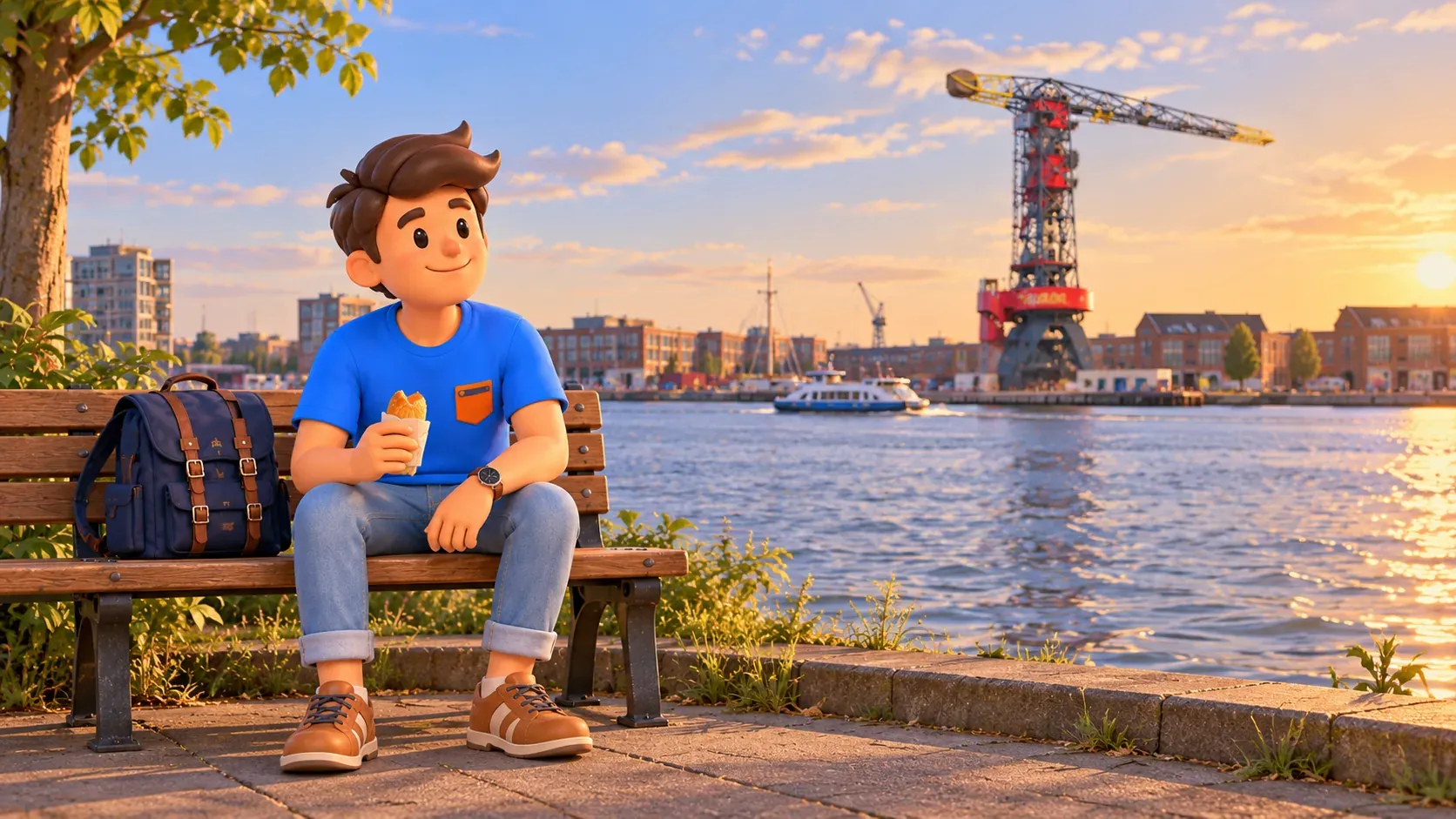
The rest of the half-hour suits a brief rest in permitted public space by the water. With a personal snack, remove the packaging afterwards and avoid treating someone else’s café terrace as an unclaimed public bench. Recall one museum work and one industrial element. There is no need to add an address for a final check mark. Three different forms of reuse already make a connected impression of the site and its present-day life.
Finish with your date in mind
The last forty-five minutes belong to walking to F4, waiting and returning to Centraal. If the centre holds a fixed commitment, assess the ferry service before deciding how long to stay by the shore. Events take place here, so available approaches and the usual atmosphere can change. Add a market, concert or festival only after checking its actual date; none is a guaranteed component of this ordinary half-day programme on the former shipyard.
In rain, you could stay longer in STRAAT and shorten exposed stops if the museum is open. On a closure date, choose another day beforehand or knowingly make a shorter exterior walk. Assess the former industrial site’s surfaces and access for your own needs: the full route has not been checked as step-free. A good result is one artwork you remember and a clearer sense of a place changing its activity while retaining traces of its earlier life.


